
In the pursuit of global carbon neutrality, the widespread adoption of battery energy storage systems has become a cornerstone of energy transition strategies. These systems are pivotal for integrating renewable energy, stabilizing grids, and providing backup power. As a researcher focused on electrochemical energy storage, I have observed that the charging performance of lithium-ion batteries, the core component of modern battery energy storage systems, directly impacts the efficiency and safety of these systems. Rapid charging at high rates is often desired to enhance the responsiveness and energy throughput of battery energy storage systems. However, this practice can induce lithium plating on the graphite anode, a parasitic side reaction that leads to irreversible capacity loss, increased internal resistance, and, in severe cases, thermal runaway—a critical safety hazard for any large-scale battery energy storage system. Therefore, developing online control technologies to enable safe, fast charging without lithium plating is of paramount importance for the longevity and reliability of battery energy storage systems.
The common constant current-constant voltage (CC-CV) charging method, while simple, does not address the internal electrochemical states of the battery. To prevent lithium plating, it is essential to monitor or estimate the anode potential versus a Li/Li+ reference, as plating is suppressed when this potential remains above 0 V. Direct measurement via reference electrodes is impractical for commercial battery energy storage systems due to cost and complexity. Thus, model-based estimation and control offer a viable pathway. High-fidelity electrochemical models, such as the pseudo-two-dimensional (P2D) model, provide detailed insights but are computationally prohibitive for real-time battery management system (BMS) applications in battery energy storage systems. In this article, I present a dimensionality-reduction approach to derive a simplified pseudo-two-dimensional (SP2D) model that retains predictive accuracy for anode potential while being suitable for online implementation. This model forms the core of a proposed proportional control strategy for lithium-plating-free fast charging, specifically tailored for battery energy storage systems.
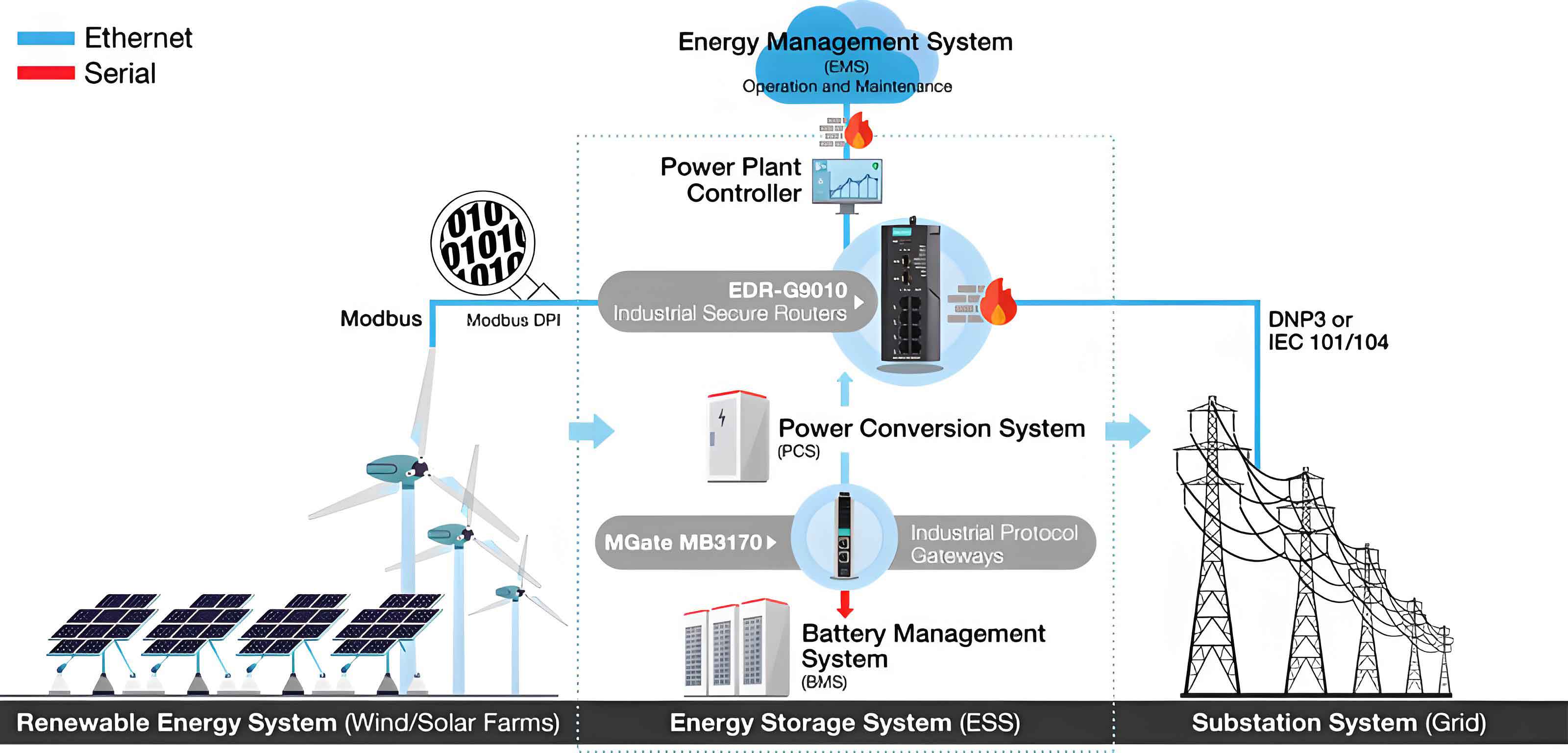
The foundation of my work lies in simplifying the governing equations of the full-order P2D model. The P2D model describes lithium-ion transport and reaction kinetics through coupled partial differential equations for solid-phase and electrolyte-phase lithium concentrations and potentials. For online control in a battery energy storage system, I focus on reducing the spatial resolution of these equations. The solid-phase lithium concentration dynamics are approximated using two first-order inertial elements linking the average concentration to the surface concentration, which is critical for reaction kinetics. The relationships are given by:
$$c_s(t_{k+1}) = c_s(t_k) – \frac{3 j_f}{a_s F r_s}$$
$$c_{s,sur}(t_{k+1}) = c_s(t_{k+1}) – \lambda_1 w_1(t_{k+1}) – \lambda_2 w_2(t_{k+1})$$
Here, $c_s$ is the average solid-phase concentration, $j_f$ is the local pore wall flux, $a_s$ is the specific surface area, $F$ is Faraday’s constant, $r_s$ is the particle radius, $c_{s,sur}$ is the surface concentration, $w_1$ and $w_2$ are state variables of the inertial blocks, and $\lambda_1$, $\lambda_2$ are fitting parameters. This reduction captures the diffusion polarization with minimal computational overhead.
For the electrolyte phase, I approximate the lithium concentration distribution across the anode, separator, and cathode regions using polynomial functions. This avoids solving the full diffusion equation. The concentration $c_e(x,t)$ is expressed as:
$$
c_e(x,t) =
\begin{cases}
f_n(x,t) = a_1 x^2 + a_2, & \text{for anode region} \\
f_{sep}(x,t) = a_3 x^2 + a_4 x + a_5, & \text{for separator region} \\
f_p(x,t) = a_6 (L – x)^2 + a_7, & \text{for cathode region}
\end{cases}
$$
where $x$ is the spatial coordinate from the negative current collector, $L$ is the total thickness, and $a_1$ to $a_7$ are time-varying coefficients determined from boundary conditions and conservation laws. The solid-phase and electrolyte-phase potentials are simplified by assuming a uniform current density profile, leading to algebraic expressions. The gradient of solid potential $\phi_s$ is approximated as:
$$
\frac{\partial}{\partial x} \phi_s(x,t) \approx \frac{I(t)}{\sigma_{eff} A} \left( \frac{x}{\delta_n} – 1 \right)
$$
and the electrolyte potential gradient $\phi_e$ as:
$$
\frac{\partial}{\partial x} \phi_e(x,t) \approx -\frac{2RT(t^+ – 1)}{F} \frac{\partial}{\partial x} \ln c_e(x,t) – \frac{I(t)}{A \delta_n \kappa_{eff}} x
$$
Here, $I(t)$ is the applied current, $\sigma_{eff}$ and $\kappa_{eff}$ are effective conductivities, $A$ is electrode area, $\delta_n$ is anode thickness, $R$ is the gas constant, $T$ is temperature, and $t^+$ is the transference number. The local pore wall flux $j_f$, which drives the interfacial reaction, is then derived by integrating the overpotential equation, yielding:
$$
j_f(x,t) = \frac{1}{P} \left[ -\frac{I(t)}{\sigma_{eff} A} x + \left( \frac{1}{\kappa_{eff}} + \frac{1}{\sigma_{eff}} \right) \frac{I(t) x^2}{A \delta_n} \times \frac{x^2}{2} + \frac{2RT(t^+ – 1)}{F} \ln c_e(x,t) – U_{ref}(x,t) \right] + Q
$$
where $P$ and $Q$ are constants, and $U_{ref}$ is the open-circuit potential, approximated by a cubic polynomial in space: $U_{ref}(x,t) = b_3 x^3 + b_2 x^2 + b_1 x + b_0$. This set of equations constitutes the SP2D model, which dramatically reduces computational complexity compared to the full P2D model, making it feasible for embedded control in battery energy storage systems.
Parameter acquisition for the SP2D model is multifaceted, as accurate parameters are crucial for predictive performance in a battery energy storage system. I employed a combination of direct measurement, experimental characterization, algorithmic fitting, and literature data. Key geometric parameters like electrode dimensions and porosity are measured from disassembled cells. Electrochemical parameters, such as solid-phase diffusion coefficients and reaction rate constants, are obtained from manufacturer data or calibrated via experiments. For the equilibrium potential curves of the anode and cathode, which are vital for the $U_{ref}$ relation, I performed coin cell tests on harvested electrodes. The half-cell data is then used in a dual-tank model to fit the full-cell voltage response, ensuring consistency. The dual-tank model equations are:
$$
y(t) = y_0 – \frac{I_{in} t}{C_p}
$$
$$
x(t) = x_0 + \frac{I_{in} t}{C_n}
$$
$$
V_{out} = U_p(y) – U_n(x) + I_{in} R_{in}
$$
where $x$ and $y$ are anode and cathode stoichiometries, $C_n$ and $C_p$ are electrode capacities, $R_{in}$ is internal resistance, $I_{in}$ is current, and $U_p$, $U_n$ are half-cell potentials. A genetic algorithm minimizes the root-mean-square error (RMSE) between model output $V_{out}$ and experimental full-cell voltage $V(t)$ to identify parameters like initial stoichiometries and capacities. This process yields critical parameters such as maximum solid-phase concentrations. A summary of key SP2D model parameters, representative of a commercial NCM/graphite cell used in battery energy storage systems, is provided in Table 1.
| Parameter | Description | Value | Source |
|---|---|---|---|
| $i_{1C}$ | 1C current density | 30.8 A m$^{-2}$ | Measured |
| $r_{neg}$ | Anode particle radius | 1.5 × 10$^{-5}$ m | Manufacturer |
| $\epsilon_{s,n}$ | Anode solid phase volume fraction | 0.4 | Manufacturer |
| $c_{e,0}$ | Initial electrolyte concentration | 1000 mol m$^{-3}$ | Manufacturer |
| $L_{neg}$ | Anode thickness | 8.6 × 10$^{-5}$ m | Measured |
| $c_{s,max,n}$ | Max anode solid concentration | 36394 mol m$^{-3}$ | Fitted |
| $D_{s,neg}$ | Anode solid diffusion coefficient | 1.2 × 10$^{-13}$ m$^2$ s$^{-1}$ | Manufacturer |
| $k_{neg}$ | Anode reaction rate constant | 1.8 × 10$^{-10}$ m s$^{-1}$ | Calibrated |
| $\sigma_n$ | Anode electrical conductivity | 100 S m$^{-1}$ | Literature |
Model validation is essential before deployment in a battery energy storage system. I validated the SP2D model against experimental data from a 156 Ah NCM square cell under constant-current charging at various rates (0.33C, 0.5C, 1C, 1.5C, 1.92C). The terminal voltage and anode potential (measured via a Li-reference electrode) were compared to model simulations. The anode potential is critical as it dictates the lithium plating margin. The validation results demonstrated high accuracy. For terminal voltage, the maximum RMSE across all rates was 13.4 mV, while for anode potential, it was 7.0 mV. These errors are acceptable for control purposes in battery energy storage systems. The model successfully captures the dynamic trends: as charging rate increases, the anode potential drops more sharply, approaching the 0 V Li/Li+ threshold. This confirms the SP2D model’s capability to reliably estimate the internal state for online control.
Building on the validated model, I developed an online charging control strategy to prevent lithium plating. The core objective is to maintain the anode potential $\eta$ above a safe threshold, set to 20 mV to account for measurement uncertainties and provide a safety margin. A proportional controller adjusts the charging current $I_k$ in real-time based on the error between the estimated anode potential $\eta_k$ (from the SP2D model) and the threshold $\eta_{lim}$. The control law is:
$$
I_k = I_{k-1} + k_{cur} (\eta_{lim} – \eta_k)
$$
where $k_{cur}$ is the proportional gain, tuned to 20 for responsive dynamics. In practice, the current is bounded by the maximum capability of the power converter in a battery energy storage system, typically 300 A for the test setup. Thus, a saturation block limits $I_k$ to $I_{max} = 300$ A. The control loop runs at a fixed sampling interval, with the SP2D model updated recursively. The charging process terminates when the cell voltage reaches the upper cutoff of 4.3 V.
Simulation of this control strategy yields a current profile that adapts to maintain the anode potential near 20 mV. Without current limiting, the controller commands an initial high current (up to ~470 A) that quickly polarizes the anode to the threshold, then gradually decreases the current as concentration polarization builds. The total charging time to 4.3 V is 1636 seconds. With the 300 A limit, the initial current saturates, resulting in a slightly longer charging time of 1895 seconds. In both cases, the anode potential remains safely above 0 V throughout, theoretically eliminating lithium plating. This adaptive current profile contrasts with fixed CC-CV protocols and showcases how model-predictive control can optimize charging for battery energy storage systems.
To translate the simulated current profile into an implementable charging protocol for experimental validation, I approximated it with a multi-step constant current sequence, as BMS in battery energy storage systems often operate with piecewise constant currents. The sequence starts at 300 A, then steps down at specific state-of-charge intervals derived from the simulation. This stepwise profile was applied to fresh cells in a 25°C environment. The charging performance was evaluated, and then the cells underwent long-term cycling to assess durability. After 780 cycles using this fast-charging protocol, the capacity retention was 93.4% (from 158.7 Ah to 148.3 Ah), indicating minimal degradation. More importantly, post-cycling analysis was conducted to check for lithium plating.
Direct visual inspection of disassembled anodes from cycled cells showed no greyish lithium deposits; the electrode surfaces remained uniformly black, characteristic of intact graphite. To complement visual inspection, a non-destructive diagnostic based on relaxation voltage analysis was employed. After charging, the cell voltage relaxation curve and its derivative $dU/dt$ were examined. The presence of a voltage plateau and a distinct minimum in the $dU/dt$ curve are hallmarks of lithium plating and subsequent lithium re-intercalation during relaxation. For cells charged with the proposed strategy, the relaxation voltage curve showed no plateau, and the $dU/dt$ curve exhibited no minimum, confirming the absence of significant lithium plating. This validates the effectiveness of the SP2D-based control in achieving safe operation for battery energy storage systems.
The implications of this work extend to the broader design and management of battery energy storage systems. By integrating a reduced-order electrochemical model into the BMS, real-time estimation of critical internal states like anode potential becomes feasible. This enables not only safe fast charging but also other advanced functions such as state-of-health monitoring, thermal management, and fault detection. The computational efficiency of the SP2D model is a key enabler; its equations can be discretized and solved on microcontrollers typically found in battery energy storage systems. Furthermore, the model parameters can be periodically updated using onboard data to account for aging, enhancing adaptability over the system’s lifespan.
However, challenges remain for widespread deployment in diverse battery energy storage systems. The model parameters are cell-specific and require initial characterization, which may be resource-intensive for large fleets. Automated parameter identification algorithms that use routine operational data could mitigate this. Additionally, the model assumes isothermal conditions; for large-scale battery energy storage systems with significant thermal gradients, a coupled thermal-electrochemical model may be necessary. Future work will focus on extending the SP2D framework to include thermal dynamics and aging mechanisms, and on implementing the control algorithm on prototype BMS hardware for field testing in grid-scale battery energy storage systems.
In conclusion, I have presented a comprehensive online control technology for safe fast charging of lithium-ion batteries in battery energy storage systems. The core innovation is a dimensionality-reduced SP2D electrochemical model that accurately predicts anode potential with low computational cost. Coupled with a proportional controller, this model enables dynamic current adjustment to prevent anode potential from falling into the lithium plating region. Experimental validation through cycling and post-mortem analysis confirms that the method successfully suppresses lithium plating while maintaining good capacity retention. This approach represents a significant step towards intelligent battery management that prioritizes both performance and safety, which are critical for the reliable and sustainable operation of modern battery energy storage systems. As the demand for grid flexibility and renewable integration grows, such advanced control strategies will be indispensable for maximizing the value and lifespan of battery energy storage systems.