
The relentless pursuit of safer, higher-energy-density energy storage systems has propelled the development of all-solid-state batteries (ASSBs) to the forefront of battery research. Replacing volatile, flammable liquid electrolytes with solid counterparts fundamentally eliminates leakage and combustion risks, enabling the use of high-capacity lithium metal anodes and high-voltage cathodes. The core enabler of this technology is the solid-state electrolyte (SSE), which must exhibit high ionic conductivity, excellent electrochemical stability, and robust mechanical properties. Among various ceramic electrolytes, perovskite-type Li0.33La0.56TiO3 (LLTO) has garnered significant attention due to its high bulk lithium-ion conductivity (on the order of 10-3 S cm-1), good thermal stability, and wide electrochemical window. However, the integration of brittle ceramic electrolytes into practical solid-state battery configurations presents formidable challenges, including high interfacial resistance, complex multi-step fabrication, and significant lithium loss during high-temperature processing.
Traditional methods for fabricating LLTO electrolytes typically involve a multi-stage process: synthesizing phase-pure LLTO powder via solid-state reaction at high temperatures (often requiring excess lithium precursors to compensate for volatilization), followed by a separate shaping (e.g., dry pressing, tape casting) and sintering step to densify the electrolyte pellet or membrane. This approach is not only energy- and time-intensive but also inevitably introduces impurities like Li2CO3 on the particle surfaces during handling and intermediate steps, which can degrade interfacial contact and overall ionic transport. Moreover, achieving a perfect, low-resistance interface between a dense ceramic electrolyte and electrode materials remains difficult, limiting the rate capability and cycle life of the resultant solid-state battery.
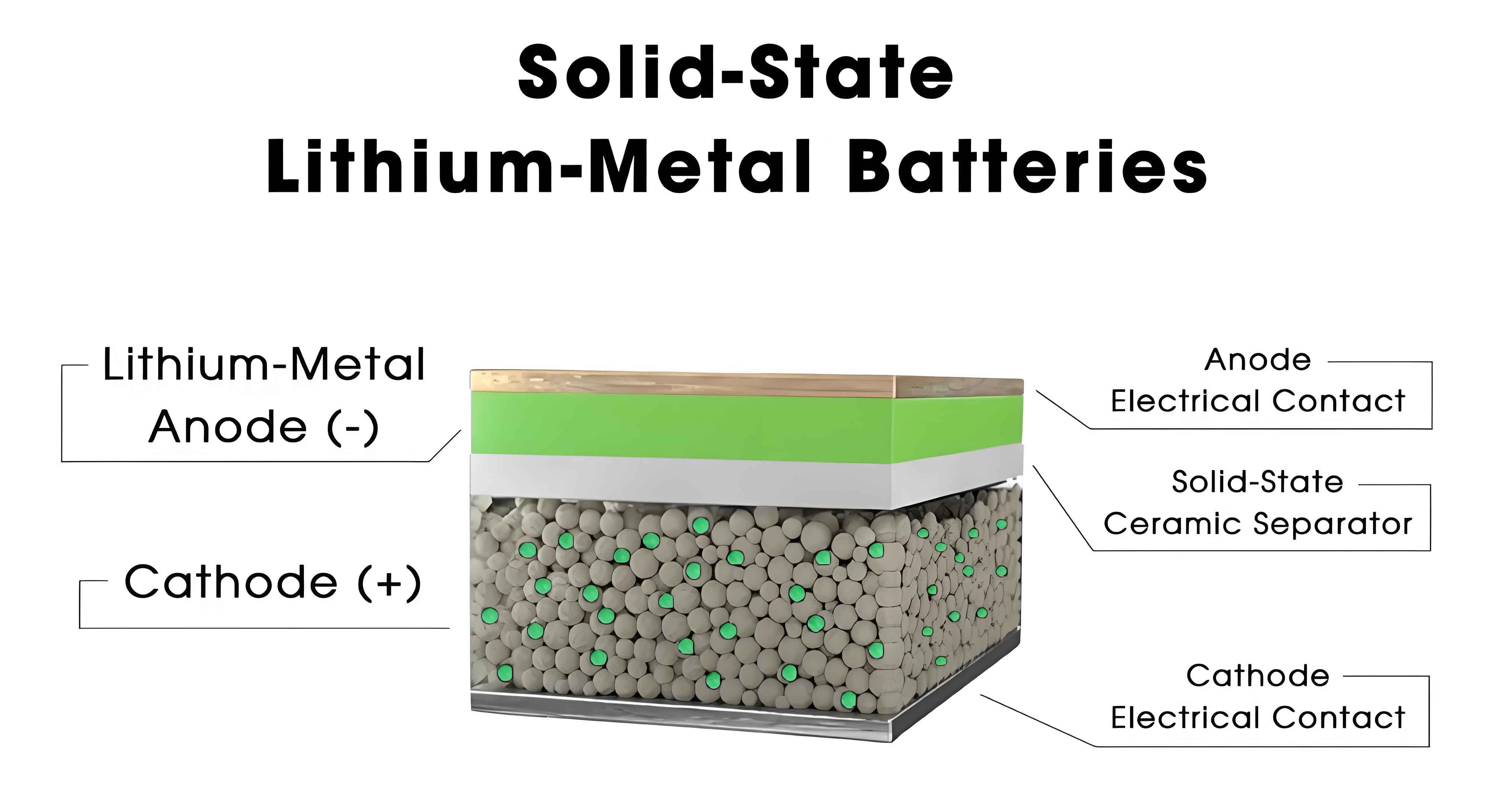
To address these intertwined issues of fabrication complexity and interfacial inefficiency, this work introduces and investigates a novel, streamlined one-step sintering strategy for directly fabricating LLTO ceramics with a unique straight-pore architecture. This method ingeniously combines the phase-inversion shaping technique with a carefully designed thermal profile to achieve polymer removal, LLTO phase formation, and final sintering densification in a single, continuous furnace run. The resultant asymmetric membrane features a dense layer on one side for effective lithium metal isolation and an array of straight, open pores on the other side, designed to be filled with cathode composite. This three-dimensional (3D) interdigitated structure promises to drastically increase the active contact area between the electrolyte and the cathode, thereby reducing local current density and interfacial resistance—a critical advancement for high-performance solid-state battery systems. This article will comprehensively detail the synthesis process, delve into the microstructural characteristics, and rigorously evaluate the electrochemical properties of these one-step sintered LLTO ceramics, demonstrating their significant potential as a key component in the next generation of solid-state battery technology.
Experimental Methodology: One-Step Sintering and Cell Assembly
The one-step sintering process begins with the formulation of a homogeneous casting slurry. Stoichiometric amounts of Li2CO3, La2O3, and TiO2 precursors, corresponding to the nominal composition Li0.33La0.56TiO3, are mixed with a 15 wt.% polyethersulfone (PES) solution in N-methyl-2-pyrrolidone (NMP). The mass ratio of the precursor powder blend to the PES solution is maintained at 1:1.1. This mixture is ball-milled for 48 hours to ensure uniformity and deagglomeration. The resulting slurry is then degassed and cast into a custom stainless-steel mold. A phase-inversion process is initiated by placing the mold in contact with a water coagulation bath for 2 hours, which precipitates the polymer and forms a green body with an incipient straight-pore structure derived from the solvent-nonsolvent exchange. The green body is subsequently dried at 60°C.
The critical one-step thermal treatment is performed in a muffle furnace. The dried green body is placed in an alumina crucible and subjected to a meticulously programmed temperature profile:
$$ \text{Step 1 (Binder Burn-out): } 25^\circ\text{C} \xrightarrow{2^\circ\text{C/min}} 400^\circ\text{C} \quad (\text{Hold for 2 hours}) $$
$$ \text{Step 2 (Solid-State Reaction): } 400^\circ\text{C} \xrightarrow{2^\circ\text{C/min}} 1050^\circ\text{C} \quad (\text{Hold for 6 hours}) $$
$$ \text{Step 3 (Sintering Densification): } 1050^\circ\text{C} \xrightarrow{2^\circ\text{C/min}} 1280^\circ\text{C} \quad (\text{Hold for 5 hours}) $$
This profile consolidates the three key stages—polymer removal, LLTO phase formation from the raw precursors, and final grain growth/densification—into one uninterrupted process, effectively minimizing lithium loss and avoiding intermediate handling contamination.
For electrochemical characterization, the sintered straight-pore LLTO membrane is integrated into different cell configurations. The dense side surface and the pore walls are coated with a thin layer of a hybrid organic-inorganic electrolyte (e.g., LiTFSI in PVDF-HFP) to improve interfacial contact. Symmetric Li|LLTO|Li cells are assembled for cycling stability and critical current density tests. For full cell assembly, a LiFePO4 (LFP) cathode slurry is infiltrated into the straight pores under vacuum, ensuring intimate contact with the ceramic walls. After drying, a lithium metal foil is attached to the dense side, completing the configuration for an all-solid-state Li|LLTO|LFP solid-state battery.
Structural and Microstructural Characterization
The success of the one-step sintering protocol is first confirmed by X-ray diffraction (XRD). The pattern of the sintered membrane shows peaks exclusively corresponding to the perovskite LLTO phase (JCPDS No. 46-0465), with no detectable impurity phases such as La2Ti2O7 or unreacted TiO2. This confirms that the designed thermal schedule is sufficient to directly synthesize phase-pure LLTO from the oxide/carbonate precursor mixture during the sintering process.
Scanning electron microscopy (SEM) reveals the distinctive architecture and superior microstructural quality achieved. The membrane exhibits a well-defined asymmetric structure: one surface is dense and non-porous, while the opposite surface features an array of straight, non-tortuous pores with a diameter of approximately 100 μm. This pore size is optimal for efficient infiltration and utilization of cathode materials, as it aligns with the typical reaction depth (< 100 μm) of active particles. Crucially, the cross-sectional analysis demonstrates a remarkably dense ceramic matrix in the one-step sintered sample, with tightly packed, well-grown grains. In contrast, a reference sample prepared via the conventional two-step method (pre-synthesized LLTO powder + sintering) shows a more porous microstructure with smaller grains and visible micro-voids at the grain boundaries.
Quantitative image analysis confirms the grain size difference. The one-step sintered ceramic exhibits a larger average grain size distribution (4-9 μm) compared to the conventional sample (1-3 μm). According to the brick-layer model for polycrystalline ceramics, the total ionic conductivity ($\sigma_{total}$) is influenced by the grain boundary resistance, which is inversely related to grain size. Larger grains reduce the number of high-resistance grain boundaries per unit thickness, favoring higher overall conductivity. The measured porosity further validates the enhanced densification: the one-step sintered membrane has an average porosity of 21.8%, significantly lower than the 36.4% of the conventional sample. The table below summarizes the key microstructural and physical parameters.
| Property / Method | One-Step Sintering | Conventional Two-Step Sintering |
|---|---|---|
| Average Grain Size (μm) | 4 – 9 | 1 – 3 |
| Average Porosity (%) | 21.8 | 36.4 |
| Pore Diameter (μm) | ~100 | ~200 |
| Matrix Density | High, Few Micro-voids | Lower, Visible Micro-voids |
Energy-dispersive X-ray spectroscopy (EDS) mapping of a pore filled with LFP cathode material confirms the compositional integrity and structural design. Elements La and Ti are uniformly distributed throughout the dense ceramic matrix, while Fe and P signals are localized strictly within the pore channels, confirming successful and confined cathode infiltration and the creation of a 3D interdigitated electrode-electrolyte interface essential for high-performance solid-state battery operation.
Electrochemical Performance of the LLTO Electrolyte
The ionic transport properties of the one-step sintered straight-pore LLTO electrolyte are systematically evaluated. Electrochemical impedance spectroscopy (EIS) measurements on a symmetric stainless steel | LLTO | stainless steel blocking cell are performed over a temperature range from 25°C to 60°C. The Nyquist plots consist of a semicircle in the high-medium frequency region, attributed to the combined bulk and grain boundary resistance, and a low-frequency tail related to electrode polarization. The total resistance ($R_{total}$) is extracted from the high-frequency intercept and the low-frequency onset of the semicircle.
The ionic conductivity ($\sigma$) is calculated using the formula:
$$ \sigma = \frac{L}{R_{total} \times A} $$
where $L$ is the thickness of the electrolyte pellet (the dense layer thickness), and $A$ is the contact area. At room temperature (25°C), the one-step sintered LLTO membrane demonstrates a total ionic conductivity of $2.31 \times 10^{-4}$ S cm-1, which is substantially higher than the $~4 \times 10^{-5}$ S cm-1 typically reported for conventionally processed LLTO and the value obtained from our reference sample. The temperature-dependent conductivity follows the Arrhenius law:
$$ \sigma T = \sigma_0 \exp\left(-\frac{E_a}{k_B T}\right) $$
where $\sigma_0$ is the pre-exponential factor, $E_a$ is the activation energy for ion migration, $k_B$ is Boltzmann’s constant, and $T$ is the absolute temperature. The derived activation energy is 0.55 eV, indicating a favorable energy landscape for Li+ ion hopping. The conductivity increases to $8.12 \times 10^{-4}$ S cm-1 at 60°C. The superior conductivity is directly attributed to the denser microstructure and reduced grain boundary density achieved via the one-step process.
| Property | Value |
|---|---|
| Ionic Conductivity at 25°C (S cm-1) | $2.31 \times 10^{-4}$ |
| Ionic Conductivity at 60°C (S cm-1) | $8.12 \times 10^{-4}$ |
| Activation Energy, $E_a$ (eV) | 0.55 |
| Electrochemical Window (vs. Li/Li+) | > 5.2 V |
| Li+ Transference Number ($t_+$) | ~0.46 |
Linear sweep voltammetry (LSV) reveals an anodic stability limit exceeding 5.2 V vs. Li/Li+, which is sufficient for pairing with high-voltage cathode materials in a solid-state battery. The lithium-ion transference number ($t_+$), determined by a combination of DC polarization and AC impedance, is approximately 0.46. This value, while dominated by ionic transport, suggests a non-negligible but typical electronic contribution for LLTO; however, the high $t_+$ still effectively mitigates concentration polarization during cycling.
The compatibility with lithium metal is assessed using Li|LLTO|Li symmetric cells. Galvanostatic cycling at a current density of 0.1 mA cm-2 shows stable lithium plating/stripping for over 350 hours with a low and stable overpotential of ~0.3 V. In stark contrast, a cell with a conventionally prepared LLTO electrolyte short-circuits after only 42 hours, likely due to non-uniform lithium deposition promoted by microstructural defects and higher local current density. Critical current density (CCD) testing indicates that the one-step sintered electrolyte can sustain cycling up to 0.3 mA cm-2 before significant polarization occurs, with failure (short circuit) at 0.4 mA cm-2. This improved CCD underscores the role of a dense, homogeneous ceramic matrix in suppressing lithium dendrite propagation.
Performance of the All-Solid-State Lithium Battery
The practical utility of the one-step sintered straight-pore LLTO membrane is evaluated in a full solid-state battery configuration with LiFePO4 cathode and lithium metal anode. The galvanostatic charge-discharge profiles at 0.2C rate exhibit the characteristic flat plateau of LFP around 3.45 V vs. Li/Li+. The initial discharge capacity is 129.5 mAh g-1, which increases in subsequent cycles due to progressive wetting and activation of the interface, reaching a stable value of ~151 mAh g-1. Most importantly, the polarization voltage between charge and discharge plateaus remains small and virtually unchanged over 200 cycles, indicating excellent interfacial stability and low resistance.
The long-term cycling performance at 0.2C is outstanding. After 200 cycles, the cell retains 94% of its maximum achieved capacity, with Coulombic efficiency consistently above 99%. The rate capability test demonstrates that the solid-state battery can deliver capacities of 156.7, 153.8, 145.1, and 117.6 mAh g-1 at rates of 0.2C, 0.3C, 0.5C, and 1.0C, respectively. Upon returning to 0.2C, the capacity recovers to 151.7 mAh g-1, demonstrating remarkable reversibility and minimal degradation from high-rate stress.
This exceptional performance is attributed to the synergistic effects of the innovative electrolyte architecture and fabrication process. The straight-pore structure provides a 3D interconnected network that maximizes the contact area between the LFP cathode and the LLTO electrolyte, drastically reducing the effective current density at the interface and facilitating rapid ion exchange. Simultaneously, the one-step sintering-derived dense ceramic matrix with large grains ensures high intrinsic ionic conductivity and mechanical robustness, preventing short circuits and accommodating volumetric changes during cycling. The integrated fabrication process also preserves the purity and activity of the ceramic surface, leading to a more stable and lower-resistance solid-solid interface compared to conventionally processed electrolytes.
Conclusion and Perspective
In conclusion, this work successfully demonstrates a novel and efficient one-step sintering strategy for the fabrication of high-quality LLTO ceramic electrolytes with a functional straight-pore architecture. This method elegantly consolidates binder removal, phase synthesis, and sintering into a single thermal process, effectively circumventing the lithium loss, contamination, and complexity inherent in conventional multi-step fabrication routes. The resulting ceramic exhibits a superior dense microstructure with larger grains and fewer defects, which directly translates into a higher room-temperature ionic conductivity of $2.31 \times 10^{-4}$ S cm-1 and lower activation energy.
The designed straight-pore structure creates an ideal 3D framework for integrating cathode materials, enabling a significantly enlarged and intimate electrode-electrolyte interface. When deployed in a full solid-state battery with a lithium metal anode and LiFePO4 cathode, this integrated electrolyte/electrode scaffold delivers excellent cycling stability (94% capacity retention after 200 cycles) and good rate capability. The symmetric cell tests further confirm enhanced compatibility with lithium metal and a higher critical current density.
This one-step sintering approach represents a significant step towards simplifying the manufacturing process for ceramic-based solid-state battery components while simultaneously improving their electrochemical performance. It highlights the profound impact of processing methodology on the microstructural and, consequently, the functional properties of ceramic electrolytes. Future work will focus on optimizing the pore size distribution, scaling up the membrane fabrication, and exploring this concept with other promising ceramic electrolyte families (e.g., garnets, NASICONs). The integration of such engineered ceramic membranes is a promising path to realizing the high energy density, safety, and longevity promised by all-solid-state battery technology.