
In the global push for sustainable development, building energy consumption represents a significant portion of total societal energy use. In many regions, particularly remote areas with underdeveloped infrastructure, providing reliable electricity remains a formidable challenge. This report details a first-hand evaluation of decentralized solar photovoltaic systems implemented in such a region. Based on extensive field testing and data analysis, I will summarize the performance, economic viability, and key lessons learned from these installations, offering insights for similar future projects.
The fundamental challenge in remote regions like the Tibetan plateau is the prohibitive cost and technical difficulty of extending the conventional power grid. Populations are sparse and widely dispersed across rugged terrain. In the evaluated area, a significant portion of villages and households lacked access to electricity. Building small hydropower stations is often not feasible due to inconsistent water flow, while grid extension would involve immense investment in transmission lines with high associated losses given the minimal load per household. In this context, decentralized renewable energy, particularly solar power, presents itself as the most viable solution.
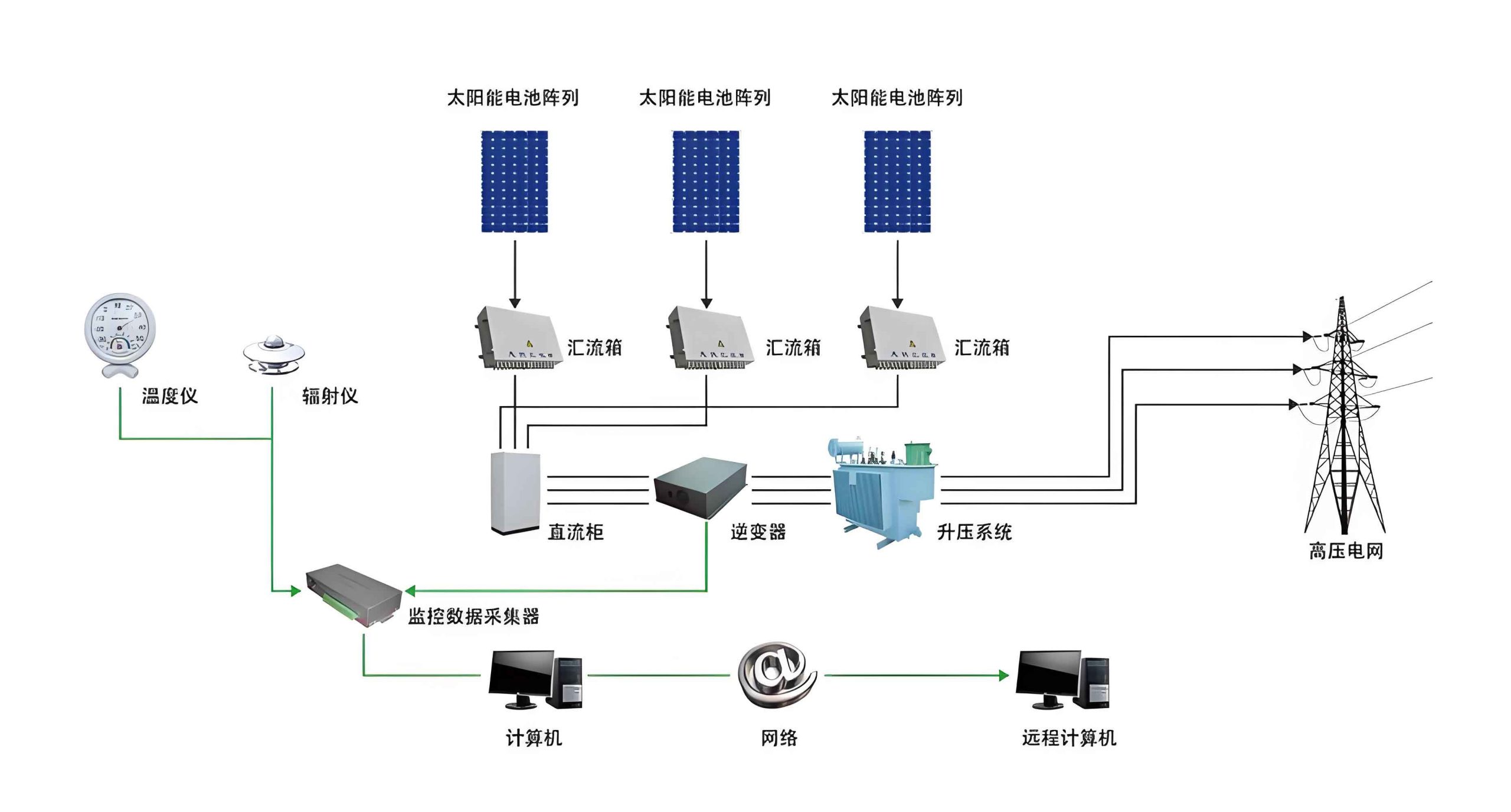
The core of the solution was the deployment of individual household solar system kits. Each kit was designed as a standalone, off-grid power supply. The primary configuration for these “Village Access” solar system units is summarized below:
| Component | Specification | Purpose |
|---|---|---|
| Solar PV Module | 85 Wp | Converts sunlight into direct current (DC) electricity. |
| Charge Controller/Inverter | Integrated Unit | Regulates battery charging and converts DC to AC for appliances. |
| Storage Battery | 100 Ah, Lead-Acid (Maintenance-free) | Stores energy for use during nighttime or cloudy periods. |
| Mounting Structure | Roof or Ground-mounted | Securely holds the PV module at an optimal angle. |
| Design Autonomy | 2 Days | System sized to meet basic needs through two consecutive cloudy days. |
The overarching goal of the project was to install thousands of these units across multiple counties, aiming to provide basic electrical services for lighting, television, and small appliances like butter tea blenders, thereby significantly improving the quality of life for remote pastoral families.
Field Methodology and Performance Assessment
The field evaluation involved a randomized selection of installed systems for detailed on-site testing. The objective was to measure the real-world performance of the solar system against design expectations and identify any operational issues. Data collection was conducted over several days, with each tested system monitored for a continuous period centered around solar noon to capture peak performance conditions.
Environmental and Irradiance Data
Critical to evaluating any solar system is understanding the operating environment. We recorded ambient temperature, humidity, wind speed at the panel location, and most importantly, the solar irradiance incident on the plane of the photovoltaic array. The local climate is characterized by high altitude, low atmospheric pressure, and exceptionally high solar insolation. The data confirmed the region’s superb solar resource, even during the test period. Average irradiance values during testing ranged from approximately 982 W/m² to 1263 W/m², with ambient temperatures between 19°C and 22°C. This rich resource is the foundational enabler for the technology’s success here.
Measuring Photovoltaic Conversion Efficiency
The key performance indicator for the PV module itself is its conversion efficiency. This is defined as the ratio of the electrical energy output to the solar energy input over a given period. The instantaneous electrical output was calculated by measuring the voltage (V) and current (I) at the terminals connecting to the charge controller/battery. The input is the integral of the irradiance (G) measured on the module plane over the test duration, multiplied by the module’s area (A). The average conversion efficiency (η) for the test period is therefore given by:
$$
\eta_{avg} = \frac{\sum_{t}(V_t \times I_t \times \Delta t)}{\sum_{t}(G_t \times A \times \Delta t)}
$$
Where \( \Delta t \) is the data logging interval. The results for three randomly selected systems showed a variation:
| System ID | Location Type | Avg. Irradiance (W/m²) | Avg. Temp (°C) | Measured Avg. Efficiency (%) |
|---|---|---|---|---|
| 1 | Household A | 1148 | 21.7 | 9.2 |
| 2 | Household B | 1263 | 19.1 | 7.8 |
| 3 | Household C | 982 | 20.1 | 6.5 |
The variation in efficiency, particularly the lower value for System 3, prompted further investigation during the site visit and forms a basis for later recommendations.
Energy, Economic, and Environmental Impact Assessment
Beyond module efficiency, the value of the entire solar system is assessed through its annual energy yield and the consequent displacement of conventional energy. Based on the aggregated performance data from the sampled systems and scaled to the entire project, the following annualized impacts were calculated.
1. Annual Energy Saving (Conventional Fuel Displacement):
The total annual electricity generation (\(E_{total}\)) of the project’s solar system was estimated. This electrical output is equated to the amount of standard coal that would have been burned in a conventional thermal power plant to produce the same amount of electricity, using a standard coal consumption factor (\(f_{coal}\)) for Chinese grid power at the time.
$$
\text{Annual Coal Saving} = E_{total} \times f_{coal}
$$
2. Annual Emission Reduction:
The saved coal translates directly to avoided emissions. Using standard emission factors for carbon dioxide (\(EF_{CO_2}\)), sulfur dioxide (\(EF_{SO_2}\)), and particulates (\(EF_{PM}\)), the annual environmental benefit can be quantified.
$$
\begin{aligned}
\text{CO}_2 \text{ Reduction} &= \text{Annual Coal Saving} \times EF_{CO_2} \\
\text{SO}_2 \text{ Reduction} &= \text{Annual Coal Saving} \times EF_{SO_2} \\
\text{Particulate Reduction} &= \text{Annual Coal Saving} \times EF_{PM}
\end{aligned}
$$
3. Annual Operational Cost Saving:
For the end-user, the most tangible benefit is the avoided cost of electricity. The calculation must consider the effective cost of delivering grid power to such remote locations. This includes the nominal tariff (\(C_{tariff}\)) and the additional cost due to high transmission losses (\(L_{loss}\)) over long, low-load lines. The useful energy delivered by the solar system accounts for the efficiency of the appliances (\(\eta_{appliance}\)).
$$
\text{Annual Cost Saving} = E_{total} \times \eta_{appliance} \times C_{tariff} \times (1 + L_{loss})
$$
The consolidated results of this assessment for the entire project are presented below:
| Impact Category | Calculation Basis | Annual Result |
|---|---|---|
| Energy Generation | Aggregated from system performance | 276,440 kWh |
| Standard Coal Saving | \(E_{total} \times 0.361\ \text{kgce/kWh}\)* | 99.8 tonnes |
| CO₂ Emission Reduction | Coal Saving \(\times\) 2.47 kg/kgce | 246.5 tonnes |
| SO₂ Emission Reduction | Coal Saving \(\times\) 0.02 kg/kgce | ~2.0 tonnes |
| Particulate Reduction | Coal Saving \(\times\) 0.01 kg/kgce | ~1.0 tonne |
| Operational Cost Saving | \(E_{total} \times 0.9 \times 0.5\ \text{¥/kWh} \times 1.2\) | ¥149,000 (~$22,800) |
| *Example coal consumption factor; actual factor varies by grid region and year. | ||
Analysis of Findings and Operational Recommendations
From a holistic perspective, the project was a clear success. User satisfaction was high, as the solar system reliably met basic household energy needs for the first time. The calculated energy, environmental, and economic benefits validated the project’s rationale. However, the technical assessment revealed specific areas where performance could be optimized and risks mitigated to ensure long-term sustainability.
The variance in measured PV conversion efficiency points to operational and maintenance factors beyond module nameplate ratings. System 3’s notably lower efficiency (6.5%) was correlated with observable issues on-site. The primary factors identified were:
1. Dust and Soiling Losses: Accumulation of dust and dirt on the surface of PV modules is a major, often underestimated, cause of performance degradation. It directly reduces the irradiance reaching the solar cells. The soiling loss (\(L_{soiling}\)) can be modeled as a transmission factor (τ) less than 1. The effective irradiance becomes:
$$
G_{effective} = G_{incident} \times \tau_{soiling}
$$
In arid, dusty environments like the Tibetan plateau, regular cleaning is not just beneficial but essential. A simple schedule, perhaps coordinated with local community groups, could significantly boost the annual yield of the entire solar system fleet.
2. Suboptimal Installation and Maintenance: During the inspection, some mounting structures were found to be inadequately secured—a serious concern in an area prone to strong winds. Mechanical stress on the panels and connections can lead to premature failure. Furthermore, proper orientation and tilt angle are crucial for maximizing annual yield. A generic fixed tilt can be optimized for the local latitude (φ). A common rule-of-thumb for year-round performance is to set the tilt angle (β) equal to the latitude.
$$
\beta_{optimum} \approx \phi
$$
Verifying and, if necessary, correcting the installation of existing systems is a critical step for safety and performance. Future installations must adhere to stricter mechanical and electrical installation standards.
3. Potential for System Sizing Optimization: The superb solar resource of the region (annual irradiance often exceeding 2000 kWh/m²) means that the energy output per installed watt-peak (Wp) is very high. While the current system sizing (85 Wp) successfully meets demand, it suggests that in resource-rich areas, designers have a margin to potentially right-size systems to reduce upfront capital cost (\(C_{cap}\)) without compromising reliability. The levelized cost of energy (LCOE), a key metric, is calculated as:
$$
LCOE = \frac{C_{cap} + \sum_{t=1}^{n} \frac{C_{O\&M,t}}{(1+r)^t}}{\sum_{t=1}^{n} \frac{E_{gen,t}}{(1+r)^t}}
$$
Where \(C_{O\&M}\) is annual operation & maintenance cost, \(E_{gen}\) is annual energy generation, \(r\) is the discount rate, and \(n\) is the system lifetime. Reducing \(C_{cap}\) by optimizing the PV array size for the local, high-yield climate directly improves the LCOE, making the solar system even more economically attractive.
| Identified Issue | Impact on System | Recommended Action |
|---|---|---|
| Dust accumulation on PV modules | Reduces irradiance, lowers efficiency and annual yield. | Establish a biannual or quarterly module cleaning routine for users. |
| Insecure mounting structures | Safety hazard, risk of damage to hardware, shortened lifespan. | Conduct a post-installation audit and reinforce weak mounts. |
| Variation in measured performance | Indicates inconsistent installation quality or maintenance. | Implement stricter installation protocols and basic user training. |
| High initial investment cost | Can be a barrier to widespread replication. | Re-evaluate system sizing for high-irradiance zones to potentially reduce PV array size. |
Conclusion and Strategic Implications
The field evaluation conclusively demonstrates that decentralized solar photovoltaic technology is not only technically feasible but also socio-economically beneficial for electrifying remote, off-grid communities in regions like Tibet. The project successfully transformed energy access for thousands of households, providing tangible developmental benefits. The lessons learned, however, extend far beyond this single installation.
First and foremost, site-specific resource assessment is paramount. The project’s success was fundamentally underpinned by the region’s exceptional solar resource. This allowed the solar system to perform reliably even with suboptimal maintenance. In any future project, a detailed solar resource assessment must be the first step in the design process. The design of a standalone solar system, including the sizing of the PV array and battery bank, depends on the Load (L), the Available Solar Resource (Psol), and the required Days of Autonomy (D). A simplified sizing relationship highlights this dependency:
$$
\text{PV Array Size (Wp)} \propto \frac{L \times D}{P_{sol} \times \eta_{system}}
$$
Where \( \eta_{system} \) is the overall system efficiency. In high-resource areas (high \(P_{sol}\)), the required PV size for a given load and autonomy is smaller.
Secondly, the total cost of ownership perspective is critical. While the initial capital cost of a solar system is a major focus, the evaluation shows that operational factors—cleaning, maintenance, component lifespan—dramatically influence long-term value and sustainability. A poorly maintained system will have a higher effective LCOE. Therefore, project planning must integrate funding and clear responsibility for long-term operation and maintenance (O&M), possibly through community-based models or simple performance-based service contracts.
Finally, this case study provides a robust model for replication. For vast, sparsely populated regions worldwide where grid extension is economically irrational, a well-designed, professionally installed, and properly maintained decentralized solar photovoltaic solar system represents the most practical, clean, and cost-effective path to energy access. The key is to move beyond viewing these as mere technology installations and to treat them as long-term energy service delivery systems. By incorporating the lessons on resource optimization, installation quality, and maintenance protocols, future projects can achieve even greater efficiency, reliability, and impact, truly harnessing the sun’s power to bridge the energy divide.