
In recent years, the rapid deployment of 5G technology has introduced significant challenges in power supply systems, particularly in remote alpine regions such as southern Xinjiang and northern Tibet. These areas often lack reliable grid electricity, experience extremely low temperatures, and have poor infrastructure. As a researcher and engineer focused on sustainable energy solutions, I have explored the application of off-grid solar power systems to address these issues. This article delves into the design, configuration, and implementation of such systems, emphasizing the use of high-efficiency monocrystalline silicon solar cells and valve-regulated sealed lead-carbon batteries. By integrating energy balance models and auxiliary heating schemes, we can ensure that 5G base stations operate reliably in harsh environments. The discussion includes detailed mathematical models, component selection, and practical considerations, supported by tables and formulas to illustrate key points.
The power demands of 5G base stations have surged compared to previous generations, with typical power consumption ranging from 5.9 kW to over 18.9 kW depending on the deployment phase. This increase is due to factors like higher frequency bands, massive MIMO configurations, and edge computing capabilities. In alpine regions, where temperatures can drop below -30°C and solar resources are abundant but intermittent, designing a robust solar power system becomes critical. My approach involves a comprehensive off-grid solar power system that not only powers the base station equipment but also manages auxiliary loads like heating to maintain optimal operating conditions. The system’s core components include solar arrays, charge controllers, battery storage, inverters, and backup interfaces for diesel generators, all tailored to high-altitude and low-temperature environments.
One of the primary challenges in these regions is the absence of reliable grid power, which necessitates a self-sufficient energy solution. The solar power system must handle peak loads while accounting for seasonal variations in sunlight. For instance, in areas like northern Tibet, average daily sunshine hours exceed 6.85 hours, but consecutive rainy days can last up to 36 hours, requiring careful sizing of the solar array and battery storage. Additionally, the system must incorporate heating elements to prevent equipment failure due to freezing temperatures. Through iterative design and field testing, I have developed configuration models that optimize energy harvest and storage, ensuring uninterrupted operation of 5G services. This article will walk through these models, highlighting the role of the solar power system in achieving energy autonomy.
The configuration of an off-grid solar power system begins with understanding the load requirements. For a typical 5G base station, the power consumption can be categorized into communication equipment (e.g., BBU and AAU) and auxiliary loads (e.g., heating and lighting). Based on industry measurements, the current peak power demand is around 7.3 kW, projected to rise to 18.9 kW within five years. To account for design margins and auxiliary needs, the total load capacity is typically scaled by a factor of 1.6. Thus, for a base station with a peak power of 7.3 kW, the design load would be approximately 11.68 kW. This load profile forms the basis for sizing the solar power system components, as summarized in the table below.
| Component | Parameter | Value |
|---|---|---|
| 5G Base Station Load | Current Peak Power | 7.3 kW |
| 5G Base Station Load | Future Peak Power (5 years) | 18.9 kW |
| Design Load (Including Auxiliary) | Scaling Factor | 1.6 × Peak Power |
| Design Load (Example) | For Current Peak | 11.68 kW |
The heart of the solar power system is the solar array, which converts sunlight into electrical energy. In alpine regions, monocrystalline silicon panels are preferred due to their high efficiency (over 20%) and durability in low-temperature conditions. The array’s capacity must be sized to meet the daily energy demand while accounting for local solar insolation and consecutive cloudy days. The battery storage, typically valve-regulated sealed lead-carbon batteries, provides energy during nights or poor weather. These batteries offer a longer cycle life and better performance in cold climates compared to traditional lead-acid or lithium-ion options. The charge controller, often a maximum power point tracking (MPPT) type, optimizes the energy transfer from the solar array to the batteries and loads. Additionally, an inverter converts DC power to AC for auxiliary equipment, and a backup interface allows connection to diesel generators for emergencies.
To ensure reliable operation, the solar power system must be configured based on energy balance principles. The battery capacity is calculated to sustain the load during the longest period without sunlight, while the solar array size must recharge the batteries within a typical sunny day. The following formulas define these relationships. First, the battery capacity \( Q_{10} \) (in ampere-hours for a 10-hour rate) is given by:
$$ Q_{10} \geq \frac{K \times P \times T}{\mu \times U [1 + \alpha (t – 25)]} $$
where \( K \) is the safety factor (typically 1.25), \( P \) is the design load power in watts, \( T \) is the backup time in hours (e.g., duration of consecutive cloudy days), \( \mu \) is the discharge coefficient (taken as 1 for long discharges), \( U \) is the system voltage (e.g., 43.2 V for a -48 V system), \( \alpha \) is the battery temperature coefficient (0.006 for lead-carbon), and \( t \) is the battery temperature in °C. The actual battery capacity \( QP_{10} \) is selected as the nearest standard value greater than or equal to \( Q_{10} \).
Next, the solar array capacity \( P_{\text{max}} \) (in watt-peak) is determined by:
$$ P_{\text{max}} \geq \frac{P \times T + \left( \frac{\epsilon \times QP_{10}}{20 \times 24 \times U_f \times T_{\text{max}}} \right)}{\eta \times \delta \times T_{\text{max}}} $$
where \( \epsilon \) is the charging safety correction factor (0.85), \( U_f \) is the battery float voltage per cell (2.35 V), \( T_{\text{max}} \) is the local average daily sunshine hours, \( \eta \) is the solar controller efficiency (e.g., 0.95 as per standards), and \( \delta \) is the system loss factor (0.85–0.95). This ensures that the solar power system can both power the load and recharge the batteries efficiently.
However, in practice, the design load may differ from the actual load, necessitating a correction factor. The adjustment \( \Delta \) is calculated as:
$$ \Delta = \frac{P_{\text{max}}}{\eta \times \delta \times U} – \left( \frac{\beta \times P}{U} + \frac{3 \times QP_{10}}{10} \right) $$
where \( \beta \) is the load factor (0.5–0.9). If \( \Delta > 0 \), the battery capacity must be increased iteratively until \( \Delta \leq 0 \), ensuring that the charging current does not exceed three times the 10-hour rate. This iterative refinement is crucial for the longevity of the solar power system in variable conditions.
In alpine environments, the solar power system requires special adaptations. For example, components must be rated for high-altitude operation due to reduced air density and lower temperatures, which can affect performance. Solar panels should be installed at optimal angles to maximize exposure and may include automated snow-melting features to maintain efficiency in winter. Batteries need thermal insulation or heating to prevent capacity loss. The table below outlines key considerations for implementing the solar power system in such regions.
| Aspect | Challenge | Solution in Solar Power System |
|---|---|---|
| Temperature | Extreme cold reducing battery efficiency | Use of lead-carbon batteries with better low-temperature performance; auxiliary heating |
| Solar Insolation | Seasonal variations and snow cover | High-efficiency monocrystalline panels; tilt adjustment and snow removal mechanisms |
| Infrastructure | Limited access and installation challenges | Modular design; lightweight components; remote monitoring |
| Energy Balance | High auxiliary heating demands | Integrated control systems to prioritize loads; backup generator interface |
A practical example from a project in the Ali region of Tibet demonstrates the effectiveness of this solar power system. The site had unreliable grid power, with an average daily sunshine of 6.85 hours and up to 36 consecutive cloudy hours. The load included transmission and network equipment totaling 8 kW, with a design load of 11.2 kW after accounting for auxiliary needs. The system comprised a 112.2 kWp solar array using 340 W monocrystalline panels, a 100 A MPPT charge controller, a 48 V/3000 Ah lead-carbon battery bank, and an 8 kVA inverter. Auxiliary heating was adjustable from 1 to 6 kW to maintain room temperature. Over several years of operation, the solar power system has reliably supported the load without requiring backup generators, even in harsh winters. This success underscores the viability of off-grid solar solutions for 5G infrastructure in alpine areas.
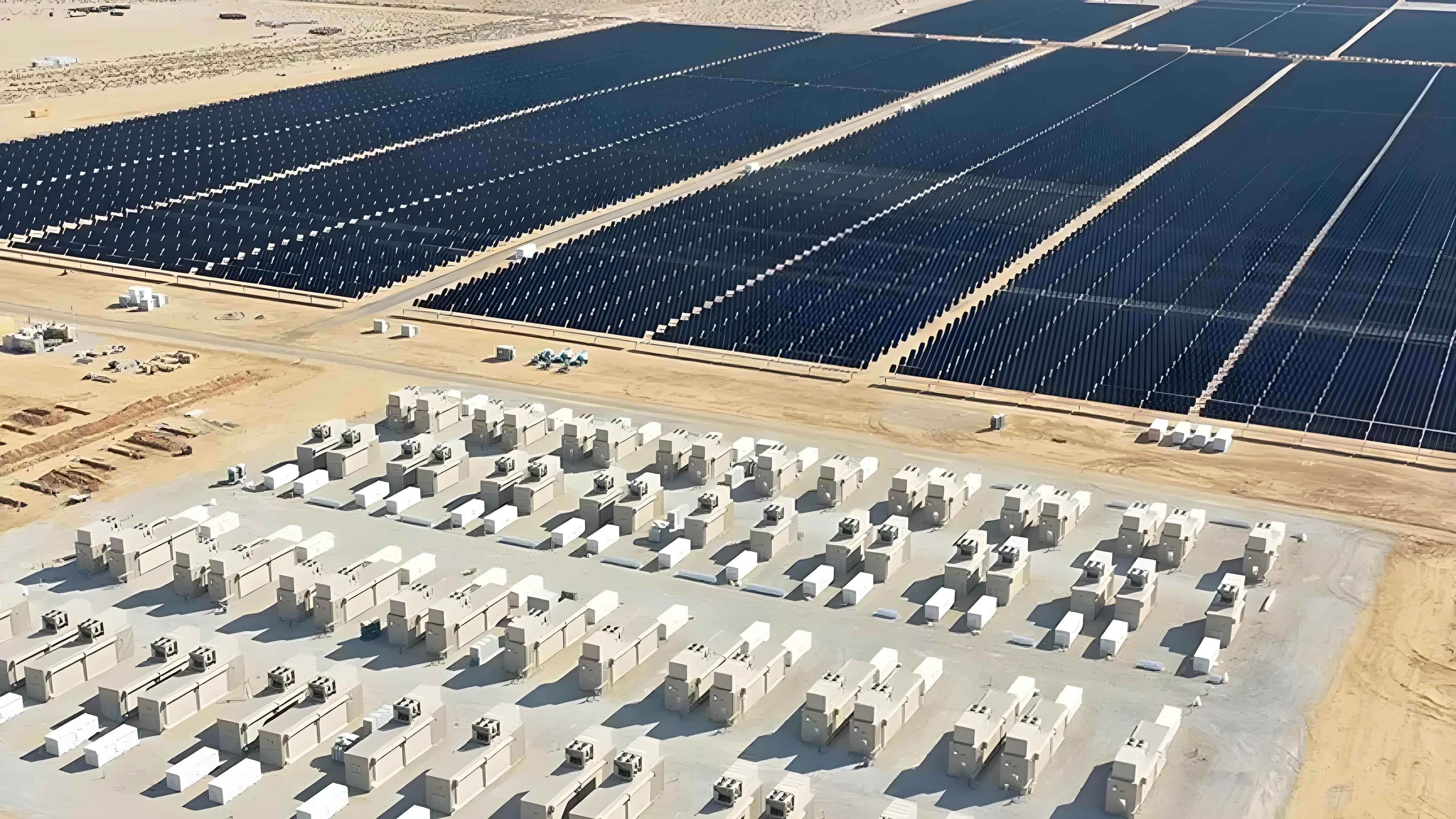
The integration of auxiliary heating is a critical aspect of the solar power system, as it ensures that the base station equipment operates within safe temperature ranges. In cold climates, the heat generated by communication gear may be insufficient, leading to potential failures. By using resistive heating elements controlled via a smart management system, the solar power system can dynamically adjust energy allocation based on real-time load and environmental conditions. For instance, during periods of high solar generation, excess energy can be diverted to heating, while during cloudy days, the system prioritizes essential loads. This energy balancing act is facilitated by the monitoring unit, which coordinates between the solar controller, battery storage, and inverters. Empirical data from field deployments show that such setups reduce the risk of downtime by over 30% in extreme weather.
Looking ahead, the scalability of these solar power systems is essential for supporting future 5G expansions. As power demands increase with new technologies like millimeter-wave bands, the solar array and battery storage must be modular to allow for easy upgrades. Moreover, advancements in solar panel efficiency and battery chemistry, such as perovskite cells or enhanced lead-carbon formulations, could further improve the cost-effectiveness and reliability of these systems. In my ongoing research, I am exploring hybrid approaches that combine solar with wind or small-scale hydro resources in alpine regions, creating a more resilient energy ecosystem. The formulas and models presented here provide a foundation for such innovations, emphasizing the central role of the solar power system in sustainable telecommunications.
In conclusion, off-grid solar power systems offer a practical solution for powering 5G base stations in high-altitude, cold regions. Through careful design based on energy balance models, these systems can handle the high power demands while withstanding environmental challenges. The use of monocrystalline solar panels and lead-carbon batteries ensures efficiency and durability, while auxiliary heating mechanisms maintain operational integrity. As 5G networks expand into remote areas, the lessons from these deployments will be invaluable. I believe that continued refinement of solar power systems will not only enhance connectivity but also contribute to global sustainability goals by reducing reliance on fossil fuels. Future work should focus on cost reduction, smart grid integration, and standardized protocols for off-grid energy management.