
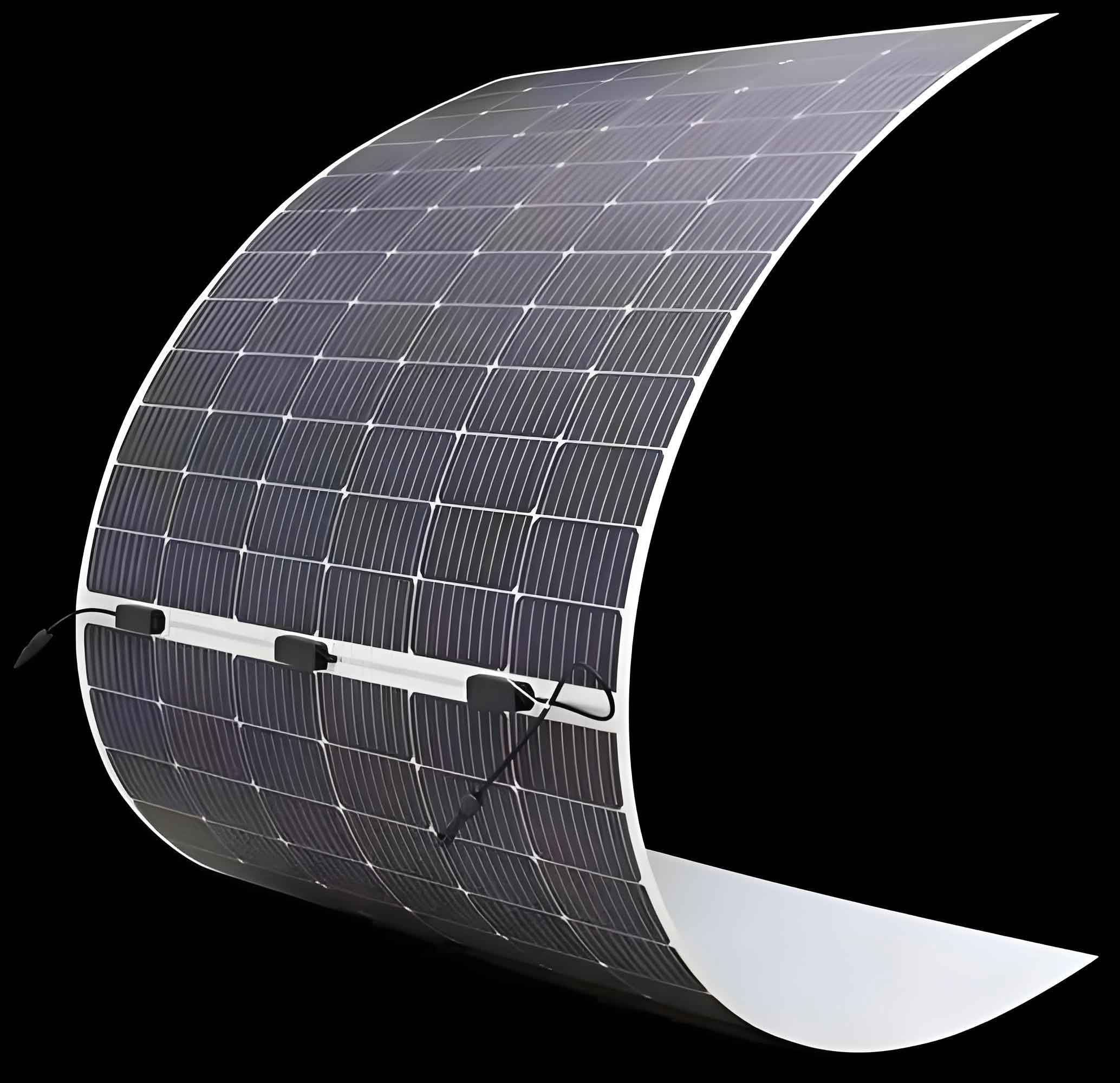
In this comprehensive pre-assessment, I evaluate the potential occupational hazards associated with a proposed thin film solar panels manufacturing project, specifically focusing on copper indium gallium selenide (CIGS) technology. Thin film solar panels represent a pivotal advancement in renewable energy, offering high photoelectric conversion efficiency, exceptional radiation resistance, and versatility for applications such as building-integrated photovoltaics and portable power sources. The project entails the establishment of a 150 MW production line for thin film solar panels, which involves complex chemical processes and advanced equipment. As an occupational health specialist, my objective is to identify, analyze, and assess the occupational risk factors that may arise during normal operations, evaluate the effectiveness of proposed control measures, and ensure the project’s feasibility from a health and safety perspective. This analysis is grounded in methodologies like engineering analysis and risk assessment, aligning with regulatory standards such as the Occupational Disease Prevention Law and design hygiene criteria for industrial enterprises.
The production of thin film solar panels, particularly CIGS-based modules, involves multiple sophisticated stages, including deposition, selenization, chemical bath deposition, and metallorganic chemical vapor deposition. These processes utilize various raw materials, such as molybdenum, indium, gallium, selenium, cadmium, and hazardous gases like hydrogen selenide and hydrogen sulfide. Given the toxic and explosive nature of some substances, a thorough pre-assessment is crucial to mitigate risks. I employ a first-person perspective to detail the evaluation process, emphasizing the importance of proactive hazard control in the thin film solar panels industry. Throughout this report, I will incorporate tables and formulas to summarize key data, ensuring clarity and depth. The keyword “thin film solar panels” will be frequently reiterated to underscore the context, as this technology is central to the project’s scope and the associated occupational health considerations.
The methodology for this pre-assessment combines engineering analysis and risk assessment techniques. I review the project’s design documents, including process flows, equipment layouts, and material safety data sheets, to identify potential sources of occupational hazards. Engineering analysis involves examining the production line for thin film solar panels, from raw material handling to final packaging, to pinpoint areas where chemical, physical, or biological agents may be released. Risk assessment, on the other hand, evaluates the likelihood and severity of exposure based on factors such as concentration, duration, frequency, and existing controls. I utilize quantitative models where applicable, such as calculating exposure indices relative to occupational exposure limits (OELs). For instance, the risk level for each hazardous substance is determined using a formula that considers the ratio of operational time to exposure limit, along with control measures. This approach ensures a systematic evaluation, enabling me to prioritize high-risk areas and recommend targeted interventions for the thin film solar panels project.
In terms of raw materials, the thin film solar panels production relies on numerous chemicals and gases, which are stored in dedicated warehouses and gas cylinder rooms. The table below summarizes the key raw materials, their annual consumption, packaging, and storage methods, highlighting the scale and complexity of the project.
| Material Name | Annual Usage | Packaging Method | Storage Location |
|---|---|---|---|
| Backplate Glass (sheets) | 847,500 units | Glass racks | Material warehouse |
| Silicon Rotary Targets | 0.375 t | Wooden boxes | Material warehouse |
| Molybdenum Rotary Targets | 5.184 t | Wooden boxes | Material warehouse |
| Copper Gallium Rotary Targets | 2.097 t | Wooden boxes | Material warehouse |
| Indium Rotary Targets | 5.338 t | Wooden boxes | Material warehouse |
| Doped Copper/Gallium Planar Targets | 0.915 t | Wooden boxes | Material warehouse |
| Hydrogen Selenide | 18.47 L | Steel cylinders | Gas cylinder room |
| Hydrogen Sulfide | 4.176 L | Steel cylinders | Gas cylinder room |
| Liquid Nitrogen | 9,000 m³ | Storage tanks | Tank area |
| Ammonia Solution | 108 t | 200 L drums | Hazardous chemical warehouse |
| Cadmium Sulfate | 11.124 t | 200 L drums | Hazardous chemical warehouse |
| Thiourea | 23.52 t | 196 kg drums | Hazardous chemical warehouse |
| Diborane (in nitrogen) | 2.91 t | 44 L cylinders | Gas cylinder room |
The production process for thin film solar panels encompasses several core stages: Mo-Si deposition, CIG deposition with post-selenization, CBD coating, and MOCVD coating, followed by encapsulation and testing. Each stage involves specific operations and potential hazards. For example, the deposition processes use magnetron sputtering in vacuum chambers, which may release metal fumes, while selenization involves high-temperature reactions with toxic gases. The chemical reactions central to thin film solar panels production are represented below using LaTeX formulas to illustrate the transformations occurring during selenization, CBD, and MOCVD steps.
During post-selenization, hydrogen selenide and hydrogen sulfide react with the deposited layers to form the CIGS absorber material. The reaction can be expressed as:
$$ \text{CuGa}_x\text{In}_{1-x} + 2\text{H}_2\text{Se} \rightarrow \text{CuGa}_x\text{In}_{1-x}\text{Se}_2 + 2\text{H}_2 \uparrow $$
$$ \text{CuGa}_x\text{In}_{1-x}\text{Se}_2 + 2\text{H}_2\text{S} \rightarrow \text{Cu(Ga}_x\text{In}_{1-x})(\text{Se}_y\text{S}_{1-y}) + 2\text{H}_2 \uparrow $$
In the chemical bath deposition (CBD) stage, cadmium sulfide is formed through a reaction involving cadmium complexes and thiourea in an alkaline medium. The equation is:
$$ \text{Cd(NH}_3\text{)}_4^{2+} + \text{S} + \text{C(NH}_2\text{)}_2 + 2\text{OH}^- \rightarrow \text{CdS} + \text{CH}_2\text{N}_2 + 4\text{NH}_3 + 2\text{H}_2\text{O} $$
For the MOCVD coating, diethylzinc reacts with water vapor to produce zinc oxide, a key component in thin film solar panels for transparent conductive layers. The reaction is:
$$ (\text{C}_2\text{H}_5)_2\text{Zn} + \text{H}_2\text{O} \rightarrow \text{ZnO} + 2\text{C}_2\text{H}_6 \uparrow $$
Additionally, diborane is used as a doping agent, decomposing to form boron oxide:
$$ \text{B}_2\text{H}_6 + 3\text{H}_2\text{O} \rightarrow \text{B}_2\text{O}_3 + 6\text{H}_2 \uparrow $$
These formulas underscore the chemical complexity inherent in manufacturing thin film solar panels, necessitating robust controls to prevent worker exposure.
Through engineering analysis, I identify a range of occupational hazards present in the thin film solar panels project. The table below details the primary hazards, their sources, and the associated occupational exposure limits (OELs) as per relevant standards. This comprehensive list highlights the diverse risks, from chemical toxins to physical agents like noise and radiation.
| Hazardous Factor | Source Process/Area | Occupational Exposure Limit (OEL) | Risk Level Based on Assessment |
|---|---|---|---|
| Molybdenum and compounds | Mo-Si deposition, sputtering | 6 mg/m³ | Low risk |
| Indium and compounds | CIG deposition, soldering | 0.1 mg/m³ | Moderate risk |
| Copper fume | CIG deposition, sputtering | 0.2 mg/m³ | Low risk |
| Cadmium and compounds | CBD coating, chemical handling | 0.01 mg/m³ | High risk |
| Ammonia | CBD coating, wastewater treatment | 20 mg/m³ | Moderate risk |
| Hydrogen selenide | Post-selenization, gas supply | 0.15 mg/m³ | High risk |
| Hydrogen sulfide | Post-selenization, wastewater | 10 mg/m³ | Moderate risk |
| Diborane | MOCVD coating, doping | 0.1 ppm (approx.) | High risk |
| Noise | Equipment operation, compressors | 85 dB(A) over 8 hours | Moderate risk |
| High temperature | Selenization furnaces, boilers | WBGT index dependent | Low risk |
| Laser radiation | P1/P2 patterning, scribing | Varies by wavelength | Low risk |
| X-rays | XRF analysis, quality control | Dose limits per regulation | Low risk |
The risk assessment incorporates a quantitative approach to evaluate the potential for occupational disease. For each chemical hazard, I calculate an exposure risk (ER) index based on the formula:
$$ \text{ER} = \frac{\text{Weekly Exposure Time (hours)} \times \text{Number of Operators}}{\text{Control Efficiency Factor}} $$
where the Control Efficiency Factor accounts for engineering and administrative measures. Combined with hazard ratings (HR) derived from toxicity data, the overall risk (R) is determined as:
$$ R = \text{ER} \times \text{HR} $$
Values above a threshold indicate areas requiring enhanced controls. For instance, cadmium compounds and hydrogen selenide in thin film solar panels production show high R values due to their low OELs and potential for acute effects, even with automated processes. This mathematical framework aids in prioritizing interventions for the thin film solar panels project.
Regarding the project’s layout and hygiene, the thin film solar panels production facility is designed with a centralized main workshop, auxiliary areas for chemical storage, and utility zones. The building incorporates air conditioning and ventilation systems to maintain indoor air quality, with fresh air supply rates of at least 30 m³/h per person in general areas and 40 m³/h in cleanrooms. Cleanrooms for thin film solar panels assembly achieve a class 100,000 cleanliness level. For areas prone to hazardous gas releases, such as gas cylinder rooms and chemical warehouses, emergency ventilation systems are planned with air change rates of 12 times per hour or more, ensuring rapid dilution of contaminants. These design features align with industrial hygiene standards, supporting the safe production of thin film solar panels.
The proposed control measures for the thin film solar panels project are multifaceted, targeting chemical, physical, and radiation hazards. Below is a table summarizing the key engineering controls for different processes, emphasizing their role in mitigating risks associated with thin film solar panels manufacturing.
| Process Stage | Main Hazards | Proposed Control Measures | Efficiency Estimation |
|---|---|---|---|
| Deposition (sputtering) | Metal fumes (In, Cu, Mo) | Closed vacuum systems, local exhaust ventilation, alkaline scrubbers | High (>90% reduction) |
| Post-selenization | H₂Se, H₂S, high temperature | Enclosed furnaces, dry absorption tail gas treatment, cooling systems | High (>95% reduction) |
| CBD coating | Ammonia, cadmium compounds | Water scrubbers followed by acid scrubbers, automated dosing | Moderate to high (85-90%) |
| MOCVD coating | Diborane, zinc compounds | Thermal oxidation wash scrubbers, closed reactors, gas detectors | High (>95% reduction) |
| Laser scribing | Metal dust, laser radiation | H14 HEPA filters, enclosed cabins, interlocks | High (>99% for dust) |
| Soldering and welding | Indium fume, noise | Local exhaust hoods, fume extractors, hearing protection | Moderate (70-80%) |
| X-ray inspection | Ionizing radiation | Shielded enclosures, interlock systems, warning signs | High (dose < limits) |
For noise control in thin film solar panels production, I recommend selecting low-noise equipment, installing vibration dampers on compressors and pumps, and using acoustic enclosures for high-noise zones. The sound pressure level (SPL) can be modeled using the formula:
$$ \text{SPL}_{\text{total}} = 10 \log_{10} \left( \sum_{i=1}^{n} 10^{\text{SPL}_i / 10} \right) $$
where SPLi represents contributions from individual sources. By targeting a reduction to below 85 dB(A), the risk of noise-induced hearing loss in thin film solar panels workers can be minimized.
Emergency response planning is critical for the thin film solar panels project, given the presence of highly toxic gases like hydrogen selenide and diborane. The facility will deploy gas detection and alarm systems in key areas, with sensors for H₂S, H₂Se, NH₃, and B₂H₆. The alarm thresholds are set based on immediately dangerous to life and health (IDLH) values, ensuring early warning. For example, the IDLH for hydrogen selenide is 1 ppm, prompting alarms at lower concentrations to allow evacuation. Emergency showers and eye wash stations are positioned near chemical handling areas, with response times under 10 seconds. Additionally, I propose regular drills and the establishment of an HSE department to oversee protocols, reinforcing safety culture in thin film solar panels manufacturing.
Personal protective equipment (PPE) is considered a last line of defense for workers in the thin film solar panels project. Based on the hazard assessment, I recommend supplying respirators with appropriate filters for metal fumes and gases, protective eyewear against chemical splashes and laser exposure, heat-resistant gloves for high-temperature tasks, and earplugs for noise-prone zones. The selection follows the hierarchy of controls, prioritizing engineering solutions over PPE. For instance, in soldering operations for thin film solar panels, local exhaust ventilation should capture indium fumes at the source, supplemented by PPE during maintenance or breakdowns. Training on proper use and maintenance of PPE is essential to ensure effectiveness.
Auxiliary facilities, such as restrooms, showers, and changing rooms, are designed according to hygiene standards, with the main workshop classified under hygiene level 3 due to the presence of high-toxicity substances. This supports worker well-being and contamination control in thin film solar panels production. Management systems will include hazard communication programs, with safety data sheets (SDS) accessible for all chemicals, and warning labels on equipment and storage areas. Continuous monitoring of occupational exposure levels through air sampling and health surveillance is advised, particularly for cadmium and indium compounds, which have chronic effects.
In discussing the findings, I note that the thin film solar panels project involves several high-risk processes, but the proposed controls appear adequate under normal operations. The automation and enclosure of key equipment, such as vacuum sputterers and selenization furnaces, significantly reduce exposure potential. However, manual tasks like target replacement, waste handling, and maintenance could pose residual risks. For example, indium compounds, used in thin film solar panels deposition, may cause pulmonary issues after prolonged exposure, necessitating strict respiratory protection during non-routine activities. The risk assessment matrix below summarizes the overall evaluation, integrating likelihood and severity scores for each hazard in thin film solar panels manufacturing.
| Hazard Category | Likelihood (1-5) | Severity (1-5) | Risk Score (L × S) | Recommended Action |
|---|---|---|---|---|
| Cadmium exposure | 2 | 5 | 10 | Enhance scrubber efficiency, routine monitoring |
| Hydrogen selenide release | 3 | 5 | 15 | Install redundant gas detectors, emergency drills |
| Noise from equipment | 4 | 3 | 12 | Implement noise mapping, acoustic upgrades |
| Laser radiation | 1 | 4 | 4 | Maintain interlocks, training on safe use |
| High temperature stress | 3 | 2 | 6 | Provide cooling vest, schedule rest breaks |
| X-ray exposure | 1 | 5 | 5 | Ensure shielding integrity, dose audits |
The overall project for thin film solar panels is classified as a “serious occupational hazard” project due to the multiplicity of toxic agents, but with the implementation of planned measures, risks are deemed controllable. The economic viability of thin film solar panels must balance with health investments, and I calculate a cost-benefit ratio for safety interventions using:
$$ \text{CBR} = \frac{\text{Reduced Healthcare Costs + Productivity Gains}}{\text{Implementation Costs}} $$
Preliminary estimates suggest a CBR greater than 1, indicating that proactive hazard control in thin film solar panels production is financially justified.
In conclusion, this pre-assessment affirms that the thin film solar panels project, while harboring significant occupational hazards, can proceed with the proposed design and controls. The integration of engineering solutions, administrative protocols, and personal protection forms a comprehensive defense system. Continuous improvement through monitoring and review will be key to adapting to operational realities. Thin film solar panels represent a promising technology for sustainable energy, and by prioritizing worker health, the project can achieve both economic and social benefits. Future studies should focus on long-term exposure effects and technological advancements to further mitigate risks in the thin film solar panels industry.