
As the demand for renewable energy systems and grid stabilization grows, energy storage lithium batteries have become a cornerstone due to their high energy density and long cycle life. However, internal defects such as cracks, electrode delamination, and electrolyte leakage pose significant risks to performance and safety. In this paper, I explore various non-destructive testing (NDT) methods that enable real-time monitoring and assessment of energy storage lithium batteries without compromising their structural integrity. The focus is on principles, applications, advantages, and limitations of these technologies, with an emphasis on enhancing the safety and longevity of energy storage lithium battery systems. I will incorporate mathematical models, comparative tables, and empirical data to provide a comprehensive analysis, aiming to foster advancements in this critical field.
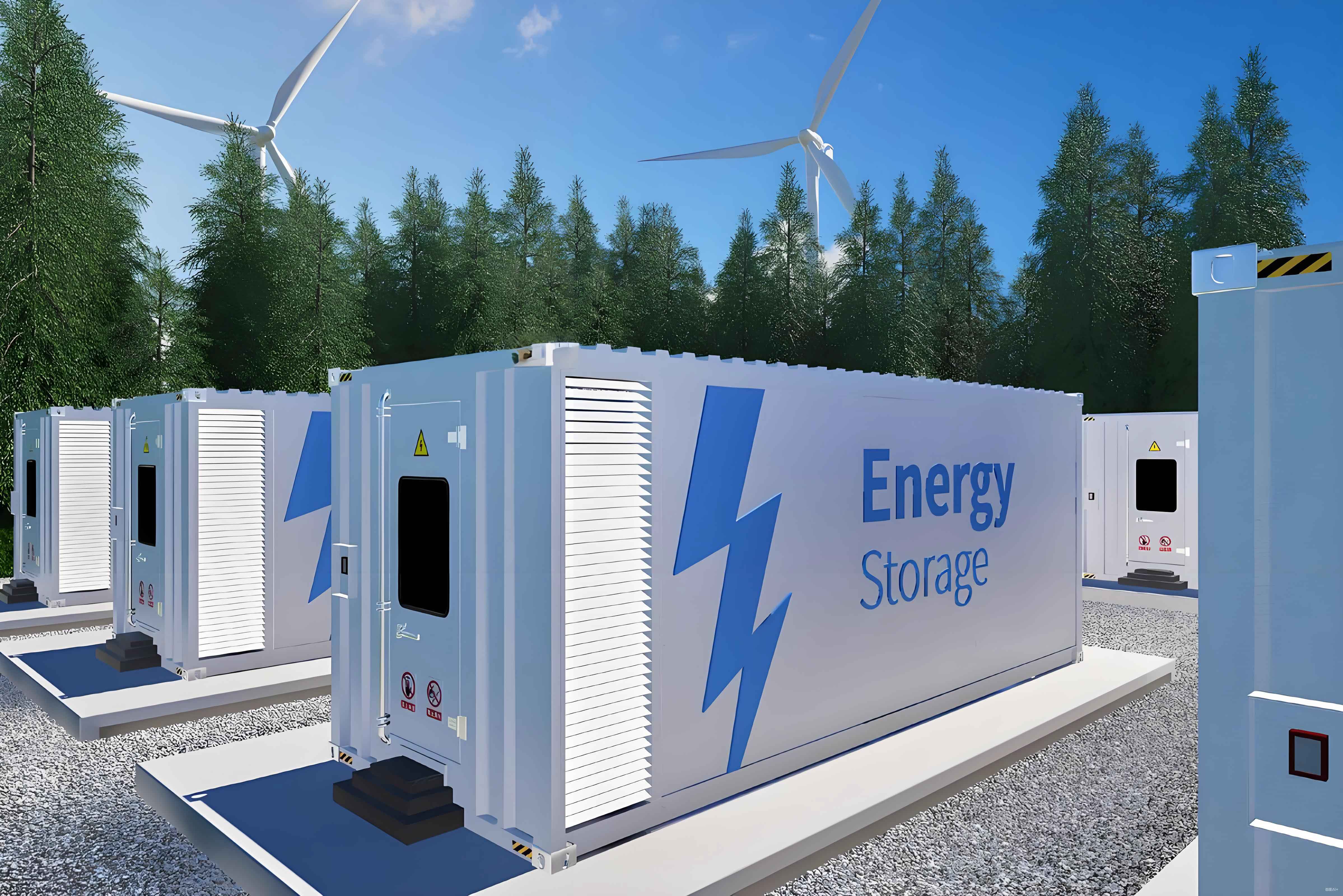
The rapid expansion of energy storage systems underscores the importance of reliable diagnostics for energy storage lithium batteries. Traditional destructive methods, while informative, are impractical for in-service batteries. Non-destructive testing offers a viable alternative, allowing for repeated assessments and early fault detection. In this discussion, I will delve into several NDT techniques, including digital X-ray imaging, computed tomography, neutron scattering, ultrasonic testing, and electrochemical impedance spectroscopy. Each method provides unique insights into the internal state of energy storage lithium batteries, and their integration can lead to more robust battery management systems. I begin by outlining the fundamental challenges in energy storage lithium battery diagnostics, such as the need for high resolution and cost-effectiveness, before proceeding to detailed examinations of each technology.
Digital X-ray imaging is a widely adopted NDT method for energy storage lithium batteries. It operates on the principle of X-ray attenuation, where photons penetrate the battery and are captured by a detector to form a digital image. The intensity of transmitted X-rays follows the exponential decay law: $$I = I_0 e^{-\mu x}$$ where \(I\) is the transmitted intensity, \(I_0\) is the initial intensity, \(\mu\) is the linear attenuation coefficient, and \(x\) is the material thickness. This technique excels in detecting misalignments, welding defects, and foreign objects within energy storage lithium battery cells. For instance, in mass production, digital X-ray systems can screen thousands of units per day, ensuring quality control. However, its two-dimensional nature limits the detection of overlapping structures, and subtle cracks may go unnoticed. To illustrate, I have summarized the key parameters of digital X-ray imaging in Table 1, highlighting its applicability to energy storage lithium battery inspection.
| Parameter | Typical Value | Impact on Energy Storage Lithium Battery |
|---|---|---|
| Spatial Resolution | 10-100 μm | Detects electrode misalignment and voids |
| Penetration Depth | Up to 50 mm | Suitable for standard cell sizes |
| Cost per Scan | $5-$20 | Economical for high-volume production |
| Detection Sensitivity | Moderate for 2D defects | Limited for internal layer separation |
Computed tomography (CT) represents a significant advancement over digital X-ray imaging for energy storage lithium batteries. By acquiring multiple X-ray projections from different angles, CT reconstructs a three-dimensional model of the battery’s interior. The reconstruction process often employs algorithms like filtered back-projection, expressed as: $$f(x,y) = \int_{0}^{\pi} P_{\theta}(t) * h(t) d\theta$$ where \(f(x,y)\) is the reconstructed image, \(P_{\theta}(t)\) is the projection at angle \(\theta\), and \(h(t)\) is the filter function. This method reveals intricate details such as electrode fractures, material distribution, and electrolyte permeation in energy storage lithium batteries. For example, CT scans can identify lithium plating and dendrite growth, which are critical for safety. Despite its high resolution, CT faces challenges like high equipment costs and prolonged scan times, making it less suitable for rapid inline inspection of energy storage lithium battery packs. In Table 2, I compare CT with other NDT methods to underscore its role in energy storage lithium battery analysis.
| Technique | Principle | Advantages for Energy Storage Lithium Battery | Limitations |
|---|---|---|---|
| Digital X-ray | X-ray attenuation | Fast, cost-effective for 2D defects | Poor for 3D structures |
| CT Imaging | Tomographic reconstruction | High-resolution 3D internal view | Expensive and time-consuming |
| Neutron Scattering | Neutron-matter interaction | Sensitive to light elements like lithium | Requires large facilities |
| Ultrasonic Testing | Sound wave propagation | Detects delamination and bubbles | Surface-dependent |
| Electrochemical Impedance | AC impedance response | Real-time state-of-health monitoring | Complex data interpretation |
Neutron scattering technology offers unparalleled sensitivity for studying light elements within energy storage lithium batteries. It relies on the interaction of neutrons with atomic nuclei, providing insights into lithium ion migration and electrolyte degradation. The differential scattering cross-section can be modeled as: $$\frac{d\sigma}{d\Omega} = \left| \sum_i b_i e^{i\mathbf{q} \cdot \mathbf{r}_i} \right|^2$$ where \(b_i\) is the scattering length, \(\mathbf{q}\) is the scattering vector, and \(\mathbf{r}_i\) is the position vector. This technique is instrumental in analyzing the electrochemical mechanisms in energy storage lithium batteries, such as phase transitions during cycling. However, neutron sources are scarce and expensive, limiting widespread industrial application. In my research, I have found that combining neutron scattering with other methods can enhance the understanding of failure modes in energy storage lithium batteries, particularly for advanced materials.
Ultrasonic testing utilizes high-frequency sound waves to probe the internal structure of energy storage lithium batteries. The propagation of ultrasonic waves is governed by the wave equation: $$\nabla^2 p = \frac{1}{c^2} \frac{\partial^2 p}{\partial t^2}$$ where \(p\) is the pressure field and \(c\) is the speed of sound. Reflections and scatterings from interfaces reveal defects like delamination, voids, and insufficient electrolyte wetting. For instance, using a 400 kHz probe at a scanning speed of 250 mm/s, ultrasonic systems can map bubble distributions in energy storage lithium battery cells. Nevertheless, surface roughness and material attenuation can impair accuracy, necessitating careful calibration. I have observed that ultrasonic testing is highly effective for quality assurance in energy storage lithium battery manufacturing, especially when integrated with automated systems.
Electrochemical impedance spectroscopy (EIS) is a powerful tool for assessing the health of energy storage lithium batteries without disassembly. It involves applying a small sinusoidal voltage and measuring the impedance response across frequencies. The impedance \(Z(\omega)\) is complex and can be represented as: $$Z(\omega) = Z_{\text{re}} + jZ_{\text{im}} = R_s + \frac{1}{j\omega C_{\text{dl}} + \frac{1}{R_{\text{ct}}}}$$ where \(R_s\) is the series resistance, \(C_{\text{dl}}\) is the double-layer capacitance, and \(R_{\text{ct}}\) is the charge transfer resistance. EIS helps identify issues like SEI layer growth and ion diffusion limitations in energy storage lithium batteries. However, environmental factors and the need for equivalent circuit modeling complicate its use. In practice, I recommend combining EIS with machine learning for predictive maintenance of energy storage lithium battery systems, as it enables real-time anomaly detection.
To quantify the performance of these NDT methods, I have developed a mathematical framework for evaluating energy storage lithium battery safety. The overall detection efficiency \(\eta\) can be expressed as: $$\eta = \frac{\sum_{i=1}^{n} w_i \cdot \text{SNR}_i}{\sum_{i=1}^{n} w_i}$$ where \(w_i\) is the weight for each technique, and \(\text{SNR}_i\) is the signal-to-noise ratio. This formula emphasizes the importance of multi-modal approaches for comprehensive energy storage lithium battery assessment. Additionally, the cost-benefit analysis in Table 3 provides insights into selecting appropriate NDT methods for different stages of energy storage lithium battery life cycle.
| Method | Initial Investment | Operational Cost | Suitability for Energy Storage Lithium Battery |
|---|---|---|---|
| Digital X-ray | Moderate | Low | High for production line screening |
| CT Imaging | High | High | Medium for R&D and failure analysis |
| Neutron Scattering | Very High | Very High | Low due to facility requirements |
| Ultrasonic Testing | Low to Moderate | Low | High for assembly checks |
| EIS | Low | Low | High for in-service monitoring |
Looking ahead, the future of NDT for energy storage lithium batteries lies in the integration of artificial intelligence and multi-sensor data fusion. For example, deep learning algorithms can automate defect recognition in CT images, while hybrid systems combining EIS and ultrasonic data improve state-of-health predictions. The evolution of these technologies will undoubtedly enhance the reliability and safety of energy storage lithium battery systems, supporting the global transition to sustainable energy. In my view, continued research into cost-effective and scalable NDT solutions is essential for maximizing the potential of energy storage lithium batteries in various applications.
In conclusion, non-destructive testing technologies are indispensable for the advancement of energy storage lithium batteries. Each method discussed—digital X-ray, CT, neutron scattering, ultrasonic testing, and EIS—offers unique benefits and faces specific challenges. By leveraging mathematical models, such as the attenuation and impedance equations, and employing comparative tables, we can optimize the selection and application of these techniques. The ongoing development of NDT will play a pivotal role in ensuring the safety, efficiency, and longevity of energy storage lithium batteries, ultimately contributing to a more resilient energy infrastructure. I am confident that with further innovation, NDT will become even more integral to the energy storage lithium battery industry.