
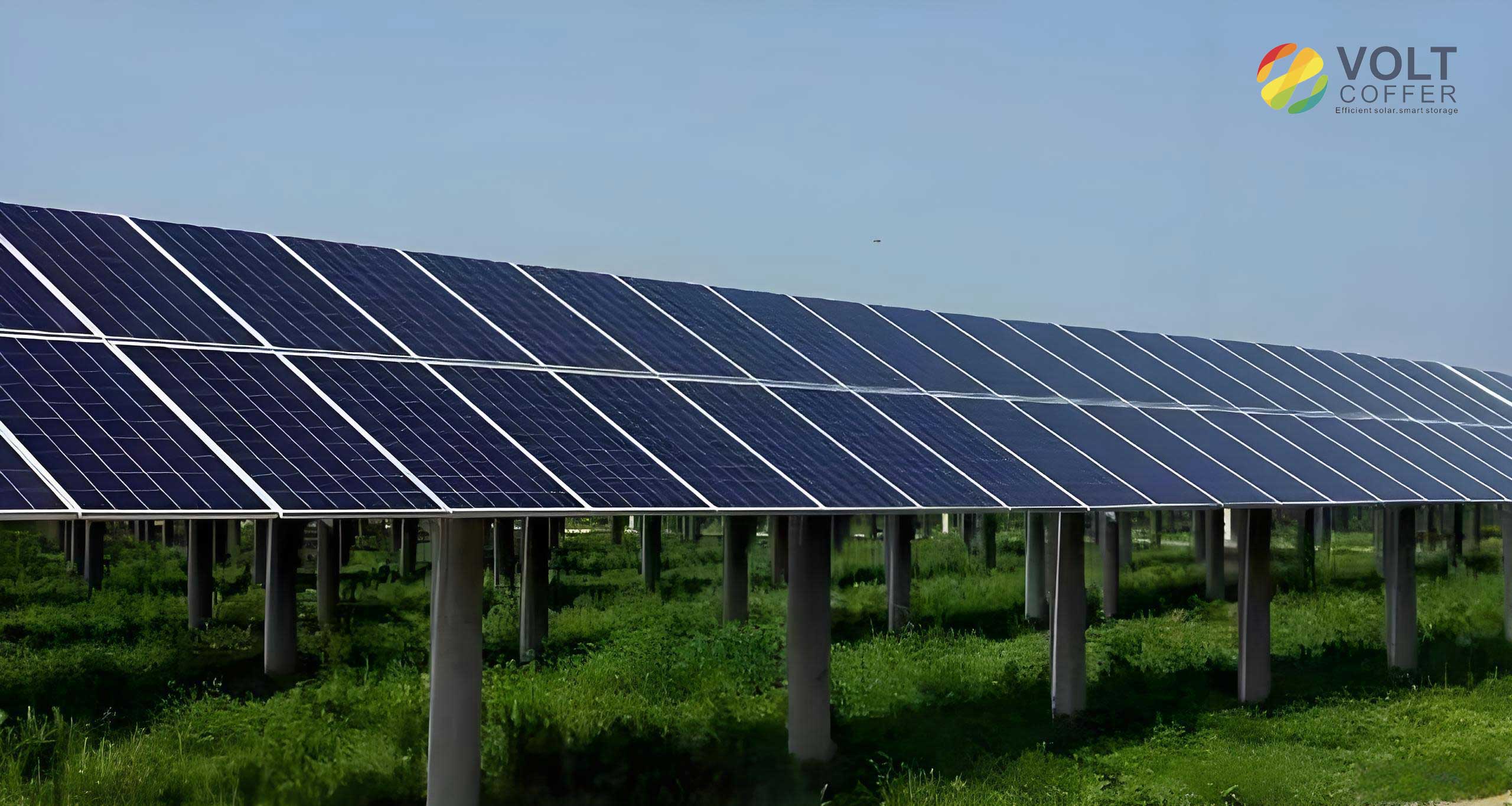
The global transition towards clean energy has propelled the photovoltaic (PV) industry to the forefront of sustainable development. Desert regions, with their abundant solar irradiance and vast, sparsely populated land, have emerged as ideal locations for large-scale solar farms. From my perspective as a researcher focused on resource and environmental management, this strategic shift is both logical and necessary. However, the rapid expansion of desert PV installations brings with it a looming, parallel challenge: the impending wave of end-of-life (EOL) solar panels. As the first-generation panels deployed in these vast solar fields approach their typical 25–30 year operational lifespan, the question of their destiny becomes critically urgent.
The prospect of transporting thousands of tons of decommissioned solar panels from remote desert locations to centralized recycling facilities is fraught with logistical nightmares, prohibitive costs, and the risk of secondary environmental pollution during transit. Therefore, the paradigm of on-site and local disposal and resource utilization is not merely an option but a necessity for the true sustainability of the desert PV sector. In this article, I explore the multifaceted dimensions of this challenge. I will analyze the current landscape, evaluate existing and potential technologies, dissect the formidable barriers specific to arid environments, and propose a comprehensive strategic framework aimed at transforming this waste stream into a valuable resource loop right where it is generated.
1. The Scale of the Challenge: Projections for Desert Regions
The magnitude of the coming wave of retired solar panels is staggering on a global scale, and desert regions will bear a significant portion of this burden. Industry projections indicate that large-scale retirement of solar panels will commence around 2025, with a dramatic surge expected by 2030. Cumulative waste mass is predicted to reach millions of metric tons by 2040. For desert regions hosting gigawatt-scale projects, these figures translate into a localized logistical and environmental crisis if not proactively managed. The concentration of PV capacity in these areas means the volume of retired solar panels will be disproportionately high, demanding localized solutions. The timeline of retirement can be modeled based on installed capacity growth and a typical failure rate function, often following a Weibull distribution:
$$ F(t) = 1 – e^{-(t/\alpha)^\beta} $$
Where \( F(t) \) is the cumulative failure probability, \( t \) is time, \( \alpha \) is the scale parameter (characteristic lifetime, ~25–30 years), and \( \beta \) is the shape parameter. This model helps predict the annual inflow of retired solar panels into the waste management stream.
2. Environmental Imperative and Resource Opportunity
The improper handling of decommissioned solar panels poses severe threats to fragile desert ecosystems. From my analysis, the risks are twofold:
- Toxicological Hazard: Certain solar panel technologies contain hazardous materials. For instance, thin-film cadmium telluride (CdTe) panels contain toxic cadmium, while earlier silicon panels often used encapsulants containing fluorinated polymers. Incineration or uncontrolled degradation can lead to the leaching of heavy metals like lead or cadmium and the emission of harmful fluorinated gases, contaminating soil and scarce water resources.
- Physical Impact and Resource Waste: Indiscriminate landfilling consumes valuable space and represents a colossal waste of finite materials. A standard crystalline silicon solar panel is a reservoir of valuable resources: approximately 70% glass, 18% aluminum (frame), 4% silicon, and smaller but critical amounts of silver, copper, tin, and lead.
The resource recovery potential can be quantified. The theoretical material recovery rate \( R_{material} \) for a given component is a key metric:
$$ R_{material} = \frac{M_{recovered}}{M_{initial}} \times 100\% $$
Where \( M_{recovered} \) is the mass of a specific material (e.g., silicon, silver) successfully extracted, and \( M_{initial} \) is its initial mass in the panel. Maximizing \( R_{material} \) is the core objective of resourceization.
3. Technology Arsenal for On-Site Processing
Implementing resource recovery in remote deserts requires robust, adaptable, and preferably low-energy technologies. Based on current research and pilot projects, I categorize the main technological pathways, each with distinct advantages and challenges for desert adaptation.
| Technology | Process Description | Advantages for Desert Use | Disadvantages & Challenges |
|---|---|---|---|
| Physical/Mechanical | Crushing, shredding, sieving, and separation based on density, magnetism, or conductivity. | Relatively simple, mobile units possible, low chemical use, minimal immediate pollution. | Low-purity output; fine material mixtures difficult to separate; high wear from abrasive glass and sand. |
| Thermal Processing | Pyrolysis or fluidized bed treatment to decompose the polymer encapsulant (EVA). | Effective delamination; can utilize concentrated solar thermal energy on-site; gases can be combusted for energy. | High energy demand; risk of toxic fume generation (e.g., HF from fluorinated backsheets); requires sophisticated gas cleaning systems. |
| Chemical Processing (Solvent) | Using organic solvents to dissolve EVA, releasing glass and cells. | Can achieve high-purity material separation at moderate temperatures. | Solvent cost, handling, and recovery are critical; generates organic waste streams; fire hazard. |
| Chemical Processing (Acid/Base Leaching) | Using strong acids or bases to dissolve metals and etch silicon. | High efficiency in metal recovery (Ag, Cu, Sn, Pb). | Generates large volumes of hazardous acidic/alkaline wastewater; extreme corrosion; requires stringent neutralization. |
| Hybrid Processes | Combining steps, e.g., thermal delamination followed by mechanical separation and chemical leaching. | Potentially optimizes recovery rates and purity while mitigating individual method drawbacks. | Increased process complexity and capital cost; requires sophisticated system integration. |
From my viewpoint, the optimal pathway for desert conditions likely involves a hybrid modular approach. A mobile thermal unit using parabolic concentrators could perform initial delamination, followed by on-site mechanical separation of glass and aluminum. The concentrated cell fragments could then be processed in a regional “hub” using advanced hydrometallurgy. The overall system recovery efficiency \( \eta_{system} \) would be the product of the recovery rates of each stage:
$$ \eta_{system} = \eta_{thermal} \times \eta_{mechanical} \times \eta_{chemical} $$
4. The Quintessential Desert Challenges: A Personal Analysis
Translating laboratory-scale recycling to functional desert operations is fraught with unique obstacles. In my assessment, these are the core challenges that must be overcome:
| Challenge Category | Specific Issues in Desert Context | Consequences |
|---|---|---|
| Technological & Operational | Extreme temperatures (thermal stress on equipment), abrasive sand (equipment wear), dust infiltration, water scarcity for processing or cooling. | Higher maintenance costs, reduced equipment lifespan, process inefficiency, limited choice of wet-chemical methods. |
| Economic Viability | High capital expenditure (CAPEX) for ruggedized, mobile plants; elevated operational expenditure (OPEX) due to energy costs and maintenance; low economies of scale initially; volatile commodity prices for recovered materials. | Lack of investor interest; unprofitable operations without subsidies; business model fragility. |
| Logistical & Infrastructural | Vast distances and poor road networks for component/chemical supply and product offtake; lack of supporting industrial ecosystem (e.g., smelters, glass processors). | Increased transport costs and complexity; difficulty establishing a circular industrial symbiosis locally. |
| Policy & Regulatory Vacuum | Absence of specific regulations mandating or facilitating on-site recycling in remote areas; lack of tailored financial incentives; unclear extended producer responsibility (EPR) enforcement mechanisms. | No legal or economic driver for action; fosters illegal dumping or substandard practices. |
The economic challenge can be framed by a simple cost-benefit analysis. For an on-site recycling venture to be viable, the net present value (NPV) must be positive:
$$ NPV = -CAPEX + \sum_{t=1}^{n} \frac{(R_t – OPEX_t)}{(1 + i)^t} $$
Where \( R_t \) is the revenue from sold recovered materials in year \( t \), \( OPEX_t \) is the operational cost, \( i \) is the discount rate, and \( n \) is the project lifetime. Current conditions often result in negative NPV, highlighting the need for policy intervention.
5. A Strategic Framework for Action
Addressing this complex issue requires a multi-pronged, synergistic strategy. I propose the following integrated framework, emphasizing actions that can be initiated immediately.
5.1 Fostering Technological Innovation for Arid Climates
Research must pivot towards developing “desert-ready” technologies. Priority areas include:
- Dry and Low-Water Processes: Advancing electrostatic or triboelectric separation techniques for finer material sorting, and optimizing solvent recovery systems in closed loops.
- Solar-Thermal Integration: Designing pyrolysis and thermal delamination units that directly use concentrated solar power as the primary heat source, drastically reducing energy-related OPEX. The required thermal energy \( Q_{thermal} \) could be supplied by a solar field of area \( A_{solar} \):
$$ Q_{thermal} = G \times \eta_{collector} \times A_{solar} $$
where \( G \) is the solar irradiance and \( \eta_{collector} \) is the collector efficiency.
- Modular and Mobile Plant Design: Engineering containerized, skid-mounted processing units that can be deployed near large solar farms and relocated as needed.
5.2 Enacting Supportive Policy and Economic Instruments
Governments must create the enabling environment. Critical steps include:
- Mandating On-Site Resourceization Plans: Requiring new large-scale desert PV project approvals to include a decommissioning and resource recovery plan, with financial guarantees.
- Financial Incentives: Providing capital grants, tax breaks, and feed-in tariffs for “recycled content” electricity generated using recovered materials. A production subsidy \( S \) per ton of processed solar panels could directly improve project economics:
$$ NPV_{subsidized} = NPV + \sum_{t=1}^{n} \frac{S \times W_t}{(1 + i)^t} $$
where \( W_t \) is the tons processed in year \( t \).
- Establishing Clear Standards: Defining quality grades for recovered glass cullet, silicon, and metal fractions to create reliable market commodities.
5.3 Building Industrial Synergies and Collaborative Networks
No single entity can solve this alone. Collaboration is key:
- PV Producer Responsibility Alliances: Encouraging major solar panel manufacturers to form consortia to establish and operate shared collection and processing facilities in key desert regions.
- Regional Material Hubs: Developing industrial parks near desert PV clusters that co-locate panel recyclers with glass manufacturers, aluminum re-smelters, and construction material producers to create a circular ecosystem.
- Knowledge Sharing Platforms: Creating international consortia focused on desert PV recycling to share data, best practices, and technology roadmaps.
| Strategic Pillar | Key Actions | Expected Outcome |
|---|---|---|
| Technology & Innovation | R&D for dry processes, solar-thermal integration, modular plants. | Cost-effective, environmentally sound, and geographically adaptable processing solutions. |
| Policy & Economics | Mandatory recycling plans, financial subsidies, recycled content standards. | Creates market demand, ensures funding, internalizes environmental costs, and drives compliance. |
| Industry Collaboration | Producer alliances, regional material hubs, knowledge platforms. | Achieves economies of scale, creates stable offtake markets, and accelerates innovation diffusion. |
6. Conclusion
The sustainable future of the desert photovoltaic industry is inextricably linked to its ability to manage its own material lifecycle. The approaching deluge of retired solar panels presents a significant environmental threat but also a profound economic and resource opportunity. From my perspective, the path forward is clear: we must abandon the linear “take-make-dispose” model and embrace a circular economy ethos directly within the desert landscapes that host these vast solar farms. This requires an unprecedented collaboration between researchers, technology developers, policymakers, and industry leaders. By investing in tailored technologies, implementing smart and supportive policies, and fostering industrial symbiosis, we can transform these barren lands into not just power generation hubs but also pioneers in sustainable material stewardship. The successful on-site and local resourceization of solar panels will be the ultimate testament to the genuine sustainability of the global solar energy revolution.