
The relentless pursuit of higher energy density in lithium-ion batteries has positioned silicon-based anodes at the forefront of next-generation energy storage research. With a theoretical specific capacity of approximately 4200 mAh/g, silicon offers a tenfold increase over conventional graphite, directly addressing the critical demand for extended-range electric vehicles and longer-lasting portable electronics. However, the integration of silicon into practical li ion battery systems is severely hampered by its colossal volumetric expansion (up to ~300%) during lithiation. This repeated mechanical stress leads to electrode pulverization, loss of electrical contact, and, most critically, the relentless fracture and reformation of the Solid Electrolyte Interphase (SEI). An unstable SEI results in continuous consumption of active lithium and electrolyte, rapid capacity fade, and ultimately, cell failure. While nanostructuring and composite design of the silicon material itself are vital, the strategic formulation of the electrolyte, particularly through functional additives, presents a highly effective and industrially scalable approach to stabilize this dynamic interface. This article will delve into the contemporary challenges and sophisticated mechanisms by which electrolyte additives mitigate interfacial degradation in silicon anodes. I will systematically explore the latest advancements, categorizing additives by their functional groups and modes of action, and employ tables and theoretical frameworks to elucidate their structure-property relationships, aiming to provide a comprehensive guide for the rational design of electrolytes for high-energy li ion battery systems.
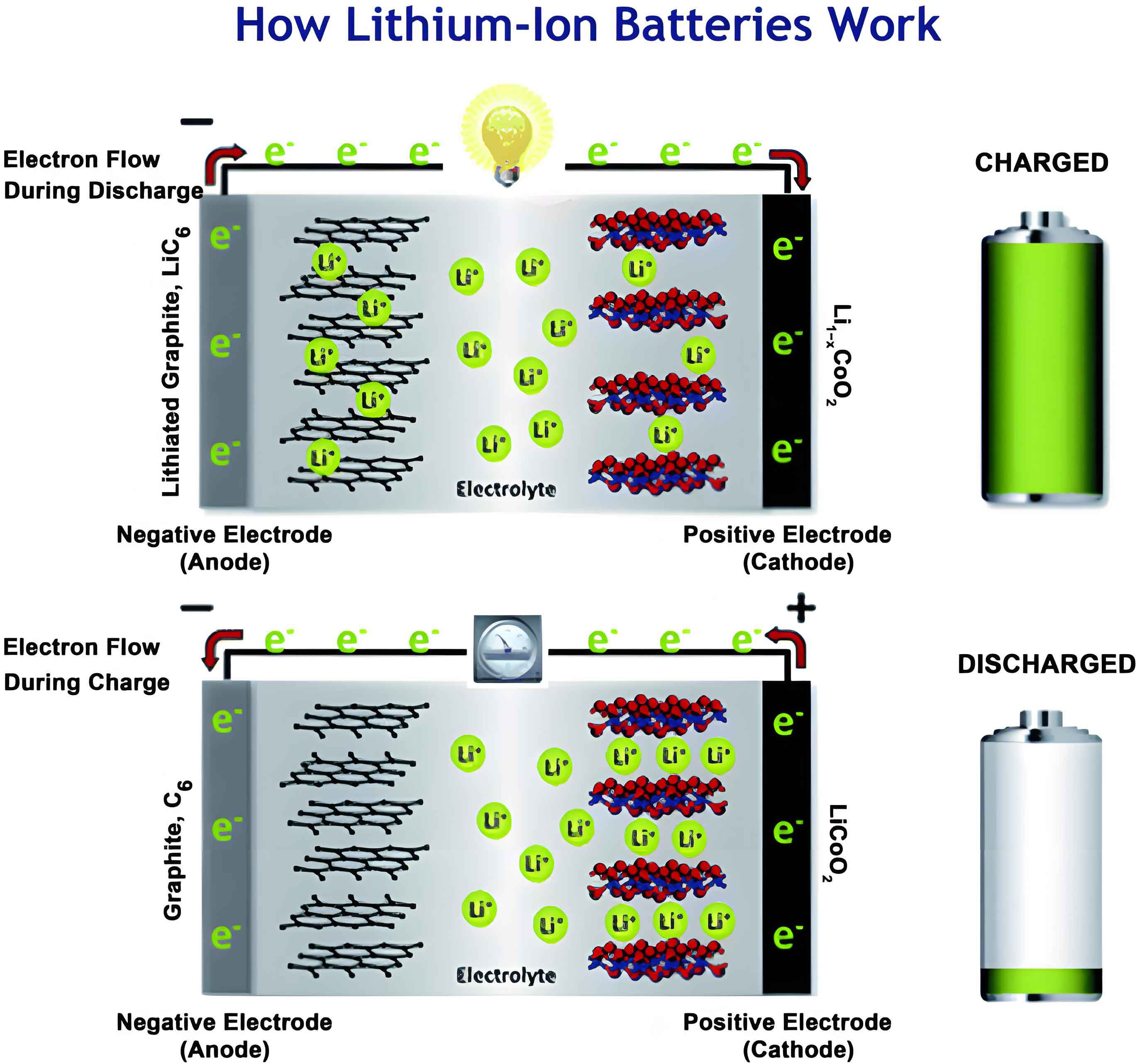
The Solid Electrolyte Interphase is a passivating layer that forms on anode surfaces from the reductive decomposition of electrolyte components. Its stability is paramount for the cycle life of any li ion battery. For silicon anodes, the challenge is two-fold: first, the SEI must possess mechanical resilience to accommodate large volume changes without cracking; second, it must be dynamically stable to prevent exposed fresh silicon from reacting with the electrolyte in subsequent cycles. The fundamental instability can be understood through the frontier molecular orbital theory. Electrolyte components undergo reduction at the anode if the anode’s electrochemical potential ($\mu_A$) is lower than the electrolyte’s lowest unoccupied molecular orbital (LUMO) energy level. The electrochemical stability window ($E_g$) of the electrolyte is given by the difference between its LUMO and highest occupied molecular orbital (HOMO) levels:
$$E_g = E_{LUMO} – E_{HOMO}$$
In an ideal operating li ion battery, $E_g$ must span the difference between $\mu_A$ and the cathode potential ($\mu_C$). For silicon anodes, the low working potential (~0.4 V vs. Li/Li+) readily drives the reduction of conventional carbonate solvents, leading to organic, often unstable, SEI components. Additives are designed with strategically lowered LUMO levels (or raised HOMO levels for cathode protection) to decompose preferentially, forming a more robust initial interphase that shields the bulk electrolyte.
Fundamental Mechanisms of Action for Silicon-Anode Additives
The operation of electrolyte additives in silicon-based systems can be distilled into three core, often interlinked, mechanisms: SEI Formation and Modification, Lewis Acid Neutralization, and Solvation Structure Regulation.
1. SEI Formation and Modification
This is the most direct and common function. Film-forming additives are reduced before the base solvents or salt anions, creating a uniform, initial SEI layer. The objective for silicon is to engineer this layer’s composition and morphology. Desirable traits include:
Mechanical Flexibility/Robustness: Achieved through the formation of polymeric networks (e.g., via electropolymerization of vinyl or cyano groups) or inorganic-organic hybrid structures that can withstand stress.
High Ionic Conductivity: Incorporated species like lithium fluoride (LiF), lithium nitride (Li$_3$N), or lithium borates facilitate rapid Li$^+$ transport, reducing impedance.
Chemical Stability: A dense, insoluble SEI minimizes further parasitic reactions. The incorporation of inorganic components like LiF, which has a high surface energy and strong adhesion to both organic SEI components and the lithiated silicon surface, is particularly effective. The beneficial role of LiF can be conceptualized as a “ionic glue” within the SEI matrix.
2. Lewis Acid Neutralization
State-of-the-art li ion battery electrolytes typically use LiPF$_6$ salt, which is thermally and hydrolytically unstable. It decomposes to generate strong Lewis acids like PF$_5$, which further react with trace moisture to produce hydrofluoric acid (HF).
$$
\begin{aligned}
\text{LiPF}_6 &\rightleftharpoons \text{LiF} + \text{PF}_5 \\
\text{PF}_5 + \text{H}_2\text{O} &\rightarrow \text{POF}_3 + 2\text{HF} \\
x\text{HF} + \text{SiO}_x &\rightarrow \text{SiF}_6^{2-} + \ldots
\end{aligned}
$$
HF is highly corrosive, attacking the silicon oxide (SiOx) native layer and any silicate species in the SEI, leading to its dissolution and failure. Additives containing Lewis basic sites (e.g., amide -N=O, alkoxy -O-) can scavenge PF$_5$ and HF by forming stable acid-base complexes, thereby stabilizing the LiPF$_6$ salt and protecting the electrode interface. This mechanism is crucial for long-term stability, especially at elevated temperatures.
3. Solvation Structure Regulation
This advanced mechanism involves the additive participating in or altering the primary solvation shell of the Li$^+$ ion. The Li$^+$ cation in electrolyte is coordinated by solvent molecules and/or anions, forming a solvation structure like Solvent-Separated Ion Pairs (SSIPs) or Contact Ion Pairs (CIPs). The composition of this solvation sheath dictates which species are dragged to the anode surface during reduction.
Anion-Derived SEI: Additives with high donor number (DN) or those that promote anion coordination can shift the reduction preference from organic solvents to anions. For instance, NO$_3^-$ (DN ~22) strongly coordinates Li$^+$, leading to its preferential reduction and formation of LiN$_x$O$_y$-rich, ionically conductive SEI.
Localized High-Concentration Electrolytes (LHCE): A special case where a high concentration of Li salt creates an anion-rich solvation structure (AGGregates). Diluting this viscous “High-Concentration Electrolyte” (HCE) with a non-coordinating diluent retains the local coordination structure while improving kinetics. This strategy reliably yields inorganic-rich, stable SEI on silicon anodes.
The solvation free energy ($\Delta G_{\text{solv}}$) of an additive influences its partitioning into the solvation shell, which can be approximated by its interaction energy with Li$^+$ relative to the base solvent.
A Taxonomy of Functional Additives: Performance and Mechanisms
The following sections categorize recent, high-performing additives based on their key functional motifs, analyzing their efficacy through the lens of the aforementioned mechanisms.
I. Fluorinated Additives: Building Robust, LiF-Rich Interphases
Fluorine incorporation is synonymous with SEI stabilization in li ion battery technology. Fluorinated additives typically have lower LUMO energies, promoting early reduction. Their decomposition incorporates LiF and often fluorinated organic oligomers into the SEI. LiF offers high mechanical modulus and improves Li$^+$ transport kinetics. Common examples like Fluoroethylene Carbonate (FEC) are ubiquitous but have limitations, such as thermal instability and gas generation. Newer fluorinated structures aim to overcome these.
| Additive & System | Molecular Motif | Cell Configuration | Key Electrochemical Performance | Postulated Primary Mechanism |
|---|---|---|---|---|
| Bis(2,2,2-trifluoroethyl) carbonate (TFEC) in 3.5M LiFSI/FEC | CF3-CH2-O-(C=O)-O-CH2-CF3 | Si Nanoparticles || LiFePO4 | 80.8% capacity retention after 300 cycles at 0.5C; Avg. CE >99.8% | Forms a dense, LiF-rich SEI; Contributes to non-flammability. |
| Hexafluorocyclotriphosphazene (HFPN) (2 wt.%) in 1M LiPF6 EC/EMC | Cyclic (N=P(–F)2)3 | SiOx/C || NCM523 | 70% retention after 412 cycles at 0.5C/4.3V | Electropolymerizes to form a flexible polyphosphazene network; Incorporates LiF and P/F species. |
| Ethyl(pentafluorocyclotriphosphazene) (EtPFPN) (2 wt.%) | Ethyl-substituted fluorophosphazene | SiOx/C || NCM523 | 70% retention after 395 cycles | Similar to HFPN; Altered substituent tunes reduction potential and polymer properties. |
| Difluoroethylene Carbonate (DFEC) (10 vol.%) in 1M LiPF6 EC/DMC/DEC | F2-Ethylene Carbonate | Li || SiOx@C | 70.3% retention after 200 cycles; CE ~99.8% | Lower LUMO than FEC, forms a more stable, inorganic-rich SEI with superior mechanical properties. |
The efficacy of fluorinated additives can be rationalized by the enhanced interfacial energy and mechanical strength provided by LiF. The adhesion work ($W_{\text{adh}}$) between SEI components may be improved by the high surface energy ($\gamma_{\text{LiF}}$) of LiF nanoparticles, acting as reinforcing fillers within an organic matrix.
II. Boron-Based Additives: Modulating Solvation and Interface Chemistry
Boron-containing additives often function as Lewis acid acceptors or solvation structure modifiers due to the vacant p-orbital on boron. They can complex with anions (like PF$_6^-$ or FSI$^-$), increasing the concentration of free Li$^+$ and promoting anion reduction. Some boron species also decompose to form beneficial borate compounds (e.g., LiBO$_2$, LiB(OR)$_x$) in the SEI, which can enhance ionic conductivity and stability.
| Additive & System | Molecular Motif | Cell Configuration | Key Electrochemical Performance | Postulated Primary Mechanism |
|---|---|---|---|---|
| (C6H5O)3B | Li || Si-C; Si-C || NCM523 | Improved initial coulombic efficiency (ICE ~87%) and cycle life. | Scavenges HF/PF5; Modifies SEI composition with borate species, improving Li+ transport. | |
| Polymeric Borate Ester (PBE-DG) (2 wt.%) | Crosslinked B-O-C polymer network | Si/Graphite || NCM | Enhanced long-term cycling stability. | Forms a stable, protective polymeric film directly on the anode; Suppresses electrolyte decomposition. |
| Lithium Difluoro(bisoxalato)phosphate (LiDFBOP) (2 wt.%) in 1M LiPF6 EC/DEC | Li[PF2(C2O4)2] | Li || Si@Graphite@C | ~62.7% retention after 100 cycles (vs. rapid fade in baseline). | Participates in Li+ solvation sheath (forms Li(EC)2(PF6)(DFBOP)); Its reduction creates a flexible, LiF/LixPOyFz-rich SEI. |
The role of LiDFBOP exemplifies the solvation regulation mechanism. Its coordination strength can be described relative to the base solvent, EC. When its binding energy with Li$^+$, $E_{\text{bind}}($Li$^+$-DFBOP$)$, is competitive with $E_{\text{bind}}($Li$^+$-EC$)$, it readily enters the solvation shell, steering interfacial chemistry.
III. Other Promising Functional Groups: Silanes, Amides, and Isocyanates
This category encompasses additives with diverse and often multifunctional chemistry, crucial for next-generation li ion battery electrolytes.
Silane-Based Additives: These compounds (e.g., R-Si(OR’)$_3$) can undergo hydrolysis and condensation reactions with surface Si-OH groups on silicon particles or with trace water. This forms a covalently bonded siloxane (Si-O-Si) network on the electrode surface, acting as a pre-formed, mechanically robust artificial SEI or a scaffold within the native SEI.
Amide-Based Additives: The carbonyl (-C=O) and amine (-N<) groups provide high DN, enabling strong Li$^+$ coordination. This promotes their incorporation into the reduction zone, where they form Li$_3$N or polyamide species, enhancing ionic conductivity. The Lewis basic nitrogen can also neutralize HF.
Isocyanate-Based Additives: The highly reactive -N=C=O group is a potent scavenger of protic impurities like H$_2$O and HF, forming urea and amide derivatives, respectively. This effectively “dries” and deacidifies the electrolyte. Furthermore, isocyanates can undergo electrochemical polymerization to form polyurethane/polyurea-like protective films.
| Additive Class & Example | Molecular Motif / Key Feature | Cell Configuration | Key Electrochemical Performance | Postulated Primary Mechanism |
|---|---|---|---|---|
| Silane: Dimethoxydimethylsilane (DMDOS) | (CH3O)2Si(CH3)2 | Si@C || NCA (Soft pack) | 85.5% capacity retention after 100 cycles (vs. 77.7% baseline). | Forms a Si-O-Si cross-linked network on anode, creating a dense, ion-conducting SEI layer. |
| Amide: N-Acetylcaprolactam (NACA) | Cyclic amide with acetyl group | Li || SiOx/C | 58% retention after 150 cycles at 0.5C; stable CE ~99%. | Undergoes ring-opening polymerization forming a flexible polymeric SEI; Scavenges HF/PF5. |
| Ionic Liquid/Amide: [PIVM][TFSA] | Imidazolium cation with amide tail, TFSA anion | Li || Si/C | 94.7% retention after 50 cycles; Improved ICE. | Amide group scavenges HF/H2O; Cation/anion participate in stable interphase formation. |
| Isocyanate: Cyclopentyl Isocyanate (CPI) | C5H9-N=C=O | Li || Si/Graphite | 87.5% retention after 100 cycles. | Dual-function: Scavenges H2O/HF; Electro-polymerizes to form a protective film. |
| Sulfone: Allyl Phenyl Sulfone (APS) | CH2=CH-CH2-SO2-C6H5 | SiOx/C || NCM90 | 83.1% retention after 200 cycles at 1C/4.3V. | Electropolymerizes via allyl group; SO2 group interacts with Li+ and scavenges acids, forming a robust, conductive SEI. |
The performance of amide additives like NACA can be linked to the ionic conductivity ($\sigma_{\text{Li+}}$) of Li$_3$N species potentially formed in the SEI, which is orders of magnitude higher than that of typical organic SEI components. The improvement in overall SEI conductivity reduces the interfacial resistance ($R_{\text{SEI}}$), a key factor in rate capability and cycle life.
Future Perspectives and Rational Design Principles
The journey toward optimal electrolytes for silicon-based li ion battery systems is ongoing. Based on the current landscape, I identify several critical avenues for future research and propose a framework for additive design.
1. Deepening Mechanistic Understanding: While empirical successes abound, a precise, atomic-level understanding of how specific functional groups interact with the dynamic silicon surface during cycling is often lacking. Advanced in situ/operando characterization techniques (e.g., AFM, NMR, XPS) coupled with high-fidelity molecular dynamics (MD) simulations are essential to map the evolution of the interphase and the role of additives in real-time.
2. Harnessing Synergistic Effects: Single-additive approaches may be insufficient to address all challenges simultaneously (e.g., SEI strength, HF scavenging, high-rate performance). The future lies in rationally designed multi-additive systems or single molecules with multiple functional groups (e.g., a molecule containing a fluorinated chain for LiF, an amide for Li$_3$N, and a silane for covalent anchoring). The synergy between FEC and HFPN is a prime example where film-forming and polymerization mechanisms combine effectively.
3. Integrating Theory-Guided Design: Computational chemistry must transition from a post-hoc explanatory tool to a predictive design engine. High-throughput screening of additive candidates using Density Functional Theory (DFT) to calculate key parameters is crucial:
- Reduction Potential: Correlated with LUMO energy: $E_{\text{red}} \propto -E_{\text{LUMO}}$.
- Binding Energy with Li$^+$: To assess solvation sheath participation: $\Delta E_{\text{bind}} = E(\text{Li$^+$-Additive}) – [E(\text{Li$^+$}) + E(\text{Additive})]$.
- Reaction Pathways: Simulating the initial reduction and decomposition steps to predict SEI composition.
This allows for the virtual screening of thousands of compounds before synthesis, accelerating discovery.
4. Advancing Beyond LiPF6: The inherent instability of LiPF6 drives the need for HF scavengers. A parallel strategy is the development of new salts (e.g., LiFSI, LiTFSI) or lithium borate salts with superior thermal stability, used in conjunction with silicon-compatible additives and solvents. This could simplify electrolyte formulation by reducing the burden on the additive to neutralize acids.
5. Sustainability and Cost: As the scale of li ion battery manufacturing grows, the environmental impact and cost of electrolyte additives become significant. Future designs must consider the synthetic complexity, abundance of raw materials, and end-of-life recyclability of these molecules.
In conclusion, the stabilization of silicon anodes through electrolyte additives is a multifaceted challenge requiring a nuanced understanding of interfacial electrochemistry, materials science, and organic synthesis. By strategically employing fluorinated compounds to build robust matrices, Lewis bases to quench deleterious acids, and solvation-modifiers to steer interfacial reactions, significant progress has been made. The continued convergence of advanced characterization, computational modeling, and innovative synthetic chemistry will undoubtedly yield the next generation of multifunctional additives. This will be instrumental in unlocking the full potential of silicon-based anodes, paving the way for the high-energy-density, long-lasting, and safe li ion battery systems demanded by our sustainable energy future.