
The rapid global electrification of transport and the explosive growth of energy storage systems have catapulted lithium-ion (li-ion) batteries to the forefront of international trade. As a cornerstone of the “new three” driving export growth alongside electric vehicles and solar panels, the li-ion battery industry represents a critical and dynamic segment of the global economy. However, the inherent electrochemical instability of these power sources classifies them as Class 9 Miscellaneous Dangerous Goods under international transport regulations (e.g., UN3480, UN3481). This dual identity—as a high-value commodity and a potential hazard—creates significant challenges for safety assurance, standardized logistics, and customs supervision. Ensuring the safe and efficient cross-border movement of li-ion batteries requires a robust understanding of international standards, a clear identification of prevalent risks in the supply chain, and the continuous optimization of regulatory oversight by authorities such as customs agencies.
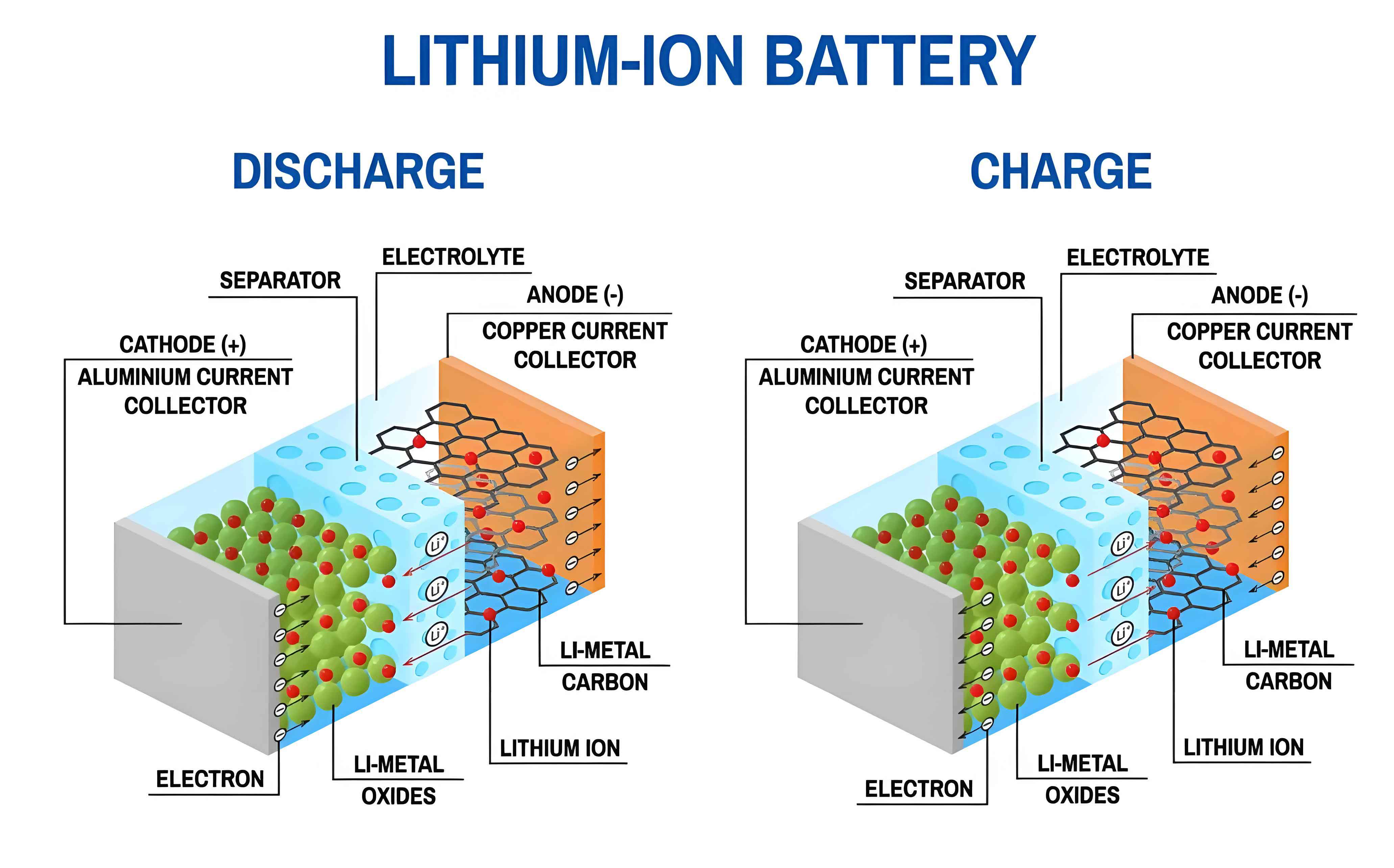
The production and export scale of li-ion batteries are monumental. Following a national strategy focused on modernizing the industrial supply chain, the sector has seen exponential growth. The total import and export value of li-ion batteries surged from approximately 134.7 billion units in 2020 to over 362.4 billion units in 2022, representing a growth of nearly 170% in just two years. The export value alone reached about 343.6 billion in 2022. This production is highly concentrated in coastal manufacturing hubs, creating a powerful cluster effect. The complete li-ion battery industry chain, from raw materials to end-of-life recycling, is now firmly established.
| Year | Total Import & Export Value (Billions) | Total Import & Export Volume (Billions of units) | Export Value (Billions) |
|---|---|---|---|
| 2020 | 134.7 | 25.0 | 110.2 |
| 2021 | 207.8 | 36.0 | 198.0 |
| 2022 | 362.4 | 49.0 | 343.6 |
| Primary Export Region (2023, Jan-Jul) | Export Value (Billions) | Key Export Destinations (2023, Jan-Jul) | Export Value (Billions) |
|---|---|---|---|
| Fujian Province | 67.1 | United States | 49.9 |
| Guangdong Province | 61.1 | Germany | 41.0 |
| Jiangsu Province | 55.2 | South Korea | 34.2 |
The industrial chain for li-ion batteries is complex and segmented. The upstream sector involves the extraction and processing of critical raw materials like lithium, cobalt, nickel, and graphite. The midstream is the core, encompassing the production of key components: cathodes, anodes, separators, and electrolytes, followed by cell manufacturing and assembly into battery packs or systems. The downstream sector integrates these li-ion battery packs into final products such as electric vehicles, consumer electronics, and various energy storage solutions.
| Chain Segment | Core Activities | Output |
|---|---|---|
| Upstream | Raw Material Mining & Refining (Li, Co, Ni, Graphite, etc.) | Battery-Grade Chemicals |
| Midstream | Component (Cathode, Anode, Separator, Electrolyte) & Cell Manufacturing; Pack Assembly | Li-ion Battery Cells and Packs |
| Downstream | Integration into EVs, Electronics, Energy Storage Systems (ESS) | Final Consumer/Industrial Products |
Despite the economic boom, the international trade of li-ion batteries is fraught with significant challenges rooted in safety and compliance.
1. Product Safety and Thermal Runaway Risk: The fundamental risk stems from the potential for thermal runaway—an uncontrollable self-heating state. This can be triggered by internal defects, external abuse like mechanical crush or penetration, short circuits, or overcharging. During transport, the close packing of multiple li-ion battery cells or packs creates a domino effect risk; the failure of one unit can propagate heat to adjacent units, leading to a large-scale fire or explosion. The energy release during thermal runaway can be modeled by the balance between heat generation and heat dissipation:
$$ \frac{dT}{dt} = \frac{1}{m C_p} \left( Q_{gen} – Q_{diss} \right) $$
where $ \frac{dT}{dt} $ is the rate of temperature change, $ m $ is mass, $ C_p $ is heat capacity, $ Q_{gen} $ is the rate of heat generation from exothermic reactions, and $ Q_{diss} $ is the rate of heat dissipation. When $ Q_{gen} > Q_{diss} $, thermal runaway ensues. This risk is so pronounced that the International Civil Aviation Organization (ICAO) has historically imposed strict restrictions on transporting li-ion batteries as cargo on passenger aircraft.
2. Non-Compliant Packaging: International regulations, such as the UN Model Regulations, mandate specific packaging requirements (UN specification packaging) for dangerous goods like li-ion batteries. Common violations found during customs inspections include the use of damaged or cracked outer packaging (e.g., plywood boxes), mismatched or missing UN marks on packages, and inadequate internal packaging to prevent short circuits or movement. Each type of li-ion battery (e.g., standalone cells, packed with equipment) has a specific UN code (UN3480, UN3481, etc.), and its packaging must pass rigorous design qualification tests.
3. Irregular Customs Declaration: A persistent issue is the misdeclaration of li-ion batteries, either by incorrectly describing them as non-dangerous goods or by failing to declare them altogether when they are integrated into equipment. Other irregularities include shipping li-ion batteries without the required test summary documents, or with missing or obscured safety marks on the battery itself (e.g., Watt-hour rating, manufacturer info). For instance, post-2011 produced li-ion batteries must be marked with their Watt-hour (Wh) rating, calculated as:
$$ \text{Wh rating} = \text{Nominal Voltage (V)} \times \text{Nominal Capacity (Ah)} $$
Failure to provide this critical safety information on the battery casing is a direct violation of international transport rules.
4. Non-Standardized Dangerous Goods Handling: Some shippers, due to negligence or a desire to circumvent stricter regulations and costs, may treat li-ion batteries as general cargo. This bypasses the mandatory “Dangerous Goods Packaging” certification process required by law. Furthermore, the multi-agency oversight of dangerous goods transport (involving transport, market regulation, emergency management, and customs authorities) can sometimes lead to fragmented supervision and unclear responsibility boundaries, creating potential regulatory gaps.
To mitigate these risks and facilitate secure trade, customs authorities must implement a multi-faceted and proactive regulatory strategy focused on the li-ion battery as a dangerous good.
1. Enforcing International Standards in Inspection: The cornerstone of customs supervision is verifying compliance with international technical standards. This involves two key documents for exported li-ion batteries: the “Performance Test Report” for the packaging and the “Dangerous Goods Packaging Certificate” for the specific use of that packaging. Customs must physically inspect the goods against these documents, checking:
- UN marking and Li-ion battery mark on the outer package.
- Integrity of the packaging (no cracks, leaks).
- Correct internal packing and cushioning.
- Accurate and visible markings on the li-ion battery itself.
- That the shipment matches the declared quantity and type.
The packaging must have undergone successful design qualification tests simulating transport hazards: vibration, drop, stack pressure, and more. For example, the vibration test profile for packaging can be defined by parameters such as frequency sweep and acceleration:
$$ a(t) = A \sin(2\pi f(t) t) $$
where $ a(t) $ is the acceleration, $ A $ is the amplitude, and $ f(t) $ is the time-varying frequency per the test standard.
2. Scientific Classification and Identification: Customs laboratories and technical centers play a vital role. They must be equipped to perform or validate the safety tests prescribed in the UN Manual of Tests and Criteria, Section 38.3, which is mandatory for li-ion batteries. These tests include thermal cycling, altitude simulation, shock, impact, crush, overcharge, and forced discharge tests. Investing in specialized testing equipment for li-ion batteries and collaborating with accredited third-party labs are essential to build this technical capacity. Accurate classification of the li-ion battery type (cell, battery, contained in equipment) determines the applicable UN number and regulatory requirements.
3. Developing and Harmonizing Standards: Proactive engagement in international standard-setting is crucial. National regulatory bodies and industry should collaborate to draft proposals that reflect the latest technological advancements in li-ion battery safety and transport, seeking their adoption into international codes like the UN Model Regulations and the ICAO Technical Instructions. Domestically, a cohesive set of standards covering safety, performance, and transport packaging for different li-ion battery applications (e.g., EVs, tools, energy storage) is necessary. Recent national standards demonstrate this effort:
| Standard Code | Focus Area |
|---|---|
| GB/T 42729-2023 | Safety Guide for Use of Li-ion Batteries and Packs |
| SJ/T 11808-2022 | Safety for Li-ion Batteries in Electric Tools |
| SJ/T 11812.1-2022 | Performance for Li-ion Batteries in Residential ESS |
| SJ/T 11815-2022 | Safety for Li-ion Batteries in Toys |
4. Enhancing Risk Awareness and Closing Regulatory Loops: Customs must lead in raising awareness among traders. This includes clarifying legal responsibilities, publishing guidelines, and conducting outreach on the proper classification, declaration, and packaging of li-ion batteries. From a systems perspective, regulatory processes should be streamlined. Implementing a “Full Declaration and Full Filing” system for li-ion battery exports could integrate commodity inspection and dangerous goods packaging verification into a single, more efficient supervisory workflow. Leveraging smart inspection technologies (e.g., X-ray imaging with AI analysis) can help identify non-compliant or misdeclared li-ion battery shipments more accurately and with less disruption to legitimate trade. Finally, inter-agency cooperation mechanisms must be strengthened to ensure seamless oversight from factory to port.
The global trade of li-ion batteries is a testament to technological advancement but is inextricably linked to significant safety responsibilities. Incidents involving li-ion batteries, whether in transportation or end-use, underscore the non-negotiable importance of rigorous quality control, standards-compliant packaging, and truthful declaration. Customs authorities worldwide stand as the critical gatekeepers in this ecosystem. Their role must evolve from mere compliance checkers to proactive risk managers and facilitators of safe trade. By rigorously enforcing international standards, investing in technical expertise, contributing to the development of forward-looking regulations, and harnessing technology for smarter oversight, customs can effectively mitigate the risks associated with li-ion battery trade. This balanced approach is essential to protect supply chains, ensure public safety, and support the sustainable growth of the clean energy industries that depend on these powerful yet sensitive energy storage devices.