
In the contemporary era driven by the “dual-carbon” strategy, the transition from fossil fuel-based vehicles to electric vehicles is pivotal for achieving carbon neutrality. As a cornerstone of electric mobility, the performance and manufacturing processes of lithium-ion batteries profoundly influence the success of this strategic shift. Within lithium-ion batteries, graphite-based anodes dominate the market due to their low cost, high theoretical capacity, and low lithium insertion/extraction potentials. However, the two primary types—natural graphite (NG) and artificial graphite (AG)—present a dichotomy: while artificial graphite offers superior electrochemical performance, its production involves energy-intensive graphitization steps leading to significant carbon emissions, contradicting sustainability goals. Conversely, natural graphite is abundant and requires less processing energy, but its inherent surface defects often result in unstable solid electrolyte interphase (SEI) formation and rapid capacity degradation. To reconcile this conflict, we explore a composite modification strategy via spray drying, aiming to harness the advantages of both materials. This article delves into the preparation, characterization, and electrochemical evaluation of NG/AG composites, seeking to provide a pathway for low-energy, high-performance anode materials in lithium-ion batteries.
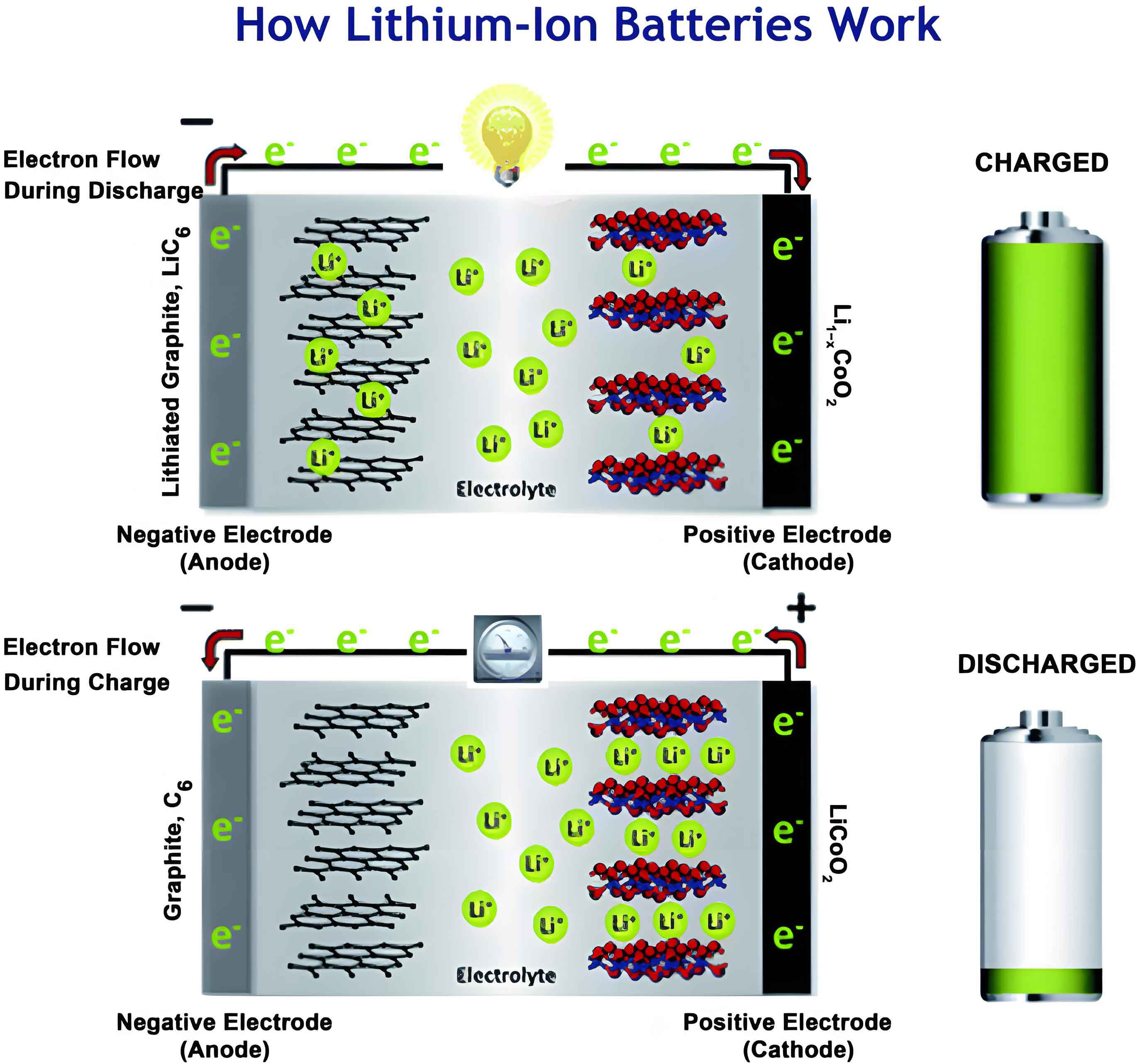
The widespread adoption of lithium-ion batteries is central to modern energy storage systems, particularly for electric vehicles and grid storage. The anode material plays a critical role in determining the overall efficiency, cycle life, and safety of lithium-ion batteries. Graphite, with its layered structure facilitating lithium intercalation, remains the benchmark anode. The theoretical capacity of graphite is given by the equation: $$C_{\text{theoretical}} = \frac{nF}{3.6M}$$ where \(C_{\text{theoretical}}\) is the specific capacity in mAh·g⁻¹, \(n\) is the number of electrons transferred (typically 1 for LiC₆ formation), \(F\) is Faraday’s constant (96485 C·mol⁻¹), and \(M\) is the molar mass of carbon (12 g·mol⁻¹). This yields approximately 372 mAh·g⁻¹. However, practical capacities often deviate due to factors like SEI formation, irreversible reactions, and material defects. Artificial graphite, derived from precursors like petroleum coke through high-temperature treatment (often above 2500°C), exhibits well-ordered crystallinity and minimal defects, leading to stable cycling. Yet, the graphitization process consumes substantial energy, estimated to contribute significantly to the carbon footprint of lithium-ion battery production. Natural graphite, mined from deposits, bypasses this step but contains more structural imperfections and active edges, which promote excessive electrolyte decomposition and thick SEI growth. The SEI dynamics can be modeled using equations for interfacial resistance: $$R_{\text{SEI}} = \frac{\delta}{\sigma}$$ where \(R_{\text{SEI}}\) is the SEI resistance, \(\delta\) is the SEI thickness, and \(\sigma\) is its ionic conductivity. A thicker, less stable SEI increases impedance and capacity fade. Thus, modifying natural graphite to mitigate these issues while reducing reliance on artificial graphite is imperative for sustainable lithium-ion battery development.
Composite materials offer a promising avenue by blending the desirable properties of individual components. Previous studies have explored surface coating, pore engineering, and chemical treatments for natural graphite, but these often involve complex procedures or costly additives. Simple mechanical mixing of natural graphite and artificial graphite may lead to particle agglomeration and inhomogeneous distributions, undermining performance. Our approach utilizes spray drying with a polymer binder to achieve uniform dispersion and composite formation. Polyvinylpyrrolidone (PVP) serves as a temporary glue, preventing reagglomeration and upon thermal treatment, potentially modifying surface chemistry. We hypothesize that the composite will exhibit reduced defect density compared to pure natural graphite, while maintaining lower energy input than pure artificial graphite, ultimately enhancing the electrochemical performance of lithium-ion batteries.
We prepared composites with varying mass ratios of natural graphite to artificial graphite: 7:3, 5:5, and 3:7. The raw materials were mixed via centrifugal blending and then dispersed in deionized water with 3 wt% PVP. The slurry was subjected to spray drying at an inlet temperature of 120°C, resulting in free-flowing powder. For comparison, pristine natural graphite and artificial graphite were also processed similarly without PVP addition. Characterization included Raman spectroscopy to assess structural disorder, using the intensity ratio of D-band (~1350 cm⁻¹) to G-band (~1580 cm⁻¹), denoted as \(I_D/I_G\). Electrodes were fabricated by mixing active material, Super P carbon black, and polyvinylidene fluoride (PVDF) binder in a weight ratio of 8:1:1 in N-methyl-2-pyrrolidone (NMP) solvent. The slurry was coated onto copper foil and dried at 80°C under vacuum. CR2032 coin cells were assembled in an argon-filled glovebox with lithium metal as the counter electrode, Celgard 2500 separator, and LB-315 electrolyte (1 M LiPF₆ in EC/DMC/EMC). Electrochemical tests included galvanostatic charge-discharge at various rates (0.1 C to 1 C, where 1 C = 372 mA·g⁻¹) and electrochemical impedance spectroscopy (EIS) from 100 kHz to 0.01 Hz at different cycle stages. The equivalent circuit model for EIS data fitting comprised solution resistance (\(R_s\)), SEI resistance (\(R_{\text{SEI}}\)), charge transfer resistance (\(R_{ct}\)), constant phase elements (CPE), and Warburg diffusion element (\(Z_w\)). The diffusion coefficient of lithium ions can be estimated from the Warburg region using: $$D = \frac{R^2 T^2}{2A^2 n^4 F^4 C^2 \sigma^2}$$ where \(D\) is the diffusion coefficient, \(R\) is the gas constant, \(T\) is temperature, \(A\) is electrode area, \(n\) is electron number, \(F\) is Faraday’s constant, \(C\) is lithium concentration, and \(\sigma\) is the Warburg coefficient obtained from the linear fit of \(Z’\) versus \(\omega^{-1/2}\).
The Raman spectra revealed distinct differences in structural order. The \(I_D/I_G\) ratios are summarized in Table 1, indicating that artificial graphite has the lowest defect density, while natural graphite shows higher disorder. Composites exhibit intermediate values, suggesting that spray drying with PVP partially covers surface defects, leading to a more ordered surface. This reduction in active defect sites is crucial for stabilizing SEI formation in lithium-ion batteries.
| Sample (AG:NG Ratio) | \(I_D/I_G\) Ratio | Interpretation |
|---|---|---|
| 0:10 (Pure NG) | 0.33 | High defect density |
| 3:7 | 0.15 | Moderate defects |
| 5:5 | 0.15 | Moderate defects |
| 7:3 | 0.13 | Low defects |
| 10:0 (Pure AG) | 0.09 | Very low defects |
The initial electrochemical performance was evaluated at 0.1 C. The charge-discharge profiles exhibited typical graphite plateaus corresponding to lithium staging phenomena. The first-cycle coulombic efficiency (ICE) and specific capacities are critical for practical lithium-ion battery applications, as irreversible capacity loss is often linked to SEI formation. The data are consolidated in Table 2. All composites show ICE values around 68%, slightly lower than pure artificial graphite but comparable to natural graphite. The reversible capacities exceed theoretical values due to contributions from conductive carbon, but trends indicate that increasing artificial graphite content reduces capacity, likely due to its lower specific capacity compared to natural graphite in this context.
| AG:NG Ratio | Charge Capacity (mAh·g⁻¹) | Discharge Capacity (mAh·g⁻¹) | ICE (%) |
|---|---|---|---|
| 0:10 | 402.6 | 573.3 | 70.2 |
| 3:7 | 393.4 | 579.6 | 67.9 |
| 5:5 | 385.0 | 565.9 | 68.0 |
| 7:3 | 362.6 | 539.3 | 67.2 |
| 10:0 | 355.3 | 512.3 | 69.3 |
Long-term cycling stability at 1 C is paramount for assessing anode durability in lithium-ion batteries. After activation at 0.1 C for three cycles, cells were cycled for 550 cycles. The capacity retention and fade kinetics can be described by an empirical decay model: $$C_n = C_0 – k \log(n)$$ where \(C_n\) is capacity at cycle \(n\), \(C_0\) is initial capacity, and \(k\) is the fade rate. The results, summarized in Table 3, demonstrate that composites outperform both pure materials. Specifically, the 5:5 composite achieves the highest capacity retention of 98.4% with a final capacity of 360.7 mAh·g⁻¹, indicating synergistic effects. In contrast, pure natural graphite and artificial graphite suffer severe degradation after 200 cycles, with retention below 50%. This underscores the efficacy of composite design in enhancing cycle life for lithium-ion batteries.
| AG:NG Ratio | Initial Capacity at 1 C (mAh·g⁻¹) | Final Capacity after 550 Cycles (mAh·g⁻¹) | Capacity Retention (%) | Fade Rate \(k\) (mAh·cycle⁻¹) |
|---|---|---|---|---|
| 0:10 | 365.8 | 123.7 | 33.8 | 0.44 |
| 3:7 | 355.2 | 311.2 | 87.6 | 0.08 |
| 5:5 | 366.5 | 360.7 | 98.4 | 0.01 |
| 7:3 | 292.0 | 281.2 | 96.3 | 0.02 |
| 10:0 | 382.1 | 183.1 | 47.9 | 0.36 |
To understand the interfacial behavior, EIS was conducted at various cycle numbers. The Nyquist plots consistently showed two semicircles and a sloping line. The fitted parameters for \(R_{\text{SEI}}\) and \(R_{ct}\) are presented in Table 4. The composite materials, especially the 5:5 ratio, exhibit lower resistances compared to pure graphite after cycling. This reduction is attributed to a more stable and conductive SEI layer facilitated by PVP-derived carbonaceous coating and homogeneous particle distribution. The charge transfer resistance, crucial for rate capability, follows the equation: $$R_{ct} = \frac{RT}{nF j_0}$$ where \(j_0\) is the exchange current density. Lower \(R_{ct}\) values indicate faster kinetics, which align with the superior cycling performance of composites. Furthermore, the Warburg diffusion coefficients, calculated from low-frequency data, show enhanced lithium-ion transport in composites, supporting the premise that modified interfaces benefit long-term operation of lithium-ion batteries.
| AG:NG Ratio | Cycle Number | \(R_{\text{SEI}}\) (Ω) | \(R_{ct}\) (Ω) | Diffusion Coefficient \(D\) (cm²·s⁻¹) |
|---|---|---|---|---|
| 0:10 | 1 | 12.5 | 45.3 | 2.1 × 10⁻¹² |
| 0:10 | 100 | 35.6 | 120.8 | 8.4 × 10⁻¹³ |
| 3:7 | 1 | 10.2 | 38.7 | 3.5 × 10⁻¹² |
| 3:7 | 100 | 18.9 | 65.4 | 2.1 × 10⁻¹² |
| 5:5 | 1 | 8.7 | 32.1 | 4.2 × 10⁻¹² |
| 5:5 | 100 | 15.3 | 48.9 | 3.8 × 10⁻¹² |
| 7:3 | 1 | 9.8 | 35.6 | 3.8 × 10⁻¹² |
| 7:3 | 100 | 17.2 | 60.1 | 2.5 × 10⁻¹² |
| 10:0 | 1 | 11.3 | 40.2 | 2.8 × 10⁻¹² |
| 10:0 | 100 | 30.1 | 110.5 | 1.2 × 10⁻¹² |
The enhancement in electrochemical properties can be rationalized through several mechanisms. First, the spray drying process creates composite particles where natural graphite and artificial graphite grains are intimately mixed, reducing the overall defect density as seen in Raman data. Second, PVP decomposition during drying may form a thin carbonaceous layer that passivates active sites, mitigating excessive SEI growth. The SEI formation energy can be approximated by: $$\Delta G_{\text{SEI}} = -nFE_{\text{SEI}}$$ where \(\Delta G_{\text{SEI}}\) is the Gibbs free energy change, and \(E_{\text{SEI}}\) is the potential of SEI formation. A more stable SEI lowers \(\Delta G_{\text{SEI}}\) over cycles, reducing continual electrolyte decomposition. Third, the composite structure likely improves mechanical integrity, buffering volume changes during lithium intercalation/deintercalation, which is described by the strain equation: $$\epsilon = \frac{\Delta V}{V_0} = \beta \cdot x$$ where \(\epsilon\) is strain, \(\Delta V\) is volume change, \(V_0\) is initial volume, \(\beta\) is the expansion coefficient, and \(x\) is lithium concentration. Homogeneous particle distribution alleviates stress concentration, delaying electrode cracking and capacity fade. These factors collectively contribute to the outstanding performance of the 5:5 composite, making it a promising candidate for next-generation lithium-ion batteries.
Rate capability tests further elucidate the kinetics. Cells were charged/discharged at varying C-rates from 0.2 C to 2 C, then returned to 0.2 C. The capacity retention at high rates is often limited by lithium-ion diffusion and charge transfer. The composite materials, particularly the 5:5 ratio, maintain higher capacities under increased current densities. This can be quantified by the power law: $$C_{\text{rate}} = C_0 \cdot \exp(-\alpha \cdot I)$$ where \(C_{\text{rate}}\) is capacity at current \(I\), \(C_0\) is capacity at low current, and \(\alpha\) is the rate constant. The composites exhibit smaller \(\alpha\) values, indicating better rate performance. Such characteristics are essential for fast-charging lithium-ion batteries used in electric vehicles.
In addition to electrochemical metrics, the environmental and economic impacts of composite anodes are noteworthy. The energy consumption for artificial graphite production is estimated to be around 15-20 kWh·kg⁻¹, primarily from graphitization furnaces. For natural graphite, the energy input is lower, approximately 5-10 kWh·kg⁻¹, including mining and purification. By replacing half of the artificial graphite with natural graphite in the composite, the embodied energy can be reduced significantly. A simple calculation shows: $$E_{\text{composite}} = f_{\text{NG}} \cdot E_{\text{NG}} + f_{\text{AG}} \cdot E_{\text{AG}}$$ where \(E_{\text{composite}}\) is the energy per kg of composite, \(f\) are mass fractions, and \(E\) are energy values. For a 5:5 composite, assuming \(E_{\text{NG}} = 8\) kWh·kg⁻¹ and \(E_{\text{AG}} = 18\) kWh·kg⁻¹, the composite energy is 13 kWh·kg⁻¹, a 28% reduction compared to pure artificial graphite. This aligns with the “dual-carbon” strategy by lowering the carbon footprint of lithium-ion battery manufacturing.
Future work could explore optimization of spray drying parameters, such as inlet temperature, feed rate, and polymer concentration, to further enhance composite morphology. Alternative binders or carbon sources might be investigated to improve conductivity and SEI stability. Moreover, scaling up the process for industrial production and integrating composites into full-cell configurations with high-voltage cathodes would be crucial steps toward commercialization. The interplay between composite ratio and electrode porosity, which affects ionic transport, can be modeled using the Bruggeman relation: $$\epsilon_{\text{eff}} = \epsilon \cdot \tau^{3/2}$$ where \(\epsilon_{\text{eff}}\) is effective porosity, \(\epsilon\) is bulk porosity, and \(\tau\) is tortuosity. Tailoring these microstructural properties could unlock even better performance for lithium-ion batteries.
In conclusion, we have demonstrated that spray-dried natural graphite/artificial graphite composites serve as high-performance anodes for lithium-ion batteries. The 5:5 ratio composite exhibits exceptional cycling stability, with 98.4% capacity retention after 550 cycles at 1 C, alongside reduced interfacial resistances. This improvement stems from defect mitigation, stable SEI formation, and enhanced mechanical integrity. By partially replacing energy-intensive artificial graphite with natural graphite, the composite approach offers a sustainable pathway without compromising electrochemical properties. Our findings underscore the potential of simple yet effective modification strategies in advancing lithium-ion battery technology towards greater efficiency and environmental compatibility. As the demand for energy storage grows, such innovations will be instrumental in realizing a carbon-neutral future powered by reliable lithium-ion batteries.