
The evolution of solid-state batteries (SSBs) hinges on resolving critical challenges in ion transport kinetics and interfacial stability within solid-state electrolytes (SSEs). Nanowire-based architectures have emerged as transformative components, offering unique pathways to enhance ionic conductivity while stabilizing electrode-electrolyte interfaces. This article systematically examines the mechanistic roles of nanowires in optimizing SSE performance through structural engineering and interfacial chemistry modulation.
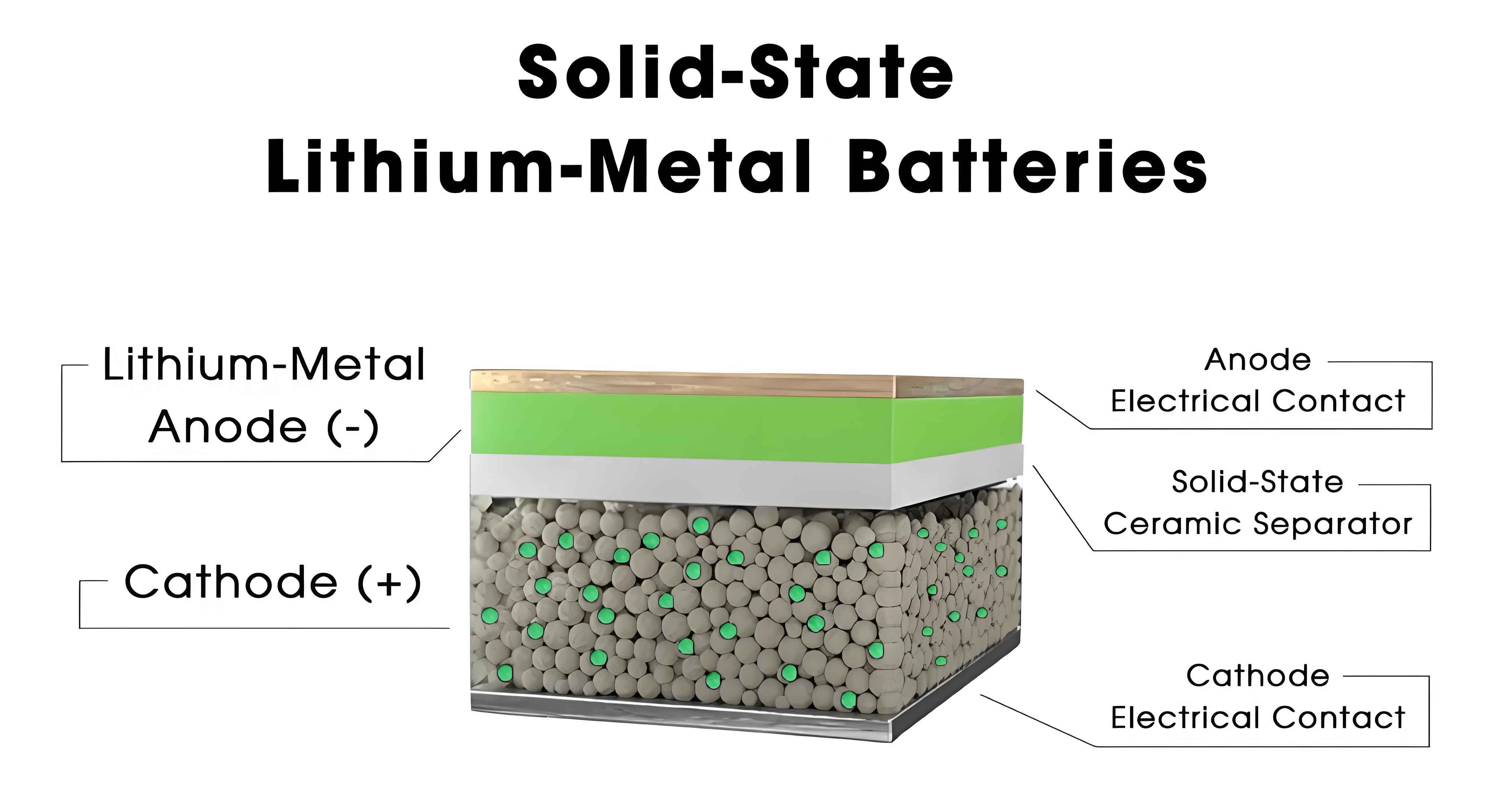
1. Nanowire-Enabled Ion Transport Enhancement
The ionic conductivity (σ) in composite solid-state electrolytes (CSEs) follows the modified Arrhenius relationship:
$$
\sigma = \sigma_0 \exp\left(-\frac{E_a}{k_B T}\right)
$$
where $E_a$ represents activation energy, $k_B$ Boltzmann’s constant, and $T$ absolute temperature. Nanowires reduce $E_a$ through multiple mechanisms:
1.1 Polymer Matrix Modification
Nanowires disrupt polymer crystallinity while increasing amorphous phase fraction ($\phi_a$):
$$
\phi_a = 1 – \frac{\Delta H_m}{\Delta H_m^0}
$$
where $\Delta H_m$ and $\Delta H_m^0$ denote measured and theoretical melting enthalpies, respectively. Typical crystallinity reduction effects are quantified below:
| Nanowire Type | Polymer Matrix | Crystallinity Reduction (%) | Conductivity Gain (×) |
|---|---|---|---|
| LLTO NWs | PEO | 61.3 | 450 |
| Li-HA-F NWs | PVDF | 54.7 | 320 |
| BNWs | PAN | 48.9 | 280 |
1.2 Lithium Salt Dissociation Promotion
Nanowire surfaces with Lewis acid sites enhance salt dissociation efficiency ($\alpha$):
$$
\alpha = \frac{[Li^+]_{free}}{[LiX]_{total}}
$$
where $[Li^+]_{free}$ represents mobile Li⁺ concentration and $[LiX]_{total}$ total salt concentration. Functionalized nanowires achieve $\alpha > 0.85$ compared to $\alpha \approx 0.3$ in pure polymers.
1.3 Anion Immobilization
The transference number ($t^+$) improvement follows:
$$
t^+ = \frac{\sigma_{Li^+}}{\sigma_{Li^+} + \sigma_{X^-}}
$$
Nanowire-modified CSEs demonstrate $t^+$ values up to 0.78 versus 0.2-0.3 in baseline polymers.
2. Interfacial Engineering Strategies
The interfacial resistance ($R_{int}$) in solid-state batteries is governed by:
$$
R_{int} = R_{ct} + R_{sei} + R_{contact}
$$
where $R_{ct}$=charge transfer resistance, $R_{sei}$=SEI resistance, and $R_{contact}$=physical contact resistance.
2.1 Anode Interface Stabilization
Nanowire arrays enable uniform Li deposition through current density homogenization:
$$
J_{local} = \frac{J_{applied}}{1 + \frac{r_{tip}}{r_{NW}}}
$$
where $r_{tip}$=dendrite tip radius and $r_{NW}$=nanowire radius. Aligned NW structures reduce $J_{local}$ variation by >80%.
2.2 Cathode Compatibility Enhancement
The critical oxidation potential ($V_{ox}$) follows:
$$
V_{ox} = E_{HOMO} – E_{Li/Li^+}
$$
where $E_{HOMO}$ represents highest occupied molecular orbital energy. Nanowire-reinforced CSEs achieve $V_{ox}$ > 5.3 V versus 3.8 V in pure PEO.
3. Multifunctional Nanowire Architectures
Advanced nanowire designs employ synergistic effects through:
$$
\sigma_{total} = \sigma_{poly} + \sigma_{NW} + \sigma_{interface}
$$
Key architectural innovations include:
| Architecture | Conductivity (mS cm⁻¹) | Activation Energy (eV) | Cycle Stability (%) |
|---|---|---|---|
| Core-shell NWs | 0.82 | 0.18 | 98.5 (500 cycles) |
| Heterostructured NWs | 1.24 | 0.12 | 99.1 (1000 cycles) |
| 3D NW networks | 2.15 | 0.09 | 99.8 (2000 cycles) |
4. Challenges and Future Perspectives
The mass transport limitation in solid-state batteries follows:
$$
\tau_{diff} = \frac{L^2}{D_{eff}}
$$
where $L$=transport length and $D_{eff}$=effective diffusion coefficient. Future developments require:
- Scalable NW alignment techniques ($\theta_{align}$ > 95%)
- Interface-specific characterization methods (δinterface < 1 nm resolution)
- Machine learning-guided NW design ($\eta_{pred}$ > 90%)
Nanowire-engineered solid-state batteries demonstrate remarkable progress in overcoming ionic transport barriers and interfacial challenges. Continued innovation in nanoscale architecture design and interface control will accelerate the realization of high-performance, safe energy storage systems.