
The pursuit of sustainable energy solutions has placed unprecedented demands on energy storage technologies. Among these, the lithium-ion battery reigns supreme due to its high energy density, long cycle life, and environmental friendliness, powering everything from portable electronics to electric vehicles. However, the continued evolution of this technology is intrinsically linked to advancements in electrode materials, particularly the anode. The commercial standard, graphite, is limited by a modest theoretical capacity of 372 mAh g-1. Alternative high-capacity materials like silicon suffer from drastic volumetric expansion (>300%) during lithiation/delithiation, leading to rapid mechanical degradation and capacity fade. This fundamental challenge has catalyzed the search for novel materials that can offer high capacity, structural stability, and fast ion transport. In this context, two-dimensional (2D) materials have emerged as promising candidates, and a relatively new family of 2D transition metal carbides, nitrides, and carbonitrides, known as MXenes, has rapidly ascended as a frontrunner for next-generation lithium-ion battery anodes.
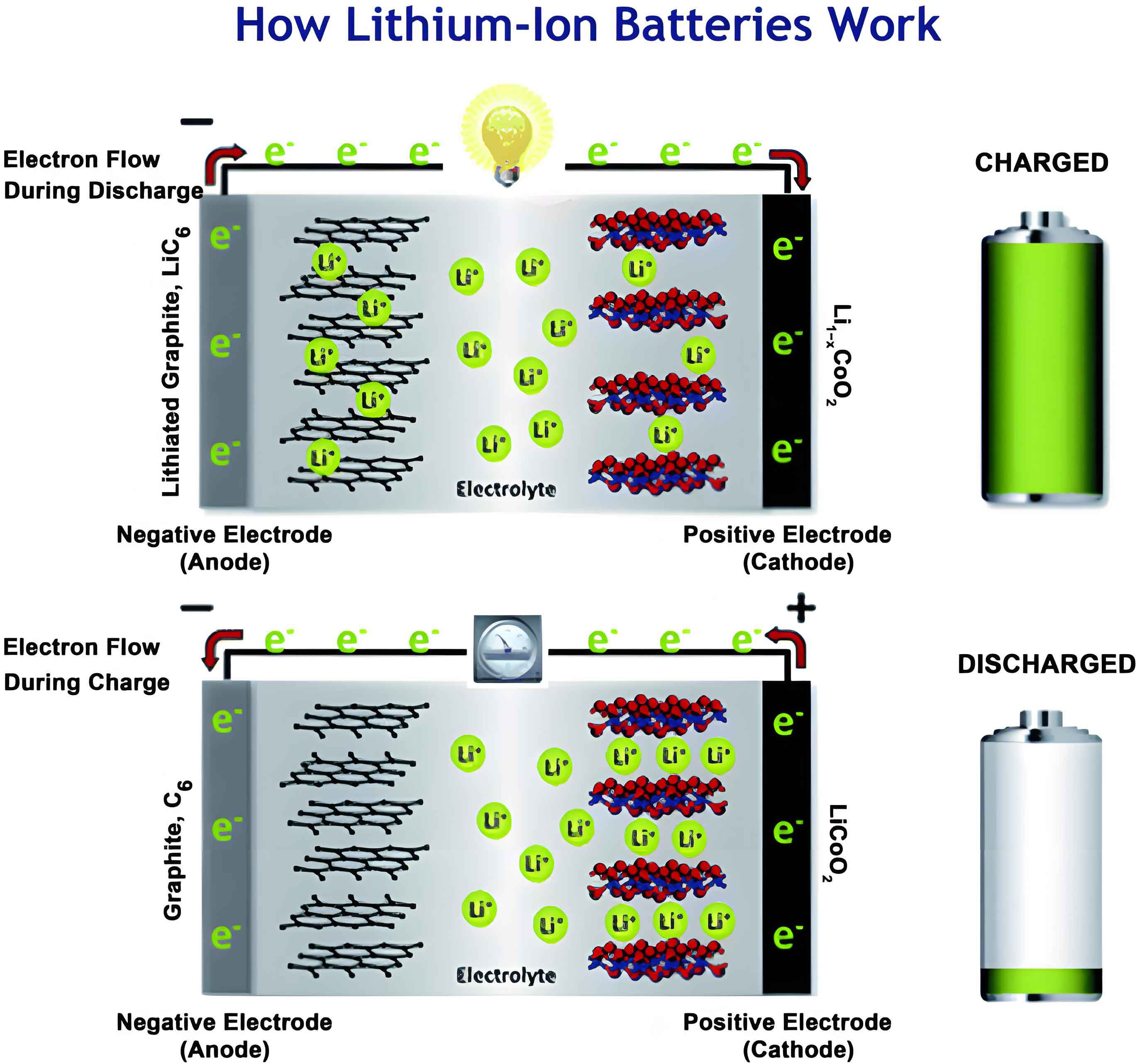
MXenes are typically synthesized by selectively etching the ‘A’ layer from their parent MAX phase ceramics. Their general formula is Mn+1XnTx, where ‘M’ is an early transition metal (e.g., Ti, V, Nb, Mo), ‘X’ is carbon and/or nitrogen, and ‘Tx‘ represents surface terminations such as -O, -OH, -F, or -Cl. This unique structure endows MXenes with an exceptional combination of properties: metallic conductivity, hydrophilic surfaces, tunable chemistry, and mechanical flexibility. For lithium-ion battery applications, their layered architecture provides natural pathways for ion intercalation, while their high electronic conductivity facilitates rapid charge transfer. This article delves into the progress of MXenes as anode materials, exploring synthesis pathways, structure-property relationships via intentional engineering, and their performance in composite architectures, ultimately providing a perspective on future challenges and opportunities.
1. Synthesis and Fundamental Properties of MXenes
The journey of an MXene begins with its precursor, the MAX phase (Mn+1AXn), where ‘A’ is mostly a group 13 or 14 element (e.g., Al, Si). The strength of the M-X bond (mixed covalent/ionic/metallic) is significantly higher than that of the M-A bond (metallic), allowing for the selective extraction of the ‘A’ layer. The synthesis method profoundly influences the resulting MXene’s morphology, defect concentration, and, most critically, its surface termination, which directly impacts electrochemical performance.
1.1 Primary Etching Methodologies
Various etching strategies have been developed, each with distinct advantages and resulting surface chemistries crucial for lithium-ion battery anode performance.
| Method | Typical Etchant | Key Mechanism | Predominant Terminations (Tx) | Advantages/Disadvantages for LIB Anodes |
|---|---|---|---|---|
| Fluoride-Containing Chemical Etching | Concentrated HF; LiF+HCl (in-situ HF) | Fluoride ions attack and dissolve the ‘A’ layer (e.g., Al). | -F, -O, -OH | Adv: Well-established, produces high-quality flakes. Disadv: Use of hazardous HF; -F terminations may hinder Li+ diffusion. |
| Molten Salt Etching | ZnCl2, CuCl2, Lewis acid salts | High-temperature electrochemical/chemical displacement of the ‘A’ layer. | -Cl, -O | Adv: HF-free; enables etching of non-Al MAX phases (e.g., Si-based); Cl-terminations can be highly active. Disadv: Requires high temperatures, inert atmosphere. |
| Electrochemical Etching | Aqueous electrolytes (e.g., NH4Cl, acids) | Applied potential drives anodic dissolution of the ‘A’ layer. | -O, -OH, -Cl | Adv: Green, room-temperature process; tunable by potential. Disadv: Can be less selective, may introduce more defects. |
| Alkali-assisted Hydrothermal | NaOH, KOH solutions | Hydroxide ions react with and remove the ‘A’ layer under heat and pressure. | -O, -OH | Adv: Fluoride-free; produces -OH/-O rich surfaces beneficial for some reactions. Disadv: Harsher conditions, may affect crystallinity. |
The surface terminations are not merely spectators; they actively participate in electrochemical processes. For instance, the Li+ storage capacity can be empirically linked to the type and quantity of terminations. A simplified model for capacity contribution from surface redox (pseudocapacitance) based on terminations can be considered:
$$ C_{ps} = \frac{n F}{3.6 M} $$
where \( C_{ps} \) is the pseudocapacitive contribution (mAh g-1), \( n \) is the number of electrons transferred per formula unit in a surface redox reaction, \( F \) is Faraday’s constant (96485 C mol-1), and \( M \) is the molar mass of the MXene formula unit (g mol-1). -O terminations are often involved in Faradaic reactions (e.g., Ti-O + Li+ + e– ⇌ Ti-O-Li), contributing to higher capacity beyond simple intercalation.
2. Structure Engineering of MXenes for Enhanced Li+ Storage
While pristine multilayer MXenes show promise, their performance is often limited by restacking of nanosheets, which reduces active sites and slows ion kinetics. Deliberate structure engineering at multiple levels—interlayer spacing, dimensionality, and composition—has proven highly effective in unlocking their full potential for lithium-ion battery anodes.
2.1 Interlayer Spacing Expansion
The van der Waals gap between MXene layers is a critical parameter. A larger interlayer spacing (d-spacing) reduces the diffusion barrier for Li+ ions, facilitating faster and more reversible intercalation. This expansion is often achieved through intercalation of molecules, ions, or by surface functional group engineering.
Intercalation of polar molecules like dimethyl sulfoxide (DMSO) or urea between layers physically pushes them apart. Post-intercalation, the d-spacing can be described relative to the original spacing \(d_0\):
$$ \Delta d = d_{expanded} – d_0 $$
where a positive \( \Delta d \) directly correlates with improved rate capability. More advanced methods involve Lewis-acidic melt etching, which replaces smaller -F groups with larger anions (e.g., -Cl, -Br), achieving expansion from ~1.12 nm to over 1.47 nm, leading to a significant boost in capacity.
2.2 Dimensionality and Morphology Control
Transforming 2D sheets into 3D architectures is a powerful strategy to mitigate restacking and increase electrode-electrolyte contact area.
- 3D Porous/Aerogel Structures: Using sacrificial templates (e.g., PMMA spheres, ice crystals) or direct assembly creates 3D networks. These structures offer short diffusion paths and buffer volume changes. The effective diffusion coefficient \(D_{eff}\) in a porous 3D electrode can be related to the tortuosity (\(\tau\)) and porosity (\(\epsilon\)) by the Bruggeman relation:
$$ D_{eff} = D_0 \cdot \frac{\epsilon}{\tau} $$
where \(D_0\) is the intrinsic diffusion coefficient. A 3D porous MXene aims to maximize \(\epsilon\) and minimize \(\tau\), thereby maximizing \(D_{eff}\).
- Hollow and Hierarchical Structures: Constructing MXene nanotubes or flowers-like assemblies further enhances structural stability and exposes more active edges, contributing to both capacitive and diffusion-controlled storage.
2.3 Elemental Doping and Defect Engineering
Introducing heteroatoms (e.g., N, S, P) into the MXene lattice or surface modifies its electronic structure and creates additional active sites. Nitrogen doping, for example, enhances electronic conductivity and introduces defects that can act as Li+ trapping sites with a lower binding energy. The resulting capacity is a sum of contributions:
$$ C_{total} = C_{intercalation} + C_{surface\ redox} + C_{defect\ storage} $$
Co-doping (e.g., N and S) can have a synergistic effect, further improving charge transfer kinetics and stability, as evidenced by composites showing capacities near 590 mAh g-1 with excellent cycling.
3. MXene-Based Composite Anodes: Synergistic Enhancement
The true power of MXenes in lithium-ion battery anodes is often realized in composite structures. MXenes act as conductive, mechanically robust, and confining scaffolds that synergize with high-capacity but problematic active materials.
3.1 MXene/Silicon Composites
This combination addresses the core issue of Si anodes: volume expansion. The MXene scaffold confines Si nanoparticles (SiNPs), prevents their aggregation, and accommodates mechanical stress, while Si prevents MXene restacking.
Mechanism: The interaction can be modeled by considering the stress (\(\sigma\)) buffering effect. For a SiNP confined between MXene sheets, the effective stress experienced by Si is reduced:
$$ \sigma_{Si, eff} = \sigma_{Si} \cdot \frac{E_{MXene}}{E_{Si} + E_{MXene}} $$
where \(E\) denotes the Young’s modulus. MXene’s high modulus helps suppress the absolute stress, delaying fracture. Furthermore, MXene’s high conductivity ensures efficient electron transport to all SiNPs. Electrodes fabricated as freestanding Si/MXene papers demonstrate remarkable stability, retaining capacities above 1900 mAh g-1 for hundreds of cycles, a feat unattainable by pure Si.
3.2 MXene/Metal Oxide Composites
Metal oxides (e.g., SnO2, Fe2O3, TiO2) offer higher capacity than graphite but suffer from low conductivity and pulverization. MXene serves as a conductive binder and buffer.
| Composite | Structure Key | Performance Highlights | Role of MXene |
|---|---|---|---|
| SnO2/Ti3C2Tx | SnO2 nanoparticles anchored on/delaminated MXene sheets. | >900 mAh g-1 after 1000 cycles at 0.1 A g-1; excellent rate performance. | Prevents SnO2 aggregation; accommodates volume change of SnO2/Sn; enhances overall conductivity. |
| Fe2O3/N-doped MXene | Fe2O3 on crumpled N-doped MXene. | ~688 mAh g-1 at 1 A g-1 after 100 cycles. | N-doping boosts conductivity; crumpled structure increases surface area and prevents stacking. |
| 3D Porous Fe3O4@SnO2/MXene | Core-shell particles integrated into a 3D MXene network. | ~626 mAh g-1 at 1 A g-1 after 900 cycles. | 3D porous network facilitates electrolyte infiltration and Li+ transport; buffers dual volume changes. |
The storage in such composites often involves a combination of conversion and alloying reactions (for SnO2, Fe2O3) alongside MXene’s intercalation. The total capacity can be expressed as a weighted sum:
$$ C_{composite} = w_{MO} \cdot C_{MO} + w_{MXene} \cdot C_{MXene} + C_{interface} $$
where \(w\) is the weight fraction, \(C_{MO}\) is the capacity of the metal oxide, and \(C_{interface}\) represents the often-significant contribution from synergistic effects at the MXene/metal oxide interface.
3.3 MXene/Carbon Composites
Combining MXenes with carbon materials (graphene oxide (GO), carbon nanotubes (CNTs), porous carbon) aims to maximize conductivity and prevent restacking from both sides.
MXene/GO Heterostructures: GO sheets can intercalate between MXene layers, acting as both spacers and conductive bridges. The alternating stacking creates numerous nanochannels for ion access. The improved kinetics are reflected in outstanding rate performance and long-cycle life (e.g., 116.5 mAh g-1 at 2.5 A g-1 after 2000 cycles).
MXene/Porous Carbon: Embedding MXene nanosheets in a porous carbon matrix creates a highly conductive and robust 3D framework. The porous carbon acts as a secondary buffer and ion reservoir. The synergy often leads to capacities significantly higher than the arithmetic sum of the individual components, highlighting the importance of interface engineering in lithium-ion battery anodes.
4. Summary and Future Perspectives
MXenes have firmly established themselves as a transformative material class for advanced lithium-ion battery anodes. Through strategic synthesis, structural engineering, and composite design, researchers have successfully addressed many inherent limitations, demonstrating materials with high capacity, exceptional rate capability, and unprecedented cycling stability. The versatility of MXenes allows them to function as active intercalation materials, conductive additives, mechanical buffers, and even freestanding current collectors.
Looking forward, several key challenges and exciting opportunities will define the next chapter of MXene research for lithium-ion batteries:
- Beyond Ti3C2Tx: The vast MXene family (e.g., V2C, Nb2C, Mo2TiC2, solid solutions) remains largely unexplored. Different transition metals offer varying redox potentials, layer spacings, and densities, which could lead to anodes with higher volumetric energy density—a critical metric for practical devices.
- Precision Termination Control: Moving from a mixture of terminations (-O, -F, -OH) to uniform, tailored terminations (e.g., all -O, or -S) is crucial for understanding fundamental storage mechanisms and maximizing performance. Developing soft, selective etching and post-synthesis modification techniques is essential.
- Scalable and Sustainable Synthesis: Current etching methods, especially HF-based routes, pose environmental and safety concerns. Scaling up fluoride-free, electrochemical, or molten salt methods in a cost-effective manner is imperative for commercial translation of MXene-based lithium-ion battery anodes.
- Advanced Characterization and Modeling: In-situ and operando techniques (TEM, XRD, XAS) are needed to visualize Li+ (de)intercalation dynamics, structural evolution, and solid-electrolyte interphase (SEI) formation on MXenes. Coupled with advanced computational modeling, this will enable rational design from the atomic scale up.
- Integration into Full-Cell Configurations: Most studies focus on half-cells (vs. Li metal). Rigorous testing in full-cells paired with high-voltage cathodes (e.g., NMC, NCA) is necessary to evaluate practical metrics like energy density, cycling under limited Li inventory, and long-term compatibility.
In conclusion, MXenes represent a paradigm-shifting platform for energy storage. Their intrinsic properties and immense tunability make them uniquely suited to overcome the persistent challenges facing anode materials in lithium-ion batteries. As research progresses from fundamental exploration to applied engineering, MXene-based anodes hold the promise of powering a new generation of high-energy, fast-charging, and durable batteries, accelerating the transition to a sustainable energy future.