
In the context of the global transition towards low-carbon and clean energy systems, renewable energy sources such as solar and wind power are rapidly increasing their share in the grid. However, the inherent intermittency and volatility of these sources pose significant challenges to grid stability. Battery energy storage systems (BESS) have emerged as a critical technology for regulating power fluctuations and stabilizing grids, thereby supporting the high penetration of renewables. Among various battery technologies, sodium-ion batteries (SIBs) are gaining prominence for large-scale BESS due to the abundance of sodium resources, lower costs, and potential safety advantages. The application of large-format prismatic sodium-ion batteries in BESS is expanding, driven by their scalability and economic viability. In typical BESS configurations, electrochemical storage systems follow a hierarchical integration structure: multiple SIB cells are enclosed in sealed stacks to form modules, modules are integrated into racks, and racks are housed in standardized containers to form a basic unit of BESS. A large-scale energy storage station may comprise many such units. This high-density integration enhances system energy density but also imposes stringent safety requirements on the batteries.
Despite the ongoing commercialization of sodium-ion batteries in industrial and consumer electronics, inherent safety risks cannot be overlooked. When subjected to electrical abuses (e.g., overcharging, over-discharging), mechanical abuses (e.g., crushing, penetration), or thermal abuses (e.g., external heating), sodium-ion batteries are prone to trigger a chain exothermic reaction known as thermal runaway (TR). This process involves local rupture of internal structures like separators, leading to direct contact between cathode and anode materials, intense internal short circuits, rapid self-discharge, and substantial Joule heating. The sharp temperature rise further accelerates side reactions, generating flammable gases and potentially causing fires or explosions. In BESS modules, if the thermal runaway of a single cell is not effectively controlled, the released heat can propagate to adjacent cells, initiating thermal spread and possibly resulting in catastrophic failure of the entire module, rack, or even the storage unit. Therefore, understanding the multiphysics behavior of sodium-ion battery modules under abusive conditions is crucial for enhancing safety in energy storage applications.
This study aims to address the safety challenges of sodium-ion batteries in large-scale energy storage systems by systematically analyzing the multiphysics failure process of thermal runaway in a module composed of 13 series-connected 185Ah prismatic cells under 0.5C overcharge abuse. The experiment reveals a chain failure mechanism driven by the coupling of electrical, chemical, thermal, and mechanical fields. The earliest precursor signal is identified as a slow linear increase in internal expansion force, caused by gas generation from localized side reactions induced by overcharging, which appears far earlier than any significant electrical or thermal anomalies. As overcharging continues, the voltage curves of individual cells begin to diverge, indicating加剧 internal inconsistency and cumulative damage. Ultimately, a “weak link” cell reaches a critical damage threshold, experiencing internal short circuit manifested by instantaneous voltage collapse and exponential temperature surge, triggering thermal runaway. This single-point catastrophic failure releases immense heat, subsequently引发 “domino effect” thermal propagation to adjacent cells, destroying the entire module in a short time. The findings confirm the “local trigger, global destruction” failure mode for sodium-ion battery modules and highlight the critical value of internal pressure monitoring as the earliest warning signal, providing important theoretical basis and data support for safer battery management systems and energy storage system design.
The experimental setup involved a dedicated explosion-proof container to ensure safety. A battery testing装置 with charge-discharge control (voltage range: 0-100V; current range: 0-200A) was used, along with a flexible printed circuit (FPC) integrated with high-precision temperature sensors and voltage sampling points for data acquisition at 1 Hz sampling frequency. A thin-film expansion force sensing system was employed to measure inter-cell squeezing forces, with two sensors placed between cells #4 and #5, and cells #9 and #10. Visual recording was done using a high-speed camera (1000 fps) and an infrared thermal imager. The module was preconditioned at 30±2°C for over 4 hours, followed by a full charge-discharge cycle at 0.5C to calibrate actual capacity. After charging to 100% SOC and resting for 1 hour, the module was coupled with the expansion force system, with preload forces of 1420 kPa and 422 kPa applied to the two sensors, respectively. All data acquisition devices were started, and continuous overcharging at 0.5C constant current was initiated until severe thermal runaway, complete structural destruction, or total voltage drop near 0V occurred. Throughout, total module voltage, total current, individual cell voltages and temperatures, and expansion force data were recorded synchronously, and remnants were collected for post-test physical characterization and failure analysis.
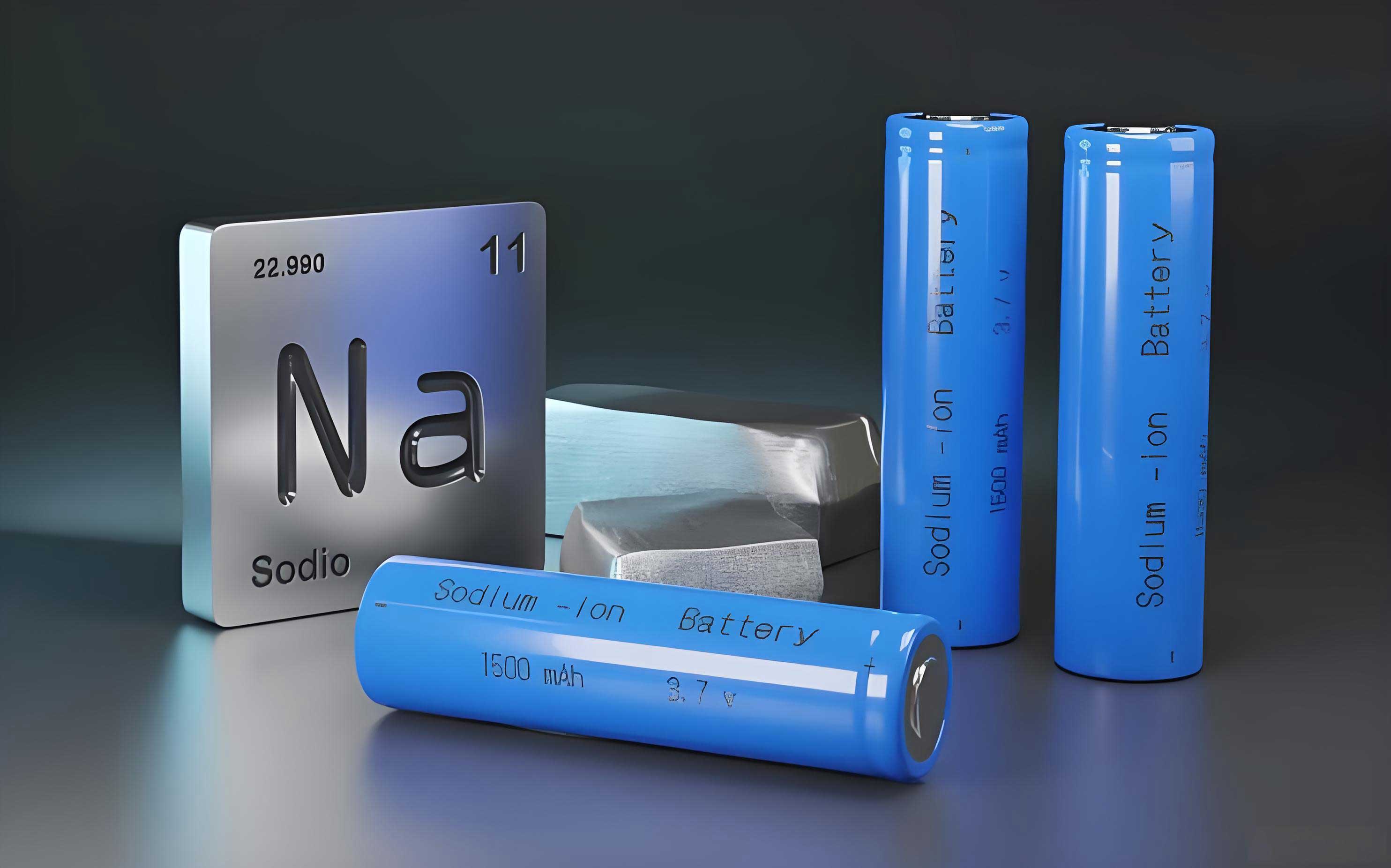
The sodium-ion battery cells used in this study were prismatic aluminum-cased sodium-ion batteries with a layered oxide cathode and soft carbon anode. Key specifications are summarized in Table 1. The selection of layered oxide sodium-ion batteries is based on their核心 position in current sodium-ion battery technology and commercial prospects. Layered oxide materials exhibit excellent electrochemical performance and are considered the most promising cathode materials for large-scale commercialization of sodium-ion batteries. However, these materials pose potential thermal runaway risks under extreme conditions like overcharging and high temperatures due to their relatively poor thermal stability, where structural phase transitions can release oxygen and trigger intense exothermic reactions. Thus,深入研究 their thermal runaway机理 under overcharging conditions provides critical theoretical insights for the safety design of this mainstream technology and has significant engineering application value.
| Parameter | Value |
|---|---|
| Rated Capacity (Ah) | 185 |
| Dimensions (mm³) | 72 × 173.7 × 207 |
| Cathode Material | Layered Oxide |
| Anode Material | Soft Carbon |
| Nominal Voltage (V) | 3.00 |
| Charge Cut-off Voltage (V) | 3.85 |
| Discharge Cut-off Voltage (V) | 2.00 |
| Cell Weight (g) | 4900 ± 0.2 |
The experimental module integrated 13 single cells in a 1P13S electrical topology. Cells were connected via aluminum busbars using laser welding and fixed within high-strength metal brackets coated with rubber for mechanical protection. A customized FPC data acquisition system was integrated inside the module, incorporating temperature sensors attached to the top surface of each cell and voltage sampling points directly connected to cell terminals. Key module specifications are listed in Table 2. This integrated design ensured synchronous and reliable data acquisition, enabling comprehensive multiphysics monitoring during the thermal runaway event.
| Parameter | Value |
|---|---|
| Nominal Capacity (kWh) | 7.2 |
| Nominal Voltage (V) | 39.00 |
| Operating Voltage Range (V) | 26 – 50 |
| Series-Parallel Configuration | 1P13S |
| Calendar Life (years) | 8 |
| Cycle Life (cycles) | 2000 |
| Self-Discharge Rate (%) | ≤ 3 |
The overcharging process of the sodium-ion battery module can be divided into five distinct stages based on electrical analysis. Stage I (0–1227 s) is the normal constant-current charging phase, where all cell voltages show high consistency, increasing linearly from 3.83 V with identical slopes, and the total module voltage rises steeply and smoothly. This indicates that the charging current primarily drives the main electrochemical reaction—sodium-ion extraction from the cathode and insertion into the anode—with no significant parasitic reactions. The electrical behavior during this stage can be described by the basic charging equation for a sodium-ion battery:
$$ V_{cell}(t) = V_0 + \frac{I_{charge} \cdot t}{C} + I_{charge} \cdot R_{internal} $$
where \( V_{cell}(t) \) is the cell voltage at time \( t \), \( V_0 \) is the initial voltage, \( I_{charge} \) is the charging current (0.5C, approximately 92.5 A for a 185 Ah cell), \( C \) is the capacity, and \( R_{internal} \) is the internal resistance. Since cells are in series, the total module voltage \( V_{module} \) is the sum of individual cell voltages:
$$ V_{module}(t) = \sum_{i=1}^{13} V_{cell,i}(t) $$
Stage II (1227–3507 s) marks the onset of overcharging and voltage divergence. When cell voltages exceed 4.2 V, the上升 rate slows significantly, forming a prolonged voltage plateau. This is because the constant input current is no longer fully utilized for the main reaction; instead, overcharging stress induces parasitic side reactions such as electrolyte decomposition. These reactions consume part of the charging current, reducing the overall charging acceptance and causing the voltage plateau. Cell voltage curves begin to show slight divergence due to inherent inconsistencies among cells (e.g., minor differences in internal resistance or capacity), leading to variations in the onset and rates of parasitic reactions under overcharging stress. The total module voltage rise slope decreases accordingly.
Stage III (3507–3923 s) is the deep overcharging and damage accumulation phase. Continued charging pushes the module to a higher voltage plateau, intensifying internal degradation. Voltage divergence becomes more pronounced, reflecting加剧 irreversible damage like electrolyte decomposition, gas generation, and accelerated sodium dendrite deposition on the anode surface, which compromise cell structural integrity. The total module voltage continues to climb slowly, indicating累积 chemical energy and potential risk.
Stage IV (3923–4601 s) is the destabilization acceleration and weak link highlighting phase. The module enters a highly unstable critical state. Significant离散 of voltage curves indicates严重 heterogeneity in cell health states. The “weak link” cell (cell #3) likely experiences accelerated damage accumulation, approaching its failure threshold. The total module voltage peaks during this stage,意味着 stored energy and internal instability reach maximum levels.
Stage V (4601–5419 s) is the thermal runaway triggering, propagation, and complete module failure phase. Accumulated damage culminates in cell #3. Its voltage peaks around 5225 s and then declines slowly, a clear precursor to internal short circuit. Around 5338 s, cell #3 voltage collapses abruptly, triggering thermal runaway. This catastrophic event causes a step-like drop in total module voltage. Subsequently, thermal runaway propagates sequentially through the module,表现为 successive voltage collapses of other cells, leading to irreversible failure. The entire process underscores that failure of a sodium-ion battery module under overcharging is not instantaneous but follows a multi-stage evolution path, with cell voltage divergence serving as a key early warning signal.
The thermal behavior of the sodium-ion battery module during overcharging is analyzed in conjunction with the electrical stages. During stages I to III (0–3923 s), the module exhibits a prolonged and stable slow heat accumulation process. All cell temperatures rise smoothly and linearly from the initial ambient temperature, with curves closely coupled. The temperature rise rate \( \frac{dT}{dt} \) remains at a very low level of approximately 0.01°C/s, indicating excellent thermal uniformity, as confirmed by infrared thermal imaging showing no local hot spots before failure. The heat sources during this phase are primarily Joule heating and slow side reaction exotherms, laying the energy foundation for subsequent thermal runaway.
Upon entering stages IV and V (after 3923 s), thermal behavior becomes剧变. Around 5338 s, the key thermal runaway event is triggered. While temperature curves show synchronized rises, the temperature rise rate \( \frac{dT}{dt} \) provides clearer dynamics: a sharp, high-amplitude pulse peak appears on the \( \frac{dT}{dt} \) curve of cell #3, the most definitive特征 signal for identifying thermal runaway. Infrared thermal imaging captures this local triggering feature, showing an instantaneous, high-intensity local hot spot at 5419 s. After cell #3 thermal runaway, the released immense heat rapidly triggers连锁 failure of adjacent cells, manifesting as successive temperature spikes and \( \frac{dT}{dt} \) peaks in other cells, forming a clear ‘domino effect’ thermal propagation. This analysis confirms that overcharge-induced thermal runaway in the module is a突发 event triggered locally, with both temperature sensors and infrared imaging consistently indicating a ‘local trigger-rapid propagation’ failure mechanism, highlighting the critical value of monitoring local abnormal temperature rises for safety warning.
The mechanical analysis focuses on the evolution of internal expansion forces, monitored at two points (Point 1 between cells #4/#5 and Point 2 between cells #9/#10). Expansion force, as a core monitoring parameter, reflects stress state changes caused by gas generation from internal side reactions more早期 and directly than surface temperature. The experimental results reveal a complete mechanical evolution chain from initial stability to final structural destruction, with distinct stages corresponding to the electrical phases.
During stage I and early stage II (0–2328 s), the module is in a stable latency period mechanically. Expansion forces at Points 1 and 2 remain constant at approximately 1471 kPa and 422 kPa, respectively, with initial differences主要 reflecting anisotropic preload forces due to manufacturing. During this phase, overcharging current is mainly consumed by the main electrochemical reaction, with极低 heat and gas generation rates, confirming cell structural stability under normal and mild overcharging conditions for nearly 40 minutes. Visual records show no外观 anomalies.
In stage II (2328–3569 s), the module enters the germination and localization phase of failure, with the earliest signal captured by mechanical sensors. From 2328 s onward, the internal balance is broken. The most significant change is that expansion force at Point 1率先 shows slow but sustained quasi-linear growth. This observation is the first explicitly detectable physical precursor signal in the entire thermal runaway chain reaction, occurring at the “weak link” cell in the module. During this period, force at Point 2 also begins to show slow but sustained growth, but at a much lower rate and magnitude than at Point 1, emphasizing the high locality of the failure event in the initial stage. The force evolution can be modeled as:
$$ F(t) = F_0 + k \cdot t $$
where \( F(t) \) is the expansion force at time \( t \), \( F_0 \) is the initial force, and \( k \) is the growth rate constant, which is higher for Point 1 than Point 2.
Entering stage III (3569–4393 s), the system enters a critical nonlinear mechanical growth phase. As internal temperature accumulates, gas-generating side reaction rates accelerate, but simultaneously, mechanical resistance from the cell casing and module structure increases sharply under compression. The interplay of these effects leads to a特殊 phenomenon: although the absolute expansion force continues to climb, its growth rate明显 slows. Data show that the pressure growth rate at Point 1 decreases from about 1.90 kPa/s earlier in the stage to about 1.10 kPa/s later. Despite the slowdown, the module accumulates over 1200 kPa of additional pressure during this stage, pushing force at Point 1 to a dangerous peak of about 8100 kPa. This decelerating mechanical behavior is an important characteristic of the structure approaching its plastic deformation limit, visually corresponding to the stage where the module sidewalls show the most significant physical bulging.
During stages IV and V (4393–5419 s), the system enters the final mechanical quasi-equilibrium and failure propagation phase. Force at Point 1 plateaus after peaking, entering a platform period with微弱 fluctuations between 8100 kPa and 8220 kPa. This does not indicate cessation of internal reactions but rather a “dynamic balance”: the ongoing gas generation rate matches the微量 gas leakage rate due to micro-cracks in the cell or partial opening of safety vents under high stress, so macroscopic pressure no longer rises significantly. However, a more critical phenomenon occurs at Point 2, where force continues to climb slowly but steadily (from about 3025 kPa to 3172 kPa). This clearly reveals the “domino effect” thermal runaway propagation process—heat accumulated and released by the initial failure cell continuously “thermally soaks” adjacent cells via heat conduction, triggering secondary thermal runaway. At this point, as local pressure cannot be released through single-cell expansion alone, internal stress redistributes across the module, causing visible expansion deformation at其他相对薄弱 structures like the module top, indicating the failure mode has evolved from localization to overall structural destruction.
Analysis of internal expansion forces reveals the “local trigger, global destruction” thermo-mechanical coupling failure path of the module. The key precursor is slow, linear pressure growth at a single cell, the earliest physical signal of internal gas-generating side reactions启动, confirming the locality of failure initiation. Subsequently, the slowing pressure growth rate is a clear warning before the structure reaches its bearing limit. Finally, the phenomenon of stable pressure at the initial point and climbing pressure at adjacent points directly证实 failure propagates sequentially in a “domino” fashion from a mechanical perspective. This analysis highlights the critical value of internal pressure monitoring for early warning.
The multiphysics coupling and thermal runaway mechanism are综合分析 by integrating insights from electrical, thermal, and mechanical dimensions. The failure chain originates from an electro-chemical-mechanical coupling mechanism. As described in the electrical analysis, continuous electrical overcharging stress induces local electrochemical side reactions (e.g., electrolyte decomposition) in the “weak link” cell. These chemical reactions directly lead to two consequences: gas generation and heat release. Gas generation causes微鼓胀 of the cell, mechanically manifesting as slow linear growth in internal expansion force. As shown in the mechanical data, expansion force begins to climb around 2328 s, while voltage and temperature show no significant anomalies yet. This clearly confirms that mechanical response is the earliest detectable precursor signal in the entire failure process, rooted in initial electro-chemical-mechanical coupling.
After failure germination, a thermo-chemical-mechanical positive feedback loop dominates the accelerated accumulation of damage. On one hand, heat release from initial side reactions and ongoing Joule heating collectively raise the system’s baseline temperature; on the other hand, increased temperature in turn急剧 accelerates the rates of all side reactions. This positive feedback is reflected in the data: after 3569 s, the growth slope of expansion force becomes明显 steeper, entering a nonlinear acceleration phase, while the temperature rise slope also begins to increase. The加剧 voltage divergence electrically during this phase is a macroscopic manifestation of this加剧 internal chemical state and structural instability, ultimately pushing the “weak link” cell toward a destabilization critical point.
The final catastrophic outcome is triggered by an intense electro-thermal coupling event. When cumulative damage in the “weak link” cell reaches a critical point, a large-scale internal short circuit (electrical failure) occurs. The瞬间 released electrical energy converts into Joule heat via strong electro-thermal coupling, causing cell temperature to surge exponentially and trigger thermal runaway. The data perfectly capture this instant: around 5338 s, voltage collapses instantaneously, while temperature rises nearly vertically. Subsequently, as described in the thermal analysis, the immense heat released from this single point propagates thermally in a “domino” fashion to destroy the entire module, completing the process from local triggering to global destruction. The coupling can be represented by energy balance equations:
$$ \frac{dU}{dt} = I^2 R_{short} + Q_{side} – Q_{loss} $$
where \( \frac{dU}{dt} \) is the rate of internal energy change, \( I^2 R_{short} \) is Joule heating from internal short circuit resistance \( R_{short} \), \( Q_{side} \) is heat from side reactions, and \( Q_{loss} \) is heat loss to surroundings. During thermal runaway, \( I^2 R_{short} \) dominates, leading to rapid temperature rise.
To comprehensively assess the safety of layered oxide sodium-ion batteries in this study, it is necessary to compare their thermal runaway characteristics with mainstream lithium-ion batteries. Electrically, the voltage evolution curves of the sodium-ion battery in this study resemble those of ternary lithium-ion batteries, both showing明显的 overcharge voltage plateaus, pre-failure voltage peaks, and eventual instantaneous collapse. However, ternary lithium batteries often exhibit more severe thermal runaway, with temperatures soaring to higher levels (e.g., over 750°C) in极短 time, leaving minimal warning and处置 windows. Comparison with lithium iron phosphate (LFP) batteries reveals more significant differences. First, in voltage response, LFP batteries exhibit a very flat and prolonged voltage plateau during overcharging, making it difficult to judge危险 state via voltage changes. In contrast, the sodium-ion battery in this study shows significant divergence in individual cell voltage curves during late overcharging, providing clear electrical signals for risk assessment through加剧 inconsistency. Second, thermally, some measurement points in LFP batteries maintain relatively low temperatures during the long overcharge plateau until急剧 rising just before thermal runaway触发. Conversely, the sodium-ion battery module in this study experiences continuous, slow整体 temperature rise from the start of overcharging, accumulating energy for eventual runaway while offering a long-term, monitorable thermal evolution process. Therefore, although LFP batteries have higher intrinsic thermal stability due to their material, the layered oxide sodium-ion battery in this study presents a clearer chain of stage-wise precursor signals evolving sequentially as “mechanical-electrical-thermal” during failure. This predictability in failure process offers new思路 and important basis for constructing more sensitive and reliable active safety warning systems.
In conclusion, overcharge-induced thermal runaway in sodium-ion battery modules is a chain catastrophe process driven by deep coupling of electrical, chemical, mechanical, and thermal fields. This clear failure chain not only reveals the underlying mechanism but also provides critical theoretical basis for building a multi-layered, in-depth defense safety防控 system. Based on this mechanism, an effective defense-in-depth strategy should首先 focus on capturing the earliest precursor signals. Since slow growth in internal expansion force is the first explicitly detectable physical signal, integrating high-sensitivity pressure or strain sensors at key locations in battery modules and optimizing battery management system (BMS) algorithms to monitor sustained pressure growth rates rather than fixed thresholds constitutes the “first line of defense” against thermal runaway. Upon detecting stable pressure growth, the BMS should immediately execute highest-priority safety operations, such as terminating charging, activating active cooling, and issuing alarms, thereby intervening tens of minutes before thermal runaway occurs. Building on this, a “second line of defense” can be established targeting mid-failure electrical characteristics. As damage accumulates, individual cell voltage curves begin to show明显 divergence; thus, the BMS should incorporate more sophisticated algorithms to实时 quantify and evaluate voltage consistency across the entire module (e.g., calculating standard deviation). When voltage inconsistency exceeds preset ranges, risk mitigation measures like reducing charging current can be taken to延缓 damage accumulation rate. As the “last line of defense” for worst-case scenarios, focus should be on emergency suppression and preventing thermal propagation. Given the characteristic of single-cell突发 thermal runaway triggering “domino effect”连锁反应, the BMS should integrate monitoring based on temperature rise rate (\( \frac{dT}{dt} \)) for instantaneous detection. Structurally, efficient隔热 materials should be filled between cells to block heat conduction, and module design should be optimized to预设 reliable定向泄压 channels. Ultimately, ensuring the BMS can immediately联动消防 systems for precise, rapid emergency response upon detecting thermal runaway is key to抑制 accident escalation.
The findings of this study emphasize that the safety of sodium-ion battery modules in energy storage applications hinges on understanding and monitoring multiphysics interactions. Future work should explore the effects of different overcharging rates, module configurations, and environmental conditions on thermal runaway behavior. Additionally, integrating real-time multiparameter data into BMS algorithms for predictive maintenance and early fault detection will be crucial for advancing the deployment of sodium-ion batteries in large-scale BESS. By leveraging insights from this research, designers and operators can enhance the robustness and reliability of energy storage systems, contributing to a safer and more sustainable energy infrastructure.
In summary, this study systematically剖析 the multiphysics耦合 behavior of a large-format prismatic sodium-ion battery module from initial failure to complete destruction under overcharge abuse. It clearly demonstrates that overcharge-induced thermal runaway is not an instantaneous or homogeneous event but a chain catastrophe process following a “local trigger, global destruction” mechanism with a clear stage-wise evolution path. The core findings reveal the complete时序 chain of the failure process: the earliest precursor is mechanical response, with slow linear growth in internal expansion force due to gas generation from localized side reactions induced by overcharging, detectable before any significant electrical or thermal anomalies; mid-term electrical and mechanical deterioration, where individual cell voltage curves diverge明显, serving as a中期 warning signal for increased failure risk, and internal expansion force growth enters nonlinear acceleration; and最终 electro-thermal coupling triggering and thermal propagation, where damage culminates in the “weak link” cell, leading to instantaneous voltage collapse, exponential temperature surge, and “domino effect” thermal spread that rapidly destroys the entire module. Compared to LFP and ternary lithium batteries, the layered oxide sodium-ion battery in this study presents a clearer chain of stage-wise precursor signals evolving as “mechanical-electrical-thermal,” enhancing predictability for active safety warning systems. The study not only深刻 reveals the failure mechanism driven by deep coupling of multiphysics fields in sodium-ion battery modules but, more importantly, validates that internal expansion force is an earlier and more sensitive failure warning signal than voltage and temperature. This discovery provides key theoretical basis and data support for developing advanced BMS based on multiphysics signals and hierarchical warning strategies (e.g., using pressure as the first line of defense and voltage inconsistency as the second), offering important guidance for improving the safety of future large-scale sodium-ion battery energy storage systems.