
In the realm of electric vehicles and energy storage systems, the lithium-ion battery stands as a pivotal component due to its high energy density and long cycle life. However, ensuring the safe and efficient operation of lithium-ion batteries necessitates accurate state estimation, which heavily relies on precise model parameters. Real-time and accurate parameter identification for equivalent circuit models remains a critical challenge, as conventional system identification and optimization algorithms often suffer from poor real-time performance and low accuracy. In this article, I address these issues by proposing a novel identification algorithm based on multi-innovation theory, which enhances the precision and robustness of parameter estimation for lithium-ion battery models.
The importance of lithium-ion batteries in modern technology cannot be overstated. They power everything from portable electronics to grid-scale energy storage, but their nonlinear and time-varying characteristics complicate state monitoring. Accurate model parameters are essential for battery management systems (BMS) to estimate states such as state of charge (SOC) and state of health (SOH), thereby preventing overcharge, over-discharge, and thermal runaway. Commonly used equivalent circuit models, such as the second-order RC model and the PNGV model, offer a balance between simplicity and accuracy in simulating battery behavior. However, identifying their parameters in real-time under varying temperatures, operational conditions, and aging states is nontrivial. Traditional methods like recursive least squares (RLS) or intelligent optimization algorithms often fail to achieve high precision or adapt quickly to changes. To overcome these limitations, I develop a unified identification equation and introduce the Forgetting Factor Multi-Innovation Auxiliary Model Extended Recursive Least Squares (FMIAELS) algorithm. This approach leverages multi-innovation theory to improve convergence speed and accuracy, enabling real-time parameter identification for lithium-ion batteries.
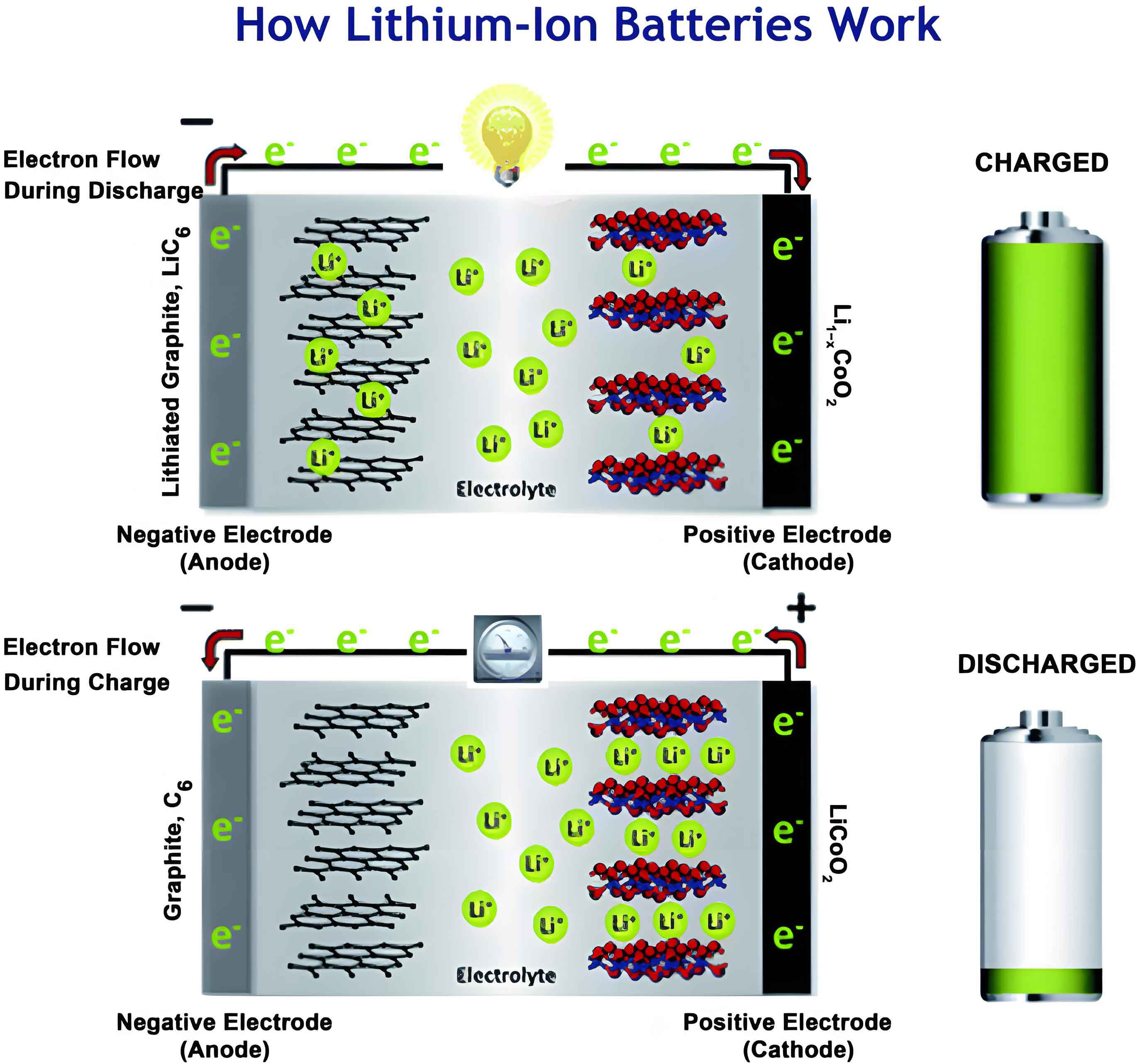
The core of my work lies in establishing a differential equation that simultaneously identifies parameters for both the second-order RC equivalent circuit model and the PNGV model. By directly discretizing the continuous-time equations, I derive a unified form that facilitates online estimation. For the second-order RC model, the terminal voltage $U_k$ at time step $k$ is expressed as:
$$U_k = U_{o,k} + R_o I_k + U_{p1,k} + U_{p2,k}$$
where $U_{o,k}$ is the open-circuit voltage (OCV), $R_o$ is the ohmic resistance, and $U_{p1,k}$ and $U_{p2,k}$ are polarization voltages across two RC pairs. The dynamics of polarization voltages are governed by:
$$\frac{dU_{p1}}{dt} = \frac{I}{C_{p1}} – \frac{U_{p1}}{R_{p1} C_{p1}}, \quad \frac{dU_{p2}}{dt} = \frac{I}{C_{p2}} – \frac{U_{p2}}{R_{p2} C_{p2}}$$
Through discretization, these equations are transformed into difference equations. For instance, $U_{p1,k} = a_1 U_{p1,k-1} + b_1 I_{k-1}$, with $a_1 = \frac{R_{p1} C_{p1} – T_s}{R_{p1} C_{p1}}$ and $b_1 = \frac{T_s}{C_{p1}}$, where $T_s$ is the sampling time. Similarly, for the PNGV model, which includes an equivalent capacitor $C_b$ to account for current cumulative effects, the equations are:
$$U_k = U_{o,k} + U_{p,k} + U_{b,k} + R I_k, \quad \frac{dU_p}{dt} = \frac{I}{C_p} – \frac{U_p}{R_p C_p}, \quad \frac{dU_b}{dt} = \frac{I}{C_b}$$
After discretization, both models yield a common difference equation structure:
$$U_k = \alpha_0 + \alpha_1 U_{k-1} + \alpha_2 U_{k-2} + \beta_0 I_k + \beta_1 I_{k-1} + \beta_2 I_{k-2}$$
This unified form allows for simultaneous parameter identification. The parameter vector $\theta = [\alpha_0, \alpha_1, \alpha_2, \beta_0, \beta_1, \beta_2]^T$ can be estimated using identification algorithms, and the original model parameters are recovered through algebraic relationships. For example, for the second-order RC model, the OCV is computed as $U_o = \frac{\alpha_0}{1 – \alpha_1 – \alpha_2}$, and the resistances and capacitances are derived from $a_i$ and $b_i$ coefficients. This approach simplifies the identification process and enables real-time application for lithium-ion battery management.
To achieve high accuracy and robustness, I propose the FMIAELS algorithm based on multi-innovation identification theory. Traditional algorithms like the Recursive Extended Least Squares (RELS) or Recursive Least Squares with Forgetting Factor (FRLS) use a single innovation scalar to update parameter estimates, which can lead to slow convergence and sensitivity to noise. In contrast, multi-innovation theory extends the innovation to a vector, incorporating multiple time steps of error information. This enhances the algorithm’s ability to track time-varying parameters, which is crucial for lithium-ion batteries due to their nonlinear behavior under different SOC, current rates, and temperatures.
The FMIAELS algorithm is derived by considering an auxiliary model to handle noise and a forgetting factor to weight recent data more heavily. The system output vector $Y_{m,j}$ and information matrix $\Phi_{m,j}$ are defined over a window of size $m$:
$$Y_{m,j} = [y_j, y_{j-1}, \dots, y_{j-m+1}]^T, \quad \Phi_{m,j} = [\phi_j, \phi_{j-1}, \dots, \phi_{j-m+1}]$$
where $\phi_j$ is the regressor vector. The parameter update equations are:
$$L_j = \frac{P_{j-1} \Phi’_{m,j}}{\eta E_m + \Phi’^T_{m,j} P_{j-1} \Phi’_{m,j}}$$
$$P_j = \frac{P_{j-1} – L_j \Phi’^T_{m,j} P_{j-1}}{\eta}$$
$$\theta’_j = \theta’_{j-1} + P_j \Phi’_{m,j} [Y_{m,j} – \Phi’^T_{m,j} \theta’_{j-1}]$$
Here, $L_j$ is the gain matrix, $P_j$ is the covariance matrix, $\eta$ is the forgetting factor (set to 0.9987 in my experiments), and $E_m$ is an identity matrix. The prime notation indicates estimated values from the auxiliary model. This algorithm not only improves accuracy but also maintains real-time performance, making it suitable for BMS applications.
I validate the FMIAELS algorithm through extensive experiments on a lithium-ion battery with a capacity of 60 Ah and nominal voltage of 3.2 V. The testing platform includes a battery cycler and a thermal chamber to control environmental conditions. Various pulse profiles are applied, such as multiple positive-negative pulses (MPN), multiple negative-positive pulses (MNP), and the Hybrid Pulse Power Characterization (HPPC) pulse. Additionally, dynamic driving cycles like GB, DST, and FUDS are used to simulate real-world conditions. The battery is also subjected to aging tests to evaluate parameter identification under different SOH levels.
The performance of FMIAELS is compared against commonly used algorithms, including RELS, FRLS, Recursive Stochastic Newton Gradient Correction (RSNA), Model Reference Adaptive System (MRAS), and Adaptive Differential Evolution (ADE). Evaluation metrics include Mean Absolute Error (MAE), Root Mean Square Error (RMSE), and Weighted Mean Absolute Percentage Error (WMAPE), defined as:
$$\text{MAE} = \frac{1}{L} \sum_{i=1}^{L} |U_{\text{real},i} – U_{\text{estimated},i}|$$
$$\text{RMSE} = \sqrt{\frac{1}{L} \sum_{i=1}^{L} (U_{\text{real},i} – U_{\text{estimated},i})^2}$$
$$\text{WMAPE} = \frac{\sum_{i=1}^{L} |U_{\text{real},i} – U_{\text{estimated},i}|}{\sum_{i=1}^{L} |U_{\text{real},i}|} \times 100\%$$
where $U_{\text{real}}$ is the measured terminal voltage and $U_{\text{estimated}}$ is the simulated voltage from the identified model. The results demonstrate that FMIAELS consistently outperforms other algorithms across different scenarios.
For the second-order RC model under MPN pulses, FMIAELS achieves an MAE of 1.18 mV, RMSE of 1.89 mV, and WMAPE of 0.04%, which are significantly lower than those of RELS, FRLS, and ADE. RSNA and MRAS show large errors initially, with RMSE values over 1 V, indicating poor suitability for lithium-ion battery parameter identification. The superiority of FMIAELS is further confirmed under MNP and HPPC pulses, as summarized in Table 1.
| Pulse Type | Algorithm | MAE (mV) | RMSE (mV) | WMAPE (%) |
|---|---|---|---|---|
| MPN | FMIAELS | 1.18 | 1.89 | 0.04 |
| RELS | 5.80 | 6.90 | 0.18 | |
| FRLS | 3.18 | 3.85 | 0.10 | |
| RSNA | 545.69 | 1996.12 | 16.85 | |
| MRAS | 295.83 | 1077.18 | 9.13 | |
| ADE | 8.98 | 4.86 | 0.19 | |
| MNP | FMIAELS | 1.88 | 3.09 | 0.06 |
| RELS | 6.60 | 7.60 | 0.21 | |
| FRLS | 4.24 | 4.76 | 0.13 | |
| RSNA | 530.20 | 1938.31 | 16.37 | |
| MRAS | 286.57 | 1039.89 | 8.85 | |
| ADE | 9.42 | 11.65 | 0.29 | |
| HPPC | FMIAELS | 3.00 | 4.72 | 0.09 |
| RELS | 6.39 | 8.67 | 0.29 | |
| FRLS | 4.09 | 7.35 | 0.13 | |
| RSNA | 120.82 | 331.05 | 3.72 | |
| MRAS | 72.44 | 305.25 | 2.23 | |
| ADE | 7.14 | 8.10 | 0.22 |
Similar trends are observed for the PNGV model, though its overall accuracy is lower than that of the second-order RC model. FMIAELS still excels, with errors approximately one-third of those from conventional algorithms. For instance, under MPN pulses, FMIAELS yields an MAE of 33.13 mV and RMSE of 38.38 mV, whereas RELS and FRLS show higher errors. ADE, as an offline optimization method, provides competitive results but lacks real-time capability. The performance degradation of the PNGV model highlights the advantage of the second-order RC model for lithium-ion battery simulation, as it better captures dynamic behavior without significant voltage drift.
To further illustrate the effectiveness of FMIAELS, I evaluate lower-order models like the zero-order and first-order RC models. The zero-order model, or Rint model, has only two parameters (OCV and internal resistance), but FMIAELS achieves higher accuracy than RELS and FRLS. Under MPN pulses, FMIAELS attains an MAE of 4.04 mV, compared to 17.50 mV for RELS. For the first-order model, FMIAELS also outperforms others, with an MAE of 2.59 mV versus 5.80 mV for RELS. These results underscore the versatility of FMIAELS across different model complexities for lithium-ion battery applications.
The robustness of FMIAELS is tested under varying temperatures (5°C, 10°C, 35°C) and dynamic driving cycles (GB, DST, FUDS). In all cases, FMIAELS maintains low errors, whereas RELS and FRLS exhibit increased inaccuracies, especially at low temperatures where battery nonlinearities are more pronounced. For example, at 5°C under GB cycle, FMIAELS achieves a WMAPE of 0.12%, while RELS and FRLS show values above 0.5%. Additionally, under different aging states (SOH = 0.869 and 0.554), FMIAELS consistently identifies parameters with high precision, enabling reliable state estimation throughout the battery lifecycle.
A key aspect of parameter identification for lithium-ion batteries is the accurate estimation of OCV, which is critical for SOC determination. FMIAELS demonstrates superior OCV identification, with an average relative error of 0.22% across MPN, MNP, and HPPC pulses. In contrast, RELS, FRLS, RSNA, MRAS, and ADE show errors of 0.36%, 0.34%, 6.34%, 1.36%, and 0.29%, respectively. The multi-innovation approach allows FMIAELS to leverage historical data effectively, reducing noise sensitivity and improving convergence to the true OCV value.
The parameter variations identified by FMIAELS reveal insights into lithium-ion battery behavior. For instance, under MPN pulses, the OCV, ohmic resistance $R_o$, and polarization resistances $R_{p1}$ and $R_{p2}$ change with SOC and current rate. The time constants $\tau_{p1} = R_{p1} C_{p1}$ and $\tau_{p2} = R_{p2} C_{p2}$ also shift, indicating dynamic effects. These variations underscore the time-varying nature of lithium-ion battery parameters, necessitating adaptive identification algorithms like FMIAELS.
In comparison to other algorithms, FMIAELS offers several advantages. Traditional optimization algorithms like ADE may find global optima but are computationally expensive and unsuitable for real-time use. Single-innovation methods like RELS and FRLS are prone to slow convergence and data saturation issues. RSNA and MRAS, while adaptive, often fail to handle the nonlinearities of lithium-ion batteries effectively. FMIAELS combines the strengths of multi-innovation theory and forgetting factors to achieve fast, accurate, and robust parameter tracking, making it ideal for embedded BMS implementations.
In conclusion, my work presents a comprehensive framework for lithium-ion battery equivalent circuit model parameter identification. The unified differential equation enables simultaneous estimation for second-order RC and PNGV models, while the FMIAELS algorithm enhances accuracy and real-time performance through multi-innovation concepts. Experimental validation under diverse conditions confirms that FMIAELS outperforms conventional algorithms, with errors reduced by approximately two-thirds. The accurate OCV estimation further supports reliable SOC prediction, contributing to safer and more efficient battery management. Future research could extend this approach to higher-order models or integrate it with machine learning techniques for enhanced adaptability in complex lithium-ion battery systems.