
The global energy landscape is undergoing a profound transformation, driven by the urgent need to transition from fossil fuels to sustainable and environmentally benign alternatives. Among the various energy storage technologies, the lithium-ion battery stands out due to its high energy density, long cycle life, lack of memory effect, and relative environmental friendliness. The performance of a lithium-ion battery is intrinsically linked to the properties of its cathode material. In recent years, high-nickel layered oxide cathodes, such as LiNixCoyMnzO2 (NCM, x ≥ 0.8), LiNixCoyAlzO2 (NCA), and LiNi0.9M0.1O2, have become the focal point of research. These materials offer a compelling combination of high specific capacity, high operating voltage, and reduced cost by minimizing the use of expensive cobalt. However, the intrinsic instability associated with high nickel content, including severe Li+/Ni2+ cation mixing, irreversible phase transitions, lattice oxygen release, and detrimental interfacial reactions, severely limits their long-term cyclability and safety, thus hindering widespread commercialization. This article provides a comprehensive review of recent advances in modification strategies aimed at overcoming these challenges and enhancing the electrochemical performance of high-nickel layered cathode materials for next-generation lithium-ion batteries.
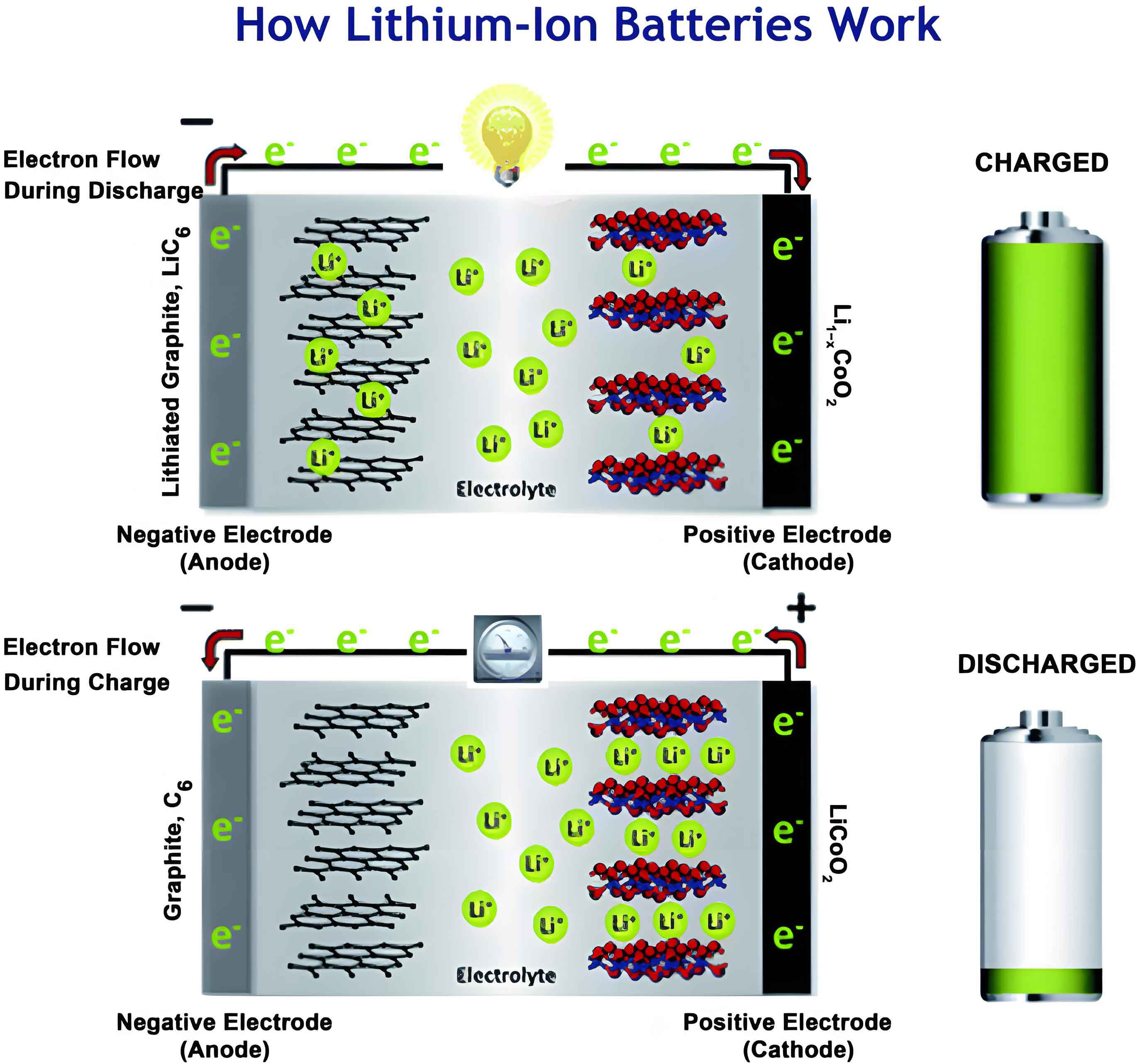
The fundamental operation of a lithium-ion battery relies on the reversible intercalation and deintercalation of lithium ions between the cathode and anode. During charging, Li+ ions are extracted from the cathode lattice, migrate through the electrolyte, and are inserted into the anode, while electrons flow through the external circuit. This process is reversed during discharge. The cathode material’s structure must remain stable during these repeated extraction/insertion cycles. For layered LiNiO2-based structures, the ideal hexagonal α-NaFeO2 structure (space group R\(\bar{3}\)m) consists of alternating layers of Li+ and transition metal (TM) ions (Ni, Co, Mn, Al) in octahedral sites, with oxygen ions forming a cubic close-packed framework. The reversible capacity is directly related to the amount of Ni3+/Ni4+ redox couple involved. However, the similar ionic radii of Li+ (0.76 Å) and Ni2+ (0.69 Å) facilitate cation mixing, where Ni2+ migrates into the Li layer, blocking Li+ diffusion pathways and reducing capacity. Furthermore, deep delithiation at high voltages or during extended cycling triggers harmful phase transitions (e.g., H2 to H3 phase), leading to abrupt anisotropic lattice contraction, microcrack generation, electrolyte infiltration, and accelerated degradation.
Ion Doping
Ion doping is a fundamental strategy to enhance the bulk structural stability of cathode materials. It involves introducing foreign ions into either the Li slab (e.g., Na+, K+, Mg2+) or the TM slab (e.g., Al3+, Nb5+, Ta5+, Sb5+). The primary objectives are to suppress cation disorder, widen Li+ diffusion channels, strengthen the TM-O bond to inhibit oxygen loss, and mitigate detrimental phase transitions.
Cation Doping
Doping with larger alkali or alkaline earth metal ions into the Li layer acts as a “pillar” to stabilize the layered structure. The enlarged interlayer spacing facilitates faster Li+ transport. For instance, Na+ doping (ionic radius ~1.02 Å) significantly expands the Li slab, which can be described by the increase in the lattice parameter \(c\). The improved Li+ diffusion coefficient \(D_{Li^+}\) can be qualitatively related to the enlarged spacing:
$$ D_{Li^+} \propto \exp\left(-\frac{E_a}{k_B T}\right) $$
where \(E_a\) is the activation energy for diffusion, which is lowered by reducing the energy barrier for Li+ hopping between octahedral sites. Doping with multivalent cations like Mg2+ into the Li site provides a strong electrostatic pillar effect, effectively inhibiting layer collapse during deep delithiation.
Doping into the TM layer often involves high-valent or inert cations. Al3+ doping is widely studied for its ability to form strong Al-O bonds (bond dissociation energy ~512 kJ/mol), enhancing thermal and structural stability. High-valent dopants like Nb5+, Ta5+, and Sb5+ not only stabilize the crystal structure but also may create charge-compensating Li+ vacancies or modify the local electronic structure, further suppressing the H2-H3 phase transition. The formation energy of a doped structure can be considered to evaluate stability:
$$ \Delta E_f = E_{doped} – E_{pristine} – \sum_i n_i \mu_i $$
where \(E_{doped}\) and \(E_{pristine}\) are the total energies of the doped and pristine systems, \(n_i\) is the number of atoms of species \(i\) added or removed, and \(\mu_i\) is its chemical potential.
| Dopant Type | Example Material | Key Effect & Performance | Proposed Mechanism |
|---|---|---|---|
| Li-site (Na+) | Li0.97Na0.03Ni0.84Co0.11Mn0.05O2 | Enhanced rate capability (138.4 mAh/g at 10C); improved cycling stability. | Pillaring effect, enlarged Li-slab spacing, reduced Li+ diffusion barrier. |
| Li-site (Mg2+) | Li0.8Mg0.2Ni0.80Co0.05Mn0.15O2 | High capacity retention at 4.5V and 50°C. | Inhibits layer collapse, reduces porosity, strengthens structure. |
| TM-site (Nb5+) | LiNi0.881Co0.056Mn0.056Nb0.007O2 | Suppressed H2-H3 phase transition, stable cycling at 4.5V. | Expanded Li layer, stabilized lattice oxygen, facilitated Li+ migration. |
| TM-site (Ta5+) | LiNi0.895Co0.04Mn0.03Al0.03Ta0.005O2 | High discharge capacity (222.6 mAh/g) and retention at 4.5V. | Strong Ta-O bond, enhanced Li+ diffusion coefficient. |
Anion Doping
Anion doping, primarily with F– or other halides, involves partial substitution of O2- in the lattice. The stronger M-F bond (compared to M-O) increases the covalent character and raises the energy required for oxygen release, thereby improving thermal and structural stability. Furthermore, F– doping can mitigate the formation of reactive species like HF in the electrolyte by preemptively consuming residual lithium impurities (e.g., Li2CO3, LiOH) on the surface. Doping with larger anions like Br– can also expand the lattice parameters. The bond strength can be a critical factor, as seen with the strong TM-Br bond (~342.5 kJ/mol), which effectively stabilizes the surface structure against degradation.
Surface Coating
Surface engineering through coating is essential to protect the reactive surface of high-nickel cathodes from electrolyte attack, HF corrosion, and transition metal dissolution. An ideal coating layer should be thin, uniform, ionically conductive, and chemically/electrochemically stable.
Oxide Coatings
Metal oxides like Al2O3, ZrO2, and TiO2 are common coating materials. They act as physical barriers, preventing direct contact between the cathode and electrolyte. Some oxides, like LiAlO2, possess good Li+ conductivity. Rare-earth oxide coatings, such as CeO2, offer unique benefits due to their rich electronic structures and oxygen storage capacity, which can scavenge harmful oxygen radicals and stabilize the interface.
Fluoride and Phosphate Coatings
Fluoride coatings (e.g., AlF3, PrF3) are highly effective due to their excellent chemical inertness and strong resistance to HF etching. They form a robust protective layer that significantly reduces surface side reactions and transition metal dissolution. Phosphate-based coatings (e.g., Li3PO4, AlPO4, ZrP2O7) are also promising. They often react with surface residual lithium compounds to form a stable Li+-conductive interface layer (e.g., Li3PO4), which promotes Li+ transport while blocking electron transfer to suppress electrolyte oxidation at high voltages. The coating process can be viewed as creating a passivating solid electrolyte interphase (CEI) on the cathode. Its effectiveness in reducing parasitic currents can be related to the charge transfer resistance \(R_{ct}\) at the interface, which should be minimized for Li+ transfer but maximized for electron transfer related to side reactions.
| Coating Type | Example Material | Key Effect & Performance | Proposed Mechanism |
|---|---|---|---|
| Oxide (Al2O3/LiAlO2) | NCM811@Al2O3/LiAlO2 | High capacity retention (94.3% at 0.2C after 100 cycles). | Physical barrier against electrolyte, HF scavenging, enhanced ionic conductivity. |
| Fluoride (PrF3) | NCM811@PrF3 | Improved high-voltage (4.6V) cycling stability. | Excellent chemical inertness, effective HF barrier, suppresses microcracks. |
| Phosphate (Li3PO4) | NCM90505@Li3PO4 | Enhanced rate capability (175.6 mAh/g at 5C) and cycling. | Consumes surface Li residues, forms Li+-conductive layer, stabilizes interface. |
Multi-Element Synergistic Modification
Single-element modifications often target specific weaknesses. A more powerful approach involves the co-modification with two or more elements, either through co-doping, a combination of doping and coating, or multi-element doping. This strategy leverages synergistic effects to simultaneously address multiple degradation pathways.
For example, Al-Mg co-doping combines the benefits of strong Al-O bonds in the TM layer for structural stability with the pillaring effect of Mg2+ in the Li layer to inhibit collapse. Similarly, Y3+ and W6+ co-doping can synergistically reduce cation mixing, strengthen the TM-O framework, and suppress phase transitions. Another effective strategy is the combination of bulk doping (e.g., with Zr4+) and surface coating (e.g., with phosphate). The dopant stabilizes the bulk crystal structure from within, while the coating protects the surface from external attack. The overall improvement in cycle life \(N\) can be conceptually modeled as an enhancement of the limiting factor, often the structural integrity factor \(\beta\):
$$ N \propto \frac{1}{\beta_{mechanical} + \beta_{chemical} + \beta_{electrochemical}} $$
Synergistic modification works by reducing all contributing degradation factors \(\beta\) simultaneously.
| Co-Modification Strategy | Example Material | Synergistic Effect & Performance | Proposed Mechanism |
|---|---|---|---|
| Al3+ & B3+ Co-doping | Li(Ni0.90Co0.05Mn0.05)0.997Al0.002B0.001O2 | High capacity (227 mAh/g) and excellent rate performance. | B expands Li layer; strong Al-O bond stabilizes structure; combined effect reduces disorder. |
| Na+ & W6+ Co-doping | Li0.98Na0.02W0.02(Ni0.83Co0.12Mn0.05)0.98O2 | Excellent cycling (85% retention after 200 cycles at 1C) and thermal stability. | Na pillars Li layer; W stabilizes TM layer; suppresses H2-H3 and microcracks. |
| Mg2+ & Fe3+ Co-doping | Li(Ni0.9Mn0.1)1-x-yMgxFeyO2 | Stable high-voltage (4.7V) cycling performance. | Mg pillars Li layer; Fe provides additional redox activity and charge compensation. |
Concentration Gradient Design and Structural Engineering
These strategies involve designing the particle architecture at the micro- or nano-scale to optimize performance.
Concentration Gradient (Core-Shell) Design
This design features a Ni-rich core (for high capacity) surrounded by a shell with gradually decreasing Ni and increasing Mn (and/or Al) concentration towards the surface. The Mn/Al-rich surface is more stable and resistant to side reactions and oxygen loss, while the core delivers high energy density. This architecture mitigates the strain mismatch between surface and bulk during cycling, reducing microcrack formation. The composition profile \(C_i(r)\), where \(i\) is the element (Ni, Mn, Co, Al) and \(r\) is the radial position, is carefully controlled during synthesis to ensure a smooth gradient that minimizes internal stress \(\sigma_{internal}\):
$$ \sigma_{internal} \propto \int \left| \frac{dC_{Ni}(r)}{dr} \right| E(r) \, dr $$
where \(E(r)\) is the local modulus. Minimizing this integral is key to preventing particle fracture.
Defect Engineering and Morphology Control
Introducing controlled cationic vacancies or designing unique particle morphologies (e.g., single crystals, porous shells) are advanced strategies. Cation vacancies, when coupled with stable dopants like Al, can significantly enhance structural reversibility by providing more space for Li+ migration and reducing the energy barrier for phase transitions. Designing a particle with a dense core and a porous outer layer, or using single-crystal particles, can effectively hinder crack propagation. Single crystals eliminate grain boundaries, which are common initiation sites for cracks, thereby enhancing mechanical integrity. The fracture toughness \(K_{IC}\) of a particle morphology plays a critical role in its longevity within a lithium-ion battery.
Conclusion and Perspectives
The relentless pursuit of higher energy density and longer cycle life for lithium-ion batteries has positioned high-nickel layered oxide cathodes at the forefront of materials research. However, their inherent structural and interfacial instabilities necessitate sophisticated modification strategies. As reviewed, ion doping effectively stabilizes the bulk crystal lattice by suppressing cation mixing, widening Li+ pathways, and strengthening metal-oxygen bonds. Surface coating constructs a protective barrier that mitigates detrimental interfacial reactions and electrolyte corrosion. Multi-element synergistic modification emerges as a particularly powerful approach, combining the advantages of individual strategies to comprehensively address bulk degradation, surface instability, and mechanical failure. Advanced designs like concentration gradient architectures and defect-engineered structures offer tailored solutions to manage internal stress and inhibit crack propagation.
Looking forward, the development of high-nickel cathodes will likely focus on several key areas. First, the exploration of novel dopants and coating materials through high-throughput computation and machine learning will accelerate the discovery of optimal compositions. Second, precise control over particle architecture, from atomic-scale doping gradients to mesoscale morphology design, will be crucial. Third, understanding the dynamic evolution of the cathode-electrolyte interphase under realistic operating conditions (high voltage, high temperature, fast charging) is essential for designing more robust protection layers. Finally, the integration of these modified high-nickel cathodes with advanced electrolytes (e.g., localized high-concentration electrolytes, solid-state electrolytes) will be a critical step towards realizing safe, long-lasting, and high-energy lithium-ion batteries for electric vehicles and large-scale energy storage. The synergistic combination of bulk doping, surface engineering, and architectural design holds the key to unlocking the full potential of high-nickel layered cathode materials, paving the way for the next generation of energy storage technology.