
The rapid global transition towards renewable energy sources like wind and solar has created an unprecedented demand for large-scale, flexible energy storage solutions. Among these, lithium-ion battery energy storage systems (BESS) have emerged as a frontrunner due to their declining costs, high energy density, and excellent cycle life. Within this domain, lithium iron phosphate (lifepo4 battery) chemistry is widely deployed, particularly for stationary storage, owing to its superior intrinsic safety profile compared to high-nickel chemistries, characterized by a higher thermal runaway onset temperature and more stable cathode material. However, the fundamental safety challenge persists: the lifepo4 battery still contains flammable organic electrolytes. Under abusive conditions such as overcharging, internal short circuit, or external heating, a cascade of exothermic reactions can be triggered, leading to thermal runaway—a self-accelerating, uncontrolled increase in temperature and pressure. This process generates large volumes of flammable and toxic gases (e.g., H₂, CO, C₂H₄, CH₄, vaporized electrolyte). In a sealed lifepo4 battery, this gas buildup eventually causes the safety vent (or burst disc) to rupture, resulting in a violent jet of gas and aerosol. If this event occurs within the confined space of an energy storage container, the accumulated combustible gases can reach explosive concentrations, posing a severe risk of fire and explosion. Therefore, understanding and controlling the post-venting behavior of a lifepo4 battery is paramount for enhancing the safety of BESS installations.
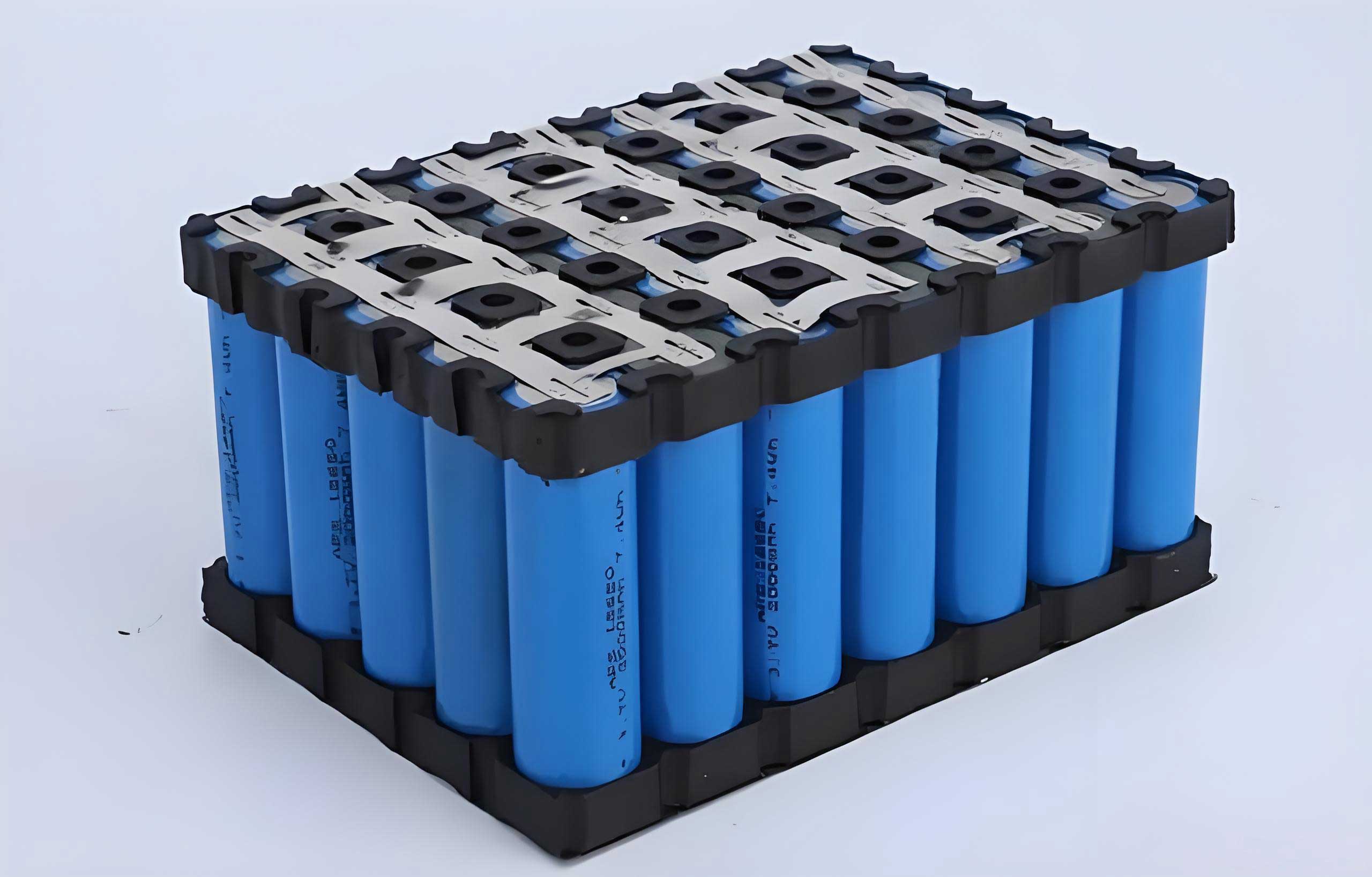
Our research focuses on a critical but often overlooked phase in the thermal runaway timeline: the period immediately after the safety vent of a lifepo4 battery has opened. While venting releases internal pressure and may temporarily slow heating, it does not necessarily halt the internal exothermic reactions, especially if electrical energy is still being supplied (e.g., in an overcharge scenario). The key question we address is: How does the timing of disconnecting the power source after venting affect the progression of thermal runaway, and what are the implications for early warning and fire suppression systems? To investigate this, our team constructed a dedicated experimental platform to analyze the characteristics of thermal runaway in a commercial lifepo4 battery under controlled overcharge conditions, with specific intervention at different points following vent activation.
1. Experimental Methodology: Simulating and Intervening in Failure
1.1 Battery Specification and Test Platform
The subject of our study was a prismatic (aluminum casing) lifepo4 battery with a nominal capacity of 27 Ah and voltage of 3.2 V. The key specifications are summarized in Table 1.
| Parameter | Specification |
|---|---|
| Dimensions (Thickness×Width×Height) | 21.3 × 100.5 × 144.8 mm |
| Mass | 605 g |
| Nominal Voltage | 3.2 V |
| Rated Capacity | 27 Ah |
| Cathode/Anode Material | LiFePO4 / Graphite |
| Main Electrolyte Solvents | EC, DMC, DEC |
Tests were conducted inside a 120 cm × 70 cm × 140 cm enclosure to allow for controlled accumulation and measurement of ejected gases. The experimental setup, as shown schematically, included:
- Charging System: A battery cycler was used to apply a constant current (1C, 27 A) overcharge until a high cutoff voltage (60 V) to ensure thermal runaway initiation.
- Data Acquisition: A multi-channel recorder collected real-time data for voltage and surface temperature (measured at the center of the battery’s largest face).
- Gas Detection: Three gas sensors were positioned 40 cm above the battery to monitor key combustible species indicative of thermal runaway: Hydrogen (H₂, 0-1000 ppm), Carbon Monoxide (CO, 0-1000 ppm), and Volatile Organic Compounds (VOC, 0-200 ppm).
- Visual Recording: A camera captured the visible jetting and smoke production process.
1.2 Defining Intervention Scenarios
The core of our experiment was to intervene by cutting off the charging power at three distinct moments after the safety vent opened. Based on preliminary tests, we identified a characteristic two-stage jetting phenomenon following vent rupture. Our intervention scenarios were designed to probe the effect of cutting power during these critical windows, as defined in Table 2.
| Scenario | Intervention (Power-Off) Moment | Rationale |
|---|---|---|
| Scenario S1 (Late Intervention) | 2 minutes after the start of the second jetting. | Simulates a severely delayed response, where thermal runaway is fully developed. |
| Scenario S2 (Mid Intervention) | At the start of the second jetting. | Tests intervention at the clear onset of major gas ejection. |
| Scenario S3 (Early Intervention) | At the moment of safety valve opening (first jet). | Represents the ideal, immediate response to the initial venting signal. |
All test batteries were preconditioned to 100% State of Charge (SOC) before the overcharge test to ensure consistency. The sequence of events for a typical overcharge test leading to thermal runaway, without early intervention, is captured in the data from Scenario S1, which serves as our baseline.
2. Results and Analysis: The Anatomy of Post-Venting Thermal Runaway
2.1 Phase Analysis of Thermal Runaway and Gas Jetting
Analyzing the data from Scenario S1 (power cut 2 min after second jet), we can delineate the thermal runaway process of the lifepo4 battery into three distinct phases, characterized by voltage, temperature, and gas evolution.
| Phase | Time Window | Key Characteristics | Underlying Mechanisms |
|---|---|---|---|
| Phase I: Pre-venting & Self-heating | 0 s to Vent Open (~932 s) | – Voltage slowly climbs to ~5.7V, then surges >10V. – Temperature rises steadily from 4°C to ~52°C. – Battery visibly swells. – No detectable gas. |
– Over-lithiation of anode, SEI layer decomposition, lithium plating. – Mild exothermic reactions cause self-heating and pressure buildup. |
| Phase II: First Venting & Interim | Vent Open to 2nd Jet (~932 s to 944 s) | – Safety valve ruptures with a brief, forceful gas jet. – Minor, transient detection of H₂, CO, VOC. – Temperature rise rate peaks (~0.49 °C/s). – Voltage stays at charger limit (10V). – ~8-12 second lull with no visible jetting. |
– Internal pressure exceeds vent threshold. – Initial release of gas from decomposed SEI and electrolyte. – Internal reactions intensify due to continued energy input. |
| Phase III: Second Jetting & Full Thermal Runaway | 2nd Jet Onward (>944 s) | – Sustained, voluminous jet of gas and aerosol (smoke). – H₂ and VOC concentrations rise sharply, often exceeding sensor range. – Voltage collapses and fluctuates wildly. – Temperature accelerates rapidly (>1 °C/s), defining full thermal runaway. – Eventual ignition risk if in open atmosphere. |
– Catastrophic decomposition of cathode, anode, and bulk electrolyte. – Intense internal heating and possible internal short circuits. – Combustible gas mixture (H₂, CO, hydrocarbons) is continuously generated and ejected. |
The most critical observation is the two-stage jetting phenomenon. The first jet at vent opening is brief and releases a finite amount of built-up gas. However, it does not stop the exothermic chain reactions inside the lifepo4 battery. With the charger still supplying energy, these reactions quickly regenerate gas, leading to a second, more prolonged and copious jetting event. The time interval between these two jets in our tests was consistently around 8-12 seconds. This “inter-jet window” emerges as a crucial period for effective intervention.
The transition to full thermal runaway, defined by a temperature rise rate exceeding 1 °C/s, occurred in Scenario S1 at approximately 1017 s, when the surface temperature was 76°C. After this point, the temperature rise became extremely rapid, reaching up to 21 °C/s, indicating that the internal reactions had become self-sustaining and uncontrollable by simply removing the external electrical stimulus.
2.2 Impact of Intervention Timing on Thermal Runaway Development
The comparative analysis of Scenarios S1, S2, and S3 reveals dramatic differences in outcomes, highlighting the profound importance of early power disconnection for a lifepo4 battery after venting.
Visual and Phenomenological Differences:
- Scenario S3 (Early Intervention): When power was cut at the instant of the first jet (vent open), the initial gas ejection subsided within about 1 second. No second jetting occurred. The battery did not proceed to produce dense smoke or sustained flaming ejecta, indicating that the internal chain reaction was effectively arrested at a very early stage.
- Scenario S2 (Mid Intervention): Cutting power at the onset of the second jet did not cause an immediate stop. Jet activity gradually weakened over approximately 90 seconds before ceasing. While significant gas was released, the event was less severe than in S1.
- Scenario S1 (Late Intervention): Cutting power 2 minutes into the second jetting had no visibly mitigating effect on the ongoing process. The battery continued to jet copious amounts of smoke until the enclosure was completely filled, demonstrating that thermal runaway was fully entrenched and irreversible by that time.
Quantitative Analysis of Temperature and Gas Generation:
The quantitative data starkly illustrates the efficacy gradient of intervention timing. Figure 7 (referenced conceptually) shows the distinct temperature trajectories:
- Scenario S3: Temperature spiked briefly to a maximum of 66°C after power-off, then slowly decayed, stabilizing around 59°C. The reaction was quenched.
- Scenario S2: Temperature continued to rise slowly for 65s after power-off, reaching a plateau of 93°C. Internal reactions continued but at a decelerated rate.
- Scenario S1: Temperature surged unabated after the late power-off, reaching a peak of 200°C. The internal heat generation far outweighed any cooling from the cessation of charging.
The gas concentration data tells a similar story. Table 4 summarizes the key comparative metrics. It is important to note that in Scenario S1, the H₂ sensor reached its upper limit (1000 ppm), indicating a very high concentration.
| Metric | Scenario S1 (Late) | Scenario S2 (Mid) | Scenario S3 (Early) | Difference (S1 – S2) | Difference (S2 – S3) |
|---|---|---|---|---|---|
| Max. Surface Temperature | 200 °C | 93 °C | 66 °C | +107 °C | +27 °C |
| Peak H₂ Concentration | >1000 ppm | 291 ppm | 252 ppm | >709 ppm | +39 ppm |
| Peak CO Concentration | 422 ppm | 94 ppm | 77 ppm | +328 ppm | +17 ppm |
| Phenomenological Outcome | Full thermal runaway, sustained heavy jetting, smoke-filled enclosure. | Thermal runaway initiated but suppressed; jetting ceased within ~90s. | Thermal runaway arrested; only initial brief venting. | Catastrophic vs. Controlled | Significant vs. Minor Event |
The differential values are revealing. The temperature gap between late and mid intervention (107°C) is four times larger than the gap between mid and early intervention (27°C). This non-linear relationship underscores that the most intense heat release in a lifepo4 battery occurs after the second jetting begins. Similarly, the gas concentration differences (e.g., >709 ppm for H₂ between S1 and S2) highlight the massive increase in flammable gas production if the battery is allowed to progress into the full thermal runaway state.
3. Discussion: Implications for Early Warning and Active Protection
3.1 The Critical “Inter-Jet” Window for Warning
Our findings directly inform the design of early warning systems for lifepo4 battery energy storage. The ideal warning signal is the detection of the safety valve opening (first jet), often accompanied by a distinct acoustic signature or a sudden change in internal pressure or internal impedance. An intervention (power disconnect, fire suppression agent release) triggered at this precise moment (Scenario S3) is maximally effective, potentially preventing any significant thermal event.
However, in practice, detecting the exact millisecond of vent opening with 100% reliability is challenging. Therefore, we propose that the most critical and reliable action window for effective warning and intervention is the period between the first and second jetting events—a window we measured to be approximately 10 seconds. During this short interval, the internal exothermic reactions are intensifying but have not yet culminated in the catastrophic, self-sustaining release characteristic of Phase III. A system that can reliably detect the first jet (via H₂, audio, or pressure sensors) and execute a shutdown command within this ~10-second window can achieve outcomes similar to Scenario S2, dramatically limiting the temperature rise and the volume of ejected flammable gas, thereby mitigating fire and explosion risks.
A warning that only triggers after the second jetting has begun (or later) is effectively a failure, as the lifepo4 battery is already in an advanced, difficult-to-control state of thermal runaway.
3.2 Kinetic Interpretation and Modeling Perspective
The progression of thermal runaway can be described by Arrhenius-based reaction kinetics. The heat generation rate ($\dot{Q}_{gen}$) inside a failing battery can be approximated by the sum of heat from various exothermic reactions (SEI decomposition, anode-electrolyte reaction, cathode decomposition, etc.):
$$
\dot{Q}_{gen} = \sum_i A_i C_i^n \exp\left(-\frac{E_{a,i}}{RT}\right)
$$
where $A_i$ is the pre-exponential factor, $C_i$ is the concentration of reactants, $n$ is the reaction order, $E_{a,i}$ is the activation energy, $R$ is the universal gas constant, and $T$ is the absolute temperature for reaction $i$.
During overcharge, the external power source adds a constant heat input $\dot{Q}_{ext} = I \cdot (V_{charge} – U_{ocv})$, where $I$ is the current, $V_{charge}$ is the charger voltage, and $U_{ocv}$ is the battery’s open-circuit voltage. The net heat accumulation is governed by:
$$
\rho C_p \frac{dT}{dt} = \dot{Q}_{gen} + \dot{Q}_{ext} – \dot{Q}_{loss}
$$
where $\rho C_p$ is the heat capacity, and $\dot{Q}_{loss}$ represents heat dissipation to the surroundings.
Our experiments demonstrate that cutting off $\dot{Q}_{ext}$ at different stages alters this energy balance decisively.
- In Scenario S3, $\dot{Q}_{ext}$ is removed while $\dot{Q}_{gen}$ is still relatively low (early in the reaction cascade). $\dot{Q}_{loss}$ can overcome the sum, causing temperature to plateau and decay: $\dot{Q}_{gen} – \dot{Q}_{loss} < 0$.
- In Scenario S2, $\dot{Q}_{ext}$ is removed as $\dot{Q}_{gen}$ is becoming significant. The system may briefly satisfy $\dot{Q}_{gen} – \dot{Q}_{loss} > 0$, leading to a limited temperature rise before the reactions deplete reactants or cool sufficiently.
- In Scenario S1, $\dot{Q}_{ext}$ is removed only after $\dot{Q}_{gen}$ has reached a very high, self-accelerating level due to the high temperature. At this point, $\dot{Q}_{gen} \gg \dot{Q}_{loss}$, making the process thermally self-sustaining regardless of the removal of external power: $\frac{dT}{dt}$ remains large and positive.
This kinetic framework explains why the timing of removing the external energy source is so critical for a lifepo4 battery.
3.3 Integration with Fire Suppression Systems
This research underscores that for active fire protection systems (e.g., water mist, aerosol, C6F12O), timing is equally critical. Releasing suppression agent after full thermal runaway (Scenario S1) may cool the battery surface and dilute gases, but it struggles to penetrate and quench the intense internal reactions. Agent release during the inter-jet window (aligned with Scenario S2) or at first vent (Scenario S3) allows the cooling and/or inhibiting effects to act on the battery while internal temperatures are lower and reaction rates are more manageable, leading to a much higher probability of suppression success. Therefore, gas detection (especially H₂, which rises early) should be integrally linked to both electrical disconnect and suppression system actuation logic.
4. Conclusion and Future Outlook
Through controlled overcharge experiments on a commercial lifepo4 battery, this study has elucidated the critical importance of intervention timing following safety vent rupture. The key findings are:
- Post-venting two-stage jetting is a key characteristic. After the initial vent burst, there is a brief lull (~10 s) followed by a second, more sustained jetting event that marks the transition into full thermal runaway.
- Power disconnection timing drastically alters outcomes. Cutting power at the first vent (early intervention) can arrest thermal runaway. Disconnecting at the second jet (mid intervention) significantly limits temperature rise and gas production. Disconnecting 2 minutes into the second jet (late intervention) has minimal effect, with the battery reaching temperatures over 200°C and producing large quantities of flammable gas.
- The “inter-jet window” is the effective action period for warning systems. For practical early warning and intervention systems in lifepo4 battery energy storage, reliable detection of the first venting event must trigger protective actions (power disconnect, suppression) within the subsequent ~10-second window to prevent the battery from progressing into an uncontrollable thermal runaway state.
Future work should focus on:
- Validating these findings across different lifepo4 battery formats (cylindrical, pouch) and capacities.
- Developing and testing multi-parameter (gas, acoustic, pressure) fusion algorithms for more robust and earlier vent detection.
- Integrating the timing strategy with advanced direct-cooling suppression agents to develop holistic “detect-interrupt-suppress” protocols for battery energy storage system safety.
By understanding and leveraging the critical post-venting timeline, we can design significantly safer energy storage systems, enabling the secure and widespread deployment of lifepo4 battery technology in the global renewable energy infrastructure.