
As a researcher focused on energy storage technologies, I have witnessed the growing urgency to transition from fossil fuels to renewable energy sources. The intermittent nature of solar and wind power necessitates efficient battery energy storage systems to ensure stable grid supply. Among various options, lithium-ion batteries have dominated, but their limited theoretical capacity and energy density hinder further progress. Therefore, exploring next-generation batteries like lithium-sulfur (Li-S) batteries is crucial. Li-S batteries offer high theoretical specific capacity (1675 mAh g−1) and energy density (2600 Wh kg−1), along with environmental benefits and low cost, making them promising for large-scale battery energy storage systems. However, challenges such as poor conductivity of sulfur, volume expansion, and the polysulfide shuttle effect impede commercialization. In this review, I discuss the application of metal phosphides as cathode materials to address these issues, emphasizing their role in enhancing the performance of Li-S batteries for advanced battery energy storage systems.
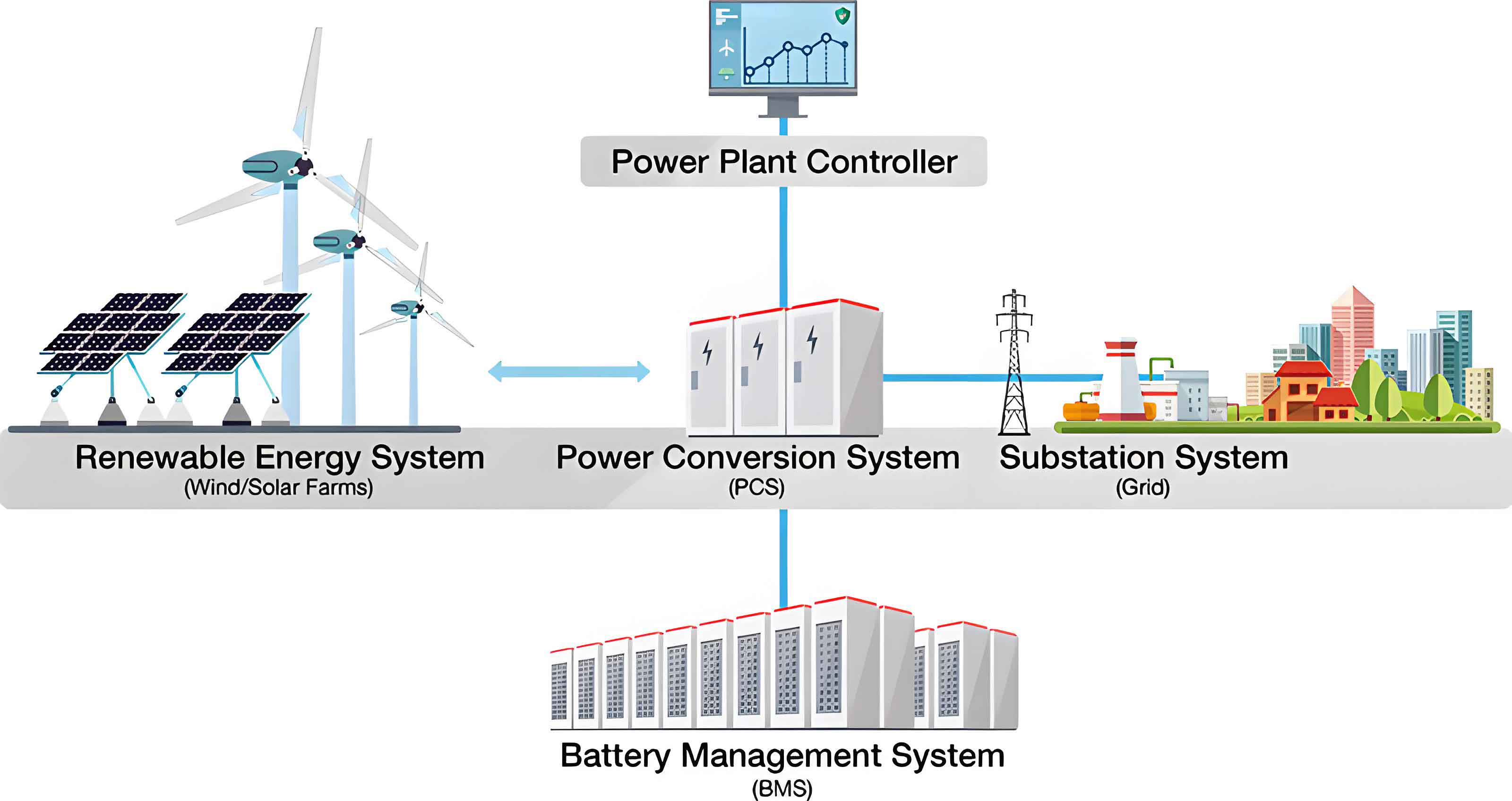
The performance of a battery energy storage system largely depends on the electrochemical properties of its components. For Li-S batteries, the cathode material is critical. Metal phosphides, with their high conductivity, catalytic activity, and ability to suppress polysulfide shuttling, have emerged as effective hosts. In this article, I will explore single and bimetallic phosphides, composites with carbon materials, and heterostructures with other compounds. I will incorporate tables and formulas to summarize key findings, ensuring that the discussion aligns with the needs of modern battery energy storage systems. The goal is to provide a comprehensive overview that highlights how metal phosphides can revolutionize energy storage.
Introduction to Lithium-Sulfur Batteries and Metal Phosphides
The demand for high-energy-density battery energy storage systems has accelerated research into Li-S batteries. The overall reaction in a Li-S battery can be represented as: $$ S_8 + 16Li \rightleftharpoons 8Li_2S $$ This reaction yields a high theoretical energy density, but practical implementation suffers from issues like polysulfide dissolution. The polysulfide shuttle effect leads to capacity fading and low Coulombic efficiency, which is detrimental to long-term operation of battery energy storage systems. Metal phosphides, such as MoP and NiCoP, exhibit polar surfaces that chemically adsorb polysulfides, thereby mitigating shuttling. Their metallic character enhances electron transfer, improving redox kinetics. I believe that integrating metal phosphides into cathodes can significantly boost the efficiency of battery energy storage systems.
To quantify the benefits, consider the specific capacity formula: $$ C_s = \frac{I \cdot \Delta t}{m} $$ where \( C_s \) is the specific capacity (mAh g−1), \( I \) is the current (mA), \( \Delta t \) is the discharge time (h), and \( m \) is the mass of active material (g). For Li-S batteries, metal phosphides help achieve values close to the theoretical limit. Additionally, the energy density \( E_d \) of a battery energy storage system is given by: $$ E_d = C_s \times V $$ where \( V \) is the average voltage (V). By enhancing \( C_s \) through metal phosphides, \( E_d \) increases, making these systems more viable for grid-scale storage.
Single and Bimetallic Phosphides
Single metal phosphides, like molybdenum phosphide (MoP), and bimetallic phosphides, such as nickel-cobalt phosphide (NiCoP), are widely studied for Li-S cathodes. Their synergistic effects improve conductivity and catalytic activity, which are essential for high-performance battery energy storage systems.
Molybdenum Phosphide (MoP)
MoP is abundant and effective in enhancing reaction kinetics. Studies show that hollow-structured MoP encapsulated with nitrogen-doped carbon (MoP@NC) provides high conductivity and porous architecture, facilitating ion diffusion. This structure is beneficial for fast charging and discharging in battery energy storage systems. The MoP@NC/S cathode delivers an initial discharge capacity of 1587 mAh g−1 at 0.1C, with a sulfur utilization of nearly 95%. After 1000 cycles at 1C, the capacity decay rate is only 0.04% per cycle, demonstrating excellent stability for long-term battery energy storage systems.
The adsorption energy \( E_{ads} \) of polysulfides on MoP can be calculated using density functional theory (DFT): $$ E_{ads} = E_{total} – (E_{MoP} + E_{LiPS}) $$ where \( E_{total} \) is the total energy of the MoP-polysulfide system, \( E_{MoP} \) is the energy of MoP, and \( E_{LiPS} \) is the energy of the polysulfide. Negative \( E_{ads} \) values indicate strong adsorption, which suppresses shuttling.
Nickel-Cobalt Bimetallic Phosphide (NiCoP)
Bimetallic phosphides leverage synergistic effects to outperform single-metal variants. For instance, hollow quasi-polyhedral NiCoP, derived from ZIF-67, offers a high specific surface area of 1539.2 m² g−1. This structure provides abundant active sites for sulfur loading and polysulfide confinement. The NiCoP-based cathode achieves an initial discharge capacity of 815.3 mAh g−1 at 0.1C, with nearly 100% Coulombic efficiency and 76% capacity retention after 200 cycles. Such performance underscores the potential of bimetallic phosphides in durable battery energy storage systems.
To compare different phosphides, I have compiled Table 1, which summarizes their electrochemical properties relevant to battery energy storage systems.
| Phosphide Type | Specific Surface Area (m² g−1) | Initial Capacity (mAh g−1 at 0.1C) | Cycle Stability (Capacity Retention after N cycles) | Key Advantages for Battery Energy Storage Systems |
|---|---|---|---|---|
| MoP@NC | ~500 (estimated) | 1587 | ~96% after 1000 cycles at 1C | High conductivity, hollow structure for ion diffusion |
| NiCoP | 1539.2 | 815.3 | 76% after 200 cycles at 0.1C | Synergistic effects, high surface area |
| Other Single Phosphides (e.g., CoP) | Varies | ~1200-1400 | ~70-80% after 500 cycles | Good adsorption, moderate conductivity |
The table highlights how bimetallic phosphides like NiCoP offer superior surface area, which is critical for adsorbing polysulfides in battery energy storage systems. The capacity retention data indicates long-term viability.
Metal Phosphide/Carbon Composites
To further enhance conductivity and polysulfide trapping, metal phosphides are combined with carbon materials. Carbon structures provide mechanical support and electron pathways, essential for efficient battery energy storage systems. I categorize these composites based on carbon dimensionality: one-dimensional (1D), two-dimensional (2D), and three-dimensional (3D).
1D Carbon Composites: Carbon Nanotubes (CNTs) and Nanofibers
CNTs form conductive networks that accelerate electron transfer. For example, a composite of CoP and CNTs embedded in carbon cages (CoP-CNT@C) exhibits strong polysulfide adsorption and fast kinetics. The CoP-CNT@C/S cathode delivers an initial discharge capacity of 1456.8 mAh g−1 at 0.1C. After 750 cycles at 0.5C, it retains 473.9 mAh g−1, with a low decay rate of 0.075% per cycle. This stability is vital for battery energy storage systems requiring frequent cycling.
The electrical conductivity \( \sigma \) of such composites can be modeled as: $$ \sigma = \sigma_0 + k \cdot V_f $$ where \( \sigma_0 \) is the conductivity of the metal phosphide, \( k \) is a constant, and \( V_f \) is the volume fraction of carbon. Higher \( V_f \) from CNTs boosts \( \sigma \), improving rate capability.
2D Carbon Composites: Graphene and Reduced Graphene Oxide
Graphene’s high surface area and flexibility make it ideal for composites. A composite of olive-like NiCo2Px with reduced graphene oxide (rGO) shows enhanced conductivity and shortened Li+ diffusion paths. The NiCo2Px/rGO/S cathode achieves a discharge capacity of 892.9 mAh g−1 after 200 cycles at 0.5C. Graphene’s mechanical strength also accommodates volume changes, benefiting the durability of battery energy storage systems.
3D Carbon Composites: Metal-Organic Frameworks (MOFs) Derivatives
3D carbon frameworks, derived from MOFs, offer hierarchical pores for sulfur confinement. A composite of CoxP nanoparticles on hollow N-doped carbon (CoxP/NC) creates an “adsorption-diffusion-conversion” network. The S@CoxP/NC cathode with 82% sulfur loading delivers 617.7 mAh g−1 at 3C and retains capacity over 1250 cycles at 1C with a decay rate of 0.053% per cycle. Even with high areal sulfur loading of 4.68 mg cm−2, it maintains performance, showcasing suitability for high-energy battery energy storage systems.
Table 2 compares the performance of metal phosphide/carbon composites, emphasizing their impact on battery energy storage systems.
| Composite Type | Carbon Material | Initial Capacity (mAh g−1) | Cycle Life (Cycles) | Decay Rate per Cycle (%) | Relevance to Battery Energy Storage Systems |
|---|---|---|---|---|---|
| CoP-CNT@C | CNTs | 1456.8 at 0.1C | 750 at 0.5C | 0.075 | Enhanced conductivity, long cycling stability |
| NiCo2Px/rGO | Reduced Graphene Oxide | ~900 at 0.5C | 200 at 0.5C | ~0.1 | Improved ion diffusion, mechanical flexibility |
| CoxP/NC | MOF-derived N-doped Carbon | ~1000 at 0.2C | 1250 at 1C | 0.053 | High sulfur loading, robust 3D structure |
These composites address key limitations of Li-S batteries, making them promising for grid-scale battery energy storage systems. The integration of carbon enhances both conductivity and polysulfide retention, which are critical for efficiency.
Heterostructures of Metal Phosphides with Other Compounds
Heterostructures combine metal phosphides with compounds like metal sulfides or oxides, creating interfaces that boost catalytic activity and charge transfer. These structures are advantageous for high-rate battery energy storage systems due to their synergistic effects.
Metal Phosphide-Metal Sulfide Heterostructures
For instance, spindle-shaped CoP-Co3S4 heterostructures are synthesized via simultaneous sulfidation and phosphidation. The polar surfaces of Co3S4 adsorb polysulfides, while CoP improves conductivity. The CoP-Co3S4@S cathode shows an initial capacity of 1516.9 mAh g−1 at 0.2C, retaining 750.1 mAh g−1 after 100 cycles. At 1C, it maintains 71.1% capacity after 300 cycles, with a decay rate of 0.077% per cycle. Even with 3.0 mg cm−2 sulfur loading, the capacity is 1055.9 mAh g−1, indicating robustness for battery energy storage systems with high energy demands.
The interfacial charge transfer in heterostructures can be described by the built-in electric field \( E_{bi} \): $$ E_{bi} = \frac{\Delta \phi}{d} $$ where \( \Delta \phi \) is the work function difference between materials and \( d \) is the interface thickness. This field accelerates Li+ migration, enhancing kinetics.
Metal Phosphide-Metal Oxide Heterostructures
Similarly, CoP-CoO heterostructures, formed via controlled phosphidation, combine CoO’s adsorption capability with CoP’s conductivity. The CoP-CoO/S cathode achieves an initial capacity of 1456.7 mAh g−1 at 0.2C, with 832 mAh g−1 after 100 cycles. At 1C, it retains 500 mAh g−1 after 300 cycles. Such performance underscores the potential of heterostructures in durable battery energy storage systems.
To quantify the synergy, the overall reaction rate \( k_{het} \) for polysulfide conversion can be expressed as: $$ k_{het} = k_{MP} + k_{MO} + \alpha \cdot I_{interface} $$ where \( k_{MP} \) and \( k_{MO} \) are rate constants of metal phosphide and metal oxide, respectively, \( \alpha \) is a coefficient, and \( I_{interface} \) represents interfacial interactions. Higher \( k_{het} \) leads to better battery performance.
Table 3 summarizes key heterostructures and their benefits for battery energy storage systems.
| Heterostructure Type | Components | Initial Capacity (mAh g−1) | Cycle Stability | Advantages for Battery Energy Storage Systems |
|---|---|---|---|---|
| CoP-Co3S4 | CoP and Co3S4 | 1516.9 at 0.2C | 71.1% retention after 300 cycles at 1C | Strong adsorption, enhanced conductivity |
| CoP-CoO | CoP and CoO | 1456.7 at 0.2C | ~500 mAh g−1 after 300 cycles at 1C | Combined polar and conductive properties |
| Other potential (e.g., NiP-Fe2O3) | Varied | ~1200-1400 | Under investigation | Tailored interfaces for specific needs |
These heterostructures exemplify how material engineering can optimize Li-S batteries for reliable battery energy storage systems.
Challenges and Future Perspectives
Despite progress, metal phosphide-based cathodes face hurdles. First, phosphidation processes often release toxic gases, posing environmental risks. Second, research is limited to common metals like Ni, Co, and Mo; exploring others (e.g., Fe, Cu) could unveil new opportunities. Third, studies on tri- or multi-metallic phosphides are scarce. Addressing these issues is essential for scalable battery energy storage systems.
From my perspective, future work should focus on eco-friendly synthesis methods, such as solid-state or aqueous routes. Additionally, computational screening using DFT can identify novel phosphides with optimal properties for battery energy storage systems. The integration of metal phosphides with emerging technologies like solid-state electrolytes could further enhance safety and performance.
In conclusion, metal phosphides hold immense promise for advancing Li-S batteries toward practical battery energy storage systems. Their ability to mitigate polysulfide shuttling and improve kinetics aligns with the demands of renewable energy integration. I anticipate that continued innovation will overcome current limitations, enabling metal phosphides to become mainstream cathode materials. This progress will not only benefit Li-S batteries but also inform related systems like Li-Se and Na-S batteries, contributing to a sustainable energy future.
To encapsulate the discussion, I present a formula for the overall efficiency \( \eta \) of a battery energy storage system incorporating metal phosphides: $$ \eta = \frac{E_{out}}{E_{in}} \times 100\% = \left( \frac{C_s \times V \times \text{CE}}{C_{theoretical} \times V_{theoretical}} \right) \times 100\% $$ where \( E_{out} \) is the energy output, \( E_{in} \) is the energy input, CE is the Coulombic efficiency, and \( C_{theoretical} \) and \( V_{theoretical} \) are theoretical values. By maximizing \( C_s \) and CE through metal phosphides, \( \eta \) improves, underscoring their value in real-world applications.
As research evolves, I am confident that metal phosphides will play a pivotal role in next-generation battery energy storage systems, enabling efficient, high-capacity energy storage for a greener planet.