
The recycling of spent lithium iron phosphate (LiFePO4) batteries has gained significant attention due to the growing demand for sustainable energy storage solutions. This study explores a mechanochemical solid-phase oxidation method using K2S2O8 as an oxidant to selectively recover lithium while minimizing environmental impact. Three approaches—oxidative leaching, mechanical activation combined with oxidative leaching, and mechanochemical solid-phase oxidation followed by water leaching—were systematically compared to optimize lithium recovery efficiency.
Experimental Design and Optimization
The cathode powder from spent lithium iron phosphate batteries was treated under varying conditions. Key parameters included the K2S2O8/LiFePO4 mass ratio (0.5–2.5) and ball-milling duration (0–40 min). Lithium leaching efficiency was calculated using:
$$ \text{Li Leaching Efficiency (\%)} = \frac{C_{\text{Li}} \times V}{m_{\text{LiFePO}_4} \times 100} $$
where \( C_{\text{Li}} \) is the lithium concentration in the leachate, \( V \) is the solution volume, and \( m_{\text{LiFePO}_4} \) is the initial mass of cathode material.
| Method | Optimal Conditions | Li Recovery (%) | Fe Leaching (%) |
|---|---|---|---|
| Oxidative Leaching | K2S2O8/LiFePO4 = 1.75 | 89.03 | 0.12 |
| Mechanical Activation + Leaching | 20 min ball-milling | 92.36 | 0.09 |
| Mechanochemical Oxidation + Water Leaching | K2S2O8/LiFePO4 = 1.75, 20 min | 98.26 | 0 |
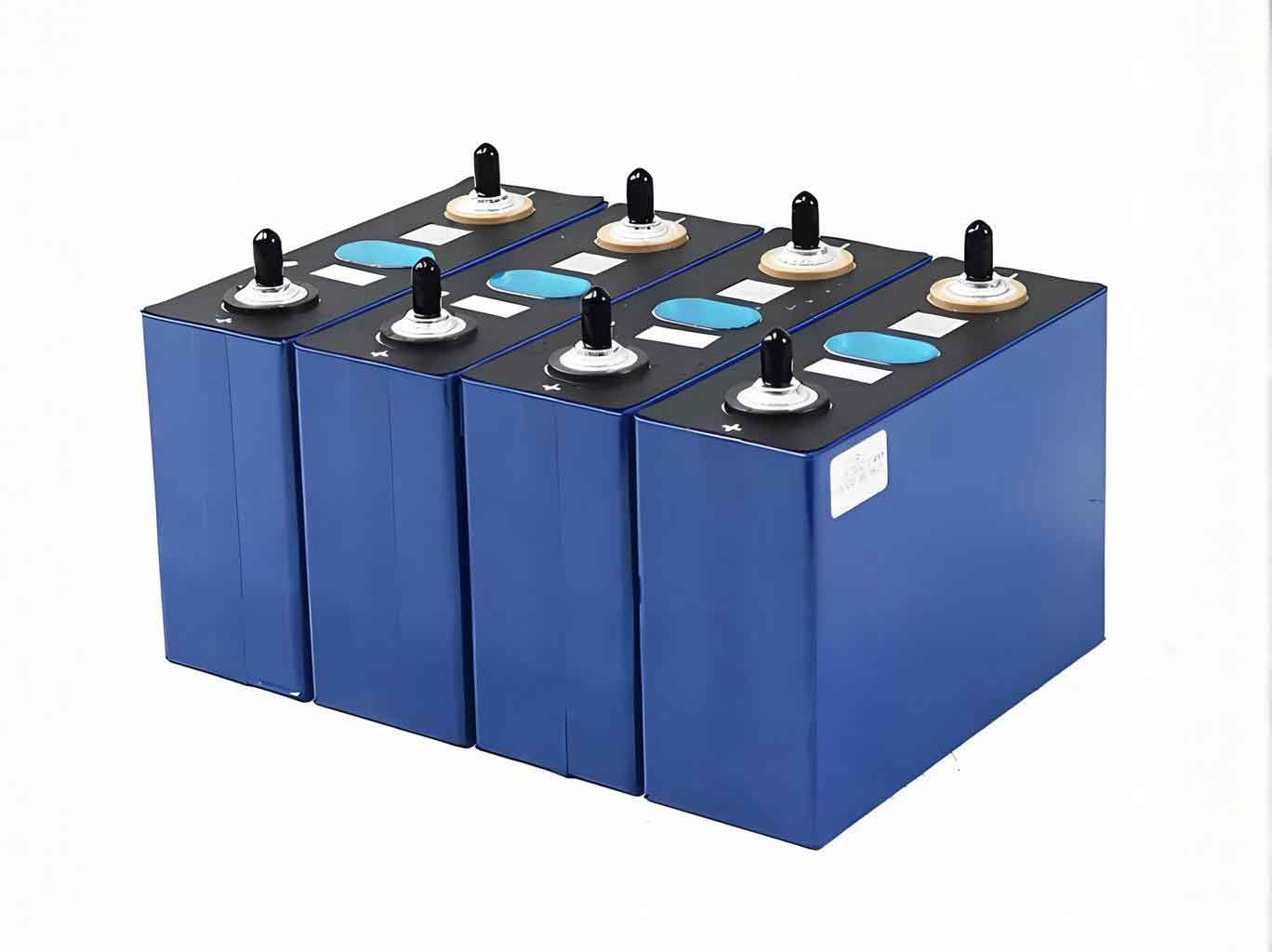
Mechanochemical Reaction Mechanism
The mechanochemical process induces both physical and chemical transformations. Ball-milling reduces particle size from \( D_{50} = 16.33 \, \mu \text{m} \) to \( 5.08 \, \mu \text{m} \), enhancing surface reactivity. Concurrently, K2S2O8 oxidizes Fe2+ in LiFePO4 to Fe3+, as confirmed by XPS analysis:
$$ \text{LiFePO}_4 + \text{K}_2\text{S}_2\text{O}_8 \rightarrow \text{FePO}_4 + \text{LiKSO}_4 + \text{SO}_4^{2-} $$
This solid-phase reaction preserves the olivine structure of FePO4, enabling selective lithium extraction during water leaching.
Product Characterization
The leachate yielded high-purity Li3PO4 (98.67%) after precipitation with K3PO4. Residual FePO4 exhibited 92.74% purity, suitable for battery remanufacturing. XRD patterns confirmed the crystallographic stability of reaction products, while SEM revealed spherical Li3PO4 aggregates with rough surfaces.
Industrial Implications
This method addresses critical challenges in lithium iron phosphate battery recycling:
- Avoids corrosive acids, reducing secondary pollution
- Minimizes energy consumption through room-temperature processing
- Enables closed-loop recovery of both lithium and iron components
Future work will optimize scalability and integrate the process with existing battery recycling infrastructure to enhance its economic viability for large-scale lithium iron phosphate battery recycling.