
As a researcher in the field of renewable energy systems, I have extensively studied the critical role that lubrication and heat transfer fluids play in ensuring the reliability and efficiency of solar power systems. The global shift toward sustainable energy sources has positioned solar power as a key player, with photovoltaic (PV) and concentrated solar power (CSP) technologies leading the way. However, the operational success of these systems hinges on the performance of key components like tracking mechanisms, turbines, and heat exchangers, all of which depend on specialized lubricants and thermal media. In this article, I will delve into the specific lubrication requirements for solar power systems, highlighting the unique challenges posed by environmental conditions and operational demands. I will use tables and equations to summarize key data, providing a comprehensive guide for selecting and developing appropriate fluids. The focus will be on enhancing the longevity and safety of solar power systems, which are essential for achieving carbon neutrality goals.
Solar power systems have seen rapid growth worldwide, with installations expanding in diverse environments from deserts to high-altitude regions. These systems can be broadly categorized into photovoltaic systems, which convert sunlight directly into electricity using semiconductors, and concentrated solar power systems, which use mirrors or lenses to focus sunlight onto a receiver, generating heat that drives a turbine. Both types rely on moving parts and thermal management, making lubrication a vital aspect of their operation. For instance, in PV systems, solar trackers use slew drives to adjust panel orientation, while in CSP systems, heliostats or parabolic troughs require precise movement to concentrate sunlight. The turbines in CSP plants, similar to those in conventional power plants, need high-performance lubricants to handle frequent starts and stops due to solar variability. Moreover, heat transfer fluids in CSP systems must withstand extreme temperatures without degrading. Throughout this discussion, I will emphasize how tailored lubrication strategies can mitigate issues like wear, leakage, and thermal breakdown, ultimately supporting the sustainable development of solar power systems.
One of the most critical components in solar power systems is the slew drive used in solar tracking mechanisms. These devices, often based on worm gear systems, enable panels or mirrors to follow the sun’s path, maximizing energy capture. However, they operate under harsh conditions, including wide temperature swings, high wind loads, and continuous slow movement. Traditional lubricants, such as general-purpose gear oils or semi-fluid greases, often fall short because they lack the necessary properties for long-term reliability. For example, in high-altitude solar power systems, temperatures can range from -20°C to 50°C, demanding lubricants with excellent low-temperature fluidity and high viscosity index. Additionally, the slow rotational speeds—often as low as 0.01 r/s at the output—create boundary lubrication conditions where oil films are thin, increasing the risk of wear. To address this, lubricants for solar power systems must have low friction coefficients and superior anti-wear properties. A common measure is the specific film thickness, which can be expressed as: $$ \lambda = \frac{h_{\text{min}}}{\sqrt{R_q^2 + R_q^2}} $$ where \( h_{\text{min}} \) is the minimum oil film thickness and \( R_q \) is the surface roughness. For solar power systems, maintaining \( \lambda > 3 \) is ideal to prevent metal-to-metal contact. Furthermore, seal compatibility is crucial to avoid leaks that could soil panels or mirrors, a common issue with standard lubricants. Oxidation stability is another key factor; lubricants must resist degradation over decades, as solar power systems are designed for lifespans exceeding 25 years. The oxidation reaction rate can be modeled using the Arrhenius equation: $$ k = A e^{-E_a / RT} $$ where \( k \) is the rate constant, \( A \) is the pre-exponential factor, \( E_a \) is the activation energy, \( R \) is the gas constant, and \( T \) is the temperature. By selecting base oils and additives that minimize \( k \), we can extend lubricant life significantly.
To illustrate the specific requirements for lubricants in solar power systems, I have compiled a table comparing typical properties for worm gear oils used in slew drives. This table is based on industry standards but tailored to the unique needs of solar applications, such as enhanced oxidation life and seal compatibility.
| Property | Test Method | Target Value |
|---|---|---|
| Viscosity Grade (ISO) | ISO 3448 | 680 or 1000 |
| Viscosity Index | ASTM D2270 | >120 |
| Pour Point (°C) | ASTM D97 | < -30 |
| Copper Corrosion (100°C, 3 h) | ASTM D130 | 1 max |
| Rust Prevention (B method) | ASTM D665 | Pass |
| Four-Ball Wear Scar (mm) | ASTM D4172 | < 0.5 |
| Oxidation Life (h to 2 mg KOH/g) | ASTM D943 | >1000 |
| Seal Compatibility (NBR, 7 days at 100°C) | DIN ISO 1817 | Volume change 0-10% |
As shown in Table 1, lubricants for solar power systems must balance multiple properties to ensure reliability. For instance, a high viscosity index ensures consistent performance across temperature ranges, which is critical for solar power systems exposed to diurnal cycles. The oxidation life target of over 1000 hours far exceeds standard requirements, aligning with the long service intervals in solar power systems. In practice, I have observed that synthetic base oils, such as polyalphaolefins (PAOs) or esters, combined with anti-wear additives like zinc dialkyldithiophosphate (ZDDP), can meet these demands. However, the unique “steel-on-iron” pairing in solar slew drives—unlike traditional “steel-on-bronze” worm gears—requires careful additive selection to prevent excessive wear. The wear volume \( V \) can be estimated using the Archard equation: $$ V = K \frac{W L}{H} $$ where \( K \) is the wear coefficient, \( W \) is the load, \( L \) is the sliding distance, and \( H \) is the hardness. By optimizing \( K \) through lubricant formulation, we can reduce wear in solar power systems.
Another vital area in solar power systems is the lubrication of turbines in CSP plants. These turbines convert thermal energy into electricity but face challenges due to intermittent operation caused by cloud cover or night cycles. Frequent starts and stops lead to thermal cycling, which accelerates oil oxidation and sludge formation. In my experience, turbine oils for solar power systems must have exceptional oxidation stability to prevent varnish deposition on critical components. The tendency for sludge formation can be predicted using the membrane patch colorimetry test, but a more fundamental approach involves monitoring the acid number over time. The rate of acid increase \( \frac{dAN}{dt} \) is proportional to the oxidation rate, and for solar power systems, we aim for \( \frac{dAN}{dt} < 0.01 \, \text{mg KOH/g per year} \). Additionally, these oils must have good demulsibility to separate water ingress, common in humid environments. A typical specification for turbine oils in solar power systems includes an ASTM D943 life exceeding 10,000 hours, which is achievable with hindered phenol antioxidants and triazine-based inhibitors.
Heat transfer fluids are equally important in CSP-based solar power systems, where they transport thermal energy from collectors to storage or turbines. Synthetic organic fluids, such as biphenyl-diphenyl oxide mixtures, are commonly used due to their high thermal stability up to 400°C. However, they must resist thermal cracking and fouling, which can reduce efficiency. The thermal degradation rate follows first-order kinetics: $$ \frac{dC}{dt} = -k C $$ where \( C \) is the concentration of the fluid and \( k \) is the degradation constant. For solar power systems, we select fluids with low \( k \) values to ensure long service life. Molten salts, like nitrate mixtures, are used in high-temperature CSP solar power systems but have drawbacks such as high freezing points (e.g., 130-230°C), requiring auxiliary heating. In contrast, synthetic oils offer lower pour points, making them suitable for systems prone to freezing. The following table summarizes key properties for thermal fluids in solar power systems.
| Property | Test Method | Synthetic Oil (e.g., Biphenyl Mix) | Molten Salt (e.g., SolarSalt) |
|---|---|---|---|
| Max Use Temperature (°C) | – | 400 | 550 |
| Freezing Point (°C) | ASTM D97 | < 10 | 220 |
| Thermal Conductivity (W/m·K) | ASTM D7896 | 0.1-0.2 | 0.5-0.6 |
| Oxidation Stability | ASTM D6184 | Stable up to 400°C | Stable up to 600°C |
| Vapor Pressure (kPa at 400°C) | ASTM T simulation | Low | Very low |
From Table 2, it is evident that synthetic oils offer advantages in low-temperature applications, while molten salts suit higher temperatures but require careful management to prevent solidification. In solar power systems, the choice depends on the specific design; for instance, tower-based CSP often uses molten salts for storage, whereas trough systems may prefer synthetic oils. To optimize heat transfer, the efficiency \( \eta \) can be expressed as: $$ \eta = 1 – \frac{T_c}{T_h} $$ where \( T_c \) and \( T_h \) are the cold and hot reservoir temperatures, respectively. By maintaining fluid integrity, solar power systems can achieve higher \( \eta \) values, reducing energy losses.
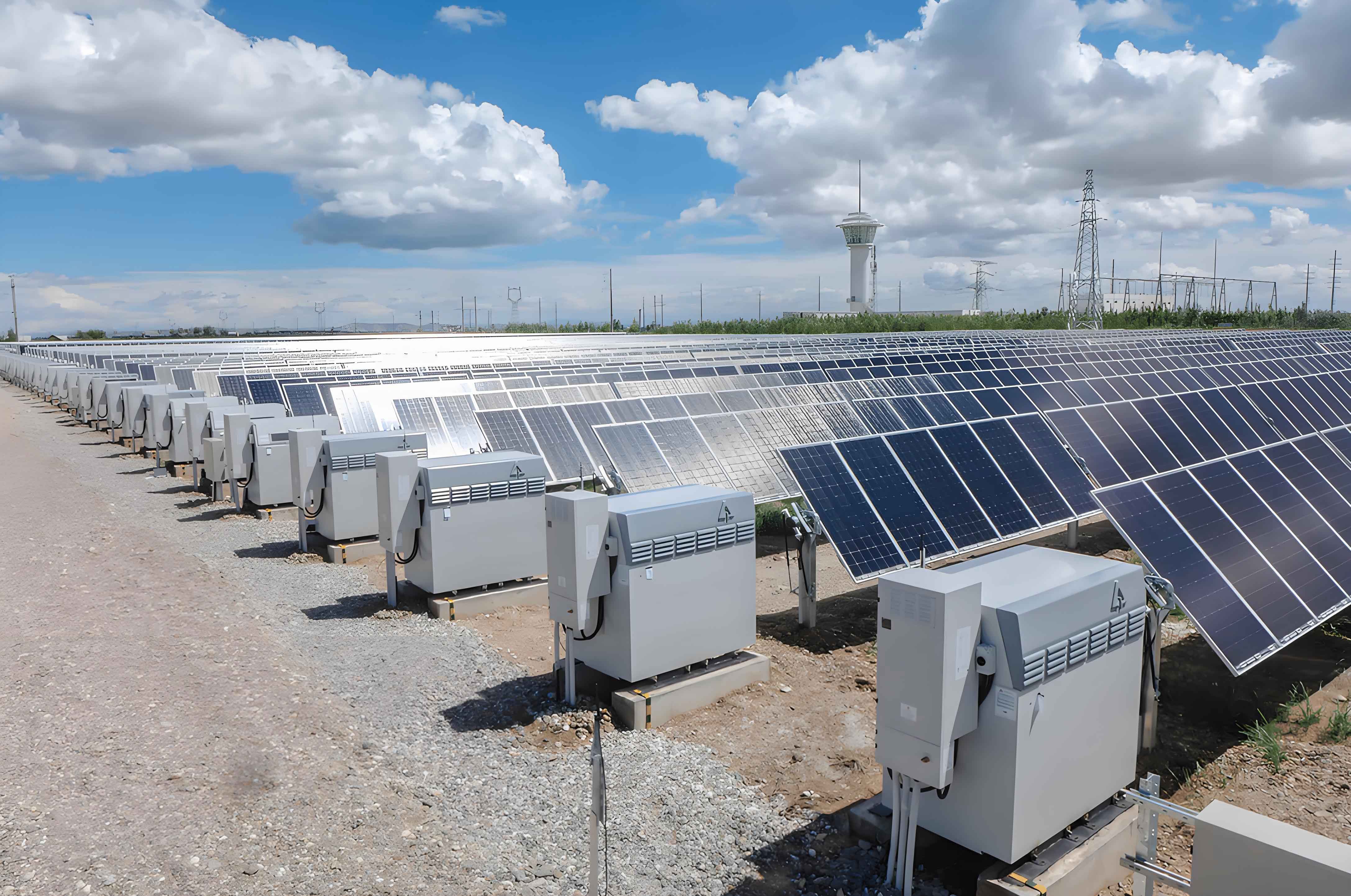
Inverter cooling is another aspect of solar power systems that requires attention, particularly in large-scale PV installations where liquid cooling is replacing air cooling for higher efficiency. The cooling fluids must have high thermal capacity and corrosion inhibition to protect metals like aluminum and copper. The heat transfer rate \( \dot{Q} \) is given by: $$ \dot{Q} = m c_p \Delta T $$ where \( m \) is the mass flow rate, \( c_p \) is the specific heat capacity, and \( \Delta T \) is the temperature difference. For solar power systems, glycol-based fluids with anti-corrosion additives are common, but they must be monitored for pH and reserve alkalinity to prevent scale formation.
Despite advancements, current lubricants and thermal fluids in solar power systems face several challenges. For example, many standard products have insufficient life spans, leading to frequent maintenance and downtime. Leakage from slew drives due to poor seal compatibility is a recurring issue, as even minor leaks can compromise the aesthetics and performance of solar arrays. Moreover, the lack of specialized testing protocols for solar power systems means that lubricants are often evaluated under conditions that do not replicate real-world scenarios. In my view, developing dedicated test rigs that simulate solar tracking movements—such as slow, oscillatory motion under variable loads—is essential. The friction coefficient \( \mu \) can be measured using a Schwingung Reibung und Verschleiss (SRV) tester, and for solar power systems, we target \( \mu < 0.1 \) to minimize energy losses.
To address these issues, I recommend a focused approach to formulating专用 lubricants for solar power systems. This involves using synthetic base oils with high viscosity indices, coupled with additive packages that enhance anti-wear, anti-oxidation, and seal-swelling properties. For instance, incorporating polymeric seal conditioners can reduce the risk of leaks in slew drives. Additionally, condition monitoring through oil analysis—measuring parameters like viscosity, acid number, and particulate count—can help predict failures in solar power systems. The remaining useful life (RUL) of a lubricant can be estimated using predictive models: $$ \text{RUL} = \frac{\text{AN}_{\text{limit}} – \text{AN}_{\text{current}}}{\frac{dAN}{dt}} $$ where \( \text{AN}_{\text{limit}} \) is the maximum allowable acid number. By integrating such models, solar power systems can transition to predictive maintenance, reducing operational costs.
In conclusion, the reliability and efficiency of solar power systems are deeply intertwined with the performance of lubricants and thermal fluids. From slew drives to turbines and heat exchangers, each component demands tailored solutions that account for environmental extremes, operational dynamics, and longevity requirements. Through careful formulation, validated by specialized testing and real-world data, we can develop lubricants that match the 25-year lifespan of solar power systems. As the world accelerates toward renewable energy, advancing lubrication technology will be pivotal in maximizing the potential of solar power systems, ensuring they contribute effectively to a sustainable future. I encourage continued collaboration between lubricant developers and solar equipment manufacturers to refine these solutions, ultimately driving down costs and enhancing the adoption of solar power systems globally.