
In modern energy storage systems, the li ion battery stands as a cornerstone technology, powering everything from portable electronics to electric vehicles and military equipment. However, as we push the boundaries of operation into extreme environments, particularly low-temperature regions such as polar areas, high altitudes, and near-space domains, the performance of conventional li ion batteries deteriorates significantly. This degradation poses critical challenges for applications in defense, aerospace, and exploration, where reliable energy storage is paramount. In this article, I will delve into the fundamental reasons behind the performance decline of li ion batteries under low-temperature conditions and explore strategic countermeasures to mitigate these issues. By examining factors like electrolyte conductivity, anode plating, desolvation processes, and mass transport limitations, we aim to provide a comprehensive overview that underscores the necessity of advancing low-temperature li ion battery technology for national security and competitiveness.
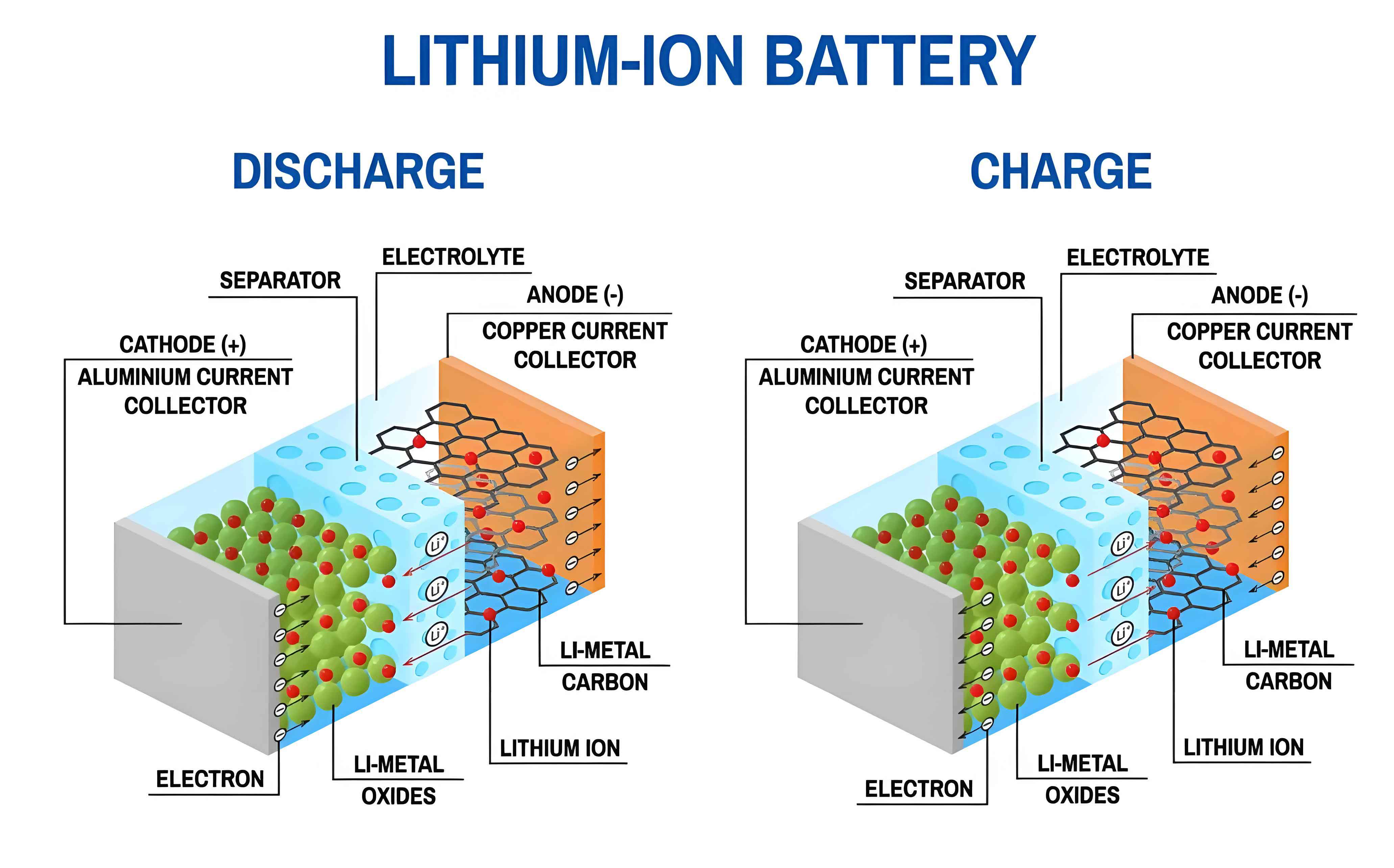
The operational temperature range of commercial li ion batteries typically spans from 0°C to 55°C, but in environments where temperatures plummet below -20°C, their electrochemical performance falters, leading to reduced capacity, power loss, and safety risks. This is especially critical in military contexts, where equipment must function reliably in harsh climates, such as -40°C in high-altitude regions or -60°C in Arctic expeditions. Moreover, in aerial and near-space applications (20–100 km altitude), temperatures can drop as low as -120°C, demanding robust energy solutions. The li ion battery, with its high energy density and rechargeability, is a preferred choice, but its inherent limitations at low temperatures necessitate urgent research and development. Here, I will systematically analyze the four primary factors contributing to this degradation: decreased electrolyte ionic conductivity, anode lithium plating and dendrite growth, hindered lithium-ion desolvation, and sluggish mass transport in electrodes and interfaces. For each factor, I will propose solutions supported by empirical data, theoretical models, and recent advancements, emphasizing the role of material engineering and electrolyte design in enhancing the low-temperature performance of li ion batteries.
To begin, let’s consider the electrolyte, which serves as the ionic conduit in a li ion battery. At low temperatures, the viscosity of the electrolyte increases dramatically, often leading to partial solidification, which severely impedes ion mobility. The ionic conductivity, a key parameter, can be described by the Arrhenius equation:
$$ \sigma = A \exp\left(-\frac{E_a}{kT}\right) $$
where \(\sigma\) is the ionic conductivity, \(A\) is a pre-exponential factor, \(E_a\) is the activation energy for ion transport, \(k\) is Boltzmann’s constant, and \(T\) is the absolute temperature. As \(T\) decreases, \(\sigma\) drops exponentially, causing increased internal resistance and reduced power output in li ion batteries. Common carbonate-based electrolytes, such as those containing ethylene carbonate (EC), have a high melting point (around 35°C) and become overly viscous below 0°C, limiting their utility in cold environments. In contrast, ether-based electrolytes offer lower viscosity but suffer from lower oxidation stability, making them incompatible with high-voltage cathodes. Recent innovations, like localized high-concentration electrolytes (LHCEs), address this by balancing salt concentration and solvent properties to maintain high conductivity at sub-zero temperatures. For instance, a liquefied gas electrolyte system using fluoroethane (FM) and acetonitrile (AN) as co-solvents has demonstrated remarkable ionic conductivity from -78°C to 75°C, enabling stable operation of li ion batteries in extreme cold. Table 1 summarizes key electrolyte modifications for low-temperature applications in li ion batteries.
| Electrolyte Type | Key Components | Ionic Conductivity at -40°C (mS/cm) | Advantages | Challenges |
|---|---|---|---|---|
| Carbonate-Based (Traditional) | EC, DMC, LiPF6 | 0.1–0.5 | High oxidation stability, good SEI formation | High viscosity, poor low-T conductivity |
| Ether-Based | DME, DOL, LiTFSI | 1.0–2.0 | Low viscosity, fast ion transport | Low oxidation potential, limited voltage window |
| High-Concentration Electrolyte (HCE) | LiTFSI >3M in EC/DMC | 0.5–1.0 | Stable interfaces, reduced solvent decomposition | High cost, high viscosity |
| Localized High-Concentration Electrolyte (LHCE) | LiTFSI, fluorinated diluents | 1.5–3.0 | Balanced viscosity and conductivity, wide T range | Complex formulation, scalability issues |
| Liquefied Gas Electrolyte | FM, AN, LiTFSI | 2.0–4.0 | Ultra-low T operation, high conductivity | Pressure management, safety concerns |
Moving to the anode, lithium plating is a predominant failure mode in li ion batteries at low temperatures. During charging, lithium ions normally intercalate into graphite layers at a potential around 0.1 V versus Li/Li⁺. However, when temperatures drop, kinetic barriers increase, causing the anode potential to dip below 0 V versus Li/Li⁺, leading to metallic lithium deposition on the surface. This plating reaction not only consumes active lithium, forming “dead lithium” that reduces capacity, but also promotes dendrite growth, which can pierce separators and cause short circuits. The overpotential for plating, \(\eta_{plating}\), can be expressed using the Butler-Volmer equation:
$$ j = j_0 \left[ \exp\left(\frac{\alpha n F \eta}{RT}\right) – \exp\left(-\frac{(1-\alpha) n F \eta}{RT}\right) \right] $$
where \(j\) is the current density, \(j_0\) is the exchange current density, \(\alpha\) is the charge transfer coefficient, \(n\) is the number of electrons, \(F\) is Faraday’s constant, \(R\) is the gas constant, and \(\eta\) is the overpotential. At low \(T\), \(j_0\) decreases, necessitating higher \(\eta\) to sustain current, which exacerbates plating risks. To counteract this, alternative anodes with higher working potentials, such as lithium titanate (Li₄Ti₅O₁₂), lithium metal, or alloy-based materials, are explored, though they often trade off energy density. Graphite modifications, like carbon coating via chemical vapor deposition or incorporating graphene nanosheets, have shown promise in reducing active sites and improving lithium-ion diffusion kinetics. For example, graphene-enhanced graphite anodes exhibit lower polarization at -30°C, delivering capacities up to 130 mAh/g compared to 25 mAh/g for pristine graphite. Additionally, surface engineering with lithiophilic materials, such as MoOₓ-MoPₓ phases, can facilitate lithium intercalation and suppress plating. Table 2 outlines anode-focused strategies to mitigate low-temperature issues in li ion batteries.
| Anode Material | Modification Approach | Performance at -30°C (Capacity Retention) | Mechanism | Limitations |
|---|---|---|---|---|
| Graphite (Conventional) | None | ~20% of room-T capacity | Standard intercalation, prone to plating | High polarization, SEI thickening |
| Carbon-Coated Graphite | CVD coating with PS | ~50% improvement | Reduces active sites, optimizes SEI | Costly process, limited scalability |
| Graphene-Composite Graphite | Add 2D graphene sheets | Up to 130 mAh/g at 0.05 A/g | Enhances conductivity, lowers polarization | Dispersion challenges, cost |
| Lithium Titanate (LTO) | Spinel structure Li₄Ti₅O₁₂ | High rate capability, minimal plating | High working potential (~1.5 V vs. Li/Li⁺) | Lower energy density, voltage mismatch |
| Pre-lithiated Hard Carbon | Chemical pre-lithiation | Fast kinetics, stable cycling | Improves initial coulombic efficiency | Complex synthesis, safety risks |
| Alloy Anodes (e.g., Sn/EG) | Sn-embedded expanded graphite | Enhanced low-T capacity | Facilitates Li-ion diffusion, reduces impedance | Volume expansion, cycle life issues |
The third critical factor is lithium-ion desolvation, which involves the stripping of solvent molecules from Li⁺ ions as they traverse the solid-electrolyte interphase (SEI) at the anode. This process requires energy, and at low temperatures, the desolvation energy barrier increases, slowing down charge transfer. The desolvation activation energy, \(E_{desolv}\), can be modeled as:
$$ E_{desolv} = \Delta H_{solv} + \Delta G_{interface} $$
where \(\Delta H_{solv}\) is the enthalpy of solvation and \(\Delta G_{interface}\) is the free energy change at the electrode/electrolyte interface. In conventional electrolytes, strong solvation sheaths around Li⁺ ions, dominated by solvents like EC, make desolvation arduous in the cold. To alleviate this, weakly solvating electrolytes (WSEs) are designed to promote anion-derived interfacial chemistry. By using non-polar solvents or additives that reduce solvent-Li⁺ interactions, more ion pairs or aggregates form, lowering \(E_{desolv}\) and accelerating desolvation. For instance, electrolytes with high anion/solvent ratios, such as concentrated LiTFSI systems, encourage anion participation in the solvation sheath, leading to faster Li⁺ transfer. This principle is crucial for optimizing the li ion battery’s low-temperature performance, as it directly impacts the charge-transfer resistance, \(R_{ct}\), which scales with temperature as:
$$ R_{ct} \propto \exp\left(\frac{E_a}{kT}\right) $$
where \(E_a\) encompasses desolvation and other activation energies. By tailoring electrolyte composition, we can significantly reduce \(R_{ct}\), enabling efficient operation of li ion batteries even below -20°C. Experimental data show that WSEs can cut \(R_{ct}\) by up to 50% at -30°C compared to standard electrolytes, highlighting their potential for cold-climate applications.
Lastly, the sluggish mass transport of lithium ions within electrode materials and across interfaces—including the SEI and cathode-electrolyte interphase (CEI)—contributes to performance decay. At low temperatures, diffusion coefficients for Li⁺ in both anode and cathode materials decrease, following the Einstein relation for diffusion:
$$ D = D_0 \exp\left(-\frac{E_D}{kT}\right) $$
where \(D\) is the diffusion coefficient, \(D_0\) is the pre-exponential factor, and \(E_D\) is the diffusion activation energy. In cathodes like LiCoO₂ or LiFePO₄, lattice contraction and reduced electronic conductivity exacerbate this slowdown. To combat this, various material engineering strategies are employed. For cathodes, doping with ions (e.g., Ti, Al) enhances Li⁺ mobility and electronic conductivity, while carbon coating or nanostructuring improves surface accessibility. For example, carbon-coated LiFePO₄ exhibits better low-temperature performance due to reduced charge-transfer resistance and faster ion pathways. Similarly, in anodes, expanding graphite or creating nanocomposites with conductive additives boosts diffusion rates. The overall impact on battery performance can be quantified using the full-cell impedance model, which includes contributions from electrolyte resistance (\(R_e\)), SEI resistance (\(R_{SEI}\)), charge-transfer resistance (\(R_{ct}\)), and diffusion-related Warburg impedance (\(Z_W\)). At low \(T\), \(R_{ct}\) and \(Z_W\) dominate, leading to voltage drops and capacity fading. By optimizing electrode architectures, such as using vertically aligned graphene or porous designs, we can minimize these resistances in li ion batteries. Table 3 summarizes key electrode modifications for enhancing low-temperature mass transport.
| Electrode Type | Material/Design | Key Modification | Effect on Diffusion Coefficient at -20°C | Resultant Performance Gain |
|---|---|---|---|---|
| Cathode | LiFePO₄ | Carbon coating, ion doping | Increase by 2–3× | Higher capacity retention (>80% at 0.1C) |
| LiNiₓCoₓMnₓO₂ (NMC) | Surface coating with Li⁺ conductors | Reduce \(E_D\) by 20–30% | Improved rate capability, cycling stability | |
| LiCoO₂ | Crystal facet engineering ({010} exposure) | Enhance surface Li⁺ flux | Better low-T discharge capacity | |
| Anode | Graphite | Expansion, Sn embedding | Boost \(D\) by 1.5–2× | Reduced plating, faster charging |
| Hard Carbon | Pre-lithiation, N-doping | Improve kinetics significantly | Stable operation down to -40°C | |
| Composite Anodes | Graphene hybrids, Al₂O₃ coating | Lower interfacial resistance | Enhanced cycle life in cold |
Integrating these insights, the development of next-generation low-temperature li ion batteries hinges on a holistic approach that combines advanced electrolytes, smart anode designs, optimized desolvation pathways, and engineered electrodes. For military and defense applications, where reliability in extreme cold is non-negotiable, such innovations are vital. For instance, li ion batteries capable of operating at -60°C could power unmanned aerial vehicles in Arctic missions or provide energy for communication devices in high-altitude outposts. The strategic importance of this technology cannot be overstated, as it directly influences national security and technological leadership. Future research should focus on scalable synthesis methods, in-situ characterization techniques to monitor interfacial dynamics, and machine learning-driven material discovery to accelerate progress.
In conclusion, the performance degradation of li ion batteries at low temperatures stems from intertwined factors: reduced electrolyte conductivity, anode lithium plating, hindered desolvation, and sluggish mass transport. Through targeted countermeasures—such as formulating localized high-concentration electrolytes, modifying graphite anodes with conductive coatings, employing weakly solvating electrolytes to ease desolvation, and engineering electrodes for faster ion diffusion—we can significantly enhance the cold-weather resilience of li ion batteries. As we continue to push the frontiers of energy storage, advancing low-temperature li ion battery technology will be crucial for enabling operations in harsh environments, bolstering defense capabilities, and supporting global competitiveness. The journey toward robust, cold-tolerant li ion batteries is challenging, but with concerted efforts in material science and electrochemistry, we can unlock new possibilities for sustainable and reliable power in the coldest corners of our world.