
The energy storage battery sector faces unprecedented challenges as price wars and oversupply reshape market dynamics. In the first half of 2024, leading Chinese battery manufacturers, including CATL, Eve Energy, and REPT Battero, reported stagnant or declining revenues and profitability. This article analyzes the drivers of low-price competition, evaluates corporate strategies for differentiation, and explores the growing role of advanced technologies such as Maximum Power Point Tracking (MPPT) in optimizing system efficiency.
1. Market Overview: Price Erosion and Profitability Pressures
Table 1 summarizes the financial performance of major players in H1 2024:
| Company | Revenue (Billion RMB) | YoY Change | Net Profit (Billion RMB) | Gross Margin (Storage) |
|---|---|---|---|---|
| CATL | 215.1 | -5.2% | 21.0 | 16.8% |
| Eve Energy | 77.7 | +9.9% | 1.4 | 14.4% |
| REPT Battero | 32.1 | -25.8% | -4.4 | 3.2% |
The price war has driven cell-level costs to unprecedented lows:
$$ C_{cell} = \frac{Material\ Cost}{1 – \eta_{production}} + Labor\ Cost $$
Where ηproduction represents production efficiency (typically 85-92% for top-tier manufacturers). At current lithium carbonate prices ($12,000/ton), theoretical cell costs approach $0.30/Wh, leaving minimal profit margins for most players.
2. Technological Differentiation: The MPPT Advantage
Forward-looking companies are integrating MPPT algorithms into battery management systems (BMS) to enhance energy harvesting efficiency:
$$ P_{max} = \frac{V_{oc}^2}{4R_s} $$
Where Voc is open-circuit voltage and Rs is series resistance. Advanced MPPT implementations can improve system-level efficiency by 3-5%, creating crucial differentiation in price-sensitive markets.
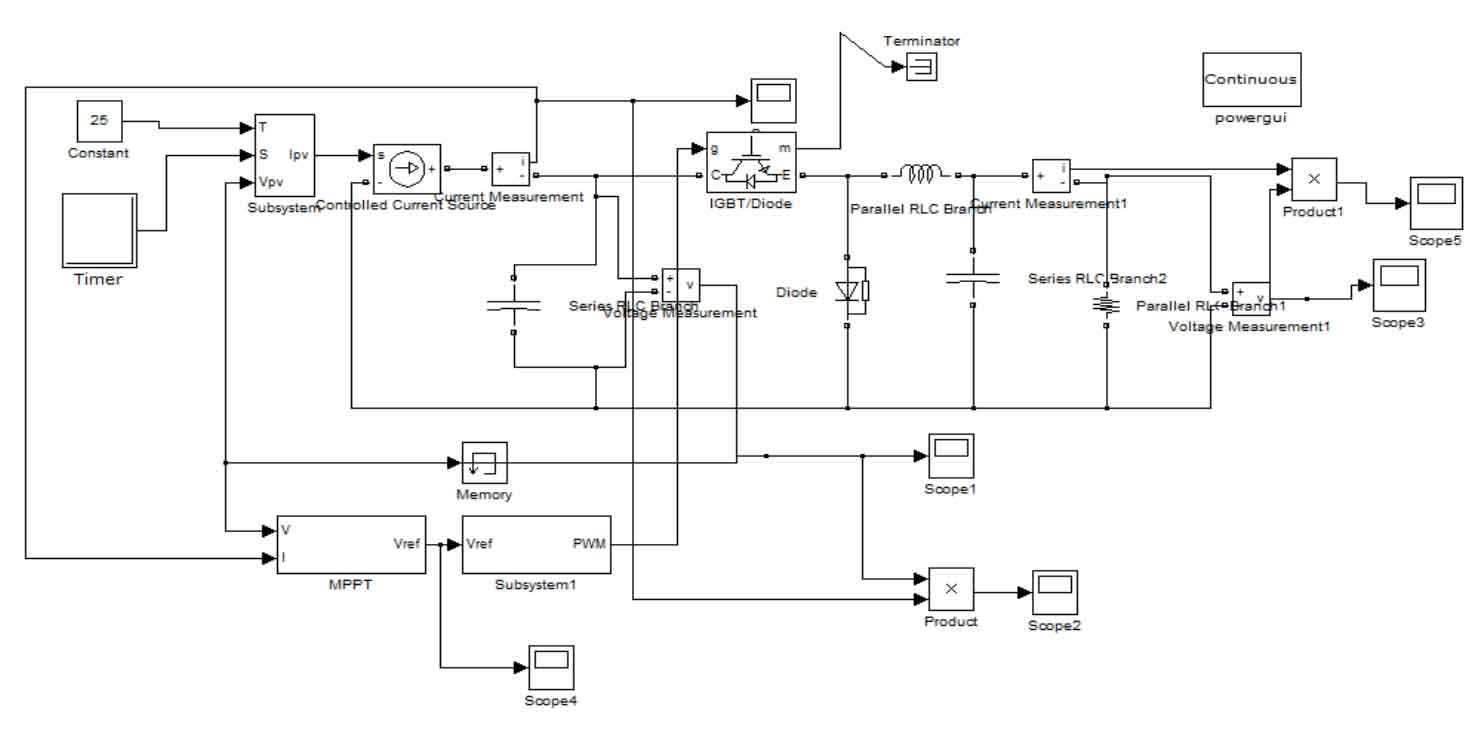
Table 2 compares MPPT implementation strategies:
| MPPT Type | Efficiency Gain | Cost Impact | Adoption Rate |
|---|---|---|---|
| Perturb & Observe | 2.8-3.2% | Low | 64% |
| Incremental Conductance | 3.5-4.1% | Medium | 28% |
| AI-Optimized | 4.5-5.5% | High | 8% |
3. Global Expansion Strategies
Leading manufacturers are establishing overseas production bases to circumvent trade barriers and access premium markets:
$$ ROI_{overseas} = \frac{(P_{export} – C_{local})}{C_{establishment}} \times T_{payback} $$
Where Pexport represents overseas pricing (typically 15-20% higher than domestic), Clocal denotes localized production costs, and Tpayback reflects policy incentives.
4. System Integration: Vertical Value Capture
Top players are migrating up the value chain through integrated energy solutions:
$$ LCOES = \frac{C_{capex} + \sum_{t=1}^{n} \frac{C_{opex}}{(1+r)^t}}{\sum_{t=1}^{n} \frac{E_{output}}{(1+r)^t}} $$
Where LCOES represents Levelized Cost of Energy Storage. System integration allows 18-22% margin expansion compared to cell-only sales.
5. Future Outlook: MPPT-Driven Innovation
The next-generation battery systems will feature:
- Adaptive MPPT for varying environmental conditions
- Hybrid topologies combining lithium-ion with alternative chemistries
- Blockchain-enabled energy trading platforms
As the market evolves, companies demonstrating technological leadership in MPPT implementation and global supply chain agility will likely emerge as long-term winners. The current price war, while painful, serves as catalyst for industry consolidation and technological advancement.