
The rapid expansion of the electric vehicle industry has spurred an unprecedented demand for high-performance li-ion battery systems. As a core component, the cathode materials for li-ion battery production require precise calcination in high-temperature kilns, where refractory insulation linings play a critical role in energy efficiency and process stability. Traditional mullite-based lightweight insulation materials are favored due to their high refractoriness, low thermal conductivity, and excellent chemical stability. However, the increasing cost of high-purity raw materials and the environmental burden associated with mining waste necessitate the exploration of alternative, sustainable resources. In this context, the comprehensive utilization of low-grade kyanite, often considered a by-product or waste in zirconium ore mining, presents a significant opportunity for developing cost-effective and eco-friendly insulation solutions specifically tailored for li-ion battery kilns.
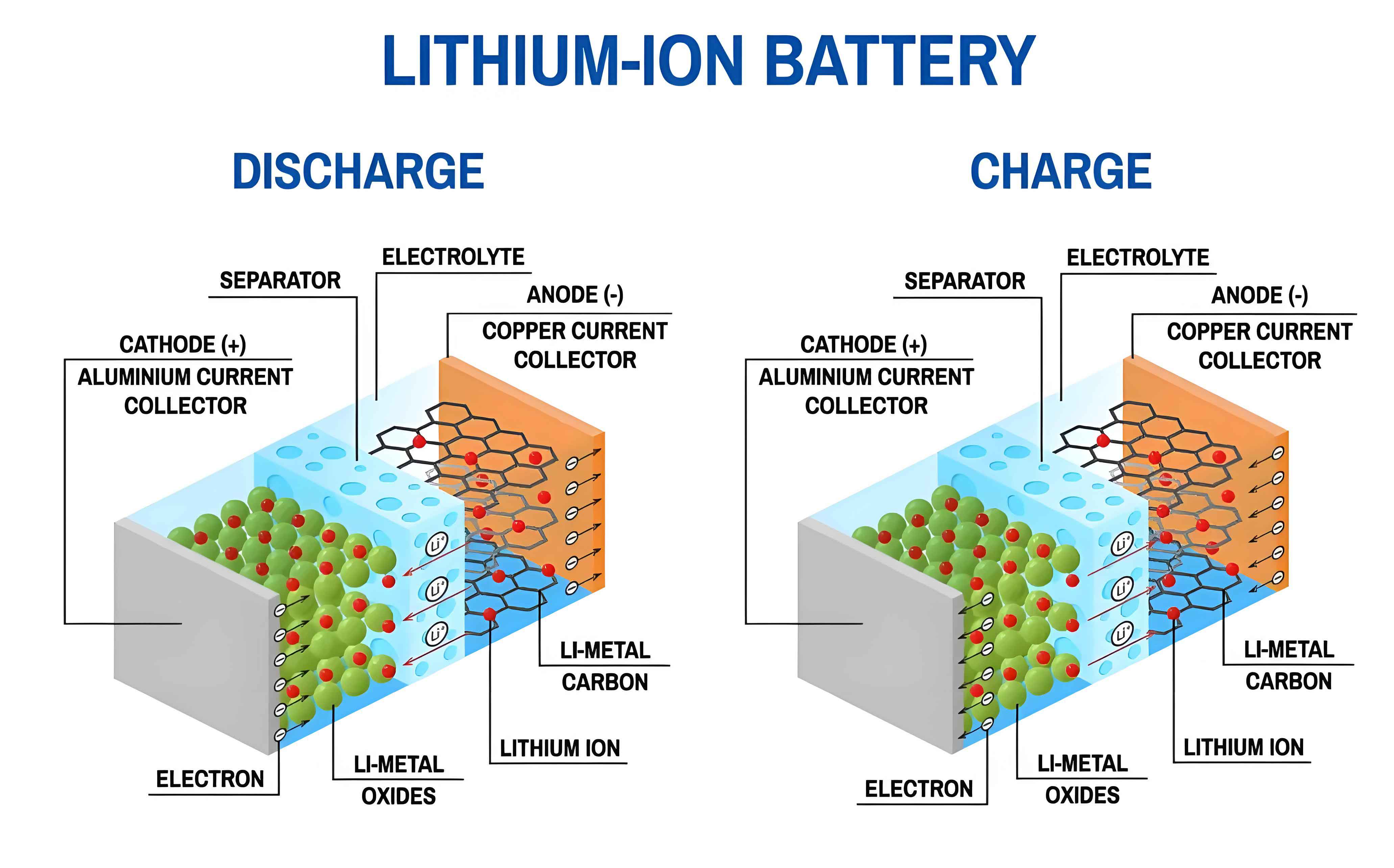
My research focuses on transforming low-grade kyanite, which typically contains impurities like zircon and other minerals, into high-value mullite insulation through a burnout method. The primary motivation is to address both resource efficiency and the specific operational challenges in li-ion battery cathode calcination kilns, where alkaline atmospheres containing Li₂O can degrade conventional refractories. By incorporating clay as a sintering aid and adjusting heat treatment parameters, I aim to optimize the microstructure and properties of the derived mullite materials, ensuring they meet the stringent requirements of li-ion battery manufacturing processes. This study not only contributes to waste valorization but also supports the sustainable growth of the li-ion battery industry by enhancing kiln lining durability and thermal management.
In my experimental approach, I selected low-grade kyanite (particle size ≤10.72 μm) as the principal raw material, complemented by α-Al₂O₃ micropowder (≤2.37 μm) to adjust the Al₂O₃/SiO₂ ratio for optimal mullite formation. Clay (≤6.20 μm) was introduced as a sintering promoter due to its fluxing oxides, while sawdust (≤1 mm) served as a pore-forming agent to achieve lightweight characteristics. Polyvinyl alcohol solution and water were used as binders for green body formation. The chemical compositions of the key raw materials, determined through X-ray fluorescence analysis, are summarized in Table 1. Notably, the low-grade kyanite exhibits a high Al₂O₃ content suitable for mullite synthesis, albeit with zirconia impurities that may influence final properties.
| Raw Material | SiO₂ (wt%) | Al₂O₃ (wt%) | Fe₂O₃ (wt%) | CaO (wt%) | MgO (wt%) | K₂O (wt%) | Na₂O (wt%) | TiO₂ (wt%) | ZrO₂ (wt%) | LOI (wt%) |
|---|---|---|---|---|---|---|---|---|---|---|
| Low-grade kyanite | 35.24 | 56.73 | 0.88 | 0.02 | 0.81 | 0.01 | 0.02 | 0.02 | 3.25 | 3.02 |
| α-Al₂O₃ micropowder | 0.13 | 98.88 | 0.07 | 0.02 | 0.02 | 0.008 | 0.008 | 0.005 | 0.00 | 0.86 |
| Clay | 63.35 | 12.29 | 1.62 | 1.69 | 1.67 | 0.48 | 2.53 | 0.15 | 0.02 | 15.96 |
The sample formulations were designed to investigate the effects of clay addition and heat treatment temperature, as detailed in Table 2. I prepared four distinct batches with clay content varying from 5 to 20 wt%, while maintaining a constant sawdust addition of 25 wt% relative to the total dry mass. The mixtures were homogenized in a rotary mixer for 3 hours, followed by the addition of 5 wt% polyvinyl alcohol solution and 15 wt% water for further mixing. After aging for 24 hours, the blends were uniaxially pressed at 10 MPa into cylindrical specimens (φ50 mm × 50 mm for corrosion tests and φ180 mm × 10 mm for physical property evaluations). The green bodies were dried at 110°C for 24 hours and subsequently fired in an electric furnace at either 1450°C or 1500°C with a 3-hour soaking period to promote mullitization and sintering.
| Sample Designation | Low-Grade Kyanite (wt%) | α-Al₂O₃ Micropowder (wt%) | Clay (wt%) |
|---|---|---|---|
| N1 | 64.37 | 30.63 | 5 |
| N2 | 54.11 | 35.89 | 10 |
| N3 | 43.85 | 41.15 | 15 |
| N4 | 33.59 | 46.41 | 20 |
Post-firing, I conducted comprehensive characterizations to assess the suitability of these materials for li-ion battery kiln applications. The bulk density and apparent porosity were measured according to the Archimedes method (GB/T 2998—2015), while cold crushing strength was determined via mechanical testing (GB/T 5072—2023). Thermal conductivity across temperatures of 400°C, 600°C, and 800°C was evaluated using a plate conductivity apparatus (YB/T 4130—2005), critical for insulation performance in li-ion battery cathode calcination. Phase compositions were analyzed by X-ray diffraction (XRD) with semi-quantitative Rietveld refinement, and microstructural evolution was examined using scanning electron microscopy (SEM). To simulate the harsh conditions of a li-ion battery production kiln, I performed corrosion resistance tests by exposing samples to LiCoO₂ precursor at 1100°C for 3 hours, mimicking the alkaline atmosphere generated during cathode material synthesis.
The results revealed significant influences of both clay content and firing temperature on the physical properties of the mullite insulation. As shown in Table 3, increasing clay addition generally led to higher bulk density and lower apparent porosity, attributable to enhanced liquid-phase sintering facilitated by fluxing oxides (e.g., K₂O, Na₂O) in the clay. For instance, sample N4 with 20 wt% clay fired at 1450°C achieved a bulk density of 0.88 g·cm⁻³ and an apparent porosity of 71.2%, whereas the corresponding values for sample N1 with 5 wt% clay were 0.72 g·cm⁻³ and 78.5%, respectively. Similarly, elevating the firing temperature from 1450°C to 1500°C further densified the microstructure, as evidenced by reduced porosity and increased shrinkage. The cold crushing strength exhibited a pronounced correlation with densification, with sample N4 fired at 1500°C reaching 30 MPa, compared to 12 MPa for sample N1 at 1450°C. This strength enhancement is crucial for withstanding mechanical stresses in li-ion battery kiln linings during thermal cycling.
| Sample | Clay (wt%) | Firing Temp. (°C) | Bulk Density (g·cm⁻³) | Apparent Porosity (%) | Cold Crushing Strength (MPa) | Linear Change (%) |
|---|---|---|---|---|---|---|
| N1 | 5 | 1450 | 0.72 ± 0.02 | 78.5 ± 1.0 | 12.0 ± 1.5 | +0.5 |
| N1 | 5 | 1500 | 0.75 ± 0.02 | 76.2 ± 1.0 | 18.5 ± 1.5 | -0.8 |
| N2 | 10 | 1450 | 0.79 ± 0.02 | 74.3 ± 1.0 | 15.3 ± 1.5 | +0.2 |
| N2 | 10 | 1500 | 0.82 ± 0.02 | 72.1 ± 1.0 | 22.0 ± 1.5 | -1.2 |
| N3 | 15 | 1450 | 0.85 ± 0.02 | 72.5 ± 1.0 | 18.7 ± 1.5 | -0.5 |
| N3 | 15 | 1500 | 0.89 ± 0.02 | 70.8 ± 1.0 | 26.5 ± 1.5 | -1.8 |
| N4 | 20 | 1450 | 0.88 ± 0.02 | 71.2 ± 1.0 | 21.1 ± 1.5 | -1.0 |
| N4 | 20 | 1500 | 0.94 ± 0.02 | 68.9 ± 1.0 | 30.0 ± 1.5 | -2.2 |
Phase analysis via XRD indicated that mullite formation was strongly dependent on processing conditions. The primary reaction governing the synthesis can be represented by the following equation, which describes the transformation of alumina and silica into mullite: $$3Al_2O_3 + 2SiO_2 \rightarrow Al_6Si_2O_{13}$$ In samples with low clay content (5 wt%) fired at 1450°C, incomplete mullitization was observed, with residual α-quartz and α-alumina phases present. Quantitative analysis revealed that mullite content increased from 42 wt% in sample N1 (1450°C) to 83 wt% in the same sample fired at 1500°C. Conversely, samples with higher clay additions (≥10 wt%) achieved near-complete conversion, with mullite contents exceeding 87 wt% at 1450°C and reaching up to 95 wt% at 1500°C. The presence of zircon (ZrSiO₄) from the low-grade kyanite remained stable across all samples, potentially contributing to thermal shock resistance. The enhanced mullitization with clay can be attributed to the catalytic effects of Fe₂O₃ and mineralizers like CaO and MgO, which lower the activation energy for the reaction, a critical factor for efficient production of insulation materials in li-ion battery kilns.
Microstructural observations through SEM provided insights into the sintering mechanisms. Samples with minimal clay (e.g., N1 at 1450°C) exhibited a porous, particulate structure with distinct grain boundaries and unreacted particles, consistent with the XRD findings. As clay content increased, the emergence of a glassy phase facilitated particle coalescence, leading to smoother grain boundaries and reduced pore sizes. At 1500°C, samples with 10-20 wt% clay displayed transgranular fracture modes, indicative of strong bonding and high mechanical integrity. This microstructural refinement is essential for maintaining insulation performance under the aggressive conditions of li-ion battery cathode calcination, where thermal stability and resistance to penetration by alkaline vapors are paramount.
Thermal conductivity measurements, summarized in Table 4, demonstrated that all samples exhibited low thermal conductivity values below 0.28 W·(m·K)⁻¹, qualifying them as effective insulators. The conductivity slightly increased with higher clay content and firing temperature due to densification, but remained within an acceptable range for energy-efficient kiln operation. For example, sample N4 fired at 1450°C showed conductivities of 0.22, 0.24, and 0.25 W·(m·K)⁻¹ at 400°C, 600°C, and 800°C, respectively. This low thermal conductivity is advantageous for li-ion battery kilns, as it minimizes heat loss and ensures uniform temperature distribution during cathode material synthesis, ultimately enhancing the quality and consistency of li-ion battery components.
| Sample | Clay (wt%) | Firing Temp. (°C) | Thermal Conductivity at 400°C (W·(m·K)⁻¹) | Thermal Conductivity at 600°C (W·(m·K)⁻¹) | Thermal Conductivity at 800°C (W·(m·K)⁻¹) |
|---|---|---|---|---|---|
| N1 | 5 | 1450 | 0.185 ± 0.005 | 0.195 ± 0.005 | 0.200 ± 0.005 |
| N1 | 5 | 1500 | 0.190 ± 0.005 | 0.200 ± 0.005 | 0.205 ± 0.005 |
| N2 | 10 | 1450 | 0.195 ± 0.005 | 0.210 ± 0.005 | 0.220 ± 0.005 |
| N2 | 10 | 1500 | 0.200 ± 0.005 | 0.215 ± 0.005 | 0.225 ± 0.005 |
| N3 | 15 | 1450 | 0.205 ± 0.005 | 0.220 ± 0.005 | 0.235 ± 0.005 |
| N3 | 15 | 1500 | 0.210 ± 0.005 | 0.225 ± 0.005 | 0.240 ± 0.005 |
| N4 | 20 | 1450 | 0.215 ± 0.005 | 0.230 ± 0.005 | 0.250 ± 0.005 |
| N4 | 20 | 1500 | 0.220 ± 0.005 | 0.235 ± 0.005 | 0.267 ± 0.005 |
The corrosion resistance to li-ion battery cathode materials was a key focus, given the detrimental effects of Li₂O-rich atmospheres on refractory linings. I conducted tests by exposing samples fired at 1450°C to LiCoO₂ precursor at 1100°C, simulating the alkaline environment of a li-ion battery kiln. Visual inspection showed that samples with 5 wt% and 10 wt% clay developed light yellow surface discoloration, while those with 15 wt% and 20 wt% clay turned orange-yellow, indicating varying degrees of reaction with lithium compounds. SEM analysis of the corroded surfaces revealed that sample N1 (5 wt% clay) suffered severe cracking due to its porous structure and incomplete mullitization, which allowed deep penetration of alkaline vapors and formation of lithium-aluminum-silicate glass phases with mismatched thermal expansion coefficients. In contrast, sample N2 (10 wt% clay) displayed minimal glassy phase formation and retained distinct mullite grain boundaries, demonstrating superior resistance to li-ion battery cathode material corrosion. Samples with higher clay content (N3 and N4) exhibited excessive glass formation, leading to microcracking upon cooling. This underscores the importance of balancing clay addition to optimize both sintering and chemical durability for li-ion battery applications.
To further elucidate the corrosion mechanism, I considered the chemical interactions between mullite and Li₂O. The reaction can be approximated by: $$Al_6Si_2O_{13} + xLi_2O \rightarrow Li_{2x}Al_{6-2x}Si_{2+x}O_{13+2x}$$ where x represents the extent of lithium incorporation, leading to the formation of low-expansion glassy phases that induce stress during thermal cycles. The porosity and phase purity of the insulation material critically influence this process. For instance, samples with higher mullite content and controlled porosity, such as N2, showed reduced susceptibility, highlighting their potential for prolonged service in li-ion battery kilns.
In addition to the experimental findings, I performed a theoretical analysis of the thermal insulation performance using Fourier’s law of heat conduction: $$q = -k \nabla T$$ where q is the heat flux, k is the thermal conductivity, and ∇T is the temperature gradient. The low k values achieved in this study (e.g., 0.25 W·(m·K)⁻¹ for N4 at 1450°C) imply reduced heat loss, which is economically beneficial for li-ion battery production by lowering energy consumption. Moreover, the relationship between strength and porosity can be described by the Ryshkewitch-Duckworth equation: $$\sigma = \sigma_0 e^{-bP}$$ where σ is the cold crushing strength, σ₀ is the strength at zero porosity, b is a constant, and P is the porosity. My data fit this model well, with higher clay additions decreasing porosity and thereby increasing strength, essential for structural integrity in kiln linings exposed to mechanical loads during li-ion battery cathode calcination.
The integration of low-grade kyanite into mullite insulation also offers environmental advantages. By utilizing a waste material, this approach aligns with circular economy principles and reduces the carbon footprint associated with traditional raw material extraction. In the context of li-ion battery manufacturing, which is increasingly scrutinized for sustainability, such eco-friendly innovations can enhance the overall green credentials of the industry. Furthermore, the cost savings from using low-grade kyanite could make li-ion battery production more economical, supporting the broader adoption of electric vehicles and renewable energy storage systems.
Looking ahead, the optimization of processing parameters could yield even better performance. For instance, adjusting the particle size distribution of raw materials or incorporating secondary pore-forming agents might fine-tune the porosity-strength trade-off. Additionally, exploring alternative sintering aids beyond clay could further enhance mullitization while minimizing glass phase formation, thereby improving corrosion resistance specifically for li-ion battery kiln environments. Long-term thermal cycling tests under simulated li-ion battery cathode calcination conditions would also be valuable to assess durability and lifetime predictions.
In summary, my research demonstrates the feasibility of producing high-performance mullite lightweight insulation materials from low-grade kyanite for li-ion battery kiln applications. The addition of clay as a sintering promoter significantly influences the microstructure and properties, with an optimal balance achieved at 10 wt% clay and 1450°C firing temperature for superior corrosion resistance against li-ion battery cathode materials. At 20 wt% clay and 1450°C, the physical properties are excellent, with a bulk density of 0.88 g·cm⁻³, cold crushing strength of 21.1 MPa, and thermal conductivity of 0.25 W·(m·K)⁻¹ at 800°C. These materials not only address the waste utilization challenge but also meet the stringent requirements of li-ion battery production, contributing to more sustainable and efficient manufacturing processes. As the demand for li-ion batteries continues to soar, such innovations in refractory technology will play a pivotal role in supporting the growth of clean energy solutions.