
In the realm of electric vehicles and large-scale energy storage, the pursuit of higher energy density in lithium-ion batteries is relentless. For large-scale applications, this translates directly to extended operational range and reduced system weight. While high-nickel ternary cathode materials often dominate discussions on energy density, their inherent challenges with thermal stability and cost remain significant. Consequently, lithium iron phosphate (LiFePO4) batteries have garnered renewed and widespread attention for power applications, primarily due to their superior safety profile, excellent cycle life, and lower material cost. However, increasing the energy density of LiFePO4 batteries presents its own set of challenges, particularly when employing thick electrodes with low porosity to maximize active material loading.
Enhancing energy density typically involves using electrodes with high areal capacity, achieved through high active material loading and high compaction density. While this approach is effective for increasing volumetric and gravimetric energy density, it inevitably leads to electrodes with low porosity and significant thickness. These dense, tortuous structures can severely impede electrolyte wetting and ionic transport, potentially degrading key performance metrics such as rate capability, low-temperature operation, and cycle life. Therefore, the design of the electrolyte becomes paramount in overcoming these limitations. Among the various electrolyte parameters, the concentration of the lithium salt, typically lithium hexafluorophosphate (LiPF6), is a fundamental variable that directly influences conductivity, viscosity, lithium-ion transference number, and the nature of the solid-electrolyte interphase (SEI). While the effects of salt concentration have been studied in lab-scale coin cells, its impact on the performance of practical, high-energy-density prismatic or pouch cells remains less explored. For power-oriented LiFePO4 batteries, which must meet stringent requirements for cycle life, power output (rate capability), and performance across a wide temperature range, the choice of salt concentration requires careful optimization, balancing electrochemical performance with economic considerations.
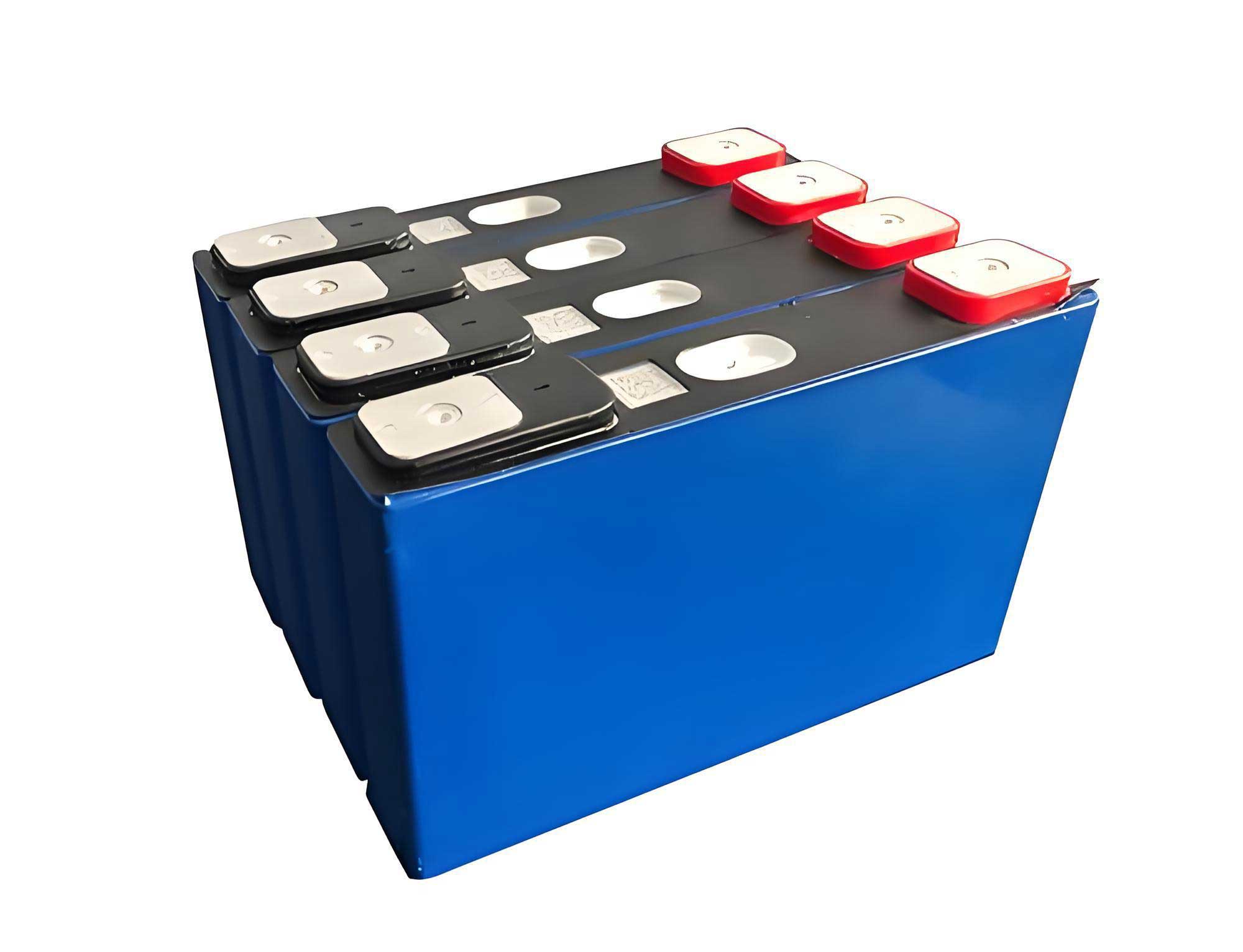
This work systematically investigates the relationship between LiPF6 concentration in the electrolyte and the critical performance characteristics of high-energy-density LiFePO4/graphite pouch cells. By fabricating cells with electrolytes of varying salt concentration and subjecting them to a comprehensive testing protocol, we aim to provide actionable insights for tailoring electrolyte formulation to specific application demands in LiFePO4 battery technology.
Experimental Methods
1. Electrolyte Preparation: Four different electrolytes were formulated in an argon-filled glove box. The base solvent mixture consisted of ethylene carbonate (EC), propylene carbonate (PC), and ethyl methyl carbonate (EMC) in a specific volume ratio. Varying amounts of battery-grade LiPF6 salt were dissolved in this solvent mixture to achieve nominal concentrations of 0.9 mol/L, 1.0 mol/L, 1.1 mol/L, and 1.2 mol/L. A fixed amount of vinylene carbonate (VC) was added as a film-forming additive to all electrolytes to promote stable SEI formation. The ionic conductivity of each freshly prepared electrolyte was measured at room temperature.
2. Cell Assembly: Commercial-grade LiFePO4 (from Jiangsu, China) and artificial graphite (from Jiangxi, China) were used as the cathode and anode active materials, respectively. Electrodes were fabricated with high areal loadings and compaction densities to target a high energy density. Using a standard stacking process, 4.0 Ah nominal capacity pouch cells were assembled. For each electrolyte concentration, a batch of 20 identical LiFePO4 battery cells was manufactured to ensure statistical reliability. The designed gravimetric energy density of these cells exceeded 160 Wh/kg.
3. Performance Evaluation: All electrochemical tests were conducted using a battery cycler under controlled environmental conditions.
- Capacity and Internal Resistance (DCIR): At 23±3 °C, cells were charged to 3.65V and then discharged at a 0.5C rate to 2.5V to determine the initial discharge capacity. The direct current internal resistance (DCIR) was measured from the voltage drop during a brief high-current pulse. Average values from 20 cells per group are reported.
- Rate Capability: After a standard charge, cells were discharged at progressively higher rates: 0.5C, 1C, 2C, 3C, 5C, and 8C, all to a cutoff voltage of 2.5V. The discharge capacity at each rate was recorded and normalized to the capacity obtained at the 0.5C rate.
- High and Low-Temperature Performance: Cells were stabilized at various test temperatures (55°C, 25°C, 10°C, 0°C, -20°C) for 2 hours. Subsequently, they were discharged at a 0.5C rate. The cutoff voltage was adjusted to 2.0V for low-temperature tests (-20°C) to avoid excessive polarization. Discharge capacity retention relative to the capacity at 25°C was calculated.
- Cycle Life Testing: Two cycling regimes were employed:
- 1C/1C Cycling: Charge at 1C constant current to 3.65V, constant voltage hold until current drops to 0.02C, rest for 2 minutes, discharge at 1C to 2.5V.
- 1C/5C Cycling: Charge at 1C (CC-CV), rest for 2 minutes, discharge at a high rate of 5C to 2.5V.
Cycling was performed at room temperature, and the test was terminated when the capacity retention fell below 80% of the initial cycle capacity.
Results and Discussion
1. Conductivity of Electrolytes with Varied LiPF6 Concentration
The ionic conductivity (σ) of an electrolyte is a critical parameter governing ionic mobility. It depends on the concentration of charge carriers (C, the salt concentration) and their mobility (µ), which in turn is inversely related to viscosity (η). The relationship can be conceptually described by a modified Nernst-Einstein and Stokes-Einstein framework. Experimentally, we observed a non-monotonic trend, as summarized in Table 1.
| LiPF6 Conc. (mol/L) | Conductivity at 25°C (mS/cm) | Relative Viscosity (arb. units) |
|---|---|---|
| 0.9 | 8.9 | Lowest |
| 1.0 | 9.2 | Low |
| 1.1 | 8.8 | Medium |
| 1.2 | 8.1 | High |
The conductivity peaked at 9.2 mS/cm for the 1.0 mol/L electrolyte. This maximum represents an optimal balance between the number of charge carriers and their mobility. The relationship can be modeled by a quadratic function:
$$\sigma = aC^2 + bC + c$$
where a is negative, reflecting the dominant effect of increased viscosity and ion-pair formation at higher concentrations. For concentrations below 1.0 mol/L, the increase in charge carrier number (C) with increasing salt concentration outweighs the slight increase in viscosity, leading to rising conductivity. Beyond 1.0 mol/L, the sharp rise in viscosity (η) and the formation of less mobile ion aggregates significantly reduce ionic mobility (µ ∝ 1/η), causing the overall conductivity to decline. This peak is a well-known characteristic of many electrolyte systems.
2. Internal Resistance and Initial Capacity of Assembled LiFePO4 Battery Cells
The internal resistance (Rcell) of a LiFePO4 battery is a composite of ohmic resistance (RΩ), charge transfer resistance (Rct), and diffusion-related resistance (Rdiff). RΩ includes contributions from electrode foils, leads, and the ionic resistance of the electrolyte within the porous electrodes. Figure 1 and Table 2 show a clear trend of increasing cell DCIR with increasing LiPF6 concentration.
| LiPF6 Conc. (mol/L) | Avg. DCIR (mΩ) | Avg. 0.5C Discharge Capacity (Ah) | Capacity Relative to 1.0M (%) |
|---|---|---|---|
| 0.9 | 2.15 | 4.05 | 98.8 |
| 1.0 | 2.35 | 4.10 | 100.0 |
| 1.1 | 2.58 | 4.18 | 102.0 |
| 1.2 | 3.02 | 4.12 | 100.5 |
This increase in Rcell runs counter to the bulk electrolyte conductivity trend, where 1.0M was highest. The primary reason is the poor wettability of high-concentration, high-viscosity electrolytes into the dense, thick electrodes of the high-energy-density LiFePO4 battery. Incomplete pore filling creates regions of high ionic resistance. Although higher salt concentrations may promote the formation of an SEI richer in LiF (which has higher ionic conductivity), the dominant factor here is the physical penetration and distribution of the electrolyte. The lower viscosity of the 0.9M and 1.0M electrolytes allows for more complete saturation of the electrode pores, minimizing RΩ.
Interestingly, the initial discharge capacity did not simply follow the resistance trend. Capacity is influenced by the kinetics of lithium-ion insertion/extraction, which depends on the availability of Li+ ions at the electrode/electrolyte interface and the charge transfer kinetics. The highest capacity was observed for the 1.1 mol/L electrolyte. While it has higher resistance, it offers a better balance: sufficient Li+ ion availability near the electrode surface (high concentration) and potentially more favorable SEI properties that facilitate interfacial charge transfer. The 1.2M electrolyte’s capacity dropped, likely due to excessive viscosity severely limiting mass transport of Li+ within the flooded pores during the initial formation cycles.
3. Rate Capability of the High-Energy-Density LiFePO4 Battery
Rate performance is crucial for power applications, especially during acceleration or regenerative braking. The capacity retention at high discharge rates (C-rate) is determined by the cell’s ability to mitigate polarization (ηtotal). The total overpotential can be expressed as:
$$η_{total} = η_{Ω} + η_{ct} + η_{diff} = I R_{Ω} + \frac{RT}{αF} \ln(\frac{I}{I_0}) + \frac{RT}{F} \frac{I δ}{n F A D C_0}$$
where I is current, I0 is exchange current density, δ is diffusion length, D is diffusion coefficient, and C0 is bulk concentration. For a thick-electrode LiFePO4 battery, ηΩ and ηdiff become particularly significant at high rates.
The results, detailed in Table 3, reveal a complex relationship.
| LiPF6 Conc. (mol/L) | 3C Retention (%) | 5C Retention (%) | 8C Retention (%) | Voltage Recovery Onset SOC at 8C (%) |
|---|---|---|---|---|
| 0.9 | 94.33 | 94.28 | 71.99 | 21.25 |
| 1.0 | 94.82 | 96.62 | 89.31 | 20.98 |
| 1.1 | 96.57 | 97.46 | 92.70 | 17.98 |
| 1.2 | 97.11 | 99.14 | 97.84 | 17.25 |
Notably, for most cells, the capacity retention at 5C was slightly higher than at 3C. This counter-intuitive result is attributed to Joule heating during high-rate discharge. The temperature rise (ΔT) reduces electrolyte viscosity and increases reaction kinetics, partially offsetting the increased polarization. The heating effect becomes more pronounced at higher currents.
The superiority of higher-concentration electrolytes (1.1M, 1.2M) becomes unequivocal at the extreme rate of 8C. The capacity retention plummeted for the 0.9M cell but remained high for the 1.2M cell. Analysis of the 8C discharge curves showed a distinct voltage dip and recovery for all cells. The onset of this recovery, marked by a specific state-of-charge (SOC), occurred earlier for higher-concentration electrolytes (17.25% for 1.2M vs. 21.25% for 0.9M). This indicates that cells with high-concentration electrolytes overcome the initial severe ohmic and concentration polarization faster. The key factor is the higher bulk concentration of Li+ ions (C0), which directly reduces the concentration overpotential term (ηdiff ∝ 1/C0). As the cell heats up, the viscosity difference between electrolytes diminishes, making the inherent high Li+ inventory of concentrated electrolytes the decisive advantage for sustaining high current in a LiFePO4 battery with limited electrode porosity.
4. Temperature-Dependent Performance of the LiFePO4 Battery
The performance of a LiFePO4 battery across a wide temperature range is critical for real-world applications. Temperature (T) dramatically affects all kinetic parameters: ionic conductivity (σ ∝ e-Ea/RT), charge transfer rates, and diffusion coefficients. Table 4 summarizes the discharge capacity retention at different temperatures.
| LiPF6 Conc. (mol/L) | 55°C Retention (%) | 0°C Retention (%) | -20°C Retention (%) |
|---|---|---|---|
| 0.9 | 106.05 | 90.13 | 77.85 |
| 1.0 | 106.55 | 88.79 | 74.18 |
| 1.1 | 105.64 | 89.99 | 76.85 |
| 1.2 | 104.72 | 91.42 | 80.64 |
At elevated temperature (55°C), all cells performed similarly, with slightly higher capacity due to enhanced kinetics. The differences are minimal because thermal energy suffices to overcome activation barriers, and the demand on Li+ supply is moderate at the 0.5C rate.
The low-temperature performance, however, shows a stark contrast. At 0°C and especially at -20°C, the electrolyte with 1.0M concentration exhibited the worst performance. The 0.9M electrolyte, with its lowest viscosity, maintained reasonable Li+ mobility and showed better performance than 1.0M. However, the 1.1M and 1.2M electrolytes demonstrated the best capacity retention at -20°C. This suggests that under severe low-temperature conditions, where viscosity increases exponentially for all electrolytes, the limiting factor shifts from pure ionic mobility to the absolute availability of Li+ ions in the immediate vicinity of the active particles. The higher-concentration electrolytes provide a larger reservoir of Li+, compensating for their higher baseline viscosity and enabling better utilization of the LiFePO4 cathode material at low temperatures.
5. Cycle Life Analysis of the LiFePO4 Battery Under Different Regimes
Cycle life is a cornerstone of LiFePO4 battery value proposition. Degradation mechanisms include SEI growth, lithium inventory loss, particle cracking, and electrolyte decomposition. The cycling stress, and thus the dominant degradation mode, varies significantly with the current rate.
a) 1C/1C Cycling: Under this moderate, energy-oriented cycling condition, the differences between cells were subtle but consistent. The cycle life to 80% capacity retention is shown in Table 5.
| LiPF6 Conc. (mol/L) | 1C/1C Cycles to 80% | 1C/5C Cycles to 80% |
|---|---|---|
| 0.9 | ~1981 | ~100 |
| 1.0 | ~2079 | ~250 |
| 1.1 | ~1777 | ~320 |
| 1.2 | ~1828 | >350 (81.4% @ 350) |
The 0.9M and 1.0M electrolytes yielded the longest cycle life in this regime. The primary degradation mechanism under 1C cycling is likely the continuous, slow consumption of lithium and electrolyte to repair and grow the SEI. The superior wettability of lower-concentration electrolytes ensures more uniform Li+ flux across the electrode surface, preventing localized over-lithiation or lithium plating on the graphite anode, which can accelerate SEI growth. Better pore filling also ensures all active material is effectively utilized, reducing local stresses.
b) 1C/5C Cycling: This power-oriented cycling regime introduces significant stress due to high polarization during discharge. The results are dramatic, as seen in Table 5. The cycle life improved monotonically with increasing LiPF6 concentration. The 0.9M cell failed rapidly (~100 cycles), while the 1.2M cell retained over 81% capacity after 350 cycles.
The high discharge current leads to substantial concentration gradients within the pores. In low-concentration electrolytes, localized depletion of Li+ ions can occur at the electrode/electrolyte interface, especially near the separator. This depletion can lead to increased polarization, lower coulombic efficiency per cycle, and may promote anomalous side reactions or lithium plating at the anode. The higher-concentration electrolytes mitigate this depletion effect by providing a larger Li+ reservoir, maintaining more stable interfacial conditions even under high current drain, thereby significantly extending the cycle life of the power-oriented LiFePO4 battery.
Conclusion
This comprehensive study on high-energy-density LiFePO4 battery cells elucidates the profound and nuanced impact of electrolyte LiPF6 concentration on critical performance metrics. The dense, thick electrodes characteristic of such cells amplify the effects of salt concentration, making its optimization a crucial design lever.
The findings present a clear trade-off, guiding formulation based on application priorities:
- For cells prioritizing high-power and low-temperature performance: Electrolytes with higher LiPF6 concentration (1.1 – 1.2 mol/L) are distinctly advantageous. They enable superior rate capability, especially at very high discharge currents (e.g., 5C, 8C), deliver the best capacity retention under low-temperature conditions (-20°C), and exhibit exceptional cycle life under high-power cycling regimes (1C/5C). The higher initial Li+ inventory is key to mitigating concentration polarization under strenuous operating conditions.
- For cells prioritizing cost, low internal resistance, and long life under moderate cycling: Electrolytes with lower LiPF6 concentration (0.9 – 1.0 mol/L) offer significant benefits. They yield cells with the lowest DCIR due to excellent electrode wettability, provide the longest cycle life under standard 1C energy cycling conditions, maintain good high-temperature performance, and reduce material cost due to lower salt usage.
In summary, there is no universally optimal concentration for every LiFePO4 battery application. The choice must be tailored to the specific performance envelope: 1.1-1.2M electrolytes for power-intensive, low-temperature, or high-rate cyclic applications, and 0.9-1.0M electrolytes for cost-sensitive applications requiring long calendar and cycle life under moderate loads. This work provides a foundational framework for rational electrolyte design in the development of next-generation, high-energy-density LiFePO4 batteries for diverse power storage needs.