
The accurate estimation of the State of Health (SOH) for lithium-ion batteries is a critical challenge in ensuring the reliability and safety of electric vehicles and large-scale energy storage systems. As a lithium-ion battery ages through repeated charge-discharge cycles, its maximum available capacity gradually fades, and its internal resistance increases. SOH, typically defined as the ratio of current maximum capacity to its nominal capacity, serves as a key metric for quantifying this degradation. My research addresses the prevalent issues of low estimation accuracy and inadequate real-time performance in current SOH estimation methods by proposing a novel data-driven algorithm that combines an Adaptive Grey Wolf Optimizer (AGWO) with Gaussian Process Regression (GPR). This integrated AGWO-GPR model aims to significantly enhance the precision and robustness of lithium-ion battery SOH prediction.
The performance and longevity of a lithium-ion battery are central to the operational cost and safety of the systems they power. Traditional model-based methods for SOH estimation often rely on complex electrochemical or equivalent circuit models, which require precise parameter identification and may lack generalizability across different battery types and operating conditions. In contrast, data-driven approaches bypass the need for explicit physical modeling by learning the underlying relationship between measurable battery parameters and its health state. Among these, GPR has emerged as a powerful non-parametric Bayesian framework. It not only provides point predictions but also quantifies the uncertainty associated with each prediction, offering a confidence interval—a feature highly valuable for battery management system (BMS) decision-making. However, the predictive performance of a GPR model is highly sensitive to its hyperparameters, particularly those of the kernel function. Manually tuning these parameters is inefficient and often suboptimal. Therefore, employing an advanced optimization algorithm to automatically find the optimal hyperparameter set is essential for maximizing GPR’s potential in lithium-ion battery SOH estimation.
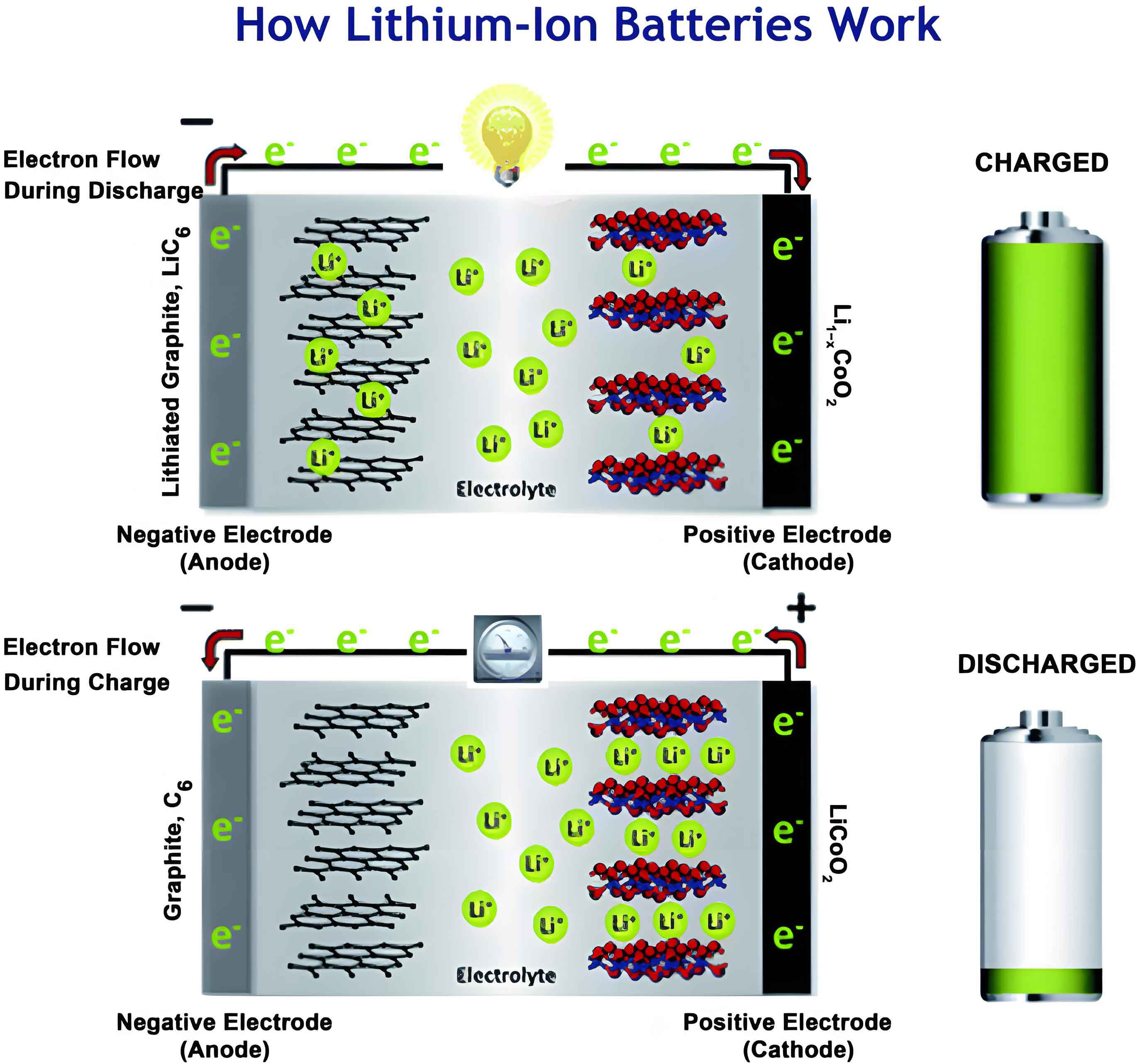
The core innovation of my method lies in the enhancement of the standard Grey Wolf Optimizer (GWO). GWO is a metaheuristic algorithm inspired by the social hierarchy and hunting behavior of grey wolves. While effective, its convergence factor a decreases linearly from 2 to 0 over iterations, which can sometimes lead to premature convergence or insufficient exploration in later stages. To improve the search capability and adaptability, I introduced a non-linear adaptive convergence factor. This modification allows for a more dynamic balance between global exploration and local exploitation during the optimization process. The adaptive factor is defined as:
$$
a = 2 – \left( \cos(\text{rand}()) \times \frac{l}{\text{Max\_iter}} \right)
$$
where \( \text{rand}() \) generates a random number within [0,1], \( l \) is the current iteration number, and \( \text{Max\_iter} \) is the maximum number of iterations. The cosine function introduces non-linear randomness, helping the algorithm escape local optima. Furthermore, in this AGWO variant, the hunting (position update) of the omega wolves is guided solely by the alpha and beta wolves, simplifying the update rules while maintaining effectiveness:
$$
\begin{aligned}
&D_{\alpha} = |C_1 \cdot X_{\alpha} – X| \\
&D_{\beta} = |C_2 \cdot X_{\beta} – X| \\
&X_1 = X_{\alpha} – A_1 \cdot D_{\alpha} \\
&X_2 = X_{\beta} – A_2 \cdot D_{\beta} \\
&X(t+1) = \frac{X_1 + X_2}{2}
\end{aligned}
$$
Here, \( X_{\alpha} \) and \( X_{\beta} \) represent the positions of the alpha and beta wolves, \( X \) is the position of the current wolf, \( A \) and \( C \) are coefficient vectors.
For the regression model, I employ Gaussian Process Regression. A GP is fully specified by its mean function \( m(x) \) and covariance kernel function \( k(x, x’) \). Assuming a zero mean function, the prior distribution over functions is defined by the kernel. For estimating the SOH of a lithium-ion battery, the Squared Exponential (SE) kernel, also known as the Radial Basis Function (RBF) kernel, is a common and effective choice due to its smoothness properties:
$$
k_{\text{SE}}(x, x’) = \sigma_f^2 \exp\left(-\frac{1}{2l^2} \|x – x’\|^2\right)
$$
In this kernel, \( \sigma_f^2 \) is the signal variance and \( l \) is the characteristic length-scale. These are the hyperparameters \( \theta = (\sigma_f^2, l) \) that the AGWO algorithm optimizes. Given training inputs \( X \) and observed outputs \( y \) (SOH values), and assuming Gaussian noise with variance \( \sigma_n^2 \), the joint prior distribution of the observed values and the predicted function value \( f_* \) at a new test point \( x_* \) is:
$$
\begin{bmatrix} y \\ f_* \end{bmatrix} \sim \mathcal{N}\left(0,
\begin{bmatrix}
K(X, X) + \sigma_n^2 I & K(X, x_*) \\
K(x_*, X) & K(x_*, x_*)
\end{bmatrix}
\right)
$$
The predictive distribution for \( f_* \) is then Gaussian with mean and variance given by:
$$
\begin{aligned}
&\bar{f}_* = K(x_*, X)[K(X, X) + \sigma_n^2 I]^{-1}y \\
&\mathbb{V}[f_*] = K(x_*, x_*) – K(x_*, X)[K(X, X) + \sigma_n^2 I]^{-1}K(X, x_*)
\end{aligned}
$$
This allows us to predict the SOH of a lithium-ion battery as \( \bar{f}_* \) and provide a 95% confidence interval as \( \bar{f}_* \pm 1.96\sqrt{\mathbb{V}[f_*]} \).
The complete framework of the AGWO-GPR algorithm for lithium-ion battery SOH estimation is as follows. First, health features (HFs) are extracted from the charging voltage and current curves of the lithium-ion battery. These features, such as the duration of constant voltage charging or the voltage rise during a constant current phase, are highly correlated with capacity degradation. The selected HFs are normalized and form the input vector \( x \). The corresponding SOH values, calculated from capacity measurements, form the output \( y \). The dataset is split into training and testing sets. The AGWO algorithm is then initialized with a population of wolves, where each wolf’s position vector represents a candidate set of GPR hyperparameters \( (\sigma_f^2, l, \sigma_n^2) \). The fitness of each wolf is evaluated by training a GPR model with its hyperparameters on the training set and calculating the root mean square error (RMSE) on a validation set (or via cross-validation). The AGWO algorithm iteratively updates the positions of the wolves based on the adaptive rules, searching for the hyperparameters that minimize the GPR model’s error. Once the termination criterion is met (e.g., maximum iterations), the best hyperparameters found by the alpha wolf are used to construct the final GPR model. This optimized model is then used to estimate the SOH for the test set data. The key steps are summarized in the table below.
| Stage | Description | Key Operations |
|---|---|---|
| 1. Data Preparation | Process raw cycling data from the lithium-ion battery. | Extract health features (HFs) from charge curves. Calculate SOH from measured capacity. Normalize data and split into train/test sets. |
| 2. AGWO Initialization | Set up the optimizer to find optimal GPR hyperparameters. | Define population size, max iterations. Initialize wolf positions randomly within bounds for \( \sigma_f^2, l, \sigma_n^2 \). |
| 3. Fitness Evaluation | Assess how good a set of hyperparameters is. | For each wolf, instantiate a GPR model with its position (hyperparameters). Train GPR on training data. Calculate RMSE on validation set as fitness score. |
| 4. AGWO Iteration | Evolve the population towards better solutions. | Update the adaptive convergence factor \( a \). Identify alpha, beta wolves based on fitness. Update positions of all wolves using AGWO rules (Eq. 2,3). |
| 5. Model Training & Estimation | Build the final model and perform SOH prediction. | Select hyperparameters from the best wolf (alpha). Train the final GPR model on the full training set. Predict SOH and uncertainty intervals for the test set. |
To validate the proposed AGWO-GPR model, I utilized the publicly available NASA battery dataset. This dataset provides cycling data for 18650-size lithium-ion batteries under different operational profiles. The capacity over cycles was used to compute the true SOH, serving as the ground truth. Four health features strongly correlated with capacity fade were extracted from the constant-current charging phase to serve as model inputs. The dataset was partitioned, with data from early cycles used for training and later cycles reserved for testing, simulating a practical scenario for predicting the future SOH of a lithium-ion battery.
The performance of the AGWO-GPR model was rigorously evaluated and compared against the standard GWO-GPR model. The evaluation metrics included Mean Absolute Error (MAE), Mean Squared Error (MSE), Root Mean Squared Error (RMSE), and the Correlation Coefficient (R). The results for the test set are presented in the following table.
| Evaluation Metric | GWO-GPR Model | AGWO-GPR Model (Proposed) | Improvement |
|---|---|---|---|
| Mean Absolute Error (MAE) | 0.014 82 | 0.013 45 | 9.24% decrease |
| Mean Squared Error (MSE) | 0.000 26 | 0.000 22 | 15.38% decrease |
| Correlation Coefficient (R) | 0.995 84 | 0.996 94 | Increased |
| Root Mean Squared Error (RMSE) | ~0.016 12 | ~0.014 83 | ~8.00% decrease |
The results clearly demonstrate the superior performance of the AGWO-GPR model. The MAE and MSE, which directly measure prediction accuracy, showed significant reductions of approximately 9% and 15%, respectively. Simultaneously, the correlation coefficient R increased, indicating a stronger linear relationship between the estimated and true SOH values. This means the AGWO-optimized model’s predictions are closer to the actual degradation trajectory of the lithium-ion battery. The AGWO algorithm’s adaptive convergence factor effectively refined the search for optimal GPR hyperparameters, leading to a model that better captures the complex, non-linear aging dynamics inherent in lithium-ion battery capacity fade.
Furthermore, analyzing the prediction plots reveals that the AGWO-GPR estimates adhere more closely to the true SOH curve compared to the GWO-GPR estimates, especially during later cycles where capacity fade often becomes more non-linear. The confidence intervals provided by the GPR framework remained reasonable, offering valuable uncertainty quantification for the state of health of the lithium-ion battery. This aspect is crucial for risk-aware BMS strategies, such as derating power or scheduling maintenance.
In conclusion, my research successfully developed and validated an AGWO-GPR model for high-precision SOH estimation of lithium-ion batteries. By integrating an Adaptive Grey Wolf Optimizer to tune the hyperparameters of a Gaussian Process Regression model, the proposed method effectively addresses key limitations related to estimation accuracy. The adaptive non-linear convergence mechanism in AGWO enhances the optimization process, leading to a more robust and accurate data-driven model. The experimental results on a standard dataset confirm that the AGWO-GPR model outperforms its non-adaptive counterpart, achieving lower error metrics and a higher correlation with the true state of health. This work contributes to the advancement of intelligent battery management systems, providing a reliable tool for predicting the remaining useful life of lithium-ion batteries, which is fundamental for optimizing the performance, safety, and economic value of electric vehicles and grid-scale energy storage systems. Future work will focus on validating the model’s generalizability across diverse lithium-ion battery chemistries, formats, and real-world driving cycles, and exploring online learning techniques to allow the model to adapt to individual battery aging characteristics.