
The performance and safety of modern electrochemical energy storage systems are critically dependent on advanced monitoring and diagnostic capabilities. Among various degradation modes, lithium plating on the graphite anode remains a particularly insidious fault mechanism for lithium-ion battery. This phenomenon, involving the metallic deposition of lithium ions instead of their intercalation, directly compromises both the longevity and thermal safety of the battery. It is therefore imperative to develop accurate, non-invasive diagnostic methods capable of not only detecting the onset of lithium plating but also assessing its severity to inform battery management strategies and mitigate risks.
Traditional diagnostic approaches often rely on single-dimensional feature analysis, which may lack the robustness required for reliable field deployment. Physical methods, while definitive, are impractical for onboard use. This work presents a comprehensive diagnostic framework based on the fusion of multidimensional features extracted from both equivalent circuit models and incremental capacity analysis, processed through advanced clustering techniques. The core hypothesis is that lithium plating induces characteristic shifts across multiple electrical and electrochemical feature domains, and that a synthesized view of these shifts provides a more reliable diagnostic signature than any single feature alone.
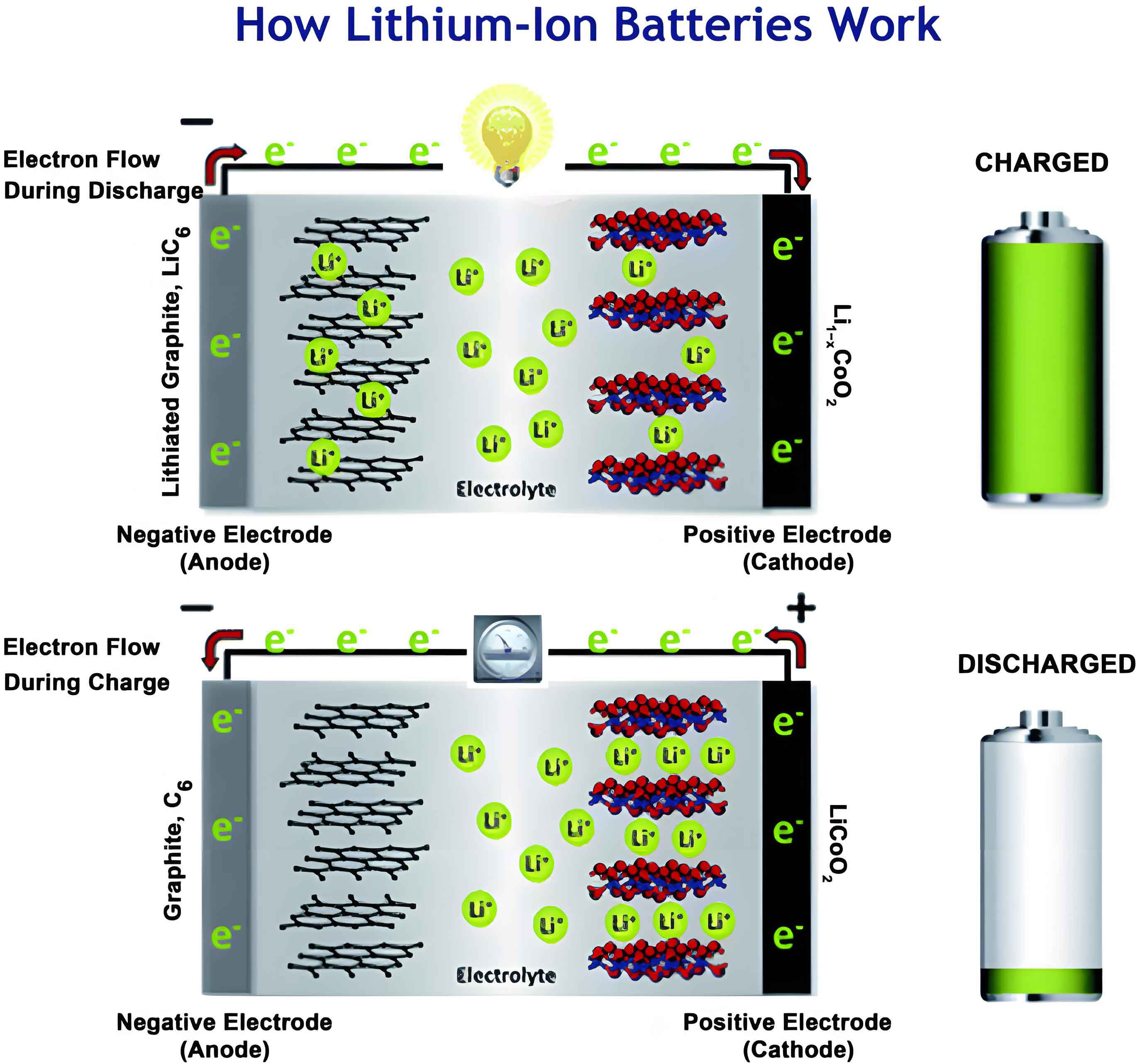
The experimental foundation for this study involved subjecting commercial cylindrical lithium-ion battery cells to controlled low-temperature charging cycles to induce varying degrees of lithium plating. The key parameters of the cells used are summarized below.
| Parameter | Specification |
|---|---|
| Nominal Capacity | 2900 mAh |
| Nominal Voltage | 3.6 V |
| Charge/Discharge Cut-off Voltage | 4.2 V / 2.5 V |
| Anode/ Cathode Material | Graphite / Li(NiCoMn)O2 |
Cells were preconditioned and then cycled at temperatures of 0°C, -5°C, and -10°C with charging rates ranging from 0.1C to 1C, as detailed in the following experimental matrix. A post-plating low-rate (0.05C) discharge was conducted to capture the characteristic voltage plateau associated with reversible lithium stripping.
| Cell ID | Test Condition | Pre-Plating Capacity (Ah) | Post-Plating Capacity (Ah) | Capacity Fade Rate |
|---|---|---|---|---|
| 1 | -10°C, 1C | 2.89 | 2.61 | -9.97% |
| 2 | -10°C, 0.75C | 2.90 | 2.56 | -11.94% |
| 3 | -10°C, 0.5C | 2.89 | 2.69 | -7.11% |
| 4 | -5°C, 0.5C | 2.87 | 2.77 | -3.38% |
| 5 | -5°C, 0.625C | 2.91 | 2.76 | -5.36% |
| 6 | -5°C, 0.75C | 2.83 | 2.61 | -7.70% |
| 7 | 0°C, 0.5C | 2.93 | 2.87 | -2.19% |
| 8 | -10°C, 0.1C | 2.94 | 2.91 | -0.82% |
| 9 | 0°C, 0.1C | 2.89 | 2.91 | +0.69% |
| 10 | -5°C, 0.1C | 2.84 | 2.84 | -0.05% |
Based on the capacity fade rate (where a fade >2% is considered indicative of lithium plating) and the presence of a voltage plateau, cells 1-7 were labeled as plated and cells 8-10 as healthy. This labeled dataset forms the ground truth for developing the diagnostic model. A larger batch of 18 cells was subsequently prepared under three representative conditions (-10°C/0.5C, -5°C/0.5C, 0°C/0.5C) to provide sufficient data for the clustering analysis.
The cornerstone of the proposed method is the extraction of multidimensional features that are sensitive to the physical and electrochemical changes induced by lithium plating in a lithium-ion battery. We derive features from two complementary domains: equivalent circuit model parameters and incremental capacity (dQ/dV) curves.
First, a first-order Thevenin equivalent circuit model is employed to represent the dynamic behavior of the lithium-ion battery. The state-space equations are:
$$U_{1,k+1} = \exp\left(-\frac{\Delta t}{R_1 C_1}\right) U_{1,k} + R_1 \left[1-\exp\left(-\frac{\Delta t}{R_1 C_1}\right)\right] I_k$$
$$U_{T,k} = U_{OCV}(z_k) – I_k R_0 – U_{1,k}$$
where $U_1$ is the polarization voltage, $I$ is the current, $U_T$ is the terminal voltage, $U_{OCV}$ is the open-circuit voltage, $z$ is the state of charge, and $R_0$, $R_1$, $C_1$ are the ohmic resistance, polarization resistance, and polarization capacitance, respectively. These parameters are identified at various SOC points from Hybrid Pulse Power Characterization (HPPC) test data. The parameters at 55% SOC, selected via a coefficient of variation method for their high sensitivity to inconsistency and change rate, are used as features: $R_1$, $C_1$. Electrochemical Impedance Spectroscopy (EIS) is also performed, and the charge transfer resistance $R_{ct}$ obtained from fitting the spectrum to a dedicated equivalent circuit model is adopted as a third model-based feature. The impedance of the equivalent circuit is given by:
$$Z = j\omega L + R_s + \frac{1}{\frac{1}{R_{ct}} + Y_0(j\omega)^n} + \frac{W_0}{(j\omega)^{1/2}}$$
where $R_s$ is the ohmic resistance and $R_{ct}$ is the charge transfer resistance.
Secondly, features are extracted from the incremental capacity curve derived from the post-plating low-rate discharge. The dQ/dV curve is calculated as:
$$\frac{dQ}{dV} \approx \frac{\Delta Q}{\Delta V} = \frac{Q_{i+1} – Q_i}{V_{i+1} – V_i}$$
This curve amplifies phase transition features related to the electrode materials. Lithium plating, primarily causing loss of lithium inventory (LLI), shifts the characteristic peaks of the dQ/dV curve. The voltage positions of the first two major peaks, denoted as $dQ/dV_1$ and $dQ/dV_2$, are extracted as salient features.
To ensure the selected features are strongly correlated with the severity of lithium plating, quantified here by the capacity fade rate, a dual correlation analysis is performed. Both Pearson ($r_p$) and Spearman ($r_{sp}$) correlation coefficients are calculated for each candidate feature:
$$r_p = \frac{E(XY) – E(X)E(Y)}{\sqrt{E(X^2) – E^2(X)} \sqrt{E(Y^2) – E^2(Y)}}$$
$$r_{sp} = \frac{\sum_i (x_i – \bar{x})(y_i – \bar{y})}{\sqrt{\sum_i (x_i – \bar{x})^2 \sum_i (y_i – \bar{y})^2}}$$
where $X$ and $Y$ represent the feature and capacity fade samples, respectively. Features with absolute correlation coefficient values greater than 0.7 for both metrics are retained. The results of this screening are presented in the correlation heatmap below, leading to the selection of five strong features: $R_1$, $C_1$, $R_{ct}$, $dQ/dV_1$, and $dQ/dV_2$.
| Feature | Pearson Correlation with Capacity Fade | Spearman Correlation with Capacity Fade |
|---|---|---|
| $R_1$ | 0.86 | 0.78 |
| $C_1$ | -0.71 | -0.73 |
| $R_0$ | 0.58 | 0.55 |
| $R_{ct}$ | 0.88 | 0.81 |
| $dQ/dV_1$ | -0.82 | -0.84 |
| $dQ/dV_2$ | -0.75 | -0.79 |
The selected five-dimensional feature set contains redundant information. Principal Component Analysis (PCA) is applied to reduce dimensionality while preserving the majority of the variance. The original feature matrix $\mathbf{X}$ is standardized, and the principal components $\mathbf{F}$ are obtained by projecting onto the eigenvectors $\mathbf{U}$:
$$\mathbf{F} = \mathbf{U}^T \mathbf{X}$$
The first two principal components, which capture over 95% of the total variance, form a new, lower-dimensional composite feature vector for clustering. The transformation for the multidimensional feature set is:
$$
\begin{aligned}
F_1 &= -0.4340R_1 – 0.4491C_1 – 0.4414R_{ct} + 0.4673(dQ/dV_1) + 0.4436(dQ/dV_2) \\
F_2 &= 0.7327R_1 – 0.4343C_1 + 0.4550R_{ct} + 0.0705(dQ/dV_1) – 0.2498(dQ/dV_2)
\end{aligned}
$$
For comparison, single-dimensional feature sets are also formed: one from the model parameters ($R_1$, $C_1$, $R_{ct}$) and another from the dQ/dV features ($dQ/dV_1$, $dQ/dV_2$), each processed by their own PCA.
The diagnostic problem is framed as an unsupervised clustering task, where the goal is to separate plated cells from healthy ones based on their feature vectors without prior labeling. The Density-Based Spatial Clustering of Applications with Noise (DBSCAN) algorithm is chosen for its ability to identify arbitrary-shaped clusters and, crucially, to label outliers as noise—which in this context correspond to faulted (plated) cells. DBSCAN requires two parameters: the neighborhood radius $\epsilon$ and the minimum number of points $MinPts$ to form a dense region.
To automate and optimize the parameter selection, a Particle Swarm Optimization (PSO) routine is integrated. The fitness function for PSO is defined based on the diagnostic accuracy for the 10 initially characterized cells: a correctly diagnosed cell (healthy cells in the large cluster, plated cells labeled as noise) contributes +1 to the fitness score. The PSO searches the ($\epsilon$, $MinPts$) space to maximize this fitness, ensuring the clustering parameters are tailored to the specific feature distribution.
The clustering is performed on three different feature sets: the model-based PCA components, the dQ/dV-based PCA components, and the multidimensional PCA components. The performance is evaluated using the misdiagnosis rate $\alpha$ (healthy cells wrongly labeled as plated) and the missed diagnosis rate $\beta$ (plated cells wrongly labeled as healthy):
$$\alpha = \frac{B}{B+D}, \quad \beta = \frac{C}{A+C}$$
where $A$ is the number of plated cells correctly diagnosed, $B$ is the number of healthy cells misdiagnosed as plated, $C$ is the number of plated cells missed, and $D$ is the number of healthy cells correctly diagnosed.
The diagnostic results demonstrate the clear advantage of the multidimensional feature approach. When using only model-based features, the clustering achieved a missed diagnosis rate ($\beta$) of 12.00%, failing to detect three plated cells. Using only dQ/dV-based features resulted in both a missed diagnosis rate of 12.00% and a misdiagnosis rate ($\alpha$) of 3.63%, where two healthy cells were incorrectly flagged. In contrast, the multidimensional feature fusion approach significantly improved performance, reducing the missed diagnosis rate to 4.00% and achieving a 0% misdiagnosis rate.
| Feature Set | Missed Diagnosis Rate ($\beta$) | Misdiagnosis Rate ($\alpha$) |
|---|---|---|
| Model-Based Only | 12.00% | 0% |
| dQ/dV-Based Only | 12.00% | 3.63% |
| Multidimensional Fusion | 4.00% | 0% |
Furthermore, the method successfully enables severity grading. By applying a secondary criterion within the cluster of plated cells—based on their capacity fade—the algorithm can distinguish between “mild” plating (capacity fade between 2.0% and 7.5%) and “severe” plating (capacity fade > 7.5%). The clustering result with severity grading showed a consistent missed diagnosis rate of 4.00% and only one case of incorrect severity classification.
The validity of the diagnostic conclusions was corroborated by post-mortem physical analysis. Scanning Electron Microscopy (SEM) was performed on the graphite anodes of selected cells. The anode from a healthy cell showed a clean surface of graphite particles. The anode from a cell diagnosed with mild plating exhibited fine, dendritic lithium deposits covering most, but not all, graphite particles. The anode from a cell diagnosed with severe plating was fully covered by a mossy layer of lithium metal, confirming the highest level of plating. Inductively Coupled Plasma (ICP) analysis further quantified the total lithium content in the anode samples, showing a progressive increase from the healthy to the mildly plated to the severely plated cell, aligning perfectly with the diagnostic and SEM results.
In conclusion, this work establishes a robust, data-driven framework for diagnosing lithium plating in lithium-ion battery systems. The fusion of multidimensional features extracted from easily measurable operational data—encompassing both circuit model dynamics and electrochemical signature analysis—provides a more comprehensive and reliable indicator of plating than any single-feature approach. The integration of PCA for feature compression and an optimized DBSCAN algorithm for adaptive, unsupervised clustering creates an effective tool for fault detection and severity assessment. This method significantly reduces both missed and false alarms compared to conventional single-domain techniques. The diagnostic outcomes were physically validated, confirming the method’s accuracy in identifying and grading lithium plating. This approach holds significant promise for implementation in advanced battery management systems to enhance the safety and prolong the service life of lithium-ion battery packs, particularly under demanding operating conditions such as low-temperature or fast charging.