
Accurate estimation of the state of health (SOH) for lithium-ion batteries (LIBs) is critical to ensure the safety and reliability of energy storage systems. This paper proposes a data-driven approach that combines multiple health factors (HFs) with an improved particle swarm optimization (IPSO) algorithm to optimize a long short-term memory (LSTM) network for SOH prediction. The methodology addresses challenges in feature selection, model parameter optimization, and generalization across diverse battery aging patterns.
Feature Engineering and Correlation Analysis
Thirteen candidate HFs are extracted from measurable parameters during charge-discharge cycles, including:
- Constant voltage charging duration (HF1)
- Constant current charging time (HF2)
- Voltage drop duration between 3.8V-3.5V (HF6)
- Temperature rise time from 33°C to 36°C (HF13)
Pearson correlation analysis identifies the most significant features for SOH estimation:
$$ r = \frac{1}{n}\sum_{i=1}^n \left( \frac{X_i – \bar{X}}{\sigma_X} \right)\left( \frac{Y_i – \bar{Y}}{\sigma_Y} \right) $$
where \( X_i \) and \( Y_i \) represent HF values and SOH measurements, respectively. The selected HFs (HF4, HF5, HF6, HF13) demonstrate correlation coefficients >0.8 with SOH degradation.
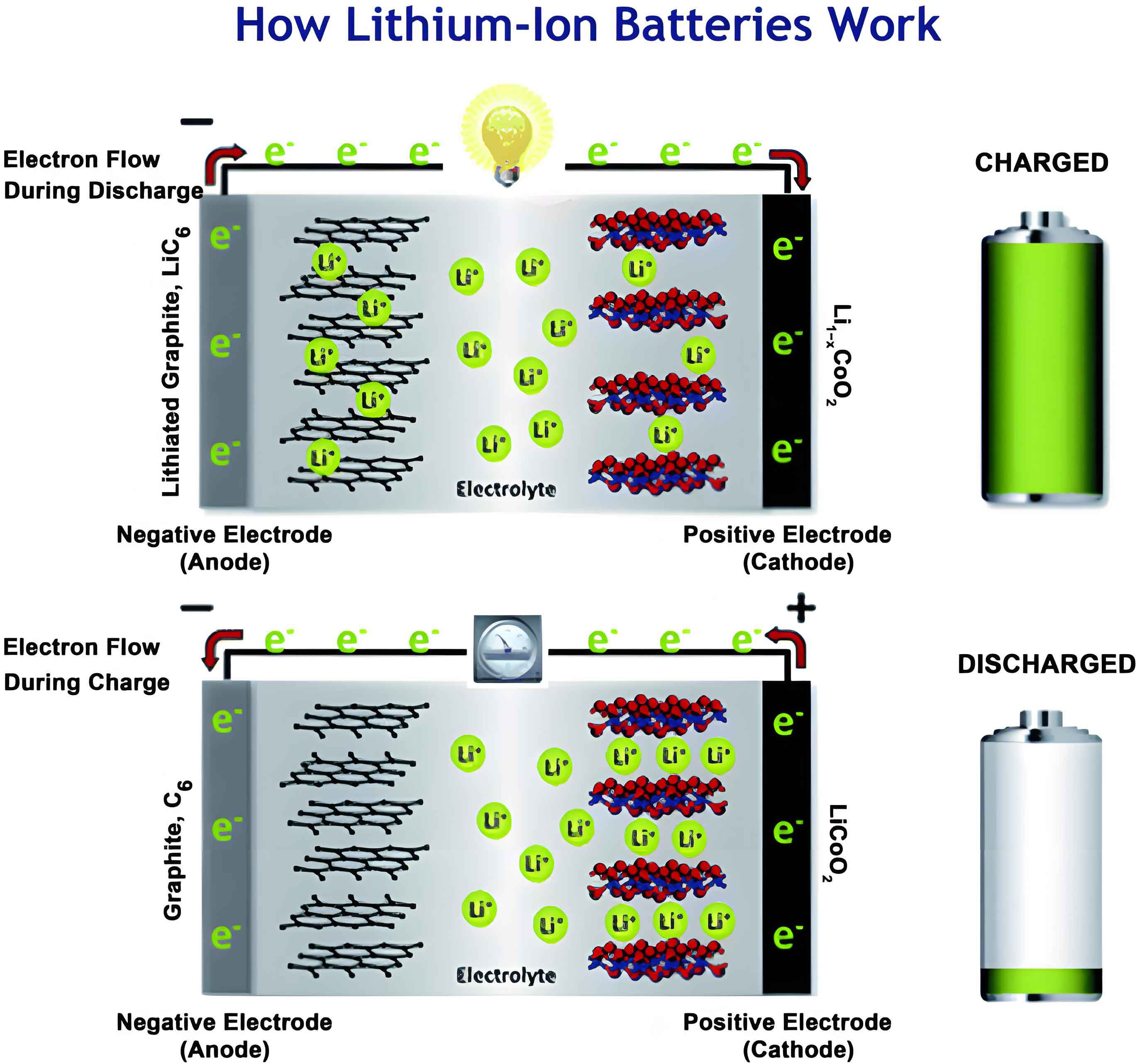
IPSO-LSTM Architecture
The proposed model integrates three key improvements to traditional PSO:
- Chaotic Initialization:
$$ x_{i+1} = \text{mod}\left( x_i + 0.2 – \frac{0.5}{2\pi}\sin(2\pi x_i), 1 \right) $$
Enhances population diversity through Circle chaotic mapping - Asymmetric Learning Factors:
$$ C_1 = 2 + 0.7(0.5 – 2)\frac{t}{t_{max}} $$
$$ C_2 = 1 + 0.7(2 – 1)\frac{t}{t_{max}} $$
Balances global exploration and local exploitation - Nonlinear Inertia Weight:
$$ w = 0.1 + (0.7 – 0.1)e^{-0.3(t/t_{max})} $$
Adapts search scope during optimization
The LSTM network structure is optimized through:
$$ \min_{\theta} \text{RMSE} = \sqrt{\frac{1}{n}\sum_{i=1}^n (y_i – \hat{y}_i)^2} $$
where \( \theta \) represents LSTM hyperparameters (hidden units, learning rate, dropout ratio).
Experimental Validation
Using NASA’s battery aging dataset (B0005, B0006, B0007), the model demonstrates superior performance across different training ratios:
| Battery | Training Ratio | MAE (%) | RMSE (%) | MAPE (%) |
|---|---|---|---|---|
| B0005 | 50% | 0.14 | 0.18 | 0.21 |
| 60% | 0.13 | 0.17 | 0.20 | |
| 70% | 0.11 | 0.13 | 0.16 |
Comparative analysis with existing methods reveals:
| Model | MAE Improvement | RMSE Improvement | MAPE Improvement |
|---|---|---|---|
| SFFS-LSTM | 79.8% | 80.7% | 78.4% |
| BiGRU-Transformer | 34.1% | 33.0% | -20.8% |
| VMD-CNN-AttBiGRU | 74.2% | 74.7% | – |
Key Advantages
- Eliminates complex electrochemical modeling through direct feature extraction
- Reduces MAE by 48-92% compared to baseline LSTM models
- Maintains prediction errors <1% across different battery aging patterns
The IPSO-LSTM framework demonstrates exceptional capability in capturing capacity regeneration phenomena and nonlinear degradation trends in lithium-ion batteries. Future work will focus on implementing this approach in real-time battery management systems and validating performance under varying operational conditions.