
I begin this review from a simple but consequential observation: a solid electrolyte cell promises high energy density and improved safety because its electrolyte is nonflammable, mechanically robust, and capable of sustaining ionic transport over a wide temperature window. Yet the same solid electrolyte cell remains limited by lithium dendrite evolution, which can induce interfacial failure, electrolyte fracture, and internal short circuits. My aim is to construct a unified analytical framework that links dendrite nucleation, propagation, and penetration to the coupled electrochemical, mechanical, and interfacial chemical processes inside a solid electrolyte cell. I do not treat dendrite growth as a single-factor instability. Instead, I argue that the central conflict in a solid electrolyte cell is that high modulus alone cannot guarantee dendrite suppression, because defects, grain boundaries, voids, contact loss, and interfacial reaction layers collectively determine where and how lithium is deposited.
I first summarize the fundamental mechanisms of electrochemical–mechanical instability during lithium dendrite evolution. I then review multiphysics modeling approaches, including phase-field methods, finite element methods, and continuum models. After that, I organize recent progress into two broad categories: modeling dominated by interfacial factors, and modeling dominated by the intrinsic properties of the solid electrolyte. Throughout this review, I emphasize that a solid electrolyte cell fails through a synergistic process in which interfacial states and bulk electrolyte properties jointly determine the preferential propagation path and the critical penetration condition. Finally, I discuss the main challenges and future directions for quantitative prediction.
Mechanisms of Lithium Dendrite Evolution in Solid Electrolyte Cells
In a solid electrolyte cell, lithium dendrite evolution is not merely a morphological instability of electrodeposition. It is a multiphysics process in which electrochemical reactions, ionic transport, mechanical stress, and interfacial chemistry are coupled across multiple length scales. Unlike liquid electrolyte systems, where dendrites often adopt tree-like or mossy morphologies, lithium in a solid electrolyte cell frequently appears as filaments, needles, or sheets that propagate along grain boundaries, pores, and cracks. This morphological difference indicates that the dendrite problem in a solid electrolyte cell is fundamentally a problem of interfacial fracture and structural failure.
The electrochemical field provides the direct driving force for nucleation and early growth. During charging, lithium ions migrate through the solid electrolyte and are reduced at the negative electrode. The local deposition rate is controlled by interfacial reaction kinetics and local overpotential. In a real solid electrolyte cell, surface roughness, pores, poor contact, and side-reaction layers disturb the uniformity of local current density and lithium-ion flux. As a result, lithium preferentially nucleates at specific sites. I identify two primary electrochemical instability mechanisms. The first is geometric current concentration: surface protrusions and defects attract lithium ions, accelerate local deposition, and establish a positive feedback loop of protrusion, current concentration, and further deposition. The second is transport-induced flux imbalance: grain boundaries, heterogeneous conductivity regions, second-phase particles, and interfacial reaction layers alter local migration paths and rates, amplifying deposition nonuniformity.
Beyond geometry and transport, space charge effects and electron leakage are important complementary mechanisms. A space charge layer arises from the discontinuity of electrochemical potential at the lithium–solid electrolyte interface, producing a characteristic potential distribution and ion redistribution. When the space charge layer limits local ionic migration or shifts the local potential, interfacial stability decreases and lithium nucleation is promoted. Electron leakage challenges the traditional view that dendrites grow only along interfaces. An ideal solid electrolyte should have negligible electronic conductivity, but defect states, grain boundaries, impurity phases, and interfacial reduction reactions can introduce weak electronic leakage. Once electrons enter the solid electrolyte, lithium ions can be reduced in the bulk or at grain boundaries, which means that some dendrites may nucleate inside the electrolyte rather than only at the electrode surface.
In a solid electrolyte cell, lithium deposition occurs at a solid–solid interface and is accompanied by significant mechanical response. I group the mechanical effects into three pathways. First, deposition-induced stress concentration and cracking: local volume expansion and interfacial deformation create stress concentration at protrusions, contact edges, and grain boundary junctions. When local stress exceeds the strength limit, microcracks form inside the electrolyte or near the interface, providing preferential channels for dendrite propagation. Second, contact evolution during cycling: voids formed during stripping reduce the effective contact area, so subsequent deposition concentrates at limited contact points, intensifying local current density and deposition nonuniformity. Local expansion during plating further alters the contact pressure distribution. This dynamic process of stripping, plating, and contact reconstruction continuously degrades the interface and amplifies nonuniform dendrite growth. Third, the double-edged effect of stack pressure: moderate stack pressure improves interfacial contact, reduces voids, and lowers impedance, but excessive or nonuniform pressure can induce local plastic deformation, stress concentration, and even premature crack initiation. Therefore, the mechanical field in a solid electrolyte cell can either suppress dendrite propagation or accelerate it through contact failure and crack initiation.
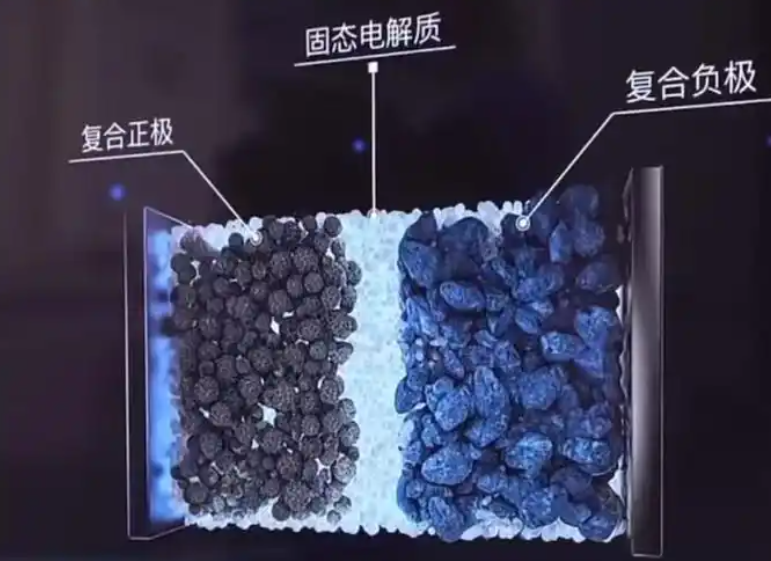
The electrochemical and mechanical fields are not independent. They are continuously coupled and mutually reinforcing in a solid electrolyte cell. I summarize the coupling into three paths. The first is stress modulation of deposition thermodynamics. Stress changes the local chemical potential and thus the driving force for lithium deposition. A compressive or tensile stress region shifts the lithium chemical potential and alters the preferred deposition site and migration trend. In a solid electrolyte cell, the deposition location and rate depend not only on the potential distribution but also directly on the stress distribution. The second is the feedback from contact state to reaction kinetics. Deposition-induced protrusions change the contact pressure distribution, while stripping-induced voids cause local loss of contact, concentrating current in the remaining contact areas and further increasing local current density. Local contact pressure changes also affect the formation and reconstruction of interfacial side-reaction layers, causing impedance and exchange current density to diverge spatially. The third is the tight coupling among concentration, stress, and diffusion. Ion depletion intensifies interfacial polarization and promotes localized deposition. Nonuniform deposition-induced volume changes generate stress gradients, which in turn affect ion diffusion paths and migration behavior. Together, these three paths determine the degree of interfacial instability in a solid electrolyte cell.
For a quantitative description, I express the local electrochemical driving force as a function of potential, concentration, and stress. The electrochemical potential of lithium can be written as:
$$\mu_{\mathrm{Li}} = \mu_{\mathrm{Li}}^0 + RT \ln a_{\mathrm{Li}} + \Omega \sigma_h$$
where \(\mu_{\mathrm{Li}}^0\) is the standard chemical potential, \(R\) is the gas constant, \(T\) is temperature, \(a_{\mathrm{Li}}\) is the activity of lithium, \(\Omega\) is the partial molar volume, and \(\sigma_h\) is the hydrostatic stress. The local current density is often described by a Butler–Volmer-type relation:
$$i_{\mathrm{loc}} = i_0 \left[ \exp\left( \frac{\alpha_a F \eta}{RT} \right) – \exp\left( -\frac{\alpha_c F \eta}{RT} \right) \right]$$
where \(i_0\) is the exchange current density, \(\alpha_a\) and \(\alpha_c\) are anodic and cathodic transfer coefficients, \(F\) is the Faraday constant, and \(\eta\) is the overpotential. In a stressed solid electrolyte cell, the overpotential includes a mechanical contribution:
$$\eta = \phi_s – \phi_e – U_{\mathrm{eq}} – \frac{\Omega \sigma_h}{F}$$
These equations show that stress and electrochemical potential are not separate variables. In a solid electrolyte cell, they jointly control the local deposition rate and thus the onset of dendrite nucleation.
Multiphysics Modeling Methods for Solid Electrolyte Cells
To analyze lithium dendrite evolution in a solid electrolyte cell, researchers have developed several modeling methods. I focus on three representative approaches: the phase-field method, the finite element method, and continuum models. These methods are not mutually exclusive. In practice, a continuum model provides the theoretical framework, the finite element method provides numerical discretization, and the phase-field method introduces order parameters to track interface evolution implicitly. For example, a phase-field model is often implemented on a finite element platform, while a continuum framework can incorporate phase-field variables or damage variables to describe crack propagation, void evolution, and interfacial instability.
The phase-field method is one of the most widely used approaches for lithium dendrite evolution in a solid electrolyte cell. Its core idea is to describe the diffuse interface between the electrode phase and the electrolyte phase using a continuous order parameter, thereby avoiding explicit tracking of complex moving boundaries. The phase-field method converts a sharp interface into a continuous transition region of finite thickness and naturally describes interface morphology evolution through a free energy functional and its variational form. It is therefore particularly suitable for studying dendrite nucleation, growth, branching, and interfacial instability in a solid electrolyte cell.
In a typical phase-field formulation, the total free energy functional includes chemical free energy, gradient energy, electrostatic energy, elastic energy, and damage energy:
$$F = \int_V \left( f_{\mathrm{chem}}(c,\eta) + \frac{\kappa_\eta}{2} |\nabla \eta|^2 + f_{\mathrm{elastic}}(\varepsilon, \eta) + f_{\mathrm{elec}}(\phi, c) + f_{\mathrm{damage}}(d) \right) dV$$
where \(c\) is the lithium concentration, \(\eta\) is the phase-field order parameter, \(\phi\) is the electric potential, \(\varepsilon\) is the strain tensor, and \(d\) is the damage variable. The evolution of the order parameter follows a time-dependent Ginzburg–Landau equation:
$$\frac{\partial \eta}{\partial t} = -L_\eta \frac{\delta F}{\delta \eta}$$
and the lithium transport equation is written as:
$$\frac{\partial c}{\partial t} = \nabla \cdot \left( M \nabla \frac{\delta F}{\delta c} \right)$$
where \(L_\eta\) is the interfacial mobility and \(M\) is the lithium mobility. In a solid electrolyte cell, these equations are coupled with the mechanical equilibrium equation and the charge conservation equation. The phase-field method can also introduce a second order parameter or damage variable to describe crack propagation, void evolution, and plating–stripping interface changes simultaneously.
The finite element method is an important tool for studying local current distribution, stress evolution, contact state, and void behavior in a solid electrolyte cell. It is well suited to solving concentration fields, potential fields, and stress fields under complex geometries and boundary conditions. Because inorganic solid electrolytes exhibit significant mechanical response, modeling a solid electrolyte cell usually requires explicit solid mechanics equations. In practice, the finite element method defines ion transport, charge conservation, interfacial reaction kinetics, and solid mechanics equations in the same geometric domain and solves them after mesh discretization. For voids, cracks, and contact degradation, contact boundary conditions, local geometry updates, cohesive elements, or diffuse interface representations can be used to link mechanical failure with electrochemical processes.
Continuum models are based on mass conservation, charge conservation, momentum conservation, and constitutive relations. They establish a unified theoretical framework at the macroscopic scale to describe the coupling of transport, reaction, deformation, and damage in a solid electrolyte cell. The advantage of a continuum model is that it can systematically analyze the relationship between intrinsic material properties, external loading conditions, and critical failure thresholds. A thermodynamically consistent electro-chemo-mechanical gradient theory is a representative example. Such a framework couples diffusion, migration, interfacial reaction, solid deformation, and damage evolution in a unified model. By using independent variables to describe deposition and damage, it can simultaneously handle crack propagation and new-phase deposition inside cracks. When applied to a solid electrolyte cell, continuum models can also homogenize polycrystalline electrolytes and treat grain, grain boundary, or defect effects as continuous medium parameters, which are then combined with fracture criteria or critical conditions.
Table 1 compares the three modeling methods in terms of core concept, typical applications, advantages, and limitations.
| Modeling approach | Core concept | Typical applications in a solid electrolyte cell | Advantages | Limitations |
|---|---|---|---|---|
| Phase-field method | Diffuse-interface description | Dendrite growth, crack evolution, void evolution | Strong interface-tracking capability; convenient for multiphysics coupling | High computational cost; parameter-sensitive |
| Finite element method | Discretized solution of multiphysics governing equations | Current localization, stress distribution, contact loss | Suitable for complex geometries; strong local-field analysis | Limited interface-tracking capability |
| Continuum model | Unified framework based on conservation laws and constitutive relations | Property effects, critical current density, failure criteria | Suitable for unified theoretical analysis | Limited microstructural resolution |
The reliability of these methods depends on physical foundations and experimental validation. In terms of theoretical framework, phase-field and continuum models are becoming thermodynamically consistent. The coupling relationships among governing equations have clear energy functional or conservation law foundations, which ensures physical self-consistency. In terms of parameter sources, first-principles calculations can provide microscopic parameters such as interfacial reaction energies, diffusion barriers, and defect electronic structures. Nanoindentation and in situ electrochemical impedance spectroscopy are gradually replacing empirical assignments, making model inputs closer to real material behavior. In terms of experimental validation, most current models achieve qualitative agreement with experimental observations of dendrite morphology evolution, and some studies have made progress in semi-quantitative prediction of critical current density and short-circuit time. However, due to the lack of continuous and dynamic in situ characterization, strict quantitative comparison between model predictions and experiments in the time domain remains a common bottleneck in this field.
Modeling Dominated by Interfacial Factors in Solid Electrolyte Cells
The interface is the region where lithium deposition and failure first occur in a solid electrolyte cell, and it is also one of the most intensively studied objects in dendrite evolution modeling. I group the influence of interfacial factors into three levels. First, surface morphology and initial defects trigger preferential local deposition. Second, cracks, voids, and contact state changes continuously amplify interfacial instability under electrochemical–mechanical coupling. Third, interfacial side-reaction layers and the induced local potential redistribution further alter boundary conditions and ion transport paths.
Surface morphology and initial defects were among the first interfacial factors incorporated into dendrite modeling. Early models simplified the lithium–electrolyte interface as a two-dimensional sinusoidal perturbation and calculated the stress distribution caused by interfacial deformation. They found that local strain changes the current density distribution at the interface and intensifies surface roughening and interfacial instability. These models proposed that when the shear modulus of the solid electrolyte exceeds twice that of lithium metal, dendrite growth can be effectively suppressed. Although this shear modulus criterion is important for understanding dendrite suppression in polymer systems, later experiments showed that it does not apply to high-modulus, brittle inorganic solid electrolytes. The fundamental reason is that the theory assumes a defect-free interface and purely elastic lithium metal, whereas in a real solid electrolyte cell, surface defects and cracks are the key sites for preferential lithium deposition and dendrite nucleation. In addition, lithium metal exhibits significant creep and viscoplastic flow under practical conditions, making its penetration and propagation in cracks more dynamic. Therefore, dendrite growth in a solid electrolyte cell cannot be reduced to a simple modulus constraint. It is essentially the result of coupling among defect structure, mechanical response, and electrochemical deposition.
On this basis, continuum and finite element models have extended interfacial defects from idealized perturbations to crack-like surface defects with explicit geometric features. These models established a more direct correspondence among surface morphology, interfacial impedance, and local deposition behavior. For example, a continuum model of a crack-like defect at a lithium–ceramic electrolyte interface showed that a pronounced positive current peak appears at the crack tip, while negative current peaks appear at the convex corners on both sides of the defect. This indicates that surface defects can significantly reconstruct the local electric field and current density distribution, making lithium more likely to nucleate and deposit at the crack tip. Moreover, the lower the interfacial surface resistance, the stronger the current concentration at the defect, which means that under a low-resistance interface, surface morphology has a more sensitive effect on deposition stability. As the crack length increases, the current peak at the crack tip continues to rise, and this trend is more pronounced under lower interfacial surface resistance. This confirms that defect size not only affects the degree of local field enhancement but also directly determines the amplification of the lithium deposition driving force.
However, failure in a real solid electrolyte cell is not always triggered by a single macroscopic crack. Local interfacial perturbations and their propagation during deposition also deserve attention. A phase-field study that introduced a local solid electrolyte interphase (SEI)-induced interfacial perturbation found that in a liquid electrolyte, irregular deposition is mainly concentrated in the initial perturbation region. In a solid electrolyte, however, nonuniform deposition expands from the initial defect to surrounding originally undisturbed regions. Even increasing the interfacial stiffness can only reduce the overall degree of nonuniformity to a limited extent, but cannot prevent its propagation. This shows that in a solid electrolyte cell, the influence range of a local interfacial defect is not limited to the defect itself. Under the combined action of stress gradients and local current perturbations, it spreads to the surrounding area and continuously induces new deposition instability zones.
In addition to geometric defects and local SEI perturbations, nonuniform composition distribution in real materials can produce similar interfacial defect effects. Finite element simulations of composite solid electrolytes have compared aggregated ceramic particles with uniformly dispersed particles. The results showed that in the aggregated case, the migration path of lithium ions becomes more tortuous, and a significantly nonuniform flux distribution forms at the electrolyte–negative electrode interface. In the dispersed case, uniformly distributed ceramic particles provide a more continuous and direct ion transport path, making the interfacial flux distribution more uniform. Quantitative results further indicated that although the introduction of a ceramic/polymer interface layer reduces the lithium-ion flux in both types of composite electrolytes, the overall lithium-ion flux in the dispersed case is always higher than that in the aggregated case. Therefore, interfacial defect modeling should not be limited to visible cracks or voids. It should also include hidden interfacial defects caused by particle aggregation, local composition fluctuations, and discontinuous transport channels. These defects may not appear as explicit macroscopic cracking, but they similarly alter local ion transport and interfacial reaction distribution, induce preferential lithium deposition, and accelerate interfacial failure in a solid electrolyte cell.
After surface defects trigger preferential local lithium deposition, interfacial failure often evolves into more complex processes such as crack propagation, void filling, and contact state reconstruction. For this stage, models have incorporated crack propagation, pore structure, external pressure, and contact boundary conditions into a unified analysis framework. Among these, the synergistic evolution of crack propagation and lithium deposition is one of the core issues. An electrochemical–mechanical coupled phase-field model of a polycrystalline solid electrolyte with pre-existing defects showed that under a stack pressure of 50 MPa, after the pre-existing defect region is initially filled with lithium, lithium dendrites can not only propagate along grain boundaries but also continue to grow in the cracked region formed by crack propagation. The local lithium-ion concentration and potential distribution also adjust continuously as the dendrite advances. The position of the pre-existing defect significantly affects the crack initiation site. When the defect is close to a grain boundary, the crack is more likely to initiate at the grain boundary and propagate into the grain. When the crack enters the adjacent grain and grain boundary network, its propagation path turns toward a lower energy direction. This indicates that the crack is not a passive consequence of dendrite growth but an active interface that evolves synchronously with lithium deposition. The low-modulus, high-conductivity region formed by crack propagation in turn provides a more favorable channel for subsequent lithium deposition. This model is qualitatively consistent with the experimentally observed preferential intergranular penetration behavior in a solid electrolyte cell, but accurate prediction of crack propagation rate and short-circuit time still depends on more precise grain boundary fracture energy parameters.
This model also quantified the amplification effect of external pressure on crack–dendrite synergistic evolution. As the stack pressure increases, the maximum penetration depth of dendrites along grain boundaries and the grain boundary dendrite area both increase significantly. When the pressure is below 10 MPa, the increase is not obvious, so the mechanical driving force for dendrite advancement is limited at low pressure. When the pressure is above 20 MPa, the mechanical contribution term increases markedly, indicating that pressure-induced strain energy becomes an important factor promoting dendrite propagation. Combined with further crack propagation analysis, high stack pressure also accelerates crack propagation inside the solid electrolyte, thereby providing more newly cracked surfaces and propagation paths for lithium dendrites. This shows that moderate pressure is beneficial for improving initial interfacial contact, but excessive pressure may increase the mechanical contribution and cause dendrite propagation to shift from electrochemical-dominated to electrochemical–mechanical co-driven behavior in a solid electrolyte cell.
The influence of voids and pore structure on dendrite evolution is further reflected in the soft short-circuit behavior in porous solid electrolytes. An electrochemical–solid mechanics coupled phase-field model simulated lithium deposition in a porous electrolyte under external pressure. At 0, 5, and 10 MPa, as the external pressure increases, continuous through-thickness dendrite growth is suppressed, but the hydrostatic pressure at the local pore surface increases significantly. The dendrite morphology changes from a tree-like connected structure to a network-like structure distributed along the pore–electrolyte interface, and at higher pressure, fracture occurs and dead lithium forms. Correspondingly, the leakage current curve changes from a sudden jump under no pressure to a fluctuating response under high pressure, exhibiting typical soft short-circuit characteristics. This result further demonstrates that external pressure has a dual effect on void-related instability. On one hand, it suppresses direct dendrite penetration. On the other hand, by inducing local stress concentration and dendrite fracture, it promotes unstable contact and soft short-circuit behavior in a solid electrolyte cell.
Changes in interfacial contact state are also an important factor affecting dendrite evolution. A contact mechanics model has been used to establish a quantitative relationship between pressure and contact coefficient. The interfacial contact coefficient between the electrode and electrolyte increases with applied pressure, and the increase is most significant in the low-pressure range. The negative electrode interface approaches complete contact at about 20 MPa, while the positive electrode interface requires higher pressure to reach a similar contact level. The change in contact state is not a simple binary state of contact or no contact, but a dynamic process that can be continuously characterized by the contact coefficient. A decrease in the contact coefficient means a reduction in the actual effective contact area, an increase in local current density, and further amplification of interfacial polarization, side reactions, and stress accumulation. Conversely, a higher contact coefficient can reduce interfacial impedance and slow performance degradation. Thus, the change in contact state is actually a concentrated manifestation of crack propagation and void evolution at the interface scale, and it is a key link in the continuous evolution of dendrites and the amplification of interfacial failure in a solid electrolyte cell.
Interfacial chemical instability also profoundly changes the dendrite evolution path. From a modeling perspective, the key significance of a side-reaction layer is not only that it increases interfacial impedance but also that it changes the interfacial boundary conditions and reshapes the local potential drop and ion transport distribution. For sulfide electrolytes, lithium reacts with the electrolyte upon contact and first undergoes reductive decomposition, forming a side-reaction layer with finite thickness, complex composition, and mixed transport characteristics. A combined characterization and finite element study of a lithium/thiophosphate interface showed that the interfacial reaction layer is not simply attached to a flat surface but expands nonuniformly into the electrolyte under the coupling of interfacial decomposition, deformation, and local cracking. The formation of the interfacial reaction layer is accompanied by local cracking and deformation of the electrolyte. More importantly, the mixed conductive intermediate layer changes the interfacial boundary condition from a binary lithium–solid electrolyte contact to a ternary coupled system of lithium–side-reaction layer–electrolyte. When this interfacial reaction layer is included in the model, the maximum potential drop and maximum lithium-ion flux density are mainly concentrated at the side-reaction layer/electrolyte interface. Especially in a battery after long cycling, the reaction intermediate layer and solid electrolyte morphology become more irregular, causing further reconstruction of the local potential field and lithium-ion migration path. If this reaction layer is ignored, the resulting potential field and ion flux distribution are significantly different. This indicates that the chemical and electrochemical properties of the interfacial reaction layer play a key role in determining the local potential distribution and ion transport path in a solid electrolyte cell.
However, not all interfacial layers exacerbate instability. Recent studies have attempted to transform an uncontrolled side-reaction layer into a controlled passivation layer through artificial interface design. First-principles molecular dynamics simulations have compared different interfacial systems. At a bare lithium/sulfide electrolyte interface, mutual diffusion of lithium and sulfur and lithium–sulfur bonding appear within a short time, and interfacial disorder rapidly increases, indicating that the side reaction is spontaneous and continuously amplified. In contrast, an alloy-based interface undergoes only limited reaction, and an oxide-based interface mainly exhibits slight interdiffusion with almost no obvious side reaction, demonstrating excellent interfacial passivation ability. This proves that artificially introducing an interface component that is electronically insulating, chemically stable, and does not excessively hinder lithium-ion migration can effectively block direct contact between active lithium and the sulfide electrolyte, thereby suppressing uncontrolled growth of the side-reaction layer. From a modeling perspective, the key difference of such a side-reaction layer is not whether a reaction occurs, but whether the final interface is a mixed conductive and continuously thickening unstable interface or an ion-conducting, electron-insulating, self-limiting passivation layer. Related theoretical analysis has further classified solid electrolyte interfaces into stable interfaces, mixed conductive unstable interfaces, and controlled passivation interfaces, providing a clearer framework for understanding the effect of side-reaction layers on dendrite evolution paths in a solid electrolyte cell.
Table 2 summarizes the main interfacial factors, their modeling representations, and their effects on dendrite evolution in a solid electrolyte cell.
| Interfacial factor | Typical modeling representation | Effect on dendrite evolution |
|---|---|---|
| Surface roughness and geometric defects | Sinusoidal perturbation, crack-like notch, local current peak | Induces preferential nucleation and amplifies local deposition driving force |
| Cracks and voids | Cohesive zone, damage variable, phase-field crack | Provides preferential propagation channels; promotes soft short circuit |
| Contact state | Contact coefficient, pressure-dependent effective area | Controls local current density and interfacial impedance |
| Side-reaction layer | Ternary interface, mixed ionic–electronic conductor | Reshapes potential and ion flux; can be unstable or passivating |
| Space charge layer | Potential discontinuity, ion redistribution | Alters local transport and nucleation kinetics |
| Electron leakage | Defect states, grain boundary reduction | Enables internal lithium nucleation inside the electrolyte |
In summary, interfacial factors regulate lithium dendrite evolution in a solid electrolyte cell at three levels. Surface morphology and geometric defects induce preferential lithium nucleation through local current concentration, and the defect size directly amplifies the deposition driving force. Cracks, voids, and contact state changes continuously evolve under electrochemical–mechanical coupling. Cracks provide preferential propagation channels for lithium deposition, voids tend to induce soft short circuits, and contact state changes dynamically adjust the degree of interfacial failure through the effective reaction area. Interfacial side-reaction layers transform the original binary contact into a ternary coupled system, and their mixed conductive characteristics can significantly change the local potential and ion flux distribution. Reasonable artificial interface design can transform an uncontrolled layer into a controlled layer. Overall, interface-dominated models have achieved qualitative to semi-quantitative agreement with experiments in terms of dendrite morphology evolution and local current distribution. However, quantitative prediction of dynamic behaviors such as interfacial impedance accumulation, dynamic thickening of side-reaction layers, and long-term contact state evolution still faces challenges in parameter calibration and dynamic validation.
Modeling Dominated by Intrinsic Properties of Solid Electrolytes in Solid Electrolyte Cells
The mechanical properties, microstructural heterogeneity, and defect electronic structure of the solid electrolyte itself also significantly affect the nucleation site, propagation path, and penetration threshold of lithium dendrites in a solid electrolyte cell. Unlike interfacial factors, which mainly determine the initial conditions for local deposition, modeling studies dominated by intrinsic properties focus more on how the intrinsic mechanical parameters of the material and their spatial heterogeneity control dendrite propagation and failure evolution. I group the existing studies into three aspects. First, intrinsic mechanical parameters such as elastic modulus and fracture toughness determine crack propagation resistance and short-circuit critical conditions. Second, microstructural heterogeneity such as grains, grain boundaries, pores, and defect geometry determines the preferential propagation path and intergranular or transgranular mode. Third, the electronic structure at defects determines whether isolated lithium metal nucleation occurs and whether penetration acceleration follows.
At the level of intrinsic mechanical parameters, fracture toughness is usually a more direct indicator of dendrite penetration risk than high modulus alone. The reason is that dendrite propagation is essentially closely related to electrodeposition-induced cracking. Young’s modulus mainly affects stress distribution and deformation constraint, while fracture toughness more directly determines whether a crack can continue to propagate. A fully coupled electrochemical–mechanical model showed that the conductivity, Young’s modulus, and fracture toughness of the electrolyte jointly affect the short-circuit time. Higher fracture toughness significantly suppresses crack propagation and delays dendrite growth, while Young’s modulus plays a competitive role and is not simply the higher the better. The study further used the normalized stiffness \(E_{\mathrm{LLZO}}/E_{\mathrm{Li}}\) to characterize the Young’s modulus of the solid electrolyte relative to that of lithium metal, and the normalized fracture toughness:
$$\tilde{K} = \frac{K_{\mathrm{LLZO}}}{\sigma_{Y,\mathrm{Li}} L_{\mathrm{el}}^{1/2}}$$
where \(K_{\mathrm{LLZO}}\) is the fracture toughness of the solid electrolyte, \(\sigma_{Y,\mathrm{Li}}\) is the yield stress of lithium metal, and \(L_{\mathrm{el}}\) is a characteristic length of the electrolyte. In the normalized parameter space, regions of no short circuit, delayed short circuit, and early short circuit were identified. Different combinations of Young’s modulus and fracture toughness correspond to different short-circuit risk regions. This indicates that the design of a solid electrolyte cell should not only emphasize material stiffness but should focus more on the matching between modulus and toughness and its comprehensive regulation of the crack propagation threshold.
In addition to intrinsic mechanical parameters, microstructural heterogeneity also significantly changes the dendrite propagation path. A polycrystalline solid electrolyte is not a homogeneous continuum but a heterogeneous system composed of grains, grain boundaries, pores, and defect regions. An electrochemical–mechanical phase-field model of lithium penetration in polycrystalline LLZO found that grain boundaries are softer than grains, so the compressive stress at the lithium–grain boundary interface is lower than that at the lithium–grain interface. This weakens local mechanical suppression and induces current concentration, promoting preferential nucleation and propagation of lithium along grain boundaries. When the grain boundary orientation is closer to the electric field direction, the grain boundary is softer, or the grain boundary spacing is larger, lithium penetration is more likely to occur. Conversely, when the difference between grain boundary and grain properties is reduced, the advantage of intergranular growth decreases, and the propagation path deflects. This shows that grain boundaries are not only geometric boundaries but also key microstructural units with mechanical weakening, stress redistribution, and path selection functions in a solid electrolyte cell.
A continuum electrochemical–mechanical gradient damage model further revealed that in polycrystalline LLZO, the lower the grain boundary fracture energy relative to the bulk, the more lithium filaments tend to grow intergranularly along the grain boundary network. As the grain boundary fracture energy gradually approaches the bulk fracture energy, the propagation morphology shifts from intergranular to transgranular. This mode transition from “propagation along weak grain boundaries” to “formation of vertical transgranular branches” indicates that the grain boundary strength difference directly changes the dendrite propagation mode. The model also emphasizes that lithium deposition, local damage, and crack propagation are not independent but evolve synchronously and compete with each other. Intergranular and transgranular are not two fixed modes but are determined by the local mechanical weak zone, reaction driving force, and damage propagation.
In polycrystalline sulfide electrolytes, the regulation of propagation mode by grain boundary properties is even more direct. An electrochemical–mechanical coupled model based on an artificial two-dimensional polycrystalline structure analyzed the effects of grain boundary fracture strength, grain size, and stack pressure on lithium deposition behavior. In this model, a coefficient \(C\) characterizes the degree of reduction in grain boundary fracture strength. A smaller \(C\) indicates that the grain boundary is more prone to fracture, and \(C=0.01\) corresponds to a significantly degraded grain boundary strength state. The results showed that when the grain boundary fracture strength decreases, lithium is more likely to continue depositing along the grain boundary region and propagate deeper. Grain size and stack pressure also significantly change the grain boundary fracture and lithium filling process. Under low grain boundary strength conditions, lithium deposition usually does not advance continuously but undergoes a process of local stress increase at the grain boundary, grain boundary failure to form new voids, and void filling by lithium. Especially under higher stack pressure, the grain boundary fails earlier and is subsequently filled by deposited lithium. Therefore, the influence of intrinsic properties of the solid electrolyte on dendrite evolution is not a static material parameter effect but is dynamically manifested through the coupling among grain boundary strength, grain size, and external pressure in a solid electrolyte cell.
In recent years, multiscale modeling has further shown that the electronic structure at defects is also an important component of the intrinsic properties of a solid electrolyte. A multiscale model combining density functional theory (DFT) and phase-field modeling compared the electronic structure characteristics at internal defects of several solid electrolytes, including cubic lithium lanthanum zirconium oxide (c-LLZO), \(\beta\)-lithium thiophosphate (\(\beta\)-Li\(_3\)PS\(_4\)), lithium aluminum titanium phosphate (LATP), and crystalline lithium oxynitride phosphate (Li\(_2\)PO\(_2\)N). The bandgap at defects in c-LLZO is significantly lower than that in the bulk, making it easier to trap excess electrons, while the difference between surface and bulk bandgaps in the other materials is smaller. In this work, the defect electronic structure parameters are obtained from DFT calculations, which have high parameter reliability. This makes predictions based on material-specific electronic characteristics closer to actual behavior than purely empirical parameter models. The surface bandgap of different solid electrolytes and its difference from the bulk electronic structure are not the same, which means that the electron localization ability at material defects is itself an important property that distinguishes dendrite growth resistance. Furthermore, the distribution of excess electrons at defects or near the surface also differs significantly among materials. Some materials such as c-LLZO exhibit stronger electron localization ability, thereby providing conditions for local reduction of internal lithium metal.
The corresponding phase-field model showed that when a certain concentration of trapped electrons exists at defects, dendrite growth is no longer only a continuous advance from the electrode interface. Isolated lithium metal nucleation sites may appear directly inside grain boundaries or pores. Under conditions with trapped electrons at defects, internal isolated nucleation significantly increases the number of effective deposition sites, causing lithium that originally advanced slowly along grain boundaries to suddenly form a new growth front inside, leading to a jump in penetration depth and propagation rate. By combining mechanical properties and electronic properties in the same phase diagram, it was shown that grain boundary softening dominates whether lithium advances continuously along grain boundaries or expands into the grain interior. The concentration of trapped electrons determines whether isolated nucleation sites appear inside the solid electrolyte and how many appear. As the modulus mismatch between grain boundary and grain and the trapped electron concentration change together, the lithium morphology can gradually transform from uniform deposition to intergranular network growth, and even to a rapid through-thickness mode accompanied by isolated nucleation. This indicates that the intrinsic properties of the solid electrolyte do not regulate dendrite evolution through a simple linear mapping from parameters to results. Instead, mechanical properties and electronic structure are jointly amplified in defect regions. The former determines which path is easier to open, and the latter determines whether a new lithium metal nucleation site forms locally in advance. Once the two are superimposed, dendrite penetration can change from gradual advancement to sudden acceleration in a solid electrolyte cell.
From a broader perspective, the modeling objects of intrinsic properties of solid electrolytes have also expanded from single inorganic electrolytes to more complex multiphase heterogeneous systems. Phase-field electrochemical–mechanical models of polymer-based composite solid electrolytes have shown that increasing the electrolyte modulus can increase the stress in lithium metal and promote plastic deformation of dendrites. For polymer–nanofiber composite solid electrolytes, a phase-field model considering mechanical effects indicated that in addition to elastic modulus, the nanofiber channel width also significantly affects lithium dendrite growth. The multiphase composite structure also changes local mechanical energy and ion transport behavior, thereby affecting dendrite morphology evolution. An atomically informed phase-field model has been developed that uses DFT-calculated reaction energy barriers and reduction potentials, and ab initio molecular dynamics (AIMD)-simulated species diffusion coefficients, to establish a parameter transfer framework from the atomic scale to the continuum scale. This model simulated the complete evolution of SEI formation from nanoseconds to seconds. Although this methodology was mainly developed for liquid systems, its framework can be extended to solid-state batteries and can incorporate a mechanical energy term to achieve electrochemical–mechanical coupling. This provides an important methodological reference for cross-scale modeling of interfacial side reactions and dendrite growth in composite solid electrolytes. Although such systems are not exactly the same as polycrystalline inorganic solid electrolytes, they indicate that the modeling objects of intrinsic properties of solid electrolytes are gradually expanding from homogeneous bulk parameters to a comprehensive description of multiphase heterogeneous structures, local transport channels, and mechanical constraint synergy in a solid electrolyte cell.
Table 3 summarizes the main intrinsic properties, their modeling parameters, and their effects on dendrite evolution in a solid electrolyte cell.
| Intrinsic property | Typical modeling parameter | Effect on dendrite evolution |
|---|---|---|
| Elastic modulus | Young’s modulus, shear modulus, normalized stiffness | Competitive effect; not simply higher is better |
| Fracture toughness | \(K_{Ic}\), \(G_c\), normalized fracture toughness | Directly controls crack propagation and short-circuit threshold |
| Grain boundary strength | Grain boundary fracture energy, modulus mismatch | Determines intergranular versus transgranular propagation |
| Microstructure | Grain size, pore geometry, grain orientation | Controls preferential transport paths and penetration depth |
| Defect electronic structure | Bandgap, trapped electron concentration, density of states | Enables internal isolated nucleation and accelerates penetration |
| Composite architecture | Phase distribution, nanofiber channel width, interface layer | Alters local mechanical energy and ion flux distribution |
Overall, the reliability of models based on intrinsic properties of solid electrolytes has improved significantly in recent years. The main driving forces are DFT calculations that reveal defect electronic structures and nanoindentation methods that calibrate local mechanical parameters. These advances have gradually shifted model inputs from assumed values to material-specific parameters. However, key parameters such as grain boundary fracture energy and local electronic conductivity still lack unified calibration standards, which limits further progress in quantitative prediction for a solid electrolyte cell.
Challenges in Modeling Lithium Dendrite Evolution in Solid Electrolyte Cells
Although modeling studies of lithium dendrites in a solid electrolyte cell have gradually developed from single deposition simulations to electrochemical–mechanical–interfacial chemical multiphysics analysis, there is still a clear gap between existing models and quantitative prediction of dendrite nucleation, propagation, and short-circuit behavior at the real battery scale. The core challenges in this field are no longer limited to whether enough coupled physical fields are introduced. They lie in the ability of models to describe real interfacial complexity, the credibility of key parameter calibration, the continuity and quantitative nature of experimental validation, and the completeness of cross-scale information transfer.
First, the description of real interfacial complexity remains insufficient. Existing models usually simplify the electrode/electrolyte interface into a regular plane, an ideal contact boundary, or a small number of pre-existing cracks. However, a real solid interface often simultaneously exhibits roughness fluctuations, local debonding, void accumulation, side-reaction layer thickening, and local electron leakage. These features continuously evolve during plating and stripping. In particular, in sulfide electrolyte systems, interfacial reductive decomposition can form a reaction layer with finite thickness and mixed transport characteristics, and its composition, thickness, and transport properties change dynamically with cycling. At present, few models incorporate this continuously evolving interfacial layer into a unified analysis framework. Therefore, although many models can explain local deposition instability or crack propagation trends, their ability to predict short-circuit time, critical current density, and failure location under real boundary conditions remains limited in a solid electrolyte cell.
Second, the lack of reliable calibration of key parameters has become a core bottleneck limiting model credibility. Electrochemical parameters such as conductivity, diffusion coefficient, and exchange current density can still be obtained through conventional tests. However, mechanical parameters such as Young’s modulus, fracture toughness, interfacial adhesion strength, and local grain boundary fracture energy are more difficult to obtain. These parameters usually have obvious scale dependence, test condition dependence, and dynamic evolution characteristics, and results reported in different studies vary widely. At the same time, unified mechanical testing standards for solid electrolytes and their interfaces are still incomplete. This is especially true for sulfide electrolytes that are highly sensitive to ambient atmosphere, making parameter calibration more difficult. In this context, existing models often still rely on literature data or idealized parameter settings, which limits the comparability and generalizability of model results for a solid electrolyte cell.
Third, model validation still lacks continuous, direct, and quantitative experimental support. The value of a multiphysics model lies not only in explaining existing phenomena but also in forming a dynamic correspondence with experimental results and being continuously corrected. However, continuous tracking of key processes such as dendrite nucleation, crack propagation, side-reaction layer evolution, and contact reconstruction is still limited. Most studies still rely on post-cycling ex situ characterization. Because disassembly and transfer processes may damage the original interfacial state, experimental results often cannot fully preserve real service characteristics. This makes it difficult to achieve strict correspondence between models and experiments in time scale, spatial location, and morphology evolution path. Therefore, how to establish an in situ or quasi-in situ validation system that can be compared step by step with modeling results remains an important problem to be solved in the field of a solid electrolyte cell.
Fourth, insufficient cross-scale integration and cycling process description make it difficult for models to truly achieve system-level failure prediction. The lithium dendrite problem involves multiple levels, from atomic-scale electronic structure and interfacial reactions, to micron-scale crack propagation and void evolution, and further to battery-scale short circuit and life degradation. Although multiscale and multiphysics models have continued to develop in recent years, a complete prediction chain with transferable parameters and verifiable results has not yet been formed among different scales. At the same time, existing studies are still obviously insufficient in the continuous description of plating–stripping cycles. Long-term evolution behaviors such as contact reconstruction, void closure, side-reaction layer thickening, and interfacial impedance accumulation are considered to a limited extent. This significantly restricts the ability of models to predict cycle life and long-term failure behavior in a solid electrolyte cell.
Table 4 summarizes the main challenges, their manifestations, and the required advances for modeling a solid electrolyte cell.
| Challenge | Manifestation | Required advance |
|---|---|---|
| Real interface complexity | Idealized planes, few defects, static interfaces | Three-dimensional reconstruction, dynamic interface evolution |
| Parameter calibration | Scale-dependent, environment-sensitive, scattered data | Unified testing standards, state-dependent parameters |
| Experimental validation | Ex situ characterization, destroyed interface, no time correspondence | In situ or quasi-in situ quantitative validation |
| Cross-scale integration | Isolated scale models, weak parameter transfer | Transferable multiscale prediction chain |
| Cycling description | Limited contact reconstruction, void closure, impedance accumulation | Long-term cycling constitutive models |
Future Directions for Solid Electrolyte Cell Modeling
To address these challenges, future modeling of lithium dendrites in a solid electrolyte cell needs to advance from real interface reconstruction, dynamic parameter calibration, quantitative prediction capability, and cross-scale prediction chains. The goal is to achieve a transition from local mechanism explanation to system-level failure prediction.
First, modeling should move from idealized interfaces to real three-dimensional interface reconstruction. Existing models mostly simplify the electrode/electrolyte interface into a regular plane or an idealized geometry with a few pre-existing defects. However, a real interface simultaneously has multiscale features such as roughness fluctuations, grain boundary networks, pore distribution, and second-phase morphology. Future research should focus on directly importing real microstructures obtained by focused ion beam–scanning electron microscopy tomography or X-ray computed tomography into finite element or phase-field models. Image segmentation and mesh generation algorithms suitable for polycrystalline electrolyte systems should be developed to parameterize features such as grain orientation, grain boundary geometry, and pore distribution. On this basis, the mechanical heterogeneity of grains and grain boundaries, such as local differences in modulus and fracture energy, and the differences in electrochemical activity should be assigned to the model synergistically. This will improve the prediction ability of dendrite propagation behavior and short-circuit location under real interfacial conditions in a solid electrolyte cell.
Second, modeling should move from fixed parameter inputs to state-dependent dynamic parameter models. The key to improving model prediction ability is not to continue simply increasing the number of coupled fields but to establish a credible, dynamic, and transferable parameter system. Parameters such as fracture toughness, interfacial adhesion strength, local electronic conductivity, and the mixed ionic/electronic conduction properties of the side-reaction layer all change continuously with charge–discharge state, cycle number, and interfacial evolution. Therefore, future work needs to combine nanoindentation for local modulus and hardness, in situ electrochemical impedance spectroscopy for tracking interfacial impedance evolution, and first-principles calculations for defect electronic structure and interfacial reaction energy. This will enable the acquisition of transient parameter variation laws under different charge–discharge states. Bayesian inference or surrogate models can then be used to fuse multi-source data, achieve uncertainty quantification and state-dependent updating of parameters, and construct time-dependent constitutive models. This will improve the comparability and parameter transferability of model results for a solid electrolyte cell.
Third, modeling should move from mechanism explanation to verifiable quantitative prediction. The core goal of future modeling research should not remain at post hoc explanation of existing experimental phenomena but should gradually develop into advance prediction of key failure behaviors. Models should not only provide dendrite morphology evolution trends but also output a series of quantitative indicators that can be directly compared with experiments. Examples include critical current density, short-circuit occurrence time, probability distribution of preferential dendrite propagation paths, and the improvement in cycle life achieved by interface modification strategies. Furthermore, simulation results should be compared with in situ electron microscopy observations, synchrotron phase-contrast imaging, or in situ electrochemical signals in a spatiotemporally corresponding manner. Quantitative features such as dendrite length, crack area, and local strain field evolution can be extracted, and statistical consistency evaluation methods between model predictions and experimental measurements can be established. Only then can modeling research truly develop from a mechanism analysis tool into a powerful means for material screening and interface design in a solid electrolyte cell.
Fourth, modeling should move from parallel multiscale studies to the establishment of a cross-scale prediction chain. The lithium dendrite problem naturally spans the atomic scale, microstructural scale, and battery scale. What is truly needed in the future is not a simple superposition of models at different scales but a clear path for parameter transfer and information feedback. For example, first-principles calculations can be used to constrain nucleation criteria, electronic structure features, and interfacial reaction parameters. Then, local failure features extracted from phase-field or finite element simulations can be mapped to battery-scale short-circuit and life prediction. In this process, data-driven methods can serve as important auxiliary tools for physical models, used for high-dimensional parameter sensitivity analysis, three-dimensional image reconstruction, surrogate model construction, and high-throughput critical condition prediction. Their value lies not in replacing physical models but in improving parameter search efficiency, cross-scale transfer efficiency, and failure prediction efficiency in complex systems. This will promote the modeling of lithium dendrites in a solid electrolyte cell from local mechanism research to systematic prediction.
Conclusions
I conclude that lithium dendrite evolution in a solid electrolyte cell is not a single deposition morphology instability problem. It is a synergistic failure process continuously amplified by the coupling of interfacial defects, intrinsic material properties, and electrochemical–mechanical–interfacial chemical multiphysics. Existing studies show that the formation, propagation, and penetration of lithium dendrites are significantly affected by interfacial factors such as surface morphology, contact state, crack and void evolution, and interfacial side-reaction layers. They are also closely related to intrinsic properties of the solid electrolyte such as fracture toughness, microstructural heterogeneity, and defect electronic structure. Interfacial factors mainly determine the initial conditions for preferential local deposition and the mode of instability amplification. Intrinsic properties of the solid electrolyte further control the dendrite propagation path, crack propagation resistance, and short-circuit critical conditions in a solid electrolyte cell.
From the perspective of modeling method development, phase-field methods, finite element methods, and continuum models promote the understanding of dendrite failure mechanisms at different levels, including interface evolution tracking, local field distribution solving, and unified theoretical framework construction. Phase-field methods are good at describing the continuous evolution of dendrite morphology, cracks, and voids. Finite element methods are more suitable for analyzing local current density, stress distribution, and contact state changes under complex geometric conditions. Continuum models help reveal the internal relationship between intrinsic material properties and macroscopic failure thresholds. The three types of methods complement each other and jointly promote the deepening of the lithium dendrite problem in a solid electrolyte cell from phenomenon explanation to mechanism induction.
Overall, the most important progress in this field is not simply increasing the number of coupled fields. It is the gradual clarification that the key to resisting lithium dendrites in a solid electrolyte cell is not a single high modulus parameter but the synergy between interfacial boundary conditions and intrinsic electrolyte properties. In the future, with the development of real microstructure reconstruction, dynamic interface characterization, and cross-scale parameter transfer, multiphysics modeling is expected to further achieve quantitative prediction of dendrite nucleation, propagation, and short-circuit critical behavior. This will provide a more instructive theoretical basis for interface optimization and material design in a solid electrolyte cell.