
As a researcher delving into sustainable energy storage, I find the evolution of sodium-ion batteries to be a pivotal advancement in addressing global energy challenges. The pressing need for alternatives to lithium-ion batteries stems from the scarcity of lithium resources and environmental concerns. Sodium-ion batteries offer a promising solution due to the abundance of sodium and their similar electrochemical mechanisms to lithium-ion systems. In this context, hard carbon materials have emerged as prime candidates for anode materials in sodium-ion batteries, owing to their disordered structure, large interlayer spacing, and excellent cycling stability. Among various precursors, lignin—a renewable biopolymer derived from biomass—stands out for its high carbon content, aromatic structure, and cost-effectiveness. In this article, I will explore the preparation, optimization, and application of lignin-based hard carbon materials in sodium-ion batteries, emphasizing recent progress and future directions.
The growing demand for energy storage systems has accelerated research into sodium-ion batteries, which are seen as a sustainable alternative to lithium-ion batteries. Hard carbon anodes play a crucial role in enhancing the performance of sodium-ion batteries, thanks to their ability to accommodate sodium ions through mechanisms such as intercalation, adsorption, and pore filling. Lignin, as a byproduct of the pulp and paper industry, presents an eco-friendly and abundant source for producing hard carbon. Its complex three-dimensional network of phenylpropane units, including guaiacyl, syringyl, and p-hydroxyphenyl structures, provides a robust foundation for carbonization. This article aims to synthesize current knowledge on lignin-based hard carbon materials, from synthesis techniques to electrochemical enhancements, and their practical deployment in sodium-ion batteries.
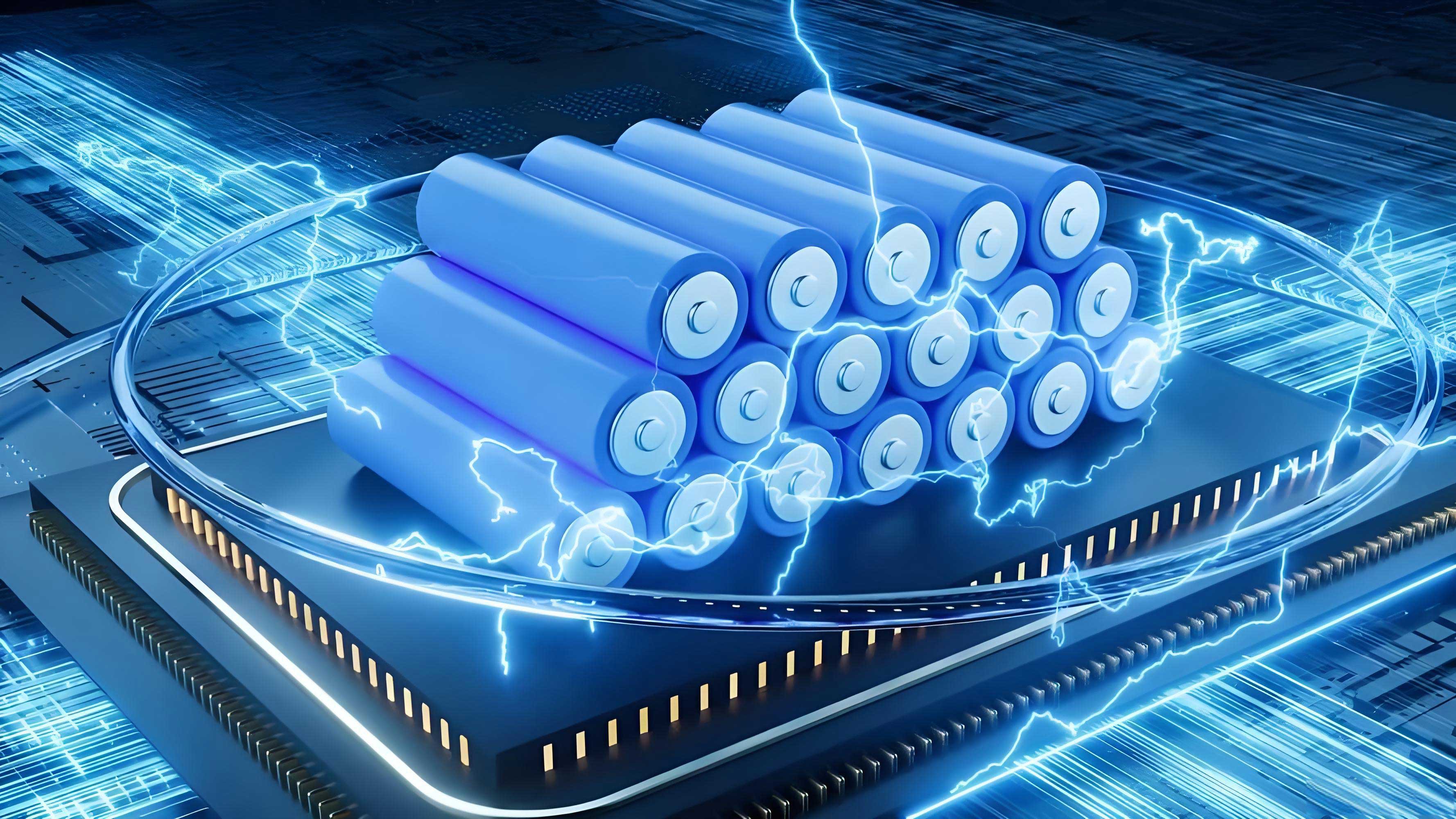
The superiority of lignin as a precursor for hard carbon in sodium-ion batteries lies in its molecular architecture. With abundant aromatic rings and functional groups like hydroxyl and quinone, lignin facilitates the formation of a disordered carbon matrix upon pyrolysis. This disorder is beneficial for sodium-ion storage, as it creates numerous active sites and reduces diffusion barriers. Moreover, the variability in lignin composition—depending on plant species and extraction methods—allows for tailoring hard carbon properties. For instance, low-molecular-weight lignin tends to yield graphite-like nanocrystals, while high-molecular-weight lignin produces amorphous carbons with enhanced ion diffusion. Such structural versatility makes lignin an ideal candidate for optimizing sodium-ion battery anodes.
To systematically understand the preparation of lignin-based hard carbon materials, I have categorized the methods into thermal approaches, templating techniques, activation processes, and other innovative strategies. Each method influences the final material’s porosity, layer spacing, and defect density, which directly impact sodium-ion battery performance. Below, I summarize these methods in a table to highlight their key features and outcomes.
| Method | Description | Key Parameters | Impact on Sodium-Ion Battery Performance |
|---|---|---|---|
| Direct Carbonization | Pyrolysis of lignin under inert atmosphere at high temperatures (700–1500°C). | Temperature, heating rate, duration. | Enhances interlayer spacing (up to 0.378 nm) and reduces specific surface area, improving initial coulombic efficiency (up to 87%) and capacity (up to 389 mAh/g). |
| Mixed Carbonization | Combining lignin with other carbon sources (e.g., epoxy resin, pitch) before pyrolysis. | Mixing ratio, carbonization conditions. | Modulates defect sites and layer spacing (>0.380 nm), leading to high reversible capacity (up to 316 mAh/g) and good rate capability. |
| Hard Templating | Using templates like SiO2 or CaO to create porous structures, removed post-carbonization. | Template type, removal process. | Introduces hierarchical porosity, increasing specific surface area and ion transport, resulting in improved rate performance. |
| Soft Templating | Employing surfactants or polymers to guide pore formation during carbonization. | Template concentration, carbonization temperature. | Produces ordered mesopores (20–50 nm), enhancing conductivity and sodium-ion storage capacity. |
| Physical Activation | Post-carbonization treatment with CO2 or steam to generate pores. | Activation temperature, gas flow rate. | Increases microporosity and defect density, boosting sodium-ion adsorption and reversible capacity. |
| Chemical Activation | Using agents like KOH or H3PO4 during carbonization to create pores. | Activator concentration, temperature. | Significantly enhances specific surface area and introduces heteroatom doping, improving electrochemical kinetics. |
| Sol-Gel Method | Forming a gel from lignin solutions, followed by carbonization. | Precursor concentration, gelation time. | Yields materials with dual carbon coatings and nitrogen doping, enhancing stability and rate capability in sodium-ion batteries. |
| Electrochemical Deposition | Depositing conductive polymers (e.g., polyaniline) on lignin-derived carbon fibers. | Deposition potential, electrolyte composition. | Improves conductivity and flexibility, leading to high capacitance and cycle life in sodium-ion battery electrodes. |
The electrochemical performance of lignin-based hard carbon materials in sodium-ion batteries is governed by several factors, including interlayer spacing, pore structure, and surface chemistry. To quantify these relationships, I can express the sodium storage capacity (C) as a function of key parameters. For instance, the capacity might be modeled based on interlayer distance (d) and defect density (D), using an empirical formula:
$$ C = \alpha \cdot d + \beta \cdot D – \gamma \cdot S $$
where α, β, and γ are constants, and S represents the specific surface area that may contribute to irreversible sodium loss. This highlights the trade-offs in optimizing materials for sodium-ion batteries. Additionally, the diffusion coefficient of sodium ions (D_Na) can be estimated using the Arrhenius equation:
$$ D_{Na} = D_0 \cdot \exp\left(-\frac{E_a}{RT}\right) $$
where D_0 is the pre-exponential factor, E_a is the activation energy, R is the gas constant, and T is the temperature. Lower activation energies, often achieved through heteroatom doping or porous structures, facilitate faster ion transport in sodium-ion batteries.
Optimizing lignin-based hard carbon for sodium-ion batteries involves strategic modifications at the microstructural and interfacial levels. Microstructural调控, such as controlling carbonization conditions, can expand interlayer distances and create closed pores, which are critical for high-capacity sodium storage. For example, slowing the heating rate during pyrolysis reduces defect concentrations and promotes the formation of graphitic domains, as shown in studies where a rate of 0.25°C/min yielded a layer spacing of 0.379 nm and a high initial coulombic efficiency of 98.4%. Heteroatom doping is another powerful tool; introducing elements like nitrogen, phosphorus, or sulfur enhances electronic conductivity and creates active sites for sodium ion adsorption. The doping effect can be described by a charge transfer model:
$$ \Delta Q = n \cdot F \cdot \Gamma $$
where ΔQ is the charge transferred, n is the number of electrons, F is Faraday’s constant, and Γ is the surface coverage of doped atoms. This boosts the rate capability of sodium-ion batteries, enabling stable cycling at high currents.
Interfacial engineering focuses on stabilizing the solid-electrolyte interphase (SEI) in sodium-ion batteries. A robust SEI prevents excessive electrolyte decomposition and sodium loss, thereby improving initial coulombic efficiency. Techniques like grafting fluorinated molecules onto hard carbon surfaces have been shown to form NaF-rich SEI layers, reducing impedance and enhancing cycle life. The SEI formation energy (E_SEI) can be correlated with surface functional groups:
$$ E_{SEI} = \sum_i \epsilon_i \cdot x_i $$
where ε_i is the energy contribution of functional group i, and x_i is its concentration. By minimizing E_SEI through surface modification, lignin-based hard carbons achieve higher reversibility in sodium-ion batteries.
The application of lignin-based hard carbon materials in sodium-ion batteries spans various forms, including carbon microspheres, porous carbons, and carbon fibers. Each form offers distinct advantages for electrode design. Carbon microspheres, with their uniform spherical morphology, provide consistent ion pathways and reduce structural stress during cycling, leading to capacities up to 339 mAh/g in sodium-ion batteries. Porous carbons, featuring micro- and mesopores, offer high specific surface areas for sodium ion adsorption and rapid diffusion, with reported reversible capacities exceeding 330 mAh/g. Carbon fibers, known for their conductivity and mechanical strength, enable flexible electrodes that maintain performance under bending, suitable for wearable sodium-ion battery devices.
To illustrate the performance metrics across different lignin-derived hard carbon types, I present a comparative table:
| Material Form | Preparation Method | Key Properties | Electrochemical Performance in Sodium-Ion Batteries |
|---|---|---|---|
| Carbon Microspheres | Spray drying and carbonization of lignin sulfonate. | Low specific surface area (5.6 m²/g), large interlayer spacing (0.396 nm). | Reversible capacity: 284–339 mAh/g; Initial coulombic efficiency: 78–88%; Cycle life: >300 cycles with 92% retention. |
| Porous Hard Carbon | Template-assisted or activation methods. | High porosity (up to 0.78 cm³/g closed pores), heteroatom doping (N, P). | Capacity: 293–359 mAh/g; Rate capability: 202 mAh/g at 1 A/g; Stability: 98% capacity retention over 200 cycles. |
| Carbon Fibers | Electrospinning or melt-spinning of lignin blends. | Conductive networks, flexibility, oriented graphitic layers. | Specific capacitance: 133.5 F/cm³; Capacity: 428 mAh/g; Initial coulombic efficiency: 91%; Suitable for flexible sodium-ion batteries. |
Despite these advancements, lignin-based hard carbon materials face challenges in commercialization for sodium-ion batteries. Variability in lignin source and composition can lead to inconsistent material properties, affecting batch-to-batch reproducibility in sodium-ion battery production. Moreover, achieving high initial coulombic efficiency remains a hurdle, as irreversible sodium loss during SEI formation limits energy density. Future research should focus on standardizing lignin pretreatment processes, such as fractionation or chemical modification, to yield more uniform precursors. Integrating advanced characterization techniques, like in situ transmission electron microscopy or neutron scattering, could elucidate sodium storage mechanisms in hard carbons, guiding the design of next-generation sodium-ion batteries.
Another promising direction is the development of composite materials, where lignin-derived hard carbon is combined with conductive additives or buffer phases to mitigate volume changes. For instance, incorporating tin sulfide or metal oxides can enhance capacity through alloying reactions, though this may compromise cycle life. The overall performance of such composites in sodium-ion batteries can be evaluated using a figure of merit (FOM):
$$ \text{FOM} = \frac{C \cdot \eta \cdot N}{R \cdot \Delta V} $$
where C is the capacity, η is the coulombic efficiency, N is the cycle number, R is the resistance, and ΔV is the voltage hysteresis. Optimizing this FOM will be key to advancing lignin-based anodes for sodium-ion batteries.
In conclusion, lignin-based hard carbon materials hold immense potential for revolutionizing sodium-ion battery technology. Their renewable origin, coupled with tunable microstructures through innovative preparation methods, positions them as sustainable alternatives to conventional anodes. By addressing challenges in consistency and efficiency through interdisciplinary research—combining materials science, electrochemistry, and engineering—we can accelerate the deployment of sodium-ion batteries in grid storage, electric vehicles, and portable electronics. As I reflect on the progress so far, it is clear that lignin not only contributes to waste valorization but also paves the way for greener energy storage solutions. The journey toward high-performance sodium-ion batteries is ongoing, and lignin-derived carbons will undoubtedly play a central role in shaping this future.