
As the demand for distributed photovoltaic systems grows, the requirements for grid-connected power quality have become increasingly stringent. The grid-connected inverter, as the core component of such systems, directly determines overall stability and performance. In my research, I focus on advancing solar inverter technology, particularly through the development of a double-stage T-type three-level topology. Compared to traditional two-level inverters, three-level inverters offer significant advantages, including reduced switching losses, higher efficiency, lower harmonic content, and decreased dv/dt. The T-type structure, in particular, surpasses the NPC (Neutral Point Clamped) topology by minimizing losses, reducing diode count, and requiring fewer independent drive power supplies. This article delves into the key technologies of this solar inverter, covering its topology, control strategies, modulation techniques, and practical implementation, with an emphasis on formulas and tables to summarize critical aspects.
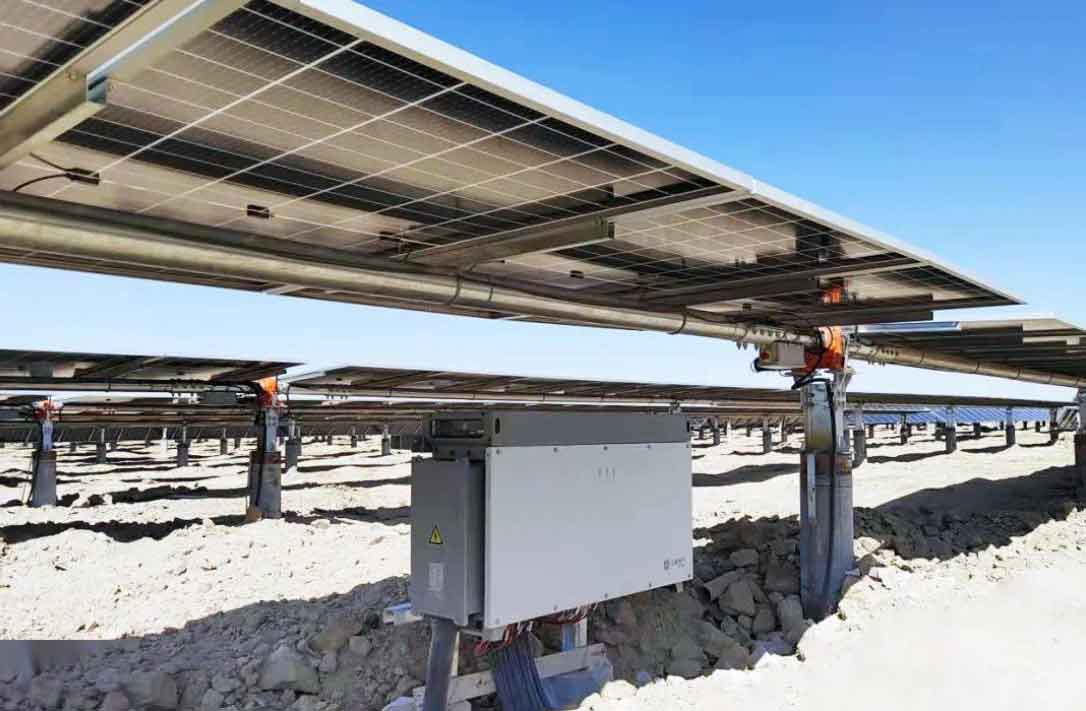
The fundamental architecture of the double-stage T-type three-level solar inverter comprises a DC/DC boost converter followed by a DC/AC inversion stage. The DC/DC stage, typically controlled by an ARM processor, handles maximum power point tracking (MPPT), allowing for a wide voltage range from photovoltaic panels. The DC/AC stage, implemented using a DSP like TMS320F28335, manages grid-connected inversion. Communication between these processors is achieved via SPI. The main power circuit includes the boost inductor, DC-link capacitors, and the T-type three-level inverter bridge with LC filters for output smoothing. This separation of MPPT and inversion control enhances system reliability and flexibility.
In the T-type three-level solar inverter, each phase leg has four switches, leading to three distinct output voltage levels relative to the neutral point: +Udc/2, 0, and -Udc/2. The switching states for a single phase, say phase A, are defined as follows:
| Switch State | sa1 | sa2 | sa3 | sa4 | Output Voltage |
|---|---|---|---|---|---|
| P | 1 | 1 | 0 | 0 | +Udc/2 |
| O | 0 | 1 | 1 | 0 | 0 |
| N | 0 | 0 | 1 | 1 | -Udc/2 |
Here, ‘1’ denotes switch ON, and ‘0’ denotes switch OFF. For a three-phase solar inverter, this yields 33 = 27 space voltage vectors, which can be categorized into zero vectors, short vectors, medium vectors, and long vectors. After accounting for redundancies, there are 19 unique vectors. The space vector diagram is divided into six major sectors, each further subdivided into six minor sectors, resulting in a total of 36 sectors for precise modulation. This detailed vector representation is crucial for the SVPWM algorithm discussed later.
The control strategy for this solar inverter employs a dual-loop approach based on dq coordinate transformation. The outer voltage loop regulates the DC-link voltage, while the inner current loop controls the grid-connected current. A software phase-locked loop (SPLL) synchronizes the inverter with the grid voltage. The control equations in the dq reference frame are derived as follows. Let the grid voltages be ea, eb, ec, and the inductor currents be ia, ib, ic. After Park transformation, we obtain:
$$ i_d = \frac{2}{3} \left[ i_a \cos(\theta) + i_b \cos(\theta – \frac{2\pi}{3}) + i_c \cos(\theta + \frac{2\pi}{3}) \right] $$
$$ i_q = \frac{2}{3} \left[ i_a \sin(\theta) + i_b \sin(\theta – \frac{2\pi}{3}) + i_c \sin(\theta + \frac{2\pi}{3}) \right] $$
where θ is the grid angle from the SPLL. The reference currents id* and iq* are generated by the voltage controller and set to zero for unity power factor, respectively. The current control law includes decoupling terms to compensate for cross-coupling effects:
$$ v_d^* = \left( k_{p} + \frac{k_{i}}{s} \right) (i_d^* – i_d) – \omega L i_q + e_d $$
$$ v_q^* = \left( k_{p} + \frac{k_{i}}{s} \right) (i_q^* – i_q) + \omega L i_d + e_q $$
Here, kp and ki are PI gains, ω is the grid angular frequency (314 rad/s), L is the filter inductance, and ed, eq are the grid voltage components in dq frame. This decoupled control ensures fast dynamic response and stable operation of the solar inverter.
The space vector pulse width modulation (SVPWM) algorithm is pivotal for generating the switching signals in this three-level solar inverter. My implementation avoids trigonometric calculations to simplify digital signal processor (DSP) execution. The process involves sector identification, calculation of vector dwelling times, and time state allocation. For sector determination, the reference voltage vector Vref is projected onto αβ axes as Vα and Vβ. The major sector is found by:
$$ \text{angle} = \text{atan2}(V_{\alpha}, V_{\beta}) $$
$$ \text{if } \text{angle} < 0, \text{ then } \text{angle} = \text{angle} + 360^\circ $$
$$ \text{majorSector} = \lfloor \text{angle} / 60^\circ \rfloor $$
$$ \text{angle1} = \text{angle} – \text{majorSector} \times 60^\circ $$
Then, Vref is transformed to the first sector for unified calculation:
$$ V_{\alpha1} = U_{\text{ref}} \cos(\text{angle1}) $$
$$ V_{\beta1} = U_{\text{ref}} \sin(\text{angle1}) $$
where Uref is the magnitude of Vref. Minor sector identification uses logical rules based on Vα1 and Vβ1, as summarized in the table below:
| Condition | Rule | Minor Sector |
|---|---|---|
| angle1 < 30° | Vβ1 ≤ -√3 × (Vα1 – 0.5Udc) | 1 |
| angle1 < 30° | Vβ1 ≤ √3 × (Vα1 – 0.5Udc) | 5 |
| angle1 < 30° | Otherwise | 3 |
| angle1 ≥ 30° | Vβ1 ≤ √3 × (Udc – Vα1) | 2 |
| angle1 ≥ 30° | Vβ1 ≥ (√3/4) Udc | 6 |
| angle1 ≥ 30° | Otherwise | 4 |
To compute dwelling times without trigonometry, define normalized variables:
$$ X = \frac{V_{\alpha1}}{U_{\text{dc}}}, \quad Y = \frac{V_{\beta1}}{0.57735 \times U_{\text{dc}}} $$
For instance, in minor sector 5 of the first major sector, the active vectors are V1 (short vector), V2 (long vector), and V3 (medium vector). Applying the volt-second balance principle:
$$ V_1 T_1 + V_2 T_2 + V_3 T_3 = V_{\text{ref}} T_s $$
$$ T_1 + T_2 + T_3 = T_s $$
where Ts is the sampling period. The dwelling times are derived as:
$$ T_1 = 2(1 – X – Y) T_s $$
$$ T_2 = (2X – 2Y – 1) T_s $$
$$ T_3 = 4Y T_s $$
These expressions eliminate trigonometric functions, easing DSP computation. Time state allocation follows a seven-segment sequence starting with a negative short vector to minimize switching transitions. For the above sector, the sequence is ONN → PNN → PON → POO → PON → PNN → ONN. The corresponding switch conduction times for the DSP’s EPWM modules are:
$$ T_{\text{on1}} = \frac{T_1}{2}, \quad T_{\text{on2}} = T_{\text{on1}} + \frac{T_2}{2}, \quad T_{\text{on3}} = T_{\text{on2}} + \frac{T_3}{2} $$
Dead-time insertion is crucial to prevent shoot-through in the solar inverter. Using the EPWM modules, complementary signals are generated with configurable dead bands, ensuring safe operation of the T-type switches.
A critical issue in three-level solar inverters is neutral point voltage imbalance, caused by unequal charging and discharging of the DC-link capacitors. This imbalance can distort output waveforms, reduce capacitor lifespan, and stress switching devices. My suppression method leverages the controllable nature of short vectors. The neutral point current inp influences the voltage deviation ΔUdc = Uup – Udown, where Uup and Udown are the upper and lower capacitor voltages. Short vectors have redundant states that affect inp oppositely. By adjusting the dwelling time of negative short vectors, balance can be achieved. The control coefficient k is introduced to modify the time allocation, as shown below:
| Condition | Neutral Current | Action on Negative Short Vector Time | k Value |
|---|---|---|---|
| ΔUdc > 0 | inp > 0 | Increase | 0.25 |
| ΔUdc > 0 | inp < 0 | Decrease | 0.25 |
| ΔUdc < 0 | inp > 0 | Decrease | 0.25 |
| ΔUdc < 0 | inp < 0 | Increase | 0.25 |
Since direct measurement of inp is complex, it is inferred from load currents. For example, the negative short vector ONO corresponds to -ib. Thus, by monitoring load currents and ΔUdc, k is adjusted dynamically to stabilize the neutral point in the solar inverter.
To validate the proposed technologies, a 10 kW prototype of the double-stage T-type three-level solar inverter was developed. The hardware incorporates the boost converter, T-type inverter bridge, LC filters, and dual-processor control system. Testing involved evaluating output waveforms, harmonic performance, and neutral point stability. The line voltage waveforms from the inverter bridge exhibited clear three-level stepping, confirming proper SVPWM operation. Additionally, the phase voltage and current demonstrated synchronization with low distortion, meeting grid standards. These results underscore the effectiveness of the control algorithms in real-world applications for solar inverters.
The implementation of this solar inverter emphasizes digital control precision. The DSP executes the SVPWM algorithm in real-time, with interrupt routines handling ADC sampling, coordinate transformations, and PWM updates. The software flow includes:
- Sample grid voltages and currents.
- Perform SPLL to obtain grid angle θ.
- Transform currents to dq frame and compute errors.
- Execute PI controllers to generate reference voltages vd* and vq*.
- Inverse transform to αβ frame to get Vα and Vβ.
- Apply SVPWM sector determination and dwelling time calculation.
- Allocate times and update EPWM registers with dead-time insertion.
- Adjust negative short vector times based on neutral point feedback.
This cycle ensures robust performance across varying solar conditions. The use of advanced modulation and control techniques significantly enhances the solar inverter’s efficiency and reliability.
Further analysis of the solar inverter’s performance can be extended to loss modeling and thermal management. The switching losses in the T-type topology are lower than in NPC designs due to reduced reverse recovery losses in diodes. Conduction losses depend on the current paths during different states. A simplified loss estimation formula for each switch is:
$$ P_{\text{loss}} = \frac{1}{T_s} \int_0^{T_s} \left[ V_{\text{CE}}(t) I_{\text{C}}(t) + R_{\text{on}} I_{\text{C}}^2(t) \right] dt $$
where VCE is the collector-emitter voltage, IC is the collector current, and Ron is the on-resistance. For the solar inverter, optimizing switching frequency and thermal design is crucial for long-term operation.
Harmonic distortion is another key metric. The three-level output inherently reduces lower-order harmonics compared to two-level inverters. The total harmonic distortion (THD) for the current can be approximated by:
$$ \text{THD} = \frac{\sqrt{\sum_{n=2}^{\infty} I_n^2}}{I_1} \times 100\% $$
where In is the nth harmonic current and I1 is the fundamental. With LC filtering and precise SVPWM, the solar inverter achieves THD below 3%, complying with standards like IEEE 1547.
In summary, this research presents a comprehensive approach to designing and implementing a double-stage T-type three-level solar inverter. The topology offers efficiency gains, while the dual-loop dq control ensures stable grid connection. The SVPWM algorithm, optimized for DSP execution, provides accurate modulation without trigonometric overhead. Neutral point balancing is effectively managed through short vector manipulation. Experimental validation on a 10 kW prototype confirms the practicality of these technologies. Future work may explore higher power levels, silicon carbide devices for reduced losses, and advanced grid-support functions. Overall, this solar inverter design represents a significant step forward in renewable energy integration, combining performance, reliability, and cost-effectiveness for distributed photovoltaic systems.