
In recent years, the development of perovskite solar cells has revolutionized the field of photovoltaics due to their high efficiency and low-cost fabrication. However, traditional IV characterization methods, which rely on standard solar spectra, fail to accurately represent the performance of these cells under real-world LED hybrid lighting conditions. The spectral distribution and intensity range of LED sources differ significantly from standardized sunlight, leading to discrepancies in efficiency measurements. This study focuses on designing a comprehensive IV testing methodology for perovskite tandem solar cells under LED hybrid illumination, aiming to bridge the gap between laboratory assessments and practical applications in building-integrated photovoltaics and Internet of Things energy harvesting. By addressing the challenges of spectral mismatch and dynamic lighting environments, we can enhance the reliability of perovskite solar cell evaluations and accelerate their commercialization.
Perovskite tandem solar cells consist of multiple subcells with varying bandgaps stacked to capture a broader range of the solar spectrum. The top subcell, typically with a wider bandgap, absorbs high-energy photons, while the bottom subcell captures lower-energy photons, minimizing thermalization losses. This structure is particularly advantageous under LED hybrid sources, as the multi-wavelength emission of LEDs can be tailored to match the absorption profiles of each subcell. For instance, the efficiency of a perovskite solar cell can be expressed in terms of its open-circuit voltage (V_oc), short-circuit current density (J_sc), and fill factor (FF):
$$ \eta = \frac{J_{sc} \times V_{oc} \times FF}{P_{in}} $$
where η is the conversion efficiency and P_in is the incident power. Under LED lighting, the spectral overlap between the source and the perovskite solar cell absorption bands becomes critical, as it directly influences J_sc and overall performance. Moreover, the tandem configuration reduces recombination losses, further optimizing energy harvest in indoor settings. Understanding these dynamics requires precise IV testing under controlled LED conditions, which forms the core of this investigation.
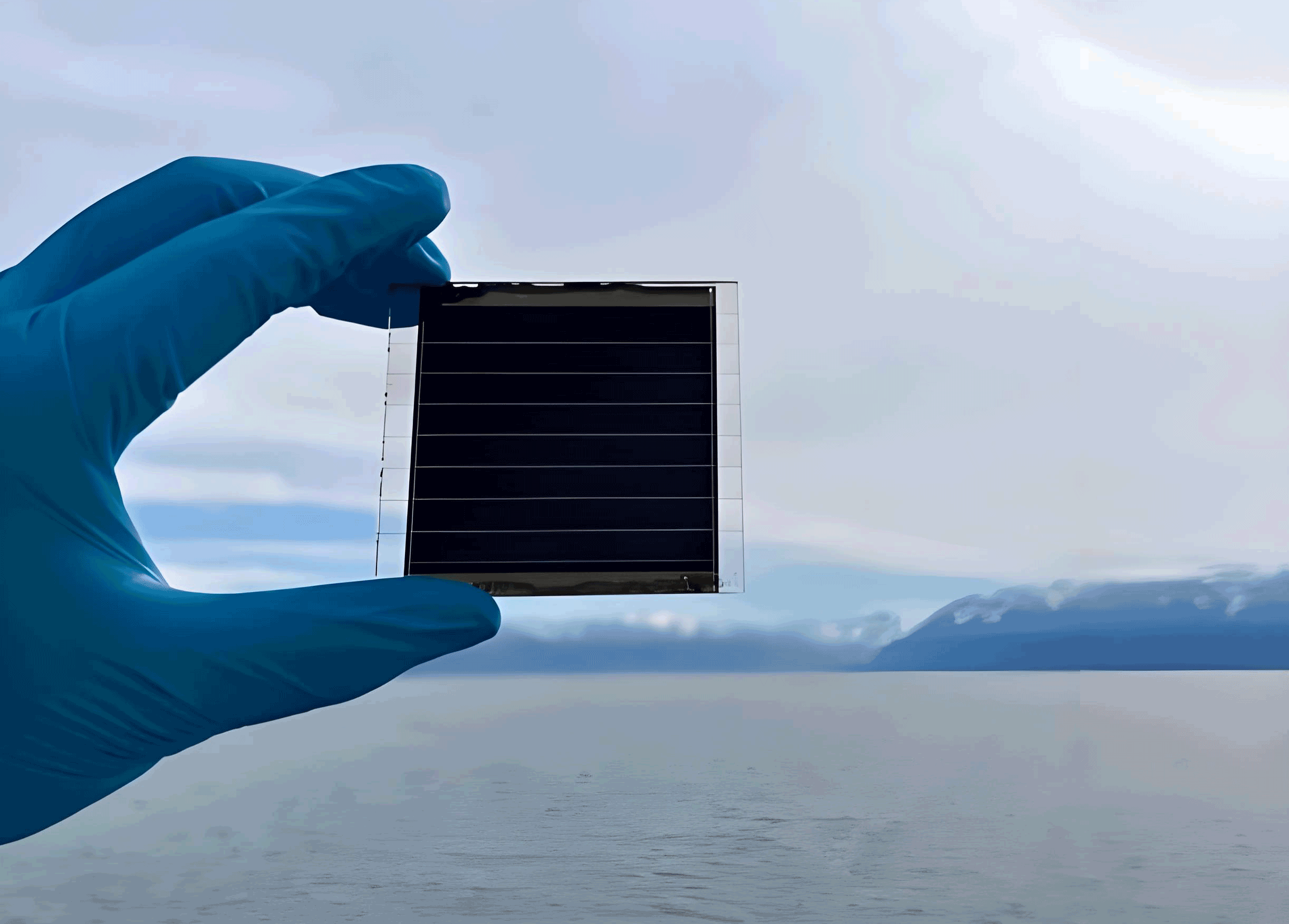
The testing system for evaluating perovskite solar cells under LED hybrid illumination comprises three main modules: the light source generation module, the signal acquisition module, and the environmental control unit. Each module is designed to handle the complexities of multi-spectral lighting and high-precision measurements. The light source module integrates red (620–660 nm), blue (450–480 nm), green (520–550 nm), and white (400–700 nm) LED arrays, each independently driven by constant current sources. This allows for continuous adjustment of light intensity from 10 to 2000 lux, simulating various indoor environments. A micro-prism diffusion film ensures uniform illumination, with a standard deviation of less than 2 lux across the test area. The signal acquisition module employs a four-probe contact method to minimize lead resistance errors, connected to a high-impedance source meter with a current range of ±3 A and resolution of 1 nA. Voltage scans from -0.5 V to +2.5 V are performed, with data captured at a sampling rate of 1 MS/s to account for transient responses. Environmental control maintains temperature between 15°C and 40°C with ±0.3°C accuracy and humidity at 10–90% RH with ±1.5% precision, using PID algorithms for stability. Synchronization between light modulation and data acquisition is achieved via fiber-optic triggers, reducing timing errors to below 1 μs. The key parameters of the system are summarized in Table 1.
| Module | Parameter | Specification |
|---|---|---|
| Light Source | LED Wavelength Range | Red: 620–660 nm, Blue: 450–480 nm, Green: 520–550 nm, White: 400–700 nm |
| Light Intensity Range | 10–2000 lux | |
| Uniformity Standard Deviation | < 2 lux | |
| Signal Acquisition | Current Range | ±3 A |
| Voltage Resolution | 10 μV | |
| Sampling Rate | 1 MS/s | |
| Environmental Control | Temperature Control | 15–40°C (±0.3°C) |
| Humidity Control | 10–90% RH (±1.5%) | |
| Synchronization | Timing Error | < 1 μs |
The testing process begins with spectral and intensity calibration of the hybrid light source to ensure accuracy. A spectroradiometer with ±0.5 nm wavelength accuracy scans each LED band, and the combined spectrum is adjusted to match target profiles, such as those in office environments, with a fitting error below 3%. This calibration accounts for thermal effects, such as spectral red-shift, by monitoring junction temperature and activating cooling if fluctuations exceed ±2°C. Light intensity uniformity is verified through grid-based scanning, and Gaussian fitting algorithms optimize the illumination profile. The calibration parameters are detailed in Table 2. After calibration, the system performs steady-state and transient IV tests. In steady-state tests, the light source outputs constant intensity, and voltage sweeps are conducted with an integration time of 100 ms per point to reduce noise. Dark current compensation is applied by measuring background noise under complete darkness, and tests are repeated three times to ensure reproducibility. Data outliers are identified using Mahalanobis distance with a 99% confidence threshold. For transient tests, the light intensity is modulated in square waves, and current responses are captured at 1 MS/s. Wavelet transform analysis decomposes the transient waveforms to extract time constants for carrier recombination and transport processes, providing insights into the dynamic behavior of the perovskite solar cell.
| Parameter | Specification | Notes |
|---|---|---|
| Target Spectrum Range | 400–700 nm | Simulates office lighting scenarios |
| Red/Green/Blue Peak Wavelengths | 650±2 nm / 540±2 nm / 460±2 nm | Full width at half maximum ≤ 15 nm |
| Light Intensity Levels | 200 / 500 / 1000 lux | Stepwise increments for testing |
| Calibration Time | ≤ 120 seconds | Includes spectral and intensity calibration |
Data acquisition and normalization are critical for reliable results. Current and voltage signals are converted via 24-bit ADC and stored in binary format, with environmental parameters logged simultaneously. A hierarchical compression technique is used: raw waveform data is saved as FP32 floating-point, while derived parameters undergo lossy compression to preserve key features. For tandem perovskite solar cells, a time-division multiplexing strategy switches between subcell channels to prevent crosstalk, and charge bleed circuits dissipate parasitic capacitance between switches. During preprocessing, Savitzky-Golay filtering smooths IV curves, with parameters optimized using Bayesian information criteria. Normalization involves scaling current density based on calibrated light power and applying temperature compensation using a coefficient of β = -0.0025/°C, measured via embedded Pt1000 sensors. The quantum efficiency weights of subcells are incorporated to reference standard conditions, such as 1000 lux and AM1.5G equivalent spectrum. Processed data, including voltage, current density, fill factor, and efficiency, is exported in CSV format with confidence intervals and uncertainty assessments.
Analysis of test results reveals that the spectral distribution of LED hybrid sources significantly influences the IV characteristics of perovskite tandem solar cells. Under a red-blue dominant spectrum (650 nm red, 460 nm blue, 500 lux), the short-circuit current density J_sc reaches 12.3 mA/cm², an 18% increase compared to white light alone, due to enhanced spectral matching with the subcells. However, at lower color temperatures below 3000 K, the open-circuit voltage V_oc drops from 1.25 V to 1.12 V, as increased red light transmission reduces carrier generation in the top wide-bandgap subcell. Transient tests show response time constants τ of 23 ms and 41 ms for 1 Hz square-wave modulation, indicating that carrier recombination at interfaces is affected by dynamic lighting. Furthermore, light intensity gradient tests demonstrate a 0.15 decrease in fill factor at the cell edges, highlighting the importance of illumination uniformity for consistent performance in perovskite solar cells. These findings underscore the need for tailored testing protocols to accurately evaluate perovskite solar cells in real-world applications.
The performance of a perovskite solar cell under LED illumination can be modeled using the diode equation, which accounts for the photocurrent and recombination losses:
$$ I = I_{ph} – I_0 \left( e^{\frac{V + I R_s}{n V_T}} – 1 \right) – \frac{V + I R_s}{R_{sh}} $$
where I_ph is the photocurrent, I_0 is the reverse saturation current, R_s is the series resistance, R_sh is the shunt resistance, n is the ideality factor, and V_T is the thermal voltage. Under hybrid LED sources, I_ph varies with spectrum, and the ideality factor n may increase due to enhanced recombination in the tandem structure. Additionally, the efficiency of a perovskite solar cell can be optimized by balancing the current matching between subcells, which is influenced by the LED spectrum. For example, the current density ratio between top and bottom subcells should satisfy:
$$ \frac{J_{sc,top}}{J_{sc,bottom}} \approx 1 $$
to maximize overall efficiency. In practice, deviations from this ratio under non-uniform LED lighting can lead to performance degradation, as observed in our tests.
In conclusion, the developed IV testing system for perovskite tandem solar cells under LED hybrid illumination addresses critical challenges in spectral adaptability and measurement precision. By integrating multi-band light source control, high-speed data acquisition, and rigorous calibration procedures, this methodology provides reliable performance characterization that reflects real-world conditions. The results demonstrate the sensitivity of perovskite solar cells to spectral variations and highlight the importance of dynamic testing for applications in indoor energy harvesting. Future work could focus on optimizing the perovskite solar cell design for specific LED spectra and expanding the testing framework to include other light sources, such as OLEDs, to further advance the field of building-integrated photovoltaics.