
As a researcher deeply involved in the field of electrochemical energy storage, I find the precise and reliable operation of lithium-ion batteries to be a cornerstone of modern technology, from portable electronics to electric vehicles and grid-scale storage. Among the critical parameters governing their performance, safety, and longevity, temperature stands paramount. The internal temperature of a lithium-ion battery is a direct reflection of its complex internal electrochemical and thermal states. It influences everything from the rate of degradation and risk of thermal runaway to the instantaneous power capability. Therefore, accurate internal temperature monitoring (ITM) is not merely a diagnostic tool but a fundamental requirement for advanced battery management systems (BMS) aiming to unlock the full potential of this technology.
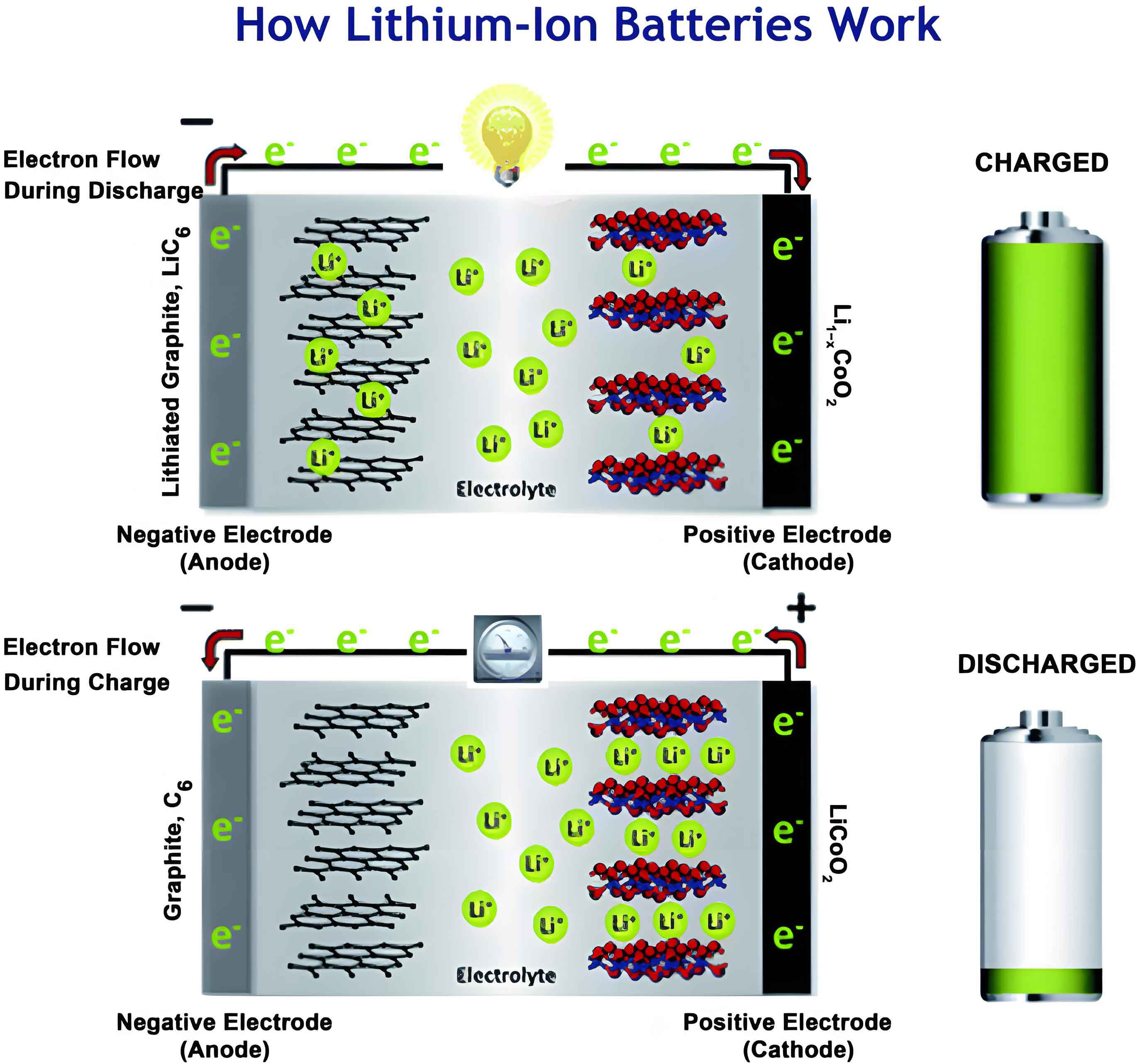
The challenge, however, is that the internal temperature of a lithium-ion battery is not directly accessible. Surface measurements, while simpler, can be significantly different from the core temperature, especially during high-power operations due to the cell’s inherent thermal resistance. This discrepancy necessitates the development of indirect, non-invasive, or inferential methods for internal temperature estimation. Over the years, three primary methodological strands have emerged: physical sensor integration, model-based estimation, and impedance-based techniques. This review focuses on the latter, particularly the promising approach of using Electrochemical Impedance Spectroscopy (EIS), which effectively turns the lithium-ion battery itself into a temperature sensor.
This article will delve into the landscape of ITM for lithium-ion batteries. I will first briefly contextualize the three main methodological families before concentrating on the principles, advancements, and practical implementation challenges of EIS-based monitoring. A critical analysis of various temperature-sensitive electrical parameters (TSEPs) derived from EIS will be presented, followed by an examination of strategies for online EIS measurement. The goal is to synthesize current research trends and offer a perspective on the future trajectory of this vital technology for ensuring the safety and efficiency of lithium-ion battery systems.
1. Landscape of Internal Temperature Monitoring Methods
Before diving into the specifics of EIS, it is instructive to survey the broader field of ITM for lithium-ion batteries. Each method carries its own set of advantages, limitations, and implementation complexities, as summarized in the table below.
| Monitoring Method | Core Principle | Key Advantages | Primary Challenges & Limitations |
|---|---|---|---|
| Physical Temperature Sensors | Direct physical measurement using embedded probes (e.g., thermocouples, FBG sensors). | High accuracy, fast response time, provides direct spatial data. | Invasive, risks cell integrity/leakage, adds cost/complexity, may reduce capacity. |
| Battery Thermal Models | Mathematical estimation using coupled electrical-thermal models and state observers (e.g., Kalman filters). | Non-invasive, low hardware cost, integrates with other BMS functions. | Model complexity vs. accuracy trade-off, requires precise parameterization, computational burden for real-time application. |
| Electrochemical Impedance Spectroscopy (EIS) | Correlating temperature-sensitive features of the cell’s AC impedance spectrum with internal temperature. | Non-invasive, fast response, rich in electrochemical information, potential for multi-state estimation. | Requires precise signal injection/measurement, needs calibration, must decouple from SOC/SOH, challenging for online implementation. |
Physical Sensor Integration represents the most direct approach. Techniques involve embedding micro-thermocouples or Fiber Bragg Grating (FBG) sensors within the cell. While offering excellent temporal and spatial resolution, their invasive nature is a significant drawback. They can compromise the seal of the lithium-ion battery, potentially lead to electrolyte leakage, and even reduce active material volume, impacting capacity. Furthermore, the integration process is complex and not easily scalable for mass-produced cells.
Model-Based Estimation relies on constructing a thermal model of the lithium-ion battery, often as a lumped-parameter system combining a heat generation model (e.g., Joule heating from internal resistance) and a heat transfer model. The internal temperature is then estimated using state observers like Kalman filters, with inputs such as surface temperature, current, and voltage. The main challenge lies in the accuracy and generality of the model. Simplified models may lack precision, while high-fidelity models require extensive parameter identification and impose a significant computational load on the BMS, creating a persistent trade-off between accuracy and real-time feasibility.
Electrochemical Impedance Spectroscopy (EIS) offers a fundamentally different pathway. It exploits the fact that the kinetics of nearly all electrochemical processes within a lithium-ion battery are temperature-dependent, as classically described by the Arrhenius equation:
$$ k = A \exp\left(-\frac{E_a}{RT}\right) $$
where $k$ is the rate constant, $A$ the pre-exponential factor, $E_a$ the activation energy, $R$ the gas constant, and $T$ the absolute temperature. Since the impedance spectrum is a fingerprint of these kinetic processes (charge transfer, solid-state diffusion, etc.) and ohmic resistances, specific features of the EIS change predictably with temperature. This method is non-invasive, uses the cell’s own terminals, and can provide very rapid temperature indications once a calibration is established.
2. EIS-Based Internal Temperature Monitoring: Principles and Parameters
The core premise of EIS-based ITM is to find a reliable, easily measurable feature within the impedance spectrum that exhibits a strong, monotonic, and preferably linear relationship with the internal temperature of the lithium-ion battery. Furthermore, this feature should be minimally influenced by other states, such as the State of Charge (SOC) and State of Health (SOH), to simplify calibration and ensure robustness. The process involves two main phases: Calibration and Online Operation.
The calibration phase is performed offline under controlled thermal conditions (e.g., in a climate chamber). For a given lithium-ion battery at a specific, stable SOC and SOH, full EIS spectra are recorded at multiple known internal temperature points. A specific parameter is extracted from each spectrum, and a mathematical relationship (calibration curve) is established between this parameter and temperature. For operational use, the system must then measure this specific EIS parameter online and invert the calibration function to estimate temperature.
Researchers have identified several promising EIS-derived Temperature-Sensitive Electrical Parameters (TSEPs), typically categorized by the frequency range of the impedance feature they rely on.
2.1 Key Temperature-Sensitive Electrical Parameters (TSEPs)
The following table provides a comparative overview of the most studied TSEPs for lithium-ion battery internal temperature monitoring.
| TSEP | Typical Frequency | Physical Origin / Notes | Temperature Relationship Trend | Key Advantages | Key Challenges |
|---|---|---|---|---|---|
| Phase Shift ($\theta$) | 10 Hz – 100 Hz (Mid-Frequency) | Related to charge-transfer kinetics and SEI layer properties. Often measured at a fixed “characteristic” frequency. | Negative correlation. Phase angle decreases as temperature increases. | Good sensitivity in mid-temperature range. Some variants show low cross-sensitivity to SOC/SOH. | Low-frequency measurement can be slow. Sensitivity often drops at high temperatures (>60°C). |
| Real Part ($R$) | ~10 kHz (High-Freq) or ~200 Hz (Mid-Freq) | High-frequency: Often related to ohmic resistances (electrolyte, contacts). Mid-frequency: Related to charge-transfer resistance. | Negative correlation (decreases with T). High-freq $R$ may have a more linear trend. | Simple to measure. High-frequency $R$ can enable fast measurement. | Can be sensitive to SOC. Limited measurement range for some mid-frequency points. |
| Imaginary Part ($X$) | 200 Hz – 300 Hz (Mid-Frequency) | Linked to the capacitive/inductive elements in the charge-transfer process. | Negative correlation. | Has been used for wide range monitoring (e.g., -10 to 95°C with piecewise calibration). Good decoupling from SOC/SOH demonstrated. | Requires accurate measurement at a specific frequency point. |
| Intercept Frequency ($f_0$, $f_X$) | 0.5 – 6.5 kHz (Mid-High Frequency) | $f_0$: Frequency where $X=0$ (real axis intercept). $f_X$: Frequency where $X$ equals a predefined non-zero value (e.g., 0.65 mΩ). | Positive correlation. Increases significantly with temperature, following an Arrhenius-like trend. | High sensitivity (Hz/°C). The $f_X$ variant is more robust against current noise. Good decoupling from SOC/SOH. | Requires frequency sweeping or sophisticated “phase-locked” tracking algorithms to find the specific frequency. |
| High-Frequency Ratio ($R_{hf}/X_{hf}$) | >200 kHz (Ultra-High Frequency) | Proposed to relate to the temperature-dependent skin effect and resistance of metallic current collectors (Al, Cu). | Positive linear correlation over a wide range. | Wide range (e.g., 20-95°C). Linear fit simplifies calibration. Inherently decoupled from SOC as it uses a ratio. | Requires ultra-high frequency measurement capability. Impact of aging (SOH) requires further study. |
The choice of TSEP involves critical trade-offs. Mid-frequency parameters (like $\theta$ or $f_0$), often linked to electrochemical kinetics, typically show a strong, Arrhenius-type temperature dependence but may have limited high-temperature range or require longer measurement times. High and ultra-high frequency parameters, often linked to purely physical phenomena like electronic conduction, can offer faster measurement and a wider linear range but demand more sophisticated measurement hardware.
A universal challenge for all TSEPs is ensuring robustness against varying operating conditions. The influence of SOC and SOH must be characterized and, ideally, minimized. A TSEP that is independent of SOC vastly simplifies the calibration process, as it removes one major dimension from the required calibration map. The sensitivity, defined as the change in the TSEP per degree Celsius, is also crucial. Higher sensitivity reduces the required measurement precision of the hardware, lowering costs. The sensitivity $S$ for a parameter $P$ can be expressed as:
$$ S_T = \frac{\Delta P}{\Delta T} $$
For example, for an intercept frequency $f_0$, $S_T$ might be in the range of 20-400 Hz/°C, which is very high, whereas for a phase angle $\theta$, $S_T$ might be 0.1-0.5 °/°C.
3. Online Implementation Strategies for EIS-Based ITM
Translating the laboratory EIS technique, typically performed with expensive, bulky potentiostats, into a practical, online method suitable for integration into a BMS is a significant engineering challenge. The core tasks are: (1) injecting a small-signal AC perturbation into the lithium-ion battery during operation, (2) accurately measuring the resulting voltage and current response, and (3) extracting the desired TSEP with minimal interference from the operational DC current. Three main implementation strategies have emerged, each with distinct pros and cons.
3.1 Strategies and Comparative Analysis
| Implementation Strategy | Core Concept | Measurement Context | Advantages | Disadvantages |
|---|---|---|---|---|
| Dedicated External Excitation Source | Using a dedicated circuit or IC to generate an AC current/voltage perturbation and measure the response. | Can be performed on-demand, independent of load. | High flexibility in frequency/amplitude control. Purpose-built ICs (e.g., from NXP, ADI) simplify design. | Adds dedicated hardware cost and complexity. Risk of signal crosstalk in multi-cell packs. |
| Utilizing DC-DC Converter Ripples | Exploiting the existing switching ripple current from a connected power converter as the perturbation source. | Limited to when the converter is active. Often requires constant current (CC) operation for clarity. | Leverages existing hardware, minimizing added cost. No extra excitation circuit needed. | Perturbation frequency/amplitude is dictated by converter design (fixed). Highly susceptible to interference from load transients. |
| Ultra-High Frequency (UHF) Resonant Method | Monitoring the natural damping characteristics of UHF parasitic ringing caused by switching events in the circuit. | Inherently coupled to switching events but independent of the main load current magnitude. | Robust against load current interference. Uses existing switching noise, requires minimal added sensing. | Limited to UHF-based TSEPs (e.g., $R_{hf}/X_{hf}$). Requires high-bandwidth current sensing and processing. |
The Dedicated Excitation Source approach is the most direct translation of lab methods. A microcontroller (MCU) or dedicated EIS chip generates a sinusoidal current signal, which is injected into the lithium-ion battery via a coupling network. Simultaneously, high-precision analog front-ends measure the AC components of the battery current and voltage. The impedance is calculated via a digital signal processor (DSP) or the MCU itself. While flexible, this method adds bill-of-materials cost and faces challenges in multi-cell configurations where managing numerous independent excitation sources and avoiding cross-talk is difficult.
The DC-DC Converter Ripple Method is an elegant attempt to use “free” excitation. In a battery system, a power converter (e.g., a buck or boost converter) is almost always present. By slightly modulating the converter’s duty cycle with a sinusoidal signal or simply using its natural switching ripple, an AC perturbation is inherently imposed on the battery current. The system then measures the battery’s AC voltage response. The major limitation is the strong coupling to the load. Any transient in the load current appears as noise at the measurement frequency, severely degrading accuracy unless the battery is under a very stable, known load (like constant-current charging). The equation governing the injected perturbation is tied to the converter’s operation, limiting control.
The UHF Resonant Method presents a novel paradigm shift. Instead of intentionally injecting a signal, it analyzes the natural, high-frequency (>1 MHz) ringing that occurs on the battery current during the switching edges of power semiconductors (like MOSFETs). This ringing frequency and damping factor are determined by the parasitic network formed by the converter’s layout and the battery’s own ultra-high frequency impedance. Since the lithium-ion battery’s UHF impedance changes with temperature (e.g., affecting the $R_{hf}/X_{hf}$ ratio), the characteristics of the ringing waveform also change. By monitoring this ringing with a high-bandwidth sensor and extracting features like the damping ratio or resonant frequency shift, the internal temperature can be inferred. The key advantage is that this ringing is a local phenomenon related to parasitics and is largely decoupled from the main, low-frequency load current, offering superior robustness in dynamic applications.
4. Challenges and Future Perspectives
Despite the significant progress, the path to widespread deployment of EIS-based internal temperature monitoring for lithium-ion batteries faces several persistent hurdles. Furthermore, the evolution of battery technology and BMS demands continuous advancement of these methods.
4.1 Persistent Challenges
- TSEP Selection and Calibration Burden: Identifying a single TSEP that offers high sensitivity, wide operational range (especially for thermal runaway warning >90°C), and near-complete independence from SOC and SOH remains difficult. Most methods require extensive multi-dimensional calibration, which is time-consuming and may not be feasible for every individual cell in a mass-produced pack.
- Hardware Cost and Integration: Accurate EIS measurement, whether at mid or ultra-high frequencies, demands precise, low-noise, and often high-bandwidth analog circuitry and signal processing capabilities. Integrating this into cost-sensitive BMS without compromising performance is a major engineering challenge. The trade-off between added hardware cost and the value of the temperature data is a key commercial consideration.
- Real-Time Operation Under Dynamic Conditions: Truly real-time monitoring that works seamlessly under arbitrary load profiles, not just constant current phases, is essential. Methods that are sensitive to load transients (like most converter-ripple methods) are not sufficient. Achieving this requires measurement techniques that are either inherently immune to DC current (like the UHF method) or employ sophisticated digital signal processing to separate the excitation signal from noise.
- Generalizability Across Cell Formats and Chemistries: Calibration models are often developed for a specific cell type (e.g., 18650 NCA). The EIS signature, and thus the optimal TSEP and its calibration coefficients, can vary significantly with cell chemistry (LFP, NMC, NCA), format (cylindrical, pouch, prismatic), capacity, and manufacturer. Developing generalized models or adaptive calibration procedures is a complex task.
4.2 Future Research Directions
To overcome these challenges and move from laboratory prototypes to integrated BMS solutions, future research will likely focus on the following avenues:
- Advanced Integrated Circuits (ICs): The development of dedicated, low-cost ASICs or highly integrated BMS chips that embed EIS functionality is critical. These chips need to support a range of frequencies (including UHF), handle multi-cell measurements without crosstalk, and integrate the DSP core for immediate TSEP extraction, providing a simple digital output (e.g., temperature) to the main BMS controller.
- Systematic “Impedance Tomography” via Power Electronics: The concept of using the inherent properties of power converter circuits for diagnostics will mature. The UHF resonant method is a prime example. Future work will expand this “sensing-through-the-converter” paradigm, potentially using it to monitor not just temperature but also SOC and SOH simultaneously by analyzing different frequency components of the system’s transient response.
- Data-Driven and AI-Enhanced Approaches: Machine learning and deep learning offer powerful tools to tackle the generalization and decoupling problems. Instead of relying on a single, perfectly decoupled TSEP, neural networks can be trained on large datasets of EIS spectra collected from diverse lithium-ion batteries under various temperatures, SOC, and SOH levels. The network can learn the complex, multi-dimensional mapping to accurately estimate internal temperature directly from raw or minimally processed impedance data, even in the presence of confounding factors. This could dramatically reduce the need for explicit physical modeling and manual calibration for each cell type.
- Multi-Parameter Co-Estimation: The ultimate goal is a unified, impedance-based diagnostic system. Since EIS contains information about kinetics, diffusion, and ohmic losses, it is intrinsically linked to temperature, SOC, and SOH. Advanced estimation algorithms (e.g., multi-output neural networks, joint Kalman filters) will be developed to simultaneously and robustly estimate these core states from a single, efficient measurement sequence, providing a comprehensive picture of the lithium-ion battery’s internal condition.
5. Concluding Remarks
The internal temperature of a lithium-ion battery is a master variable, governing its performance, safety, and degradation. Among the various techniques to monitor this critical parameter, Electrochemical Impedance Spectroscopy stands out due to its non-invasive nature, speed, and rich information content. By identifying robust Temperature-Sensitive Electrical Parameters and developing ingenious online measurement strategies—from dedicated excitation to leveraging power converter dynamics—researchers are making steady progress toward practical implementation.
The journey from laboratory EIS analyzers to embedded BMS features is paved with challenges related to hardware integration, calibration complexity, and operational robustness. However, the convergence of advances in analog/digital IC design, sophisticated power electronics, and data-driven artificial intelligence is creating a fertile ground for solutions. The future of lithium-ion battery management lies in smart, multi-functional sensing that goes beyond simple voltage and current measurement. EIS-based internal temperature monitoring is poised to be a cornerstone of this next generation of BMS, enabling safer fast-charging, more accurate health assessment, and earlier thermal runaway warnings, thereby unlocking the full reliability and longevity of lithium-ion battery energy storage systems.