
In the context of rapidly evolving energy storage systems, the integration of high-percentage renewable energy sources has underscored the critical need for reliable and safe electrochemical storage solutions. Among these, LiFePO4 batteries, commonly referred to as LFP batteries, have gained prominence due to their inherent thermal stability, long cycle life, and cost-effectiveness, making them a preferred choice for large-scale energy storage applications. However, despite their advantages, LiFePO4 batteries are not immune to safety risks, particularly under abuse conditions such as overcharge, over-discharge, and external short circuits, which can lead to thermal runaway and potentially catastrophic failures like fires or explosions. Traditional safety预警 systems often rely on monitoring external parameters such as battery case temperature or gas emissions after venting, but these methods suffer from significant delays in detection, limiting their ability to prevent incidents proactively. In this study, I explore a groundbreaking approach by focusing on the internal pressure dynamics of LiFePO4 batteries as an early indicator of safety risks. I demonstrate that internal pressure runaway—characterized by a sharp increase in pressure and its rate of change—occurs well before external temperature changes or venting events, providing a faster and more accurate means to identify potential hazards. This article delves into the experimental investigation of LiFePO4 batteries under normal and abusive conditions, employing real-time pressure monitoring to reveal the underlying mechanisms and establish a framework for enhanced safety protocols in energy storage systems.
The significance of this research stems from the growing number of safety incidents in lithium-ion battery储能 projects worldwide, which have highlighted the limitations of existing预警 technologies. For instance, in many cases, temperature-based sensors only trigger alarms when the battery外壳 has already heated up substantially, often too late to mitigate thermal runaway. Similarly, gas detection systems typically activate after the safety valve bursts, releasing gases into the environment. In contrast, internal pressure monitoring offers a direct window into the electrochemical and thermal processes within the LiFePO4 battery, enabling earlier intervention. My work builds upon prior studies that have noted gas generation during battery operation, but I take it a step further by quantifying pressure changes and correlating them with specific abuse scenarios. By doing so, I aim to establish internal pressure失控 as a reliable预警 criterion, potentially revolutionizing safety management in储能 stations and other applications reliant on LiFePO4 battery technology.
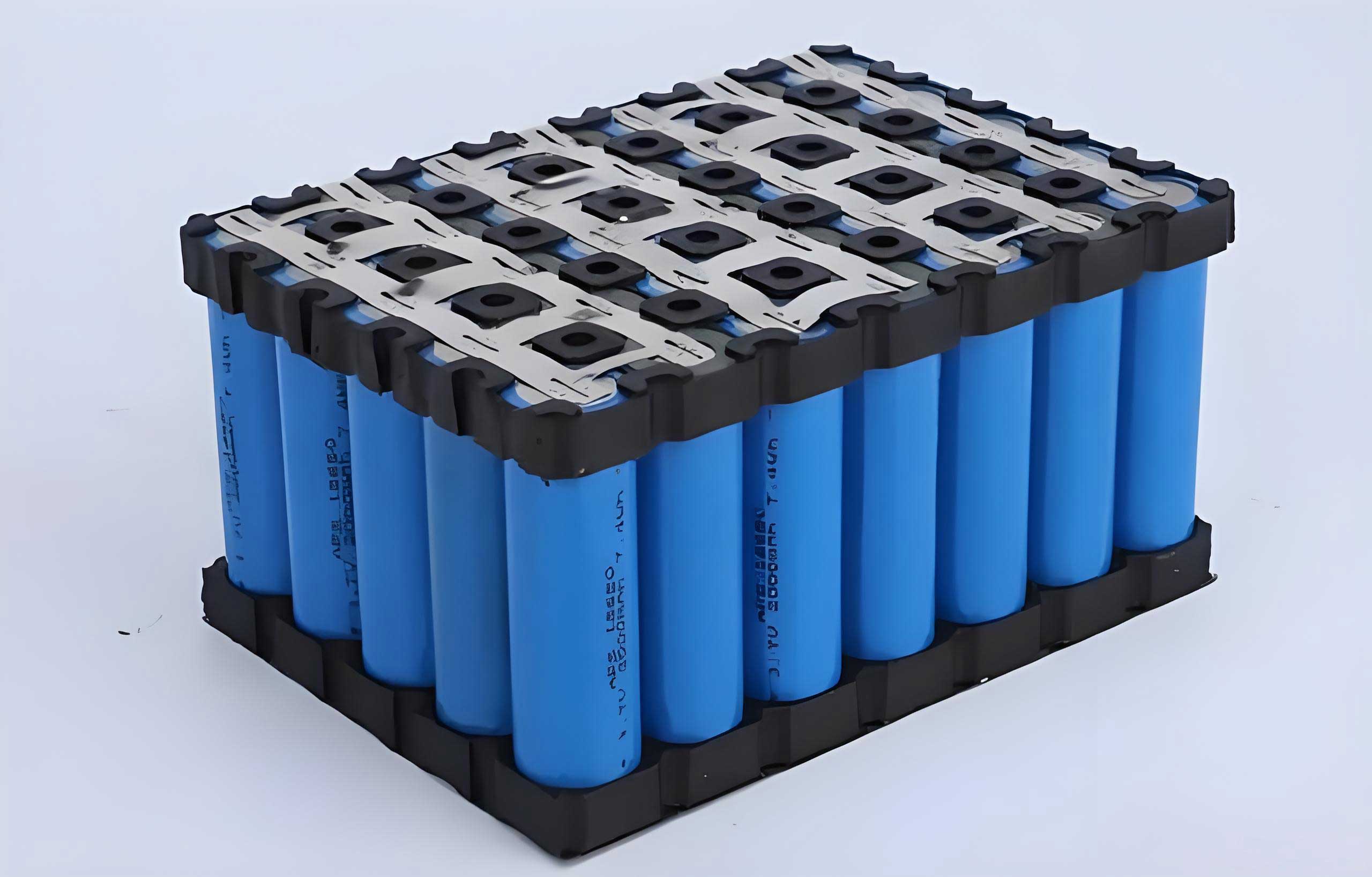
To conduct this investigation, I designed a custom experimental setup for real-time monitoring of internal pressure in a commercial LiFePO4 battery. The battery used was a 3.2 V, 70 Ah prismatic LiFePO4 cell, with key specifications outlined in Table 1. This LiFePO4 battery was selected for its relevance in储能 applications, where safety is paramount. In a controlled dry room environment, I modified the battery by removing its safety valve and installing a sealed导管 connected to a pressure sensor. This allowed continuous measurement of internal pressure without compromising the battery’s integrity. Additionally, I attached four热电偶 sensors to the external surfaces of the LiFePO4 battery—specifically at the centers of the front, back, and two side faces—to monitor case temperature variations. All sensors were calibrated and connected to a data acquisition system using LabVIEW software, ensuring high precision in recording parameters at one-second intervals. The abuse tests were performed using a Chroma battery cycler, capable of simulating overcharge, over-discharge, and external short-circuit conditions. Each test was conducted inside a防爆箱 to contain any potential hazards, although environmental temperature was not actively controlled to observe natural thermal responses. This setup enabled a comprehensive comparison between internal pressure and temperature data under various operating states of the LiFePO4 battery.
| Parameter | Value |
|---|---|
| Rated Capacity | 70 Ah |
| Working Voltage Range | 2.5–3.6 V |
| Charge Cut-off Voltage | 3.6 V |
| Discharge Cut-off Voltage | 2.5 V |
| Critical Temperature | 55°C |
Under normal operating conditions, the LiFePO4 battery exhibited predictable behavior in both internal pressure and temperature. During standard charge-discharge cycles at 0.5 C rate, the internal pressure fluctuated within a narrow range of 0 to 0.2 kPa, as shown in Figure 3. This minor variation is attributed to reversible gas generation from electrolyte decomposition during electrochemical reactions. Specifically, the decomposition of ethylene carbonate (EC) and diethyl carbonate (DEC)—common solvents in LiFePO4 battery electrolytes—can produce gases such as carbon dioxide (CO₂) and ethylene (C₂H₄). The reactions can be represented by the following equations, which are fundamental to understanding gas evolution in LiFePO4 batteries:
$$ \text{EC} + 2\text{Li}^+ + 2e^- \rightarrow \text{Li}_2\text{CO}_3 + \text{C}_2\text{H}_4 $$
$$ \text{EC} + 2\text{Li}^+ + 2e^- \rightarrow (\text{CH}_2\text{OLi})_2 + \text{CO} $$
These processes occur at the electrode-electrolyte interface, particularly during charging when the负极 potential becomes more negative. The gas generation leads to a slight pressure build-up, but it remains within safe limits due to the stable structure of LiFePO4 cathode material. Concurrently, the case temperature of the LiFePO4 battery varied between 28°C and 34°C during normal cycles, with temperature rising during charge and exhibiting a dip before stabilizing during discharge. This baseline data is crucial for establishing reference points to detect anomalies in the LiFePO4 battery. The small pressure and temperature swings confirm that under standard use, the LiFePO4 battery operates reliably without significant internal stress, highlighting its suitability for储能. However, the real test of safety lies in how the LiFePO4 battery responds to abusive conditions, which I investigated through a series of targeted experiments.
In the overcharge test, I subjected the LiFePO4 battery to a 1 C constant-current charge beyond its cut-off voltage of 3.6 V, up to 5.4 V (150% of the nominal limit). The results, depicted in Figure 5(a), reveal a dramatic shift in internal pressure. At the point where overcharge began (step 3,660 in data logging), the pressure remained stable for merely 10 seconds before surging abruptly at step 3,670. This pressure runaway, characterized by a sharp increase from near-zero to several kPa within seconds, served as an early预警 signal. In contrast, the case temperature showed a gradual rise without a distinct突变点. To quantify this, I calculated the temperature difference between consecutive steps (ΔT), as shown in Figure 6. The ΔT values remained below 0.2°C until step 3,730, indicating a delayed thermal response. Thus, the pressure预警 preceded the temperature预警 by over 30 seconds—a critical time window for safety interventions in a LiFePO4 battery system. This delay underscores the advantage of internal pressure monitoring: it captures the initial gas generation from SEI decomposition and electrolyte reactions, which occur at temperatures around 80–120°C, well before heat propagates to the battery外壳.
| Sensor Type | Location on LiFePO4 Battery | Model |
|---|---|---|
| Thermocouple TC1 | Center of narrow side face 1 | MEACON WZP-100 |
| Thermocouple TC2 | Center of wide front face 2 | MEACON WZP-100 |
| Thermocouple TC3 | Center of wide front face 3 | MEACON WZP-100 |
| Thermocouple TC4 | Center of narrow side face 4 | MEACON WZP-100 |
| Pressure Sensor SENSOR1 | Connected via导管 to interior | MEACON MIK-P300 (0–150 kPa) |
Similarly, in the over-discharge test, I discharged the LiFePO4 battery at 1 C rate down to 0 V, well below the recommended 2.5 V cut-off. As illustrated in Figure 7(a), the internal pressure surged sharply at step 5,760, which corresponded to 60 seconds after entering the over-discharge state at step 5,700. This pressure失控 was again more immediate than the temperature change: the case temperature’s ΔT exceeded 0.1°C only at step 5,770, lagging by 10 seconds (Figure 8). While 10 seconds may seem brief, in the context of thermal runaway in a LiFePO4 battery, every second counts for activating safety measures like circuit disconnection or cooling systems. The mechanism behind this pressure increase involves reverse reactions and lithium plating on the anode, which can catalyze gas generation from electrolyte decomposition. The LiFePO4 battery’s internal chemistry becomes unstable under such conditions, leading to accelerated gas production and pressure build-up. This experiment reinforces that internal pressure is a sensitive indicator of滥用 in LiFePO4 batteries, responding faster than external温度 parameters.
The external short-circuit test presented an even starker contrast. I simulated a short circuit by connecting the LiFePO4 battery to a 0.02 Ω resistor, resulting in a discharge current of approximately 160 A. Figure 9 shows that the internal pressure began to rise steadily from the start of discharge and then spiked dramatically upon the short-circuit event at step 1,710. This pressure runaway was unmistakable, providing a clear预警 within seconds. However, the case temperature increased linearly throughout the test, with no abrupt change that could serve as a reliable预警 signal. To validate this thermal behavior, I performed a simulation using COMSOL Multiphysics for a LiFePO4 battery under identical short-circuit conditions. The model, based on the geometry and materials of the LiFePO4 battery, predicted a temperature rise from 35°C to 36.9°C over 150 seconds, closely matching the experimental observation of 36.2°C (the slight difference attributed to heat dissipation delays). This consistency confirms that temperature changes are gradual during short circuits in a LiFePO4 battery, whereas internal pressure responds instantaneously to the surge in current and associated electrochemical reactions. Thus, for rapid risk identification in LiFePO4 battery systems, pressure monitoring outperforms temperature-based methods.
To further analyze the pressure dynamics, I derived a mathematical model linking internal pressure to gas generation in the LiFePO4 battery. The ideal gas law provides a foundational framework: $$ P = \frac{nRT}{V} $$ where \( P \) is the internal pressure, \( n \) is the number of moles of gas produced, \( R \) is the gas constant, \( T \) is the absolute temperature, and \( V \) is the free volume inside the LiFePO4 battery. Under abuse conditions, \( n \) increases rapidly due to decomposition reactions. For instance, during overcharge, the正极 of the LiFePO4 battery may release oxygen, while the负极 experiences lithium plating and SEI breakdown, contributing to gas species like CO₂ and CO. The rate of gas generation can be expressed as: $$ \frac{dn}{dt} = A e^{-E_a/RT} $$ where \( A \) is a pre-exponential factor, \( E_a \) is the activation energy, and \( T \) is the local temperature at reaction sites. This equation highlights that even modest temperature rises can exponentially accelerate gas production, leading to pressure runaway in the LiFePO4 battery. By monitoring \( P \) and its derivative \( dP/dt \), one can detect these changes early. In my experiments, the pressure change rate exceeded 0.5 kPa/s during abuse states, compared to less than 0.01 kPa/s under normal operation for the LiFePO4 battery. This stark difference enables simple threshold-based预警 algorithms for LiFePO4 battery management systems.
| Abuse Condition | Internal Pressure预警 Time (seconds after abuse onset) | Case Temperature预警 Time (seconds after abuse onset) | Advantage of Pressure Monitoring |
|---|---|---|---|
| Overcharge | 10 | >30 | 20+ seconds earlier |
| Over-discharge | 60 | 70 | 10 seconds earlier |
| External Short Circuit | Immediate (within 1-2 seconds) | No distinct预警 | Enables early intervention |
The implications of these findings are profound for the design of safer energy storage systems using LiFePO4 batteries. Traditional battery management systems (BMS) often rely on voltage and temperature sensors, but as shown, temperature changes are too slow for timely risk mitigation in LiFePO4 batteries. Integrating internal pressure sensors into LiFePO4 battery packs could provide a complementary data stream that triggers alarms or shutdowns before thermal runaway escalates. For example, in a储能 station with thousands of LiFePO4 battery cells, real-time pressure monitoring could identify faulty cells during early abuse stages, allowing for isolation and maintenance without cascading failures. Moreover, this approach aligns with the push for predictive maintenance in smart grids, where data-driven insights enhance reliability. The LiFePO4 battery, with its robust chemistry, is well-suited for such advancements, as pressure changes are less affected by external environmental factors compared to temperature.
In discussing the broader context, it’s important to note that internal pressure monitoring is not entirely new; it has been explored for other battery types like MH-Ni cells. However, its application to LiFePO4 batteries is particularly promising due to the latter’s widespread use in储能 and electric vehicles. Previous studies on LiFePO4 batteries have focused on thermal runaway mechanisms post-venting, but my work shifts the paradigm to prevention. By establishing pressure失控 as a precursor to thermal events, I provide a proactive tool for risk management. Future research could expand on this by testing LiFePO4 batteries under varying conditions, such as different states of charge, aging effects, or combined abuse scenarios. Additionally, developing cost-effective pressure sensors for mass production in LiFePO4 battery modules will be key to practical implementation.
In conclusion, this study demonstrates that internal pressure runaway is a reliable and early indicator of safety risks in LiFePO4 batteries under abuse conditions such as overcharge, over-discharge, and external short circuits. Through rigorous experimentation, I showed that pressure changes occur significantly sooner than case temperature variations, offering a time advantage of up to 30 seconds for预警. This advancement can transform safety protocols in储能 systems, enabling faster responses to prevent thermal runaway and associated hazards. The LiFePO4 battery, already valued for its stability, can achieve even higher safety standards with integrated pressure monitoring. As the world moves toward greater renewable energy integration, ensuring the safety of storage technologies like the LiFePO4 battery is paramount. My findings pave the way for next-generation BMS designs that leverage internal pressure data, ultimately contributing to more resilient and trustworthy energy infrastructure.