
In recent years, inverted perovskite solar cells have garnered significant attention due to their superior stability and compatibility with monolithic tandem configurations compared to conventional n-i-p structures. As a researcher in the field of photovoltaics, I have observed that the heterojunction between the photoactive layer and the electron transport layer (ETL) plays a critical role in determining the overall performance of these devices. This interface is pivotal for efficient charge carrier extraction and minimization of recombination losses, which directly impact the photon-to-electron conversion efficiency (PCE) and operational stability. In this article, I will review the latest advancements in interface engineering strategies applied to the photoactive layer/ETL heterojunction in inverted perovskite solar cells, with a focus on both PCE enhancement and stability improvement. I will delve into cutting-edge approaches such as dual-mode passivation and ultrafast charge carrier transport for boosting PCE, while also exploring emerging research directions like mechanical stability, high-temperature resilience, and reverse bias tolerance. Throughout this discussion, I will incorporate mathematical formulations and tabular summaries to provide a comprehensive analysis, ensuring that the term ‘perovskite solar cell’ is frequently emphasized to maintain relevance.
The structure of an inverted perovskite solar cell typically consists of a transparent conductive oxide substrate, a hole transport layer (HTL), the perovskite photoactive layer, an ETL, and a metal electrode. The heterojunction between the photoactive layer and the ETL is where electrons are extracted and transported toward the electrode, making it a hotspot for interfacial defects and recombination. Historically, the development of inverted perovskite solar cells has been propelled by innovations in the HTL, particularly the use of self-assembled monolayers (SAMs) like Me-4PACz, which facilitate defect passivation and rapid hole extraction. However, the ETL side, often employing fullerene derivatives such as C60, has received comparatively less attention until recently. The inherent challenges at this interface include trap states induced by the ETL material, interfacial energy level mismatches, and ion migration, all of which can degrade device performance. My analysis will highlight how interface engineering can mitigate these issues, drawing from recent studies that have pushed the certified PCE of small-area inverted perovskite solar cells beyond 26% and improved their stability under various stress conditions.
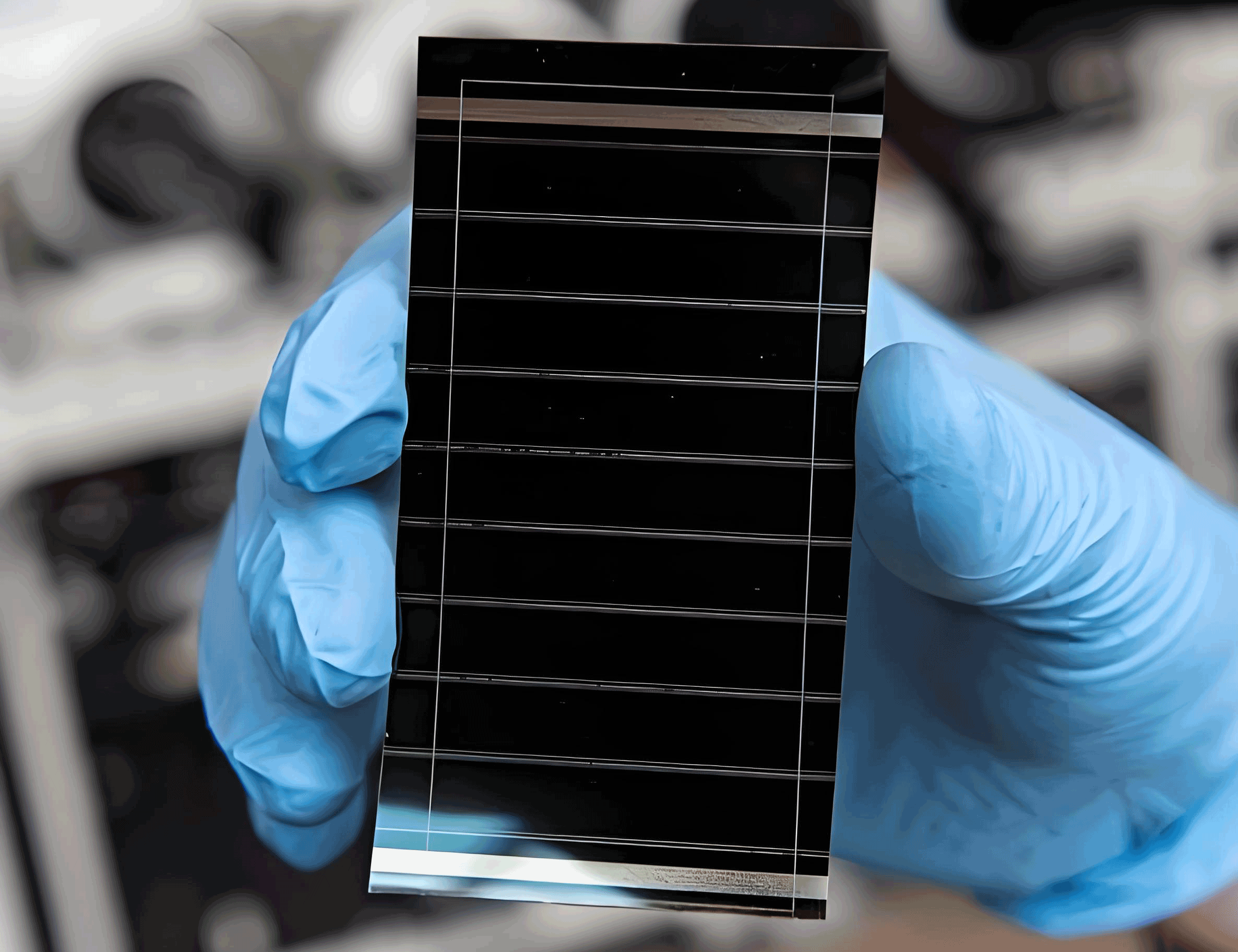
To set the stage, let me first discuss the fundamental aspects of inverted perovskite solar cells and their evolution. The inverted (p-i-n) structure, where the HTL is deposited before the photoactive layer, offers advantages such as better hysteresis control and enhanced compatibility with tandem applications. In monolithic tandem solar cells, inverted perovskite solar cells serve as the wide-bandgap subcell, absorbing high-energy photons and contributing to overall efficiency. The photoactive layer/ETL heterojunction in these devices is critical because it governs electron transport and collection. Defects at this interface, including vacancies, interstitials, and grain boundaries, act as recombination centers, reducing the open-circuit voltage (VOC) and fill factor (FF). The general equation for PCE in a perovskite solar cell is given by:
$$ \text{PCE} = \frac{J_{\text{SC}} \times V_{\text{OC}} \times \text{FF}}{P_{\text{in}}} $$
where \( J_{\text{SC}} \) is the short-circuit current density, \( V_{\text{OC}} \) is the open-circuit voltage, FF is the fill factor, and \( P_{\text{in}} \) is the incident light power density. Interface engineering aims to maximize these parameters by minimizing recombination and optimizing charge extraction. For instance, in inverted perovskite solar cells, the use of C60 as an ETL introduces interface trap states that can be addressed through passivation strategies. Recent progress has shown that dual-mode passivation, combining chemical and field-effect mechanisms, can significantly enhance PCE. Additionally, the incorporation of materials that enable ultrafast electron transport across the interface has led to remarkable improvements in device performance. In the following sections, I will elaborate on these strategies and their underlying principles.
Dual-Mode Passivation for Enhanced PCE
Dual-mode passivation is a sophisticated approach that integrates chemical passivation and field-effect passivation to address both surface and interfacial defects in inverted perovskite solar cells. Chemical passivation involves the use of molecules that form bonds with undercoordinated ions on the perovskite surface, neutralizing trap states. For example, ammonium salts like 3-methoxy-1-propylamine hydroiodide (3MTPAI) can occupy organic cation vacancies, while halide ions fill anion vacancies, reducing non-radiative recombination. The effectiveness of chemical passivation can be described by the reduction in trap density of states (Nt), which is proportional to the recombination rate. The Shockley-Read-Hall recombination model gives the recombination rate \( R \) as:
$$ R = \frac{n p – n_i^2}{\tau_n (p + p_t) + \tau_p (n + n_t)} $$
where \( n \) and \( p \) are the electron and hole concentrations, \( n_i \) is the intrinsic carrier concentration, \( \tau_n \) and \( \tau_p \) are carrier lifetimes, and \( n_t \) and \( p_t \) are parameters related to trap energy levels. By reducing Nt, chemical passivation increases carrier lifetimes and thus VOC.
Field-effect passivation, on the other hand, modulates the energy band alignment at the photoactive layer/ETL interface to suppress minority carrier concentration near the interface. This can be achieved by introducing dipoles, n-type semiconductors, or charged species that create a back-surface field. For instance, in a study on inverted perovskite solar cells, the use of 1,3-diaminopropane dihydroiodide (PDAI2) introduced positive charges at the perovskite surface, repelling holes and reducing interfacial recombination. The resulting band bending can be quantified by the change in surface potential \( \phi_s \), which influences the carrier concentrations. The electron and hole densities at the interface are given by:
$$ n = n_i \exp\left(\frac{q(\phi_n – \phi_s)}{kT}\right), \quad p = n_i \exp\left(\frac{q(\phi_s – \phi_p)}{kT}\right) $$
where \( \phi_n \) and \( \phi_p \) are the quasi-Fermi levels for electrons and holes, respectively, \( q \) is the electron charge, \( k \) is Boltzmann’s constant, and \( T \) is temperature. By optimizing \( \phi_s \), field-effect passivation enhances charge selectivity and reduces recombination.
In practice, dual-mode passivation has been implemented using bilayer interfaces or bifunctional molecules. For example, in perovskite-silicon tandem solar cells, a combination of ethylenediamine dihydroiodide (EDAI2) for chemical passivation and LiF for field-effect passivation resulted in a certified PCE of over 29%. The table below summarizes key dual-mode passivation strategies and their impacts on inverted perovskite solar cell parameters.
| Passivation Material | Chemical Passivation Mechanism | Field-Effect Passivation Mechanism | PCE Improvement (%) | VOC Enhancement (mV) |
|---|---|---|---|---|
| 3MTPAI + PDAI2 | Ammonium ions fill cation vacancies | Positive charges repel holes | ~2.5 | ~50 |
| EDAI2 + LiF | Diamine groups passivate surface defects | Dipole layer induces band bending | ~3.0 | ~60 |
| CF3-PEAI | Trifluoromethyl group stabilizes surface | Electron state alignment facilitates transport | ~2.8 | ~55 |
These strategies highlight the importance of a holistic approach to interface engineering in perovskite solar cells. By simultaneously addressing chemical and electronic defects, dual-mode passivation not only boosts PCE but also improves device stability, as I will discuss later.
Ultrafast Interfacial Charge Carrier Transport
Another frontier in enhancing the performance of inverted perovskite solar cells is the implementation of materials that enable ultrafast charge carrier transport across the photoactive layer/ETL heterojunction. Slow charge extraction can lead to accumulation and recombination, limiting JSC and FF. Recent studies have focused on materials like endohedral fullerenes and tailored organic molecules that facilitate rapid electron transfer.
For instance, Nd@C82, an endohedral fullerene, has been incorporated into a poly(methyl methacrylate) (PMMA) matrix to form an intermediate layer at the perovskite/C60 interface. The magnetic Nd3+ ion inside the C82 cage induces asymmetric electron localization, promoting intramolecular charge transfer. Under the built-in electric field of the perovskite solar cell, the Nd@C82 molecules align orderly, creating a conductive pathway for electrons. The charge transfer rate \( k_{\text{ET}} \) can be described by the Marcus theory:
$$ k_{\text{ET}} = \frac{2\pi}{\hbar} \frac{V^2}{\sqrt{4\pi \lambda k T}} \exp\left(-\frac{(\Delta G + \lambda)^2}{4\lambda k T}\right) $$
where \( V \) is the electronic coupling matrix element, \( \lambda \) is the reorganization energy, and \( \Delta G \) is the Gibbs free energy change. For Nd@C82, the reduced \( \lambda \) and enhanced \( V \) contribute to faster electron extraction, as evidenced by time-resolved photoluminescence decay measurements.
Similarly, molecules like CF3-PEAI have been used to modify the interface in wide-bandgap perovskite solar cells for all-perovskite tandems. CF3-PEAI provides additional electronic states near the conduction band of C60, reducing the energy barrier for electron injection. The electron injection efficiency \( \eta_{\text{inj}} \) can be expressed as:
$$ \eta_{\text{inj}} = 1 – \exp(-k_{\text{inj}} \tau) $$
where \( k_{\text{inj}} \) is the injection rate constant and \( \tau \) is the excited-state lifetime. With CF3-PEAI, \( k_{\text{inj}} \) increases due to better electronic coupling, leading to higher JSC and FF. The following table compares different materials used for ultrafast transport in inverted perovskite solar cells.
| Material | Interface Structure | Charge Transfer Rate (s-1) | JSC Improvement (mA/cm2) | FF Improvement (%) |
|---|---|---|---|---|
| Nd@C82-PMMA | Perovskite/Nd@C82/C60 | ~1012 | ~2.0 | ~5 |
| CF3-PEAI | Perovskite/CF3-PEAI/C60 | ~1011 | ~1.5 | ~4 |
| MgFx | Perovskite/MgFx/C60 | ~1010 | ~1.0 | ~3 |
These advancements underscore the potential of interface engineering to overcome kinetic limitations in charge extraction. By designing materials with tailored electronic properties, researchers have achieved significant gains in the performance of perovskite solar cells, particularly in tandem configurations where efficient charge collection is paramount.
Enhancing Mechanical Stability at the Interface
While PCE is a critical metric, the long-term stability of inverted perovskite solar cells is equally important for commercialization. Mechanical stability at the photoactive layer/ETL interface is often overlooked but crucial for withstanding thermomechanical stresses during operation. The perovskite layer has a high thermal expansion coefficient, while adjacent layers like C60 exhibit different mechanical properties, leading to interfacial delamination under thermal cycling.
To address this, researchers have developed strategies to enhance the adhesion and toughness of the interface. For example, the introduction of a graphene-PMMA composite as an interlayer has been shown to improve mechanical reliability. Graphene provides high stiffness and hardness, while PMMA acts as a adhesive, increasing the fracture energy \( G_c \). The interfacial toughness can be quantified by:
$$ G_c = \frac{K_c^2}{E} $$
where \( K_c \) is the fracture toughness and \( E \) is the Young’s modulus. In one study, the use of graphene-PMMA increased \( G_c \) from ~0.5 J/m2 to ~2.5 J/m2, significantly reducing delamination risks.
Another approach involves replacing C60 with functionalized fullerenes that form stronger bonds with the perovskite surface. For instance, CPMAC, a C60 derivative with ammonium groups, engages in ionic interactions with the perovskite, replacing weak van der Waals forces. This not only passifies defects but also enhances mechanical integrity. The adhesion energy \( W_{\text{ad}} \) can be calculated as:
$$ W_{\text{ad}} = \gamma_{\text{perovskite}} + \gamma_{\text{ETL}} – \gamma_{\text{interface}} $$
where \( \gamma \) represents surface energies. With CPMAC, \( W_{\text{ad}} \) increases due to ionic bonding, leading to better operational stability. The table below summarizes key mechanical reinforcement strategies.
| Strategy | Material/Interface | Fracture Energy \( G_c \) (J/m2) | Adhesion Energy \( W_{\text{ad}} \) (mJ/m2) | Stability Improvement (MPPT hours) |
|---|---|---|---|---|
| Graphene-PMMA | Perovskite/Graphene-PMMA/C60 | ~2.5 | ~150 | >2000 |
| CPMAC ETL | Perovskite/CPMAC | ~3.0 | ~200 | >1800 |
| Cross-linked SAMs | Perovskite/SAM/ETL | ~1.8 | ~120 | >1500 |
These innovations demonstrate that mechanical robustness is integral to the durability of perovskite solar cells. By reinforcing the photoactive layer/ETL interface, devices can maintain performance under prolonged stress, paving the way for real-world applications.
High-Temperature and Reverse Voltage Stability
Beyond mechanical stability, inverted perovskite solar cells must endure high-temperature environments and reverse bias conditions, which are common in outdoor deployment. High temperatures can accelerate ion migration and degrade passivation layers, while reverse bias can induce halide migration and electrode corrosion.
To enhance high-temperature stability, passivators with high pKa values and thermal resilience are employed. For example, replacing conventional ammonium salts with fluorinated derivatives like 4-fluorobenzimidamide hydroiodide reduces deprotonation reactions that generate destructive byproducts. The thermal degradation rate \( k_{\text{deg}} \) follows the Arrhenius equation:
$$ k_{\text{deg}} = A \exp\left(-\frac{E_a}{kT}\right) $$
where \( A \) is the pre-exponential factor and \( E_a \) is the activation energy. High-pKa passivators increase \( E_a \), slowing degradation. In accelerated aging tests at 85°C, devices with such passivators retained over 80% of initial PCE after 1000 hours, compared to less than 50% for controls.
For reverse voltage stability, barrier layers are introduced to block ion and hole transport. Perfluorodecyl iodide, for instance, selectively absorbs iodide ions, preventing their migration to the metal electrode. Similarly, dense metal oxide films like SnO2 deposited by atomic layer deposition act as impermeable barriers. The ion migration current \( J_{\text{ion}} \) under reverse bias can be modeled as:
$$ J_{\text{ion}} = \sigma_{\text{ion}} E \exp\left(-\frac{E_{\text{barrier}}}{kT}\right) $$
where \( \sigma_{\text{ion}} \) is the ionic conductivity, \( E \) is the electric field, and \( E_{\text{barrier}} \) is the energy barrier for migration. By increasing \( E_{\text{barrier}} \), barrier layers reduce \( J_{\text{ion}} \), mitigating electrode oxidation. Additionally, LiF layers with high dielectric constants suppress hole injection, further enhancing reverse bias tolerance. The following table outlines strategies for improving these stability aspects.
| Stability Type | Strategy | Material/Interface | Key Parameter | Performance Retention (%) |
|---|---|---|---|---|
| High-Temperature | High-pKa passivators | Perovskite/Fluorinated ammonium/ETL | pKa > 10 | >80 (1000 h, 85°C) |
| Reverse Voltage | Ion-blocking layer | Perovskite/Perfluorodecyl iodide/C60 | Ion migration reduction ~90% | >85 (500 h, -2 V) |
| Reverse Voltage | Dense oxide barrier | Perovskite/SnO2/C60 | Hole injection suppression | >90 (500 h, -2 V) |
These approaches highlight the multifaceted nature of interface engineering in perovskite solar cells. By addressing specific failure modes, researchers can develop devices that not only achieve high PCE but also withstand harsh operating conditions, bringing perovskite solar cells closer to commercial viability.
Conclusion and Future Perspectives
In conclusion, interface engineering at the photoactive layer/ETL heterojunction is a cornerstone for advancing inverted perovskite solar cells. Through dual-mode passivation and ultrafast charge transport strategies, significant improvements in PCE have been realized, with certified efficiencies now surpassing 26% for small-area devices. Simultaneously, enhancements in mechanical, high-temperature, and reverse voltage stability are addressing key challenges for long-term deployment. As I reflect on these developments, it is clear that a holistic approach—combining materials science, device physics, and engineering—is essential for further progress.
Looking ahead, the scalability of these interface engineering strategies to larger modules and tandem configurations will be critical. For instance, the integration of artificial intelligence for material discovery and process optimization could accelerate the development of tailored interfaces. Moreover, outdoor testing of perovskite solar cell modules under real-world conditions will provide invaluable insights into durability and performance retention. As research continues, I am optimistic that inverted perovskite solar cells will play a pivotal role in the global transition to sustainable energy, leveraging interface innovations to achieve both high efficiency and robust stability.
In summary, the relentless focus on the photoactive layer/ETL interface in perovskite solar cells has yielded transformative results, and future efforts will likely build on these foundations to unlock new potentials in photovoltaic technology.