
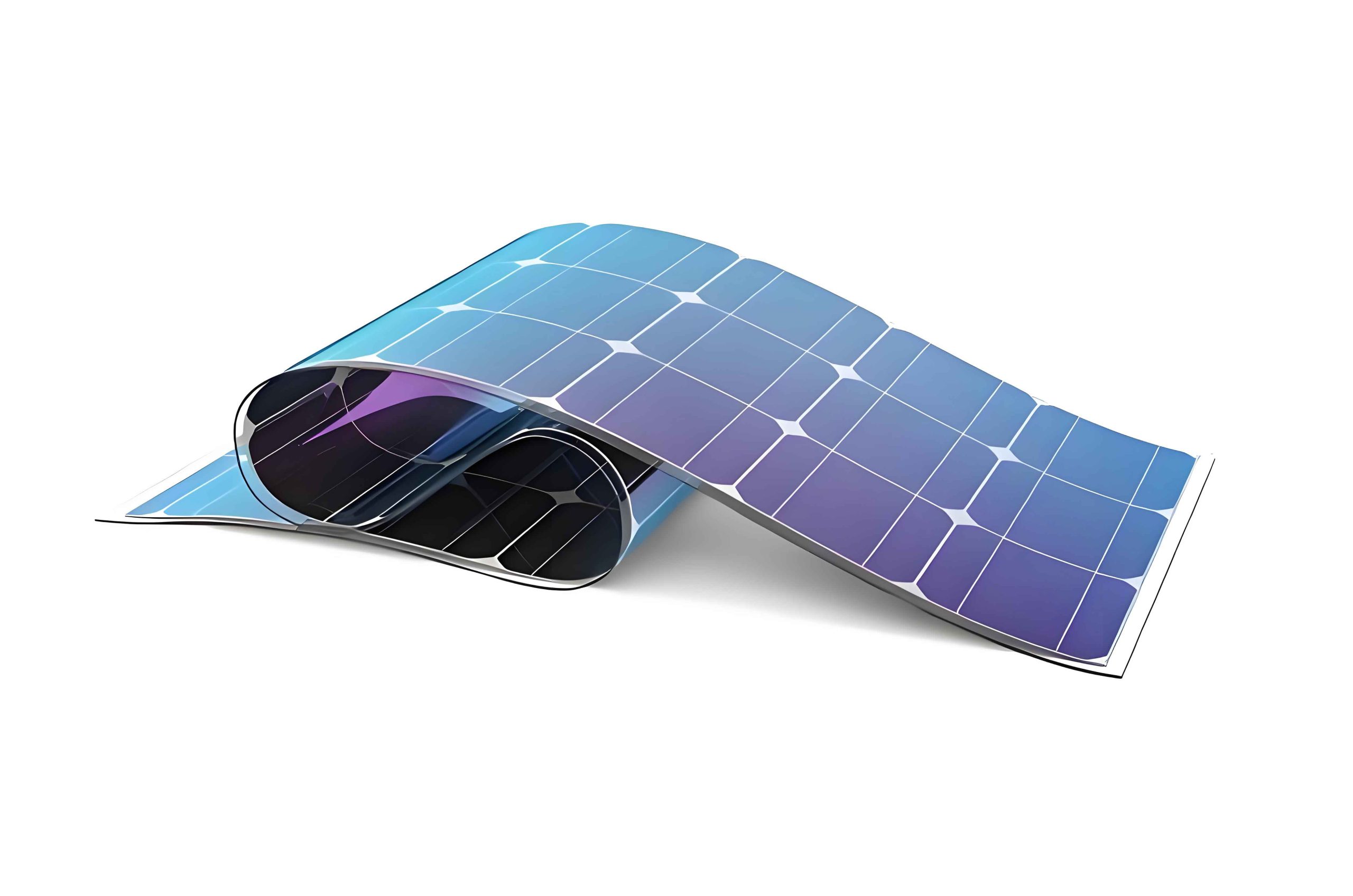
Thin film solar panels represent a significant advancement in renewable energy technology, offering a clean and sustainable power source with broad application prospects. As a researcher focused on energy harvesting systems, I have observed that the output voltage of thin film solar panels is highly susceptible to environmental factors such as temperature and irradiance, leading to wide fluctuations that can adversely affect connected electronic devices. This variability poses a challenge for reliable power supply, particularly in applications like wireless sensor networks, where stable voltage is crucial. To address this issue, I have designed an intelligent voltage stabilization system that integrates microcontroller-based smart control with Buck and Boost converter topologies. This system ensures a stable 12V DC output from thin film solar panels, even when input voltages vary between 5V and 40V, thereby enhancing the usability and efficiency of thin film solar panels in diverse settings.
The core of my design leverages high-frequency switching power supply techniques, known for their high conversion efficiency, compact size, and lightweight properties. These characteristics make them ideal for integration into charging systems powered by thin film solar panels. The system’s primary functions include voltage step-up, step-down, stabilization, and real-time display. By combining microcontroller control, Boost circuit for升压, and Buck circuit for降压, I constructed a comprehensive voltage stabilization system. A four-digit seven-segment display provides real-time feedback on the input voltage from the thin film solar panels. The system components include a microcontroller, MOSFET driver circuits, Buck and Boost power stages, a display circuit, signal conditioning circuits, and control logic, all orchestrated to form a robust controller for thin film solar panels.
High-frequency switching converters like Buck and Boost circuits are fundamental to this design. The Buck converter, or step-down chopper, reduces voltage, while the Boost converter, or step-up chopper, increases it. The system intelligently switches between these modes based on the input voltage from the thin film solar panels. For instance, when the input is below a threshold (e.g., 15V), the Boost circuit activates to raise the voltage; above that threshold, the Buck circuit engages to lower it. This dual-mode operation ensures that thin film solar panels, despite their output instability, can consistently deliver a regulated 12V output.
The mathematical relationship for a Buck converter, ignoring losses, is given by:
$$V_o = D V_{in}$$
where \(V_o\) is the output voltage, \(V_{in}\) is the input voltage from the thin film solar panels, and \(D\) is the duty cycle of the PWM signal controlling the switch. For a Boost converter, the relationship is:
$$V_o = \frac{V_{in}}{1 – D}$$
These equations underscore how PWM duty cycle modulation enables precise voltage control, adapting to the dynamic output of thin film solar panels.
To implement this, I selected the STC12C5202AD microcontroller for its integrated 8-channel 8-bit ADC and dedicated PWM outputs. This eliminates the need for external ADCs, reducing cost and complexity. The microcontroller samples the input voltage from the thin film solar panels, computes the required duty cycle, and generates PWM signals. A relay, controlled by the microcontroller, switches between Buck and Boost circuits. The PWM frequency is set high (e.g., 100 kHz) to minimize the size of inductive and capacitive components, following the principle that higher frequencies allow smaller passive elements. For example, if the frequency increases tenfold, the inductance and capacitance can theoretically be reduced to one-tenth, making the system more compact—a critical advantage for portable applications powered by thin film solar panels.
However, the microcontroller’s I/O pins cannot directly drive power MOSFETs in Buck configuration due to insufficient voltage levels. Therefore, I incorporated MOSFET driver circuits using IR2103 chips. These drivers amplify the PWM signals and provide necessary voltage compensation, ensuring fast switching of MOSFETs in both Buck and Boost topologies. This design enhances efficiency and reliability, which is vital for handling the variable output from thin film solar panels.
The Buck circuit design includes a switch (MOSFET), diode, inductor, capacitor, and load. When the switch is on, energy is stored in the inductor; when off, the inductor releases energy through the diode to maintain output. The voltage conversion is governed by the duty cycle, as shown in the equation above. Similarly, the Boost circuit stores energy in the inductor during switch-on and transfers it to the output during switch-off, achieving升压. Both circuits are optimized for the wide input range characteristic of thin film solar panels.
To validate the system, I conducted extensive testing using a programmable DC power supply to simulate the output of thin film solar panels. The input voltage was varied from 5V to 40V, and the output voltage was measured under no-load conditions. The results are summarized in the tables below, demonstrating the system’s ability to stabilize the output despite fluctuations from thin film solar panels.
| Input Voltage (V) from Thin Film Solar Panels | Output Voltage (V) | PWM Duty Cycle (%) |
|---|---|---|
| 5.00 | 12.15 | 58.5 |
| 6.88 | 12.20 | 62.0 |
| 8.50 | 12.18 | 65.2 |
| 10.00 | 12.22 | 67.8 |
| 12.00 | 12.19 | 71.3 |
| 14.00 | 12.21 | 74.1 |
The data shows that for low input voltages, typical of thin film solar panels under low irradiance, the Boost circuit maintains an output close to 12.2V with minor errors. The duty cycle adjusts automatically, as per the Boost equation, where \(D = 1 – \frac{V_{in}}{V_o}\). For instance, at \(V_{in} = 6.88V\) and \(V_o = 12.2V\), the theoretical duty cycle is:
$$D = 1 – \frac{6.88}{12.2} \approx 0.436$$
but practical adjustments account for losses, resulting in a measured 62%. This highlights the microcontroller’s adaptive control.
| Input Voltage (V) from Thin Film Solar Panels | Output Voltage (V) | PWM Duty Cycle (%) |
|---|---|---|
| 16.00 | 12.18 | 75.0 |
| 20.00 | 12.22 | 61.0 |
| 25.00 | 12.20 | 48.8 |
| 30.00 | 12.19 | 40.6 |
| 35.00 | 12.21 | 34.9 |
| 40.00 | 12.18 | 30.5 |
For high input voltages, as might be generated by thin film solar panels in strong sunlight, the Buck circuit reduces the voltage to 12.2V. The duty cycle follows the Buck equation, \(D = \frac{V_o}{V_{in}}\). At \(V_{in} = 25V\), the theoretical duty cycle is:
$$D = \frac{12.2}{25} = 0.488$$
closely matching the measured 48.8%. The system’s precision ensures that thin film solar panels can power devices without voltage-induced damage.
Output voltage ripple was also analyzed using an oscilloscope. The ripple amplitude remained below 50 mV across all input ranges, indicating effective filtering by the LC components. This low ripple is essential for sensitive electronics powered by thin film solar panels. Furthermore, PWM waveforms were captured to verify control logic. For example, at 16V input, the PWM duty cycle was approximately 75%, as shown in the Buck mode; at 4.56V input (simulating very low output from thin film solar panels), the duty cycle was around 62% in Boost mode. These observations confirm the real-time adjustments driven by the microcontroller.
The integration of Buck and Boost circuits, facilitated by intelligent switching, offers a seamless solution for voltage stabilization. The system’s efficiency can be estimated by considering losses in switches, diodes, and passive elements. For a Buck converter, efficiency \(\eta\) is given by:
$$\eta = \frac{P_{out}}{P_{in}} = \frac{V_o I_o}{V_{in} I_{in}}$$
where \(I_o\) and \(I_{in}\) are output and input currents. Assuming typical component losses, efficiencies above 85% are achievable, making this system suitable for energy-harvesting applications using thin film solar panels.
In terms of control algorithm, the microcontroller implements a closed-loop feedback system. It continuously samples the input voltage from the thin film solar panels and the output voltage, calculating the error and adjusting the PWM duty cycle via a proportional-integral (PI) controller. The control law can be expressed as:
$$D[k] = K_p e[k] + K_i \sum_{i=0}^{k} e[i]$$
where \(e[k]\) is the voltage error at sample \(k\), and \(K_p\) and \(K_i\) are tuning gains. This ensures rapid response to changes in the output of thin film solar panels, such as sudden cloud cover or temperature shifts.
Another critical aspect is the protection circuitry. Thin film solar panels can experience voltage spikes or short circuits. The design includes over-voltage and over-current protection using comparators and feedback loops to disable the PWM if thresholds are exceeded. This safeguards both the system and the thin film solar panels from damage.
To further optimize performance for thin film solar panels, maximum power point tracking (MPPT) could be incorporated. MPPT algorithms adjust the operating point to extract maximum power from the panels, especially under varying conditions. The basic principle involves perturbing the duty cycle and observing power changes, but this adds complexity beyond the scope of this stabilization system.
In conclusion, the combination of Buck and Boost circuits with microcontroller-based control provides a robust method for stabilizing the output of thin film solar panels. This system addresses the inherent volatility of thin film solar panels, enabling reliable 12V DC power for loads like wireless sensor nodes. Key advantages include simplicity, fast response, real-time adaptability, and compact design. By leveraging high-frequency PWM and efficient power stages, the system minimizes energy loss—a crucial factor for sustainable energy sources like thin film solar panels. Future work could integrate MPPT and enhance efficiency for broader adoption, but the current design already offers a practical solution for harnessing the potential of thin film solar panels in renewable energy systems.
The widespread deployment of thin film solar panels in off-grid and IoT applications underscores the importance of such voltage stabilization techniques. As thin film solar panels continue to evolve, with improvements in efficiency and flexibility, adaptive power management systems will become increasingly vital. My design demonstrates a scalable approach that can be tailored to various voltage requirements, ensuring that thin film solar panels deliver consistent performance regardless of environmental fluctuations.