
Climate change stands as one of the most significant challenges of our time, demanding a fundamental transformation in how we produce and use energy. In this context, the lithium-ion battery has emerged as a pivotal technology for new energy storage. With advantages such as high energy density, long cycle life, and substantial charge/discharge power, lithium-ion batteries are extensively deployed in electric vehicles, grid-scale energy storage, and consumer electronics, serving as key equipment for reducing CO2 emissions across transportation, power, and industrial sectors. Consequently, initiatives like the EU’s “Battery 2030+” plan aim to enhance battery performance, safety, and sustainability through smarter management.
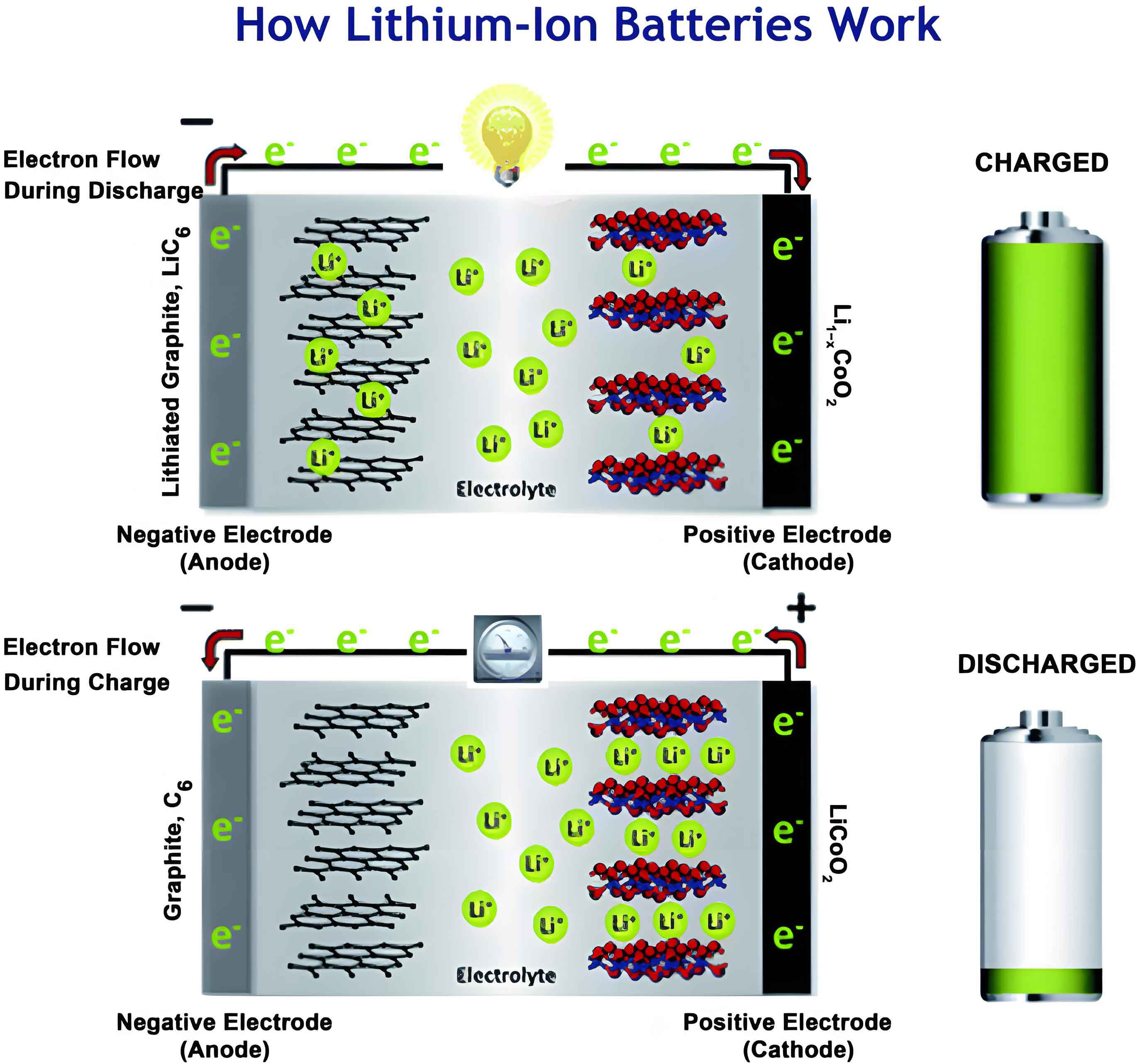
However, the high-energy-density electrode materials and flammable organic electrolytes that enable the performance of lithium-ion batteries also render them sensitive to conditions like high temperature, overcharge, over-discharge, and mechanical abuse. This sensitivity accelerates battery aging, increases parameter inconsistency, and leads to failure modes such as lithium plating, electrolyte leakage, swelling, internal short circuits, and ultimately, thermal runaway. These failures severely impact the consistency, reliability, and safety of lithium-ion battery systems. Statistical data reveals a concerning frequency of fire and explosion incidents involving electric vehicles and energy storage stations globally, underscoring the insufficiency of existing monitoring methods within standard Battery Management Systems (BMS), which typically only track voltage, current, and surface temperature. There is an urgent need for more comprehensive, reliable, and intelligent multi-parameter sensing and early warning technologies.
Therefore, leveraging intelligent sensing to identify and perceive the multi-dimensional physical and chemical characteristic signals—electrical, thermal, gas, acoustic, optical, pressure, and magnetic—that manifest during the early stages of lithium-ion battery failure is crucial. By enabling online monitoring and diagnosis of the battery’s safety state, such technologies can provide early warnings, significantly reducing failure rates and preventing catastrophic accidents.
1. Evolution Mechanism of Multi-Dimensional Feature Signals in Lithium-ion Batteries
The effectiveness of intelligent sensing and early warning for lithium-ion batteries relies on detecting signals released during the degradation and failure process. It is essential to identify the series of physical-chemical feature signals generated at different stages, which map to the battery’s evolving safety state with a certain chronological order. The general failure process, often initiated by electrical abuse, can be divided into stages, each releasing distinct signals.
Taking the overcharge-induced thermal runaway of a commercial lithium-ion battery as an example, the process can be summarized in four stages, with associated reactions and signal generation:
| Stage | Internal State & Reactions | Primary Signals Generated |
|---|---|---|
| Stage 1: Normal Operation | Normal lithiation/delithiation. Minimal heat/gas generation. | Normal electrical signals. |
| Stage 2: Initial Abuse (e.g., Overcharge) | Severe delithiation at cathode; Lithium plating (dendrite growth) on anode due to limited intercalation capacity. Micron-scale Li dendrites can react with the PVDF binder: $$2\text{Li} + (-CH_2-CF_2-)_n + … \rightarrow … + H_2$$. | Electrical: Voltage anomaly. Gas: Trace $H_2$. Magnetic: Potential current/magnetic field disturbance. |
| Stage 3: Accelerated Degradation | Reaction of plated Li with electrolyte generates heat and gases (e.g., $C_2H_4$, $CO_2$). SEI film decomposition. Temperature and internal pressure rise rapidly. | Thermal: Internal temperature rise. Gas: Increased $H_2$, $CO_2$, $C_2H_4$, CO. Pressure: Internal pressure increase, casing strain. Acoustic: Micro-sounds from reactions/material cracking. |
| Stage 4: Thermal Runaway | Separator meltdown/puncture leading to large-scale internal short circuit. Cathode material decomposition releases oxygen, reacting violently with electrolyte. Electrolyte vaporization and decomposition. | Thermal: Rapid temperature spike. Gas: Massive release of combustible gases ($H_2$, CO, $CH_4$, VOCs). Pressure: Safety valve opening, casing rupture. Acoustic: Loud venting sound. Optical: Smoke/electrolyte ejection. Electrical: Voltage crash. |
The mapping of these multidimensional feature signals to the safety state evolution of a lithium-ion battery provides the foundation for targeted sensing strategies.
2. Intelligent Sensing and Early Warning Technologies
Based on the characteristic signals elucidated above, various sensing technologies have been developed for fault diagnosis and safety预警 of lithium-ion batteries.
2.1 Electrical Sensing Technology (EST)
EST involves measuring electrical parameters like voltage, current, and impedance, which are the most direct indicators of a lithium-ion battery’s operational state.
Voltage/Current Sensing: While standard in BMS, advanced data-driven methods are enhancing diagnostic capabilities. For instance, state representation methods using normalized cell voltages can identify early inconsistencies and faults within a lithium-ion battery pack. Similarly, internal short circuit (ISC) detection can be achieved through innovative circuit topologies like the Symmetry Loop Circuit Topology (SLCT), where the distribution of short-circuit current helps locate the faulty cell in a parallel configuration.
Impedance Sensing (EIS): Electrochemical Impedance Spectroscopy is a powerful, non-invasive diagnostic tool. It is particularly effective for detecting early-stage degradation like lithium plating. Research shows that tracking the real part of the impedance at specific frequencies (e.g., during charging) can indicate the onset of Li plating. The impedance’s characteristic change can serve as an early warning sign. Furthermore, online dynamic impedance measurement at frequencies like 70 Hz has been shown to provide early warning for thermal runaway, with alerts issued several minutes before catastrophic failure. The measurement principle often involves a “four-wire” configuration to minimize contact resistance errors. A simplified equivalent circuit model for a lithium-ion battery is:
$$Z(\omega) = R_\Omega + \frac{R_{ct}}{1+j\omega R_{ct}C_{dl}} + Z_W$$
where $R_\Omega$ is the ohmic resistance, $R_{ct}$ is the charge-transfer resistance, $C_{dl}$ is the double-layer capacitance, and $Z_W$ is the Warburg diffusion impedance.
2.2 Temperature Sensing Technology
Temperature is a critical parameter for lithium-ion battery safety. The disparity between internal and surface temperature makes internal measurement highly valuable.
Implanted Sensors: K-type thermocouples or Fiber Bragg Grating (FBG) sensors can be embedded within cells. FBG sensors offer advantages like small size, immunity to electromagnetic interference, and multiplexing capability. Their operating principle relies on the shift of the Bragg wavelength $\lambda_B$ with temperature: $$\Delta \lambda_B = \lambda_B \cdot (\alpha + \xi) \cdot \Delta T$$ where $\alpha$ is the thermal expansion coefficient and $\xi$ is the thermo-optic coefficient.
Non-Invasive Estimation: Methods based on thermal models or electrochemical impedance can estimate internal temperature. For example, the phase shift between a high-frequency current excitation and the voltage response is primarily temperature-dependent, allowing for internal temperature estimation without physical intrusion.
2.3 Gas Sensing Technology
Gas emission is a direct consequence of the internal chemical reactions during lithium-ion battery failure. Detecting specific gases offers a non-contact, system-level warning capability.
Gas Composition: Thermal runaway gases primarily include $H_2$, $CO$, $CO_2$, $CH_4$, $C_2H_4$, and electrolyte vapors (VOCs). Their relative volumes depend on chemistry (e.g., LFP vs. NMC) and conditions.
Early Warning via $H_2$ Detection: Studies have demonstrated that $H_2$ generation begins with the growth of micro-scale lithium dendrites, reacting with the PVDF binder. This occurs very early, often when surface temperature is still low (~35°C). Detecting $H_2$ can provide warnings several minutes before smoke or fire appears, making it a highly effective early indicator for lithium-ion battery failure.
Other Target Gases: Sensors for $CO$, $CO_2$, or $C_2H_4$ are also used. Electrolyte vapor sensors based on polymers like Polystyrene Sulfonic Acid (PSS) can detect solvent leakage early. Gas detection formulas often rely on sensor-specific calibration: $$C_{gas} = f(S_{output}, T, Humidity)$$ where $C_{gas}$ is concentration and $S_{output}$ is the sensor signal.
2.4 Acoustic Sensing Technology
Acoustic sensing is a low-cost, non-intrusive method for lithium-ion battery monitoring.
Passive Acoustic Sensing: The distinct sound of the safety valve opening during pressure release is a clear, late-stage warning signal. Advanced signal processing techniques like Mel-Frequency Cepstral Coefficients (MFCC) can be used to extract features and locate the source of the sound within an energy storage container.
Active Ultrasonic Sensing: Ultrasound can penetrate battery materials, providing internal structural information. Changes in ultrasonic transmission time, attenuation, or signal amplitude are sensitive to state-of-charge (SOC) distribution, electrolyte drying (wetting), gas formation, and electrode delamination. The time-of-flight $\Delta t$ is related to the sound velocity $v$ and path length $L$: $$\Delta t = \frac{L}{v}$$ where $v$ changes with the material’s modulus and density, affected by SOC and degradation.
2.5 Optical (Image) Sensing Technology
Optical sensing targets the visible smoke/ejected electrolyte during the late stages of lithium-ion battery thermal runaway.
Smoke Detection Algorithms: Traditional smoke alarms may not respond effectively to electrolyte vapors. Computer vision techniques, such as improved YOLO (You Only Look Once) algorithms, can be trained to recognize the specific visual characteristics of battery-generated smoke within an energy storage cabin, providing a reliable fire warning.
2.6 Mechanical (Pressure/Strain) Sensing Technology
Mechanical signals arise from internal stress due to electrode expansion/contraction and gas pressure buildup in a lithium-ion battery.
Implanted Pressure/Strain Sensors: Flexible thin-film pressure sensors or FBG strain sensors can be integrated between the jelly roll and casing or on the electrode. They measure the mechanical stress $\sigma$ related to lithium intercalation/deintercalation and gas pressure $P$: $$\sigma \propto \Delta V \cdot E \quad \text{and} \quad P = \frac{nRT}{V}$$ where $\Delta V$ is volume change, $E$ is modulus, $n$ is moles of gas, R is the gas constant, T is temperature, and V is volume.
External Pressure Monitoring: Monitoring the air pressure variation within a sealed battery module enclosure can detect the sudden gas release from a venting cell, providing a module-level warning signal.
2.7 Electromagnetic Sensing Technology
This technique leverages changes in the magnetic or high-frequency electromagnetic properties of the lithium-ion battery.
Magnetic Field Monitoring: Internal short circuits cause sudden current changes, perturbing the external magnetic field, which can be detected.
High-Frequency Electromagnetic Diagnostics: Techniques like Nuclear Magnetic Resonance (NMR) or high-frequency impedance analysis in the MHz band are sensitive to the presence of metallic lithium (plating). The deposition of Li alters the conductive pathways, affecting the high-frequency impedance.
2.8 Comparison of Multi-Parameter Sensing Technologies
The following table summarizes and contrasts the key characteristics of different sensing technologies for lithium-ion battery safety.
| Sensing Dimension | Target Signal / Technology | Typical Warning Time | Technical Difficulty / Accuracy | Monitoring Scope | Key Advantages / Disadvantages |
|---|---|---|---|---|---|
| Electrical | Voltage/Current/Impedance | Early to Mid-stage (e.g., Li plating) | Low / Medium-High | Cell-level | Direct, integrable with BMS; Complex mapping to failure, requires wiring. |
| Thermal | Implanted FBG/Thermocouple; Model-based Estimation | Early-Mid stage (Internal Temp) | High (Implant) / High; Medium (Est.) / Medium | Cell-level | Reliable; Implantation challenging, estimation can be inaccurate. |
| Gas | $H_2$, CO, $CO_2$, VOC Sensors | Very Early ($H_2$) to Mid-stage | Low-Medium / High | System-level | Non-contact, wide coverage; Sensor poisoning, cost, lifetime issues. |
| Acoustic | Venting Sound; Ultrasound | Mid-stage (Venting); Early (Ultrasound) | Low (Sound) / High; High (US) / High | System-level; Cell-level (US) | Low cost, fast response (sound); Detailed internal diagnosis (US) but costly. |
| Optical | Smoke/Image Recognition | Late-stage | Low-Medium / High | System-level | Wide monitoring range; Warning delay is relatively long. |
| Mechanical | Internal Pressure/Strain; External Air Pressure | Early-Mid stage | High (Implant) / High; Low (External) / High | Cell-level; Module-level | Sensitive to internal changes; Implantation challenging. |
| Electromagnetic | High-frequency Impedance; Magnetic Field | Very Early (e.g., Li plating) | High / High | Cell-level | Non-invasive, sensitive to micro-structural changes; Susceptible to interference, limited scope. |
3. Challenges and Future Research Directions
Despite significant progress, the development and deployment of intelligent sensing for lithium-ion battery safety face several key challenges:
Warning Timeliness: External parameter sensing often triggers warnings only when failure features become externally manifest, which may be too late to prevent thermal runaway propagation. Further research is needed to shorten the delay by probing earlier internal signals.
Implementation Difficulty and Sensor Survivability: Reliable internal sensing often requires sensor implantation, raising issues of sensor-battery compatibility, potential damage to cell components during integration, and sensor degradation in the corrosive, anoxic internal environment of a lithium-ion battery. Even external sensors face risks from high temperatures, electrolyte vapor poisoning, and electromagnetic interference, leading to potential false alarms or failures.
Monitoring Scope vs. Cost: Most cell-level sensing technologies require a high sensor density for a battery pack, increasing cost and complexity. While gas, acoustic, and optical sensing offer system-level coverage, they have limitations in timeliness or environmental robustness. Sensor lifespan, especially for electrochemical gas sensors in harsh environments, often does not match the long service life of energy storage systems, adding to life-cycle costs.
Technology Integration: For comprehensive and reliable safety monitoring, integrating multiple sensing technologies is essential. This integration faces challenges related to sensor co-habitation, adaptability, form factor, communication protocols, installation strategies (implanted, contact, non-contact), and system-level packaging and data fusion.
Future Directions:
1. Multi-Parameter Integrated Systems: Development of smart, compact modules capable of simultaneously monitoring several key parameters (e.g., impedance, temperature, internal pressure) for each cell or module.
2. Advanced Implantable Sensors: Research into more compatible, robust, and minimally invasive sensor materials and implantation techniques, potentially integrated during lithium-ion battery manufacturing.
3. Enhanced External Sensing Algorithms: Improving the accuracy and reliability of non-invasive methods (e.g., model-based temperature estimation, advanced ultrasonic imaging) through better physics-based models and machine learning.
4. Sensor Durability and Cost Reduction: Developing sensors with longer lifetimes in battery environments and lower production costs to enable widespread adoption.
5. BMS Integration and Standardization: Working towards the seamless integration of multi-parameter sensing data into next-generation BMS platforms and establishing relevant standards for data interpretation and safety warnings.
4. Conclusion
In summary, achieving early safety warning for lithium-ion batteries necessitates the development of more reliable and timely multi-dimensional intelligent sensing technologies. The evolution of a lithium-ion battery fault process is mapped to the generation of diverse feature signals—electrical, thermal, gas, acoustic, optical, pressure, and magnetic. Sensing technologies targeting these signals have demonstrated varying degrees of effectiveness for fault diagnosis and early warning, each with its own advantages and limitations concerning warning time, difficulty, accuracy, scope, and cost. The future of lithium-ion battery safety monitoring lies in the direction of integrated multi-parameter sensing systems, smarter and more durable sensors, improved implantation and packaging techniques, and the effective fusion of heterogeneous data for actionable intelligence. Overcoming the existing challenges will be crucial for enhancing the safety, reliability, and public trust in large-scale lithium-ion battery energy storage systems and electric vehicles.