
The widespread adoption of solar energy as a cornerstone of renewable power generation has brought the operational efficiency and longevity of solar panels into sharp focus. A critical, yet often underestimated, threat to their performance is surface contamination. The accumulation of dust, bird droppings, pollen, or industrial soiling on solar panels creates localized shading. These shaded cells, unable to generate current, begin to dissipate power as heat, leading to the formation of “hot spots.” This phenomenon is not merely an efficiency issue; sustained elevated temperatures accelerate material degradation, cause permanent damage to photovoltaic cells, and in severe cases, pose significant fire safety risks. Consequently, the timely and precise identification of soiled areas is paramount for triggering maintenance actions, ensuring the safety, and maximizing the energy yield and return on investment of solar installations.
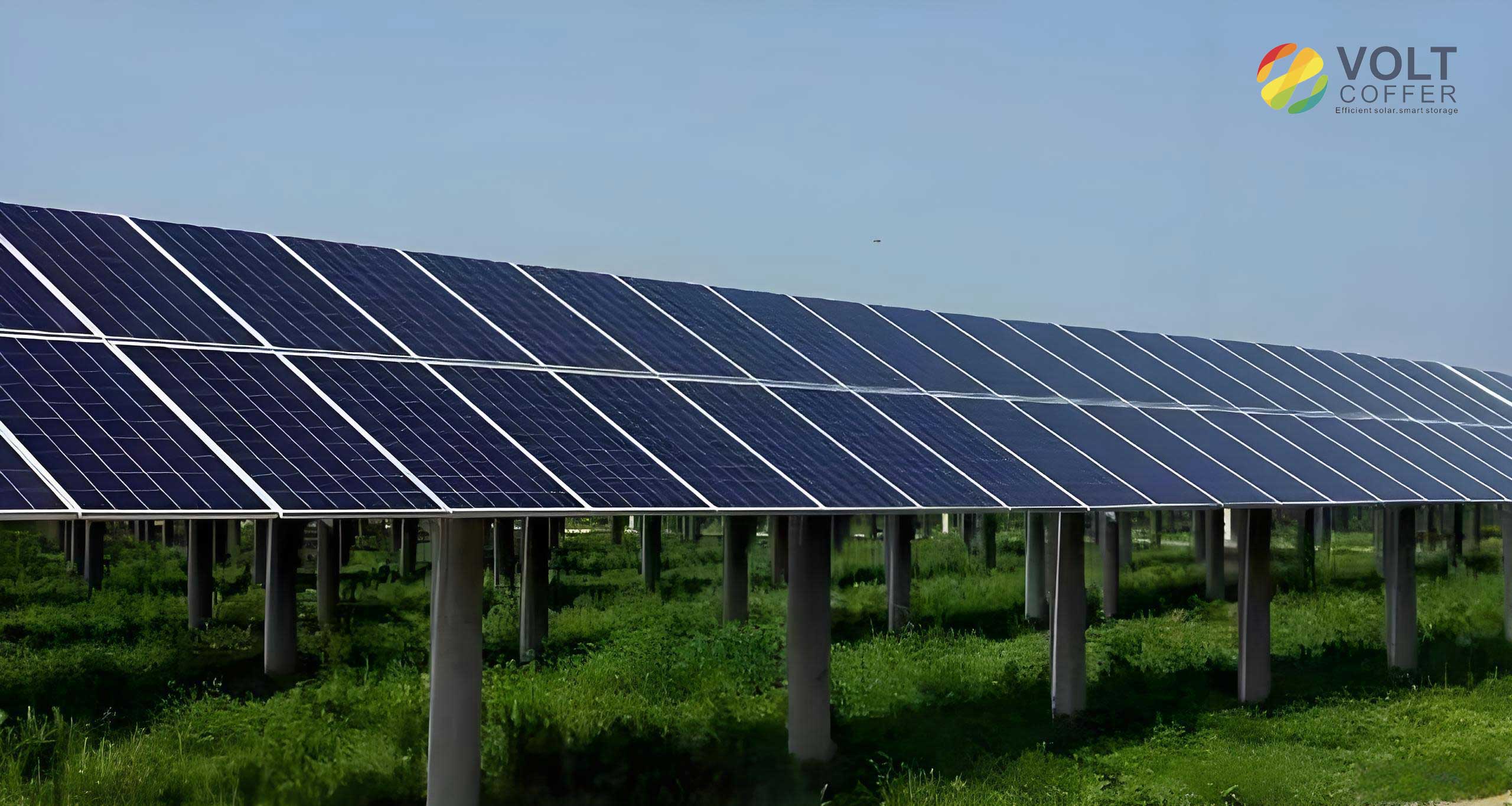
Traditional inspection methods for solar panels, such as manual visual checks or thermal imaging surveys conducted with drones, are often intermittent, labor-intensive, and costly. They lack the capability for continuous, real-time monitoring. The advent of cost-effective, high-resolution imaging sensors and robust computing platforms has paved the way for automated, vision-based inspection systems. This article presents a comprehensive framework for a real-time, video-based soiling detection system, built upon a two-stage algorithmic approach. The core innovation lies in its hierarchical processing: first, it robustly locates and segments the solar panel within the video frame, and second, it performs precise detection of soiling spots within the confined panel region. This method effectively isolates the region of interest, minimizing false positives from the background and structural elements like mounting frames, leading to highly reliable detection suitable for guiding automated cleaning apparatus.
System Architecture and Video Acquisition
The proposed system is designed for continuous monitoring. It begins with a video stream, typically captured by fixed or pan-tilt-zoom (PTZ) cameras installed in the solar farm. The system architecture follows a sequential, modular pipeline optimized for real-time operation.
System Workflow:
- Frame Capture & Buffering: The live video feed is sampled at a configured frame rate. Individual frames are extracted and buffered for processing.
- Image Preprocessing: This critical stage prepares the raw frame for analysis. It involves converting the image to grayscale, applying a binarization threshold to separate potential soiling (foreground) from the panel surface (background), and employing noise-reduction filters to suppress irrelevant details like inter-cell grid lines and sensor noise.
- Stage 1: Solar Panel Localization: Using edge detection and geometric fitting algorithms, the system identifies the quadrilateral boundary of the solar panel within the image. This step defines the precise Region of Interest (ROI), eliminating any background clutter.
- Stage 2: Soiling Spot Detection: Processing is now constrained to the ROI. A connected-component analysis scans the preprocessed binary image within the panel area, identifying contiguous blobs of pixels classified as foreground. These blobs are candidate soiling spots.
- Post-processing & Output: Detected spots are filtered based on size and shape parameters to reject small noise artifacts. The final output includes the coordinates, dimensions, and a confidence metric for each detected soiling spot. This data packet can be transmitted to a central monitoring system or directly to a robotic cleaning unit for targeted intervention.
The video acquisition setup is crucial. While the reference system used a 160×120 resolution, modern implementations benefit from higher resolutions (e.g., 720p or 1080p) for detecting smaller soiling particles. The camera’s field of view, focus, and exposure must be calibrated to ensure consistent image quality of the solar panels under varying daylight conditions.
Image Preprocessing: Laying the Foundation for Accurate Detection
Raw video frames contain color information, texture from the solar panel’s anti-reflective coating, grid lines separating individual cells, shadows, and the target soiling spots. Preprocessing aims to simplify this complex scene into a binary map where soiling spots are prominent. The pipeline involves grayscale conversion, optimal binarization, and advanced filtering.
1. Grayscale Conversion:
The color image (RGB) is first converted to a grayscale intensity image. This reduces computational complexity while retaining essential luminance information. The standard luminance formula is applied per-pixel:
$$ I(x,y) = 0.299 \cdot R(x,y) + 0.587 \cdot G(x,y) + 0.114 \cdot B(x,y) $$
where \( I(x,y) \) is the grayscale intensity at pixel coordinates \((x, y)\), and \( R, G, B \) are the red, green, and blue channel values, respectively.
2. Optimal Binarization using Otsu’s Method:
The grayscale image \(I\) is then converted to a binary image \(B\). A global threshold \(T\) is sought to separate pixels into two classes: background (panel surface) and foreground (potential soiling). Otsu’s method is a widely adopted algorithm that determines \(T\) by maximizing the inter-class variance, effectively finding the threshold that best separates the two pixel distributions.
Let the pixels of \(I\) be represented in \(L\) intensity levels \([0, 1, …, L-1]\). The number of pixels at level \(i\) is denoted by \(n_i\), and the total number of pixels is \(N = n_0 + n_1 + … + n_{L-1}\).
The probability of intensity level \(i\) is:
$$ p_i = \frac{n_i}{N} $$
For a given threshold \(T\), pixels are divided into class \(C_0\) (intensities \([0, T]\)) and class \(C_1\) (intensities \([T+1, L-1]\)).
The probabilities of the two classes are:
$$ \omega_0 = \sum_{i=0}^{T} p_i, \quad \omega_1 = \sum_{i=T+1}^{L-1} p_i = 1 – \omega_0 $$
The mean intensities of the two classes are:
$$ \mu_0 = \frac{\sum_{i=0}^{T} i \cdot p_i}{\omega_0}, \quad \mu_1 = \frac{\sum_{i=T+1}^{L-1} i \cdot p_i}{\omega_1} $$
The total mean intensity is \(\mu_T = \omega_0 \mu_0 + \omega_1 \mu_1\).
The inter-class variance \(\sigma_B^2\) is defined as:
$$ \sigma_B^2 = \omega_0 (\mu_0 – \mu_T)^2 + \omega_1 (\mu_1 – \mu_T)^2 $$
Otsu’s algorithm finds the threshold \(T^*\) that maximizes \(\sigma_B^2\):
$$ T^* = \arg \max_{0 \leq T < L-1} \sigma_B^2(T) $$
The binary image \(B(x,y)\) is then obtained:
$$ B(x,y) = \begin{cases} 1 & \text{if } I(x,y) > T^* \quad \text{(Foreground)} \\ 0 & \text{if } I(x,y) \leq T^* \quad \text{(Background)} \end{cases} $$
In the context of soiled solar panels, the darker soiling spots typically become foreground (value 1), while the brighter panel surface becomes background (value 0).
3. Advanced Filtering and Morphological Operations:
The initial binary image \(B\) often contains noise from panel grid lines, textured surfaces, and imaging artifacts. A two-step process cleans this image:
Mode Filtering (Majority Filter): This non-linear filter is excellent for removing isolated noise while preserving edges. For each pixel, it examines its 8-connected neighborhood and assigns the value (0 or 1) that appears most frequently (the mode). Let \(N_{8}(x,y)\) be the set of pixel values in the 8-neighborhood of \((x,y)\), including the pixel itself. The filtered value \(B_{mode}(x,y)\) is:
$$ B_{mode}(x,y) = \text{mode}(N_{8}(x,y)) $$
This effectively eliminates thin grid lines and salt-and-pepper noise without blurring the boundaries of larger soiling spots.
Morphological Opening: To further refine the shape of detected regions and break tenuous connections, a morphological opening operation is applied. Opening is defined as an erosion followed by a dilation, using the same structuring element \(S\) (typically a small disk or square of radius 2-3 pixels).
$$ B_{open} = (B_{mode} \ominus S) \oplus S $$
Here, \(\ominus\) denotes erosion and \(\oplus\) denotes dilation. Erosion (\(B \ominus S\)) shrinks the foreground regions, removing small protrusions and separating narrowly connected components. Subsequent dilation (\( \cdot \oplus S \)) expands the remaining foreground back, restoring the approximate size of genuine soiling spots but without the reconnection of separated parts. The result, \(B_{clean}\), is a significantly cleaner binary image where major soiling spots are distinct, well-defined white blobs on a black background.
| Processing Step | Mathematical Operation/Algorithm | Primary Purpose | Effect on Solar Panel Image |
|---|---|---|---|
| Grayscale Conversion | $$ I = 0.299R + 0.587G + 0.114B $$ | Reduce data dimensionality; retain luminance. | Color image → Intensity image. |
| Binarization (Otsu) | $$ T^* = \arg \max \sigma_B^2(T) $$ | Segment image into foreground (soiling) and background (panel). | Intensity image → Binary mask. Dark spots become white. |
| Mode Filtering | $$ B_{mode}(x,y) = \text{mode}(N_{8}(x,y)) $$ | Remove isolated noise and thin structures (grid lines). | Eliminates panel cell grid and speckle noise. |
| Morphological Opening | $$ B_{open} = (B_{mode} \ominus S) \oplus S $$ | Smooth contours, break narrow connections, remove small artifacts. | Produces clean, distinct blobs corresponding to soiling areas. |
Stage 1: Robust Solar Panel Localization via Geometric Fitting
Before analyzing for soiling, the system must reliably find the solar panel in the frame. This is crucial for ignoring false positives from the background (e.g., dirt on the ground, distant objects) and for defining the spatial limits of Stage 2. We employ a geometry-based detection method.
1. Edge Detection:
The preprocessed binary image \(B_{clean}\) or the original grayscale image \(I\) (if contrast is sufficient) is used for edge detection. The Canny edge detector is preferred due to its good noise immunity and ability to detect weak edges. It involves:
– Gaussian Smoothing: Blur the image to reduce noise.
– Gradient Calculation: Find intensity gradients (e.g., using Sobel operators).
– Non-Maximum Suppression: Thin edges to one-pixel width.
– Double Thresholding & Hysteresis: Identify strong and weak edges, connecting weak edges only if linked to strong ones.
The output is a binary edge map \(E(x,y)\), where edges are marked as 1.
2. Line Segment Detection and Fitting:
The edge map \(E\) contains contours. We apply a probabilistic Hough Transform to detect line segments from these contours. This transform accumulates votes in a parameter space (e.g., \((\rho, \theta)\) for normal form of a line) for points that are collinear. It returns a set of line segments, each defined by its endpoints \((x_1, y_1, x_2, y_2)\).
3. Quadrilateral (Rectangle) Fitting:
The goal is to find the four lines that most likely represent the border of the solar panel. Assuming the solar panels in the image are approximately rectangular (a valid assumption for most installations), the algorithm:
– Clusters the detected line segments based on their angle (orientation) into two main groups: ~horizontal and ~vertical lines.
– Within each group, lines are further clustered based on their proximity (e.g., their intercept).
– For each of the two dominant horizontal and two dominant vertical lines, a representative line is calculated (e.g., by averaging parameters of lines in the cluster).
– The four intersection points of these representative lines are computed, defining the four corners of the solar panel’s bounding quadrilateral.
This polygon defines the ROI. A rectangular bounding box is often drawn around it for visualization and to extract the sub-image for the next stage.
Stage 2: Precise Soiling Spot Detection within the Panel
With the solar panel accurately localized, analysis is confined to the extracted sub-image \(I_{ROI}\) and its corresponding preprocessed binary version \(B_{ROI}\). Within this region, we need to identify and label individual soiling spots. This is a classic connected component labeling (CCL) problem.
Connected Component Labeling (CCL) Algorithm:
CCL scans the binary image \(B_{ROI}\) and groups adjacent foreground pixels (value 1) into components, assigning a unique label to each component. We describe a two-pass algorithm using a 4-connectivity rule (considering north, south, east, west neighbors).
Let \(B\) be the binary ROI image of size \(M \times N\). Let \(Label\) be a matrix of the same size, initialized to 0. A disjoint-set data structure (union-find) is used to manage label equivalences.
First Pass:
Scan the image row by row from top-left.
For each pixel \(B(i,j) = 1\):
1. Examine its neighbors already processed: the west \((i, j-1)\) and north \((i-1, j)\) pixels.
2. Get their labels from \(Label\) (if they exist and are foreground). Let these be a set \(S\).
3. If \(S\) is empty, assign a new label: \(Label(i,j) = new\_label\).
4. If \(S\) contains one label, assign that label to \((i,j)\).
5. If \(S\) contains multiple labels, assign the smallest label to \((i,j)\) and record that all labels in \(S\) are equivalent (union them in the disjoint-set).
Second Pass:
Resolve equivalences by updating each pixel’s label in \(Label\) to its root label from the union-find structure.
The algorithm outputs a labeled image where all pixels belonging to the same connected soiling spot share a unique integer label \(k > 0\).
Feature Extraction and Filtering:
For each labeled component \(k\), basic properties are computed:
– Area (\(A_k\)): The number of pixels in the component.
– Bounding Box: The minimum and maximum x and y coordinates.
– Centroid (\( \bar{x}_k, \bar{y}_k \)): The geometric center of the component.
$$ \bar{x}_k = \frac{1}{A_k} \sum_{(x,y) \in C_k} x, \quad \bar{y}_k = \frac{1}{A_k} \sum_{(x,y) \in C_k} y $$
where \(C_k\) is the set of pixels with label \(k\).
– Extent: Ratio of the component area to the area of its bounding box.
A size filter is applied to reject noise: components with area \(A_k\) below a threshold \(A_{min}\) (e.g., 10-50 pixels, depending on image resolution and desired sensitivity) are discarded. The remaining components are validated as genuine soiling spots.
| Algorithm Stage | Core Technique | Key Mathematical Formulation | Advantages for Solar Panel Inspection | Potential Challenges |
|---|---|---|---|---|
| Panel Localization | Canny Edge Detector + Hough Transform | Line detection in \((\rho, \theta)\) space: $$ \rho = x \cos\theta + y \sin\theta $$ | Robust to partial occlusion; finds panel even with some soiling present. | May fail under extreme glare or if panel edges have very low contrast with background. |
| Soiling Detection | Connected Component Labeling (CCL) | Union-Find for label equivalence: $$ \text{Union}(root1, root2), \quad \text{Find}(label) $$ | Precise pixel-level segmentation; calculates exact area and location of each spot. | Sensitive to preprocessing quality; may merge very close spots. |
System Integration and Performance Considerations
For a practical system, the algorithms described must be integrated into a stable software pipeline capable of processing video streams in real-time. This involves efficient coding, potentially leveraging GPU acceleration for image processing operations, and implementing a robust communication protocol to output detection results.
Performance Metrics:
The effectiveness of the system for monitoring solar panels can be evaluated using standard computer vision metrics:
– Precision: The proportion of detected spots that are actual soiling. $$ \text{Precision} = \frac{TP}{TP + FP} $$
– Recall (Sensitivity): The proportion of actual soiling spots that are detected. $$ \text{Recall} = \frac{TP}{TP + FN} $$
– F1-Score: The harmonic mean of precision and recall. $$ F1 = 2 \cdot \frac{\text{Precision} \cdot \text{Recall}}{\text{Precision} + \text{Recall} } $$
– Processing Frame Rate (FPS): The number of video frames the system can process per second, determining its responsiveness.
Where \(TP\) = True Positives (correctly detected soiling), \(FP\) = False Positives (background misidentified as soiling), and \(FN\) = False Negatives (missed soiling spots).
Challenges and Mitigations for Solar Panel Applications:
1. Lighting Variation: Sunlight angle, cloud cover, and time of day dramatically affect the appearance of solar panels. Adaptive thresholding techniques or normalization based on panel surface intensity can improve robustness.
2. Reflections and Glare: Specular highlights can be mistaken for soiling. Polarizing filters on cameras or algorithms that detect characteristic glare patterns can help.
3. Panel Variety: Solar panels come in different colors (blue, black) and cell structures (monocrystalline, polycrystalline, thin-film). The system may require calibration or training data for specific installations.
4. Real-time Operation: Optimizing the code, reducing image resolution after panel localization, and using efficient data structures are key to maintaining a high FPS on embedded hardware.
Conclusion and Future Directions
The two-stage video image detection technology presented offers a viable, automated solution for the continuous monitoring of soiling on solar panels. By first isolating the panel from its environment and then performing detailed blob analysis within its confines, the system achieves a high degree of accuracy and reliability. The precise location and area data generated for each soiling spot provide actionable intelligence for maintenance crews or automated cleaning robots, enabling a shift from scheduled, whole-array cleaning to condition-based, targeted cleaning. This optimizes resource use, minimizes water and energy consumption for cleaning, and most importantly, helps maintain the peak efficiency and safety of the solar power installation.
Future enhancements to this core technology are promising. Integrating deep learning-based object detectors (like YOLO or Faster R-CNN) could improve panel localization and soiling classification under challenging conditions. Multi-spectral imaging, combining visible light with thermal or UV sensors, could detect sub-visible soiling or early-stage hot spots directly. Furthermore, deploying such algorithms on networks of low-power, edge-computing devices across a large solar farm could create a truly distributed, intelligent monitoring grid, ensuring the long-term health and productivity of our critical solar energy infrastructure.