
As the global energy landscape shifts toward sustainability, integrating renewable sources like solar energy with conventional coal-fired power plants has emerged as a promising strategy to enhance efficiency and reduce emissions. In this article, we explore the current state of research on hybrid systems that combine solar power systems with coal-fired units, focusing on three primary integration approaches: solar-assisted steam-water heating, solar-aided carbon capture, and solar thermal storage compensation. By leveraging the strengths of solar power systems, these integrations aim to mitigate the intermittent nature of solar energy while improving the overall performance of coal-based generation. Throughout this discussion, we will emphasize the role of solar power systems in advancing clean energy transitions, supported by tables and mathematical formulations to summarize key findings.
The first integration method involves using solar power systems to supplement the steam-water heating processes in coal-fired plants. Typically, solar thermal collectors, such as parabolic troughs or solar towers, are employed to preheat feedwater, reducing the reliance on extraction steam from turbines. This not only boosts the plant’s efficiency but also lowers fuel consumption and CO₂ emissions. For instance, studies have shown that by replacing high-pressure heater extraction steam with solar-derived heat, the overall thermal efficiency can increase significantly. The performance of such systems can be evaluated using thermodynamic metrics like the solar contribution factor and energy savings. Consider the following efficiency improvement equation:
$$ \eta_{\text{hybrid}} = \eta_{\text{coal}} + \Delta \eta_{\text{solar}} – L_{\text{integration}} $$
where $\eta_{\text{hybrid}}$ is the hybrid system efficiency, $\eta_{\text{coal}}$ is the baseline coal plant efficiency, $\Delta \eta_{\text{solar}}$ represents the efficiency gain from the solar power system, and $L_{\text{integration}}$ accounts for losses due to integration complexities. Research indicates that under optimal conditions, solar power systems can enhance efficiency by 5–10%, depending on the solar multiple and design parameters. However, challenges such as diurnal variability and the need for precise temperature matching between solar and conventional systems can limit practical implementation. The table below summarizes key performance indicators for different solar-assisted heating configurations:
| Integration Scheme | Solar Collector Type | Efficiency Gain (%) | Coal Savings (g/kWh) | CO₂ Reduction (%) |
|---|---|---|---|---|
| Parallel with High-Pressure Heater | Parabolic Trough | 7.5 | 12.3 | 8.2 |
| Replacement of Economizer Section | Solar Tower | 9.2 | 15.1 | 10.5 |
| Graded Solar-Coal System | Hybrid Trough-Tower | 11.8 | 18.7 | 12.9 |
Another critical aspect is the economic viability of these integrations, often assessed using the Levelized Energy Cost (LEC). The LEC for a solar power system integrated with a coal plant can be expressed as:
$$ \text{LEC} = \frac{\sum_{t=1}^{T} (I_t + M_t + F_t) / (1 + r)^t}{\sum_{t=1}^{T} E_t / (1 + r)^t} $$
where $I_t$ is the investment cost in year $t$, $M_t$ is maintenance cost, $F_t$ is fuel cost, $E_t$ is energy output, and $r$ is the discount rate. Analyses reveal that solar power systems coupled with high-pressure heaters achieve lower LEC values compared to standalone solar thermal plants, with payback periods shortening as solar field size increases. Nonetheless, operational hurdles like maintaining stability under fluctuating solar irradiance require advanced control strategies, such as model predictive control, to optimize energy dispatch and minimize inefficiencies.
The second integration approach focuses on using solar power systems to support carbon capture processes in coal-fired plants. Post-combustion capture methods, like amine-based scrubbing, consume substantial energy for solvent regeneration, typically sourced from turbine extraction steam. By substituting this with solar thermal energy, the parasitic load on the plant is reduced, leading to higher net power output and lower emissions. For example, in a typical 600 MW unit, integrating a solar power system to supply heat for the carbon capture unit can improve overall thermal efficiency by approximately 5% under standard irradiation conditions. The exergy efficiency of such systems can be modeled as:
$$ \psi_{\text{system}} = \frac{W_{\text{net}} + E_{\text{carbon}}}{E_{\text{fuel}} + E_{\text{solar}}} $$
where $\psi_{\text{system}}$ is the exergy efficiency, $W_{\text{net}}$ is the net work output, $E_{\text{carbon}}$ represents the exergy associated with captured CO₂, $E_{\text{fuel}}$ is the fuel exergy input, and $E_{\text{solar}}$ is the solar exergy input. Studies comparing different integration schemes—such as direct solar heating for the reboiler or using solar energy to preheat feedwater while employing mid-pressure extraction for carbon capture—show that the latter can achieve superior performance. The table below highlights the comparative analysis of solar-aided carbon capture systems:
| Integration Method | Solar Contribution (%) | Net Efficiency Gain (%) | CO₂ Capture Rate (%) | Cost Increase (%) |
|---|---|---|---|---|
| Solar Reboiler Heating | 60 | 4.8 | 85 | 12.5 |
| Hybrid Solar-Feedwater Preheating | 75 | 6.3 | 90 | 9.8 |
| Solar with ORC Waste Heat Recovery | 80 | 7.1 | 92 | 8.2 |
Dynamic simulations further demonstrate that solar power systems can mitigate the performance degradation caused by irradiance variations, though they necessitate robust thermal storage or backup systems to ensure continuous operation. For instance, integrating organic Rankine cycles (ORC) to recover waste heat from CO₂ compression can enhance the overall economics, reducing the levelized cost by up to 10%. However, the complexity of these configurations increases capital expenditure and operational demands, highlighting the need for optimized design parameters.
The third integration strategy employs solar power systems with thermal energy storage, particularly molten salt-based systems, to compensate for coal plant operations. Molten salts, such as Solar Salt (60% NaNO₃ and 40% KNO₃), offer high thermal stability and capacity, enabling the storage of solar energy for use during periods of low insolation. In a typical setup, cold salt at 290°C is heated to 585°C in solar collectors and stored in hot tanks; when needed, it is dispatched to heat exchange stations, providing steam or feedwater heating. This not only stabilizes the hybrid system but also allows for greater solar penetration. The energy balance in such a system can be described as:
$$ Q_{\text{storage}} = m_{\text{salt}} \cdot c_p \cdot \Delta T – Q_{\text{loss}} $$
where $Q_{\text{storage}}$ is the stored thermal energy, $m_{\text{salt}}$ is the mass of molten salt, $c_p$ is the specific heat capacity, $\Delta T$ is the temperature difference, and $Q_{\text{loss}}$ accounts for thermal losses. Research on dual-tank storage integrated with coal plants shows that under 75% load conditions, the solar power system can shoulder 5–15% of the thermal load, reducing coal consumption by about 10%. Moreover, the inclusion of storage extends stable operation duration by over 30%, facilitating better grid integration. The economic impact is evaluated through parameters like the solar multiple and storage hours, as summarized below:
| Storage Duration (hours) | Solar Multiple | Annual Solar Contribution (GWh) | Cost of Electricity Reduction (%) | Emission Reduction (kt CO₂/year) |
|---|---|---|---|---|
| 6 | 1.5 | 45.2 | 4.2 | 12.5 |
| 12 | 2.0 | 68.7 | 6.1 | 18.9 |
| 18 | 2.5 | 92.3 | 7.8 | 25.3 |
Despite the benefits, the high initial investment for molten salt infrastructure and the need for precise temperature control pose challenges. For example, optimizing the aspect ratio of heat exchange tubes can maximize storage capacity, but it requires detailed computational fluid dynamics simulations. Additionally, hybrid systems combining trough and tower solar power systems have been proposed to enhance exergy efficiency, though they further escalate complexity.
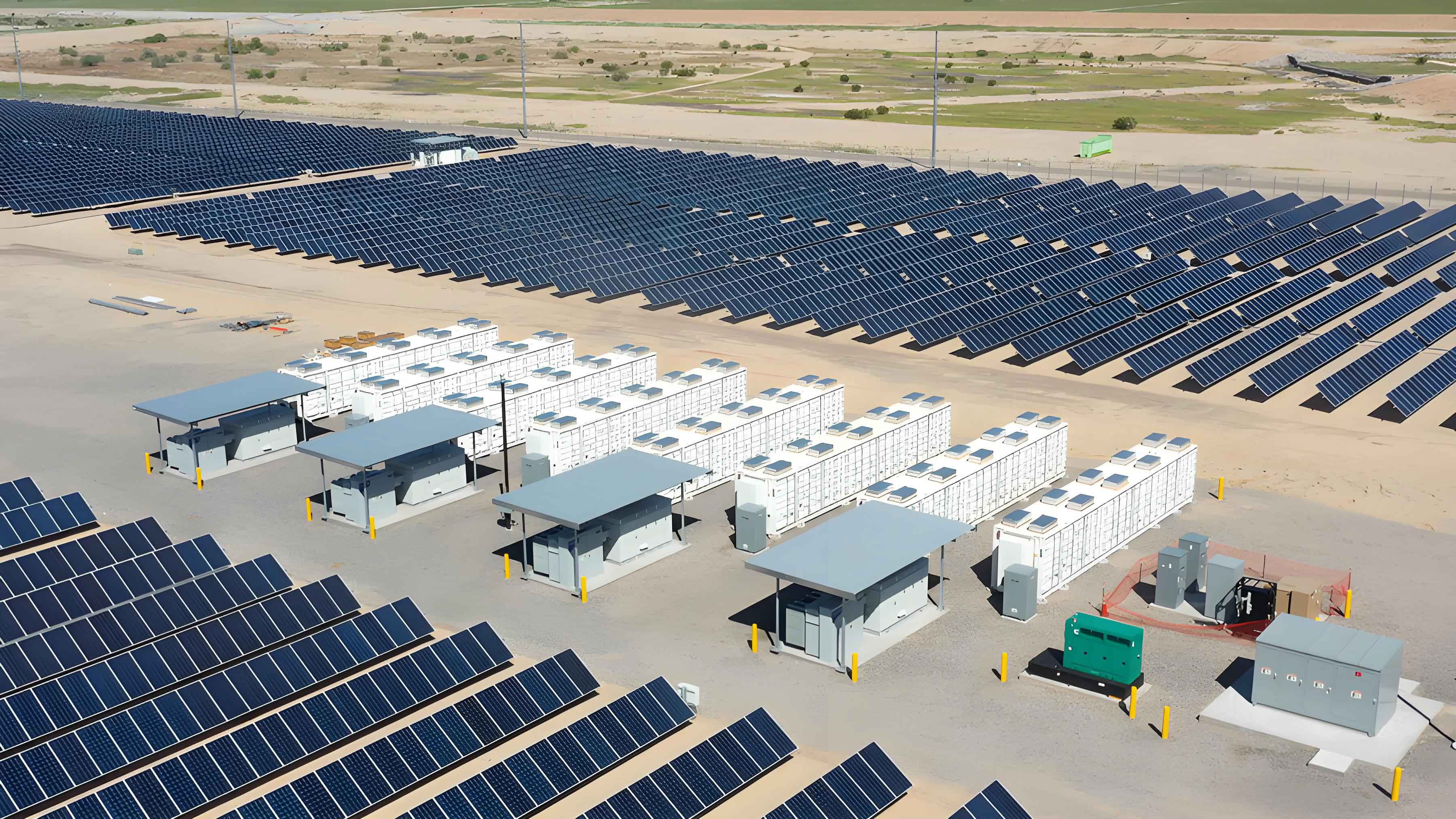
In conclusion, the integration of solar power systems with coal-fired plants represents a viable pathway toward cleaner and more efficient energy production. Each of the three methods—solar-assisted heating, carbon capture support, and thermal storage—offers distinct advantages in terms of efficiency gains, emission reductions, and operational flexibility. However, challenges such as cost, system complexity, and intermittency management remain significant. Future research should focus on dynamic optimization, multi-coupling schemes, and advanced control algorithms to enhance the responsiveness and economic feasibility of these hybrid systems. By continuing to innovate in solar power system technologies, we can accelerate the transition to a sustainable energy future while leveraging existing coal infrastructure.