
In this study, we explore the design and implementation of a coupled solar photovoltaic and variable frequency drive (VFD) water supply system tailored for rural areas in karst terrain, analogous to the challenging landscapes found in regions like Guangxi. The motivation stems from the urgent need to address persistent issues in traditional water supply models, which are plagued by high energy consumption, poor water quality, and prohibitive costs. Our approach centers on harnessing solar energy to drive an intelligent, efficient, and safe water supply infrastructure, directly supporting rural livelihoods and agricultural development. We emphasize the term “solar system” throughout, referring specifically to the photovoltaic energy generation and management components integrated into the water supply framework. This solar system is not merely an add-on but the core enabler of sustainability, ensuring that water delivery is both eco-friendly and economically viable in dispersed settlements.
The research background is rooted in the unique geographical and demographic characteristics of karst areas, where terrain is complex with significant elevation changes, limited surface water, and scattered housing patterns. Such conditions render conventional centralized water supply systems impractical due to exorbitant pipeline costs, inefficient operation, and vulnerability to pollution. With the global push toward renewable energy and rural revitalization, solar photovoltaic technology has become increasingly affordable, with costs dropping dramatically over the past decade. Similarly, VFD technology has matured, offering precise control over pumping operations to match variable water demand. We leverage these advancements to propose a scalable solution that can be adapted to both small clusters (e.g., 5-household hamlets) and larger villages (e.g., 50-household communities). Our goal is to establish a replicable model that enhances water security, reduces operational expenses, and aligns with carbon reduction targets, thereby contributing to sustainable agriculture and community resilience.
The current water supply scenario in such regions faces multifaceted challenges. Energy-wise, reliance on grid electricity with fixed-speed pumps leads to excessive能耗, especially during low-demand periods, often termed “big horse pulling small cart” phenomena. Economically, this translates to high electricity bills that strain limited village budgets, coupled with frequent maintenance needs due to equipment stress from voltage fluctuations. Water quality is another critical concern, as karst aquifers are susceptible to contamination from surface runoff, agricultural chemicals, and inadequate treatment. Typically, basic sedimentation and chlorination fail to remove fine particles and microbial pathogens, posing health risks and undermining agricultural productivity. These issues collectively hinder rural development, making a transition to a smarter, solar-powered approach imperative.
Our design philosophy adheres to a principle we term “three adaptations and one synergy”: adaptation to topography, scale, and economy, with synergy among technologies. For topography, we site solar panels to avoid shadow zones from karst features like sinkholes and position pumps near water sources to minimize head loss. For scale, we customize configurations—small systems use individual pumps with shared storage, while larger ones employ dual-pump rotation with smart scheduling. For economy, we select durable, cost-effective components with long warranties to minimize lifecycle costs. The synergy integrates solar generation, VFD pumping, and water purification into a cohesive whole, ensuring optimal performance. The overall system comprises energy modules (solar panels, batteries, controllers), water modules (pumps, storage tanks), purification units, and an intelligent control system, all working in concert to deliver reliable water.
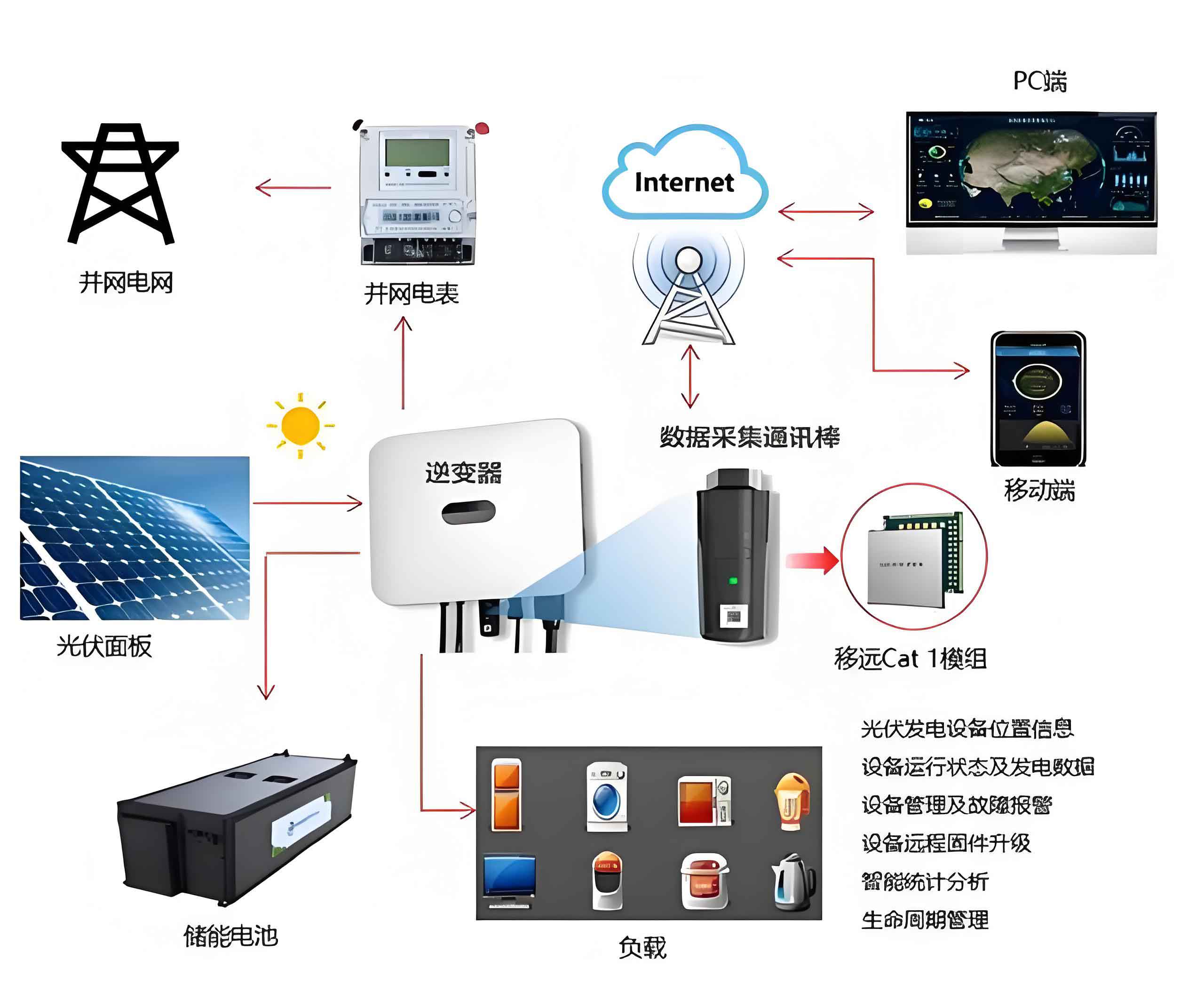
To detail the scalable architecture, we define two primary system sizes. For dispersed 5-household settlements, the solar system includes 3 kWp monocrystalline silicon panels with an efficiency of 25%, installed at a 25° tilt to maximize solar capture in subtropical latitudes. Energy storage involves 48 V, 200 Ah gel batteries suited to temperature variations, and an MPPT charge controller with 97% conversion efficiency. The water module features a 0.75 kW VFD centrifugal pump capable of lifts up to 80 m, paired with a 5 m³ stainless steel tank with level sensors. For concentrated 50-household villages, the solar system scales up to 30 kWp using polycrystalline panels in array formations, with 48 V, 400 Ah lithium iron phosphate battery banks for extended autonomy, and a 50 kW inverter with grid backup capability. The water module uses two 3 kW VFD pumps in duty-standby mode and a 50 m³ reinforced concrete reservoir. Key parameters are summarized in Table 1.
| Component | 5-Household System | 50-Household System |
|---|---|---|
| Solar PV Power | 3 kWp monocrystalline, η=25% | 30 kWp polycrystalline, η=25% |
| Battery Storage | 48 V, 200 Ah gel | 48 V, 400 Ah LiFePO4 |
| Charge Controller | MPPT, 97% efficiency | MPPT with system monitoring |
| Inverter | Integrated in controller | 50 kW, 120% overload capacity |
| VFD Pump | 0.75 kW, centrifugal | 2×3 kW, centrifugal, duty-standby |
| Storage Tank | 5 m³ stainless steel | 50 m³ concrete |
| Water Purification | Multi-stage filtration (sediment, carbon, UV) | Advanced treatment (coagulation, filtration, disinfection) |
The intelligent control system is the brain of the operation, utilizing a PLC to achieve dynamic coordination among energy, water flow, and quality. Key functionalities include solar-pump coupling: the controller monitors real-time photovoltaic output and adjusts pump frequency accordingly. If solar power is insufficient, it reduces pump speed to prioritize essential water needs, ensuring the solar system operates within its generation capacity. Water-pressure regulation uses管网 pressure sensors (accuracy ±0.01 MPa) to maintain optimal pressure during peak usage hours, such as mornings and evenings, or during agricultural irrigation periods. This prevents pipe bursts and ensures consistent delivery. The control logic can be expressed via a proportional-integral-derivative (PID) algorithm: $$u(t) = K_p e(t) + K_i \int_0^t e(\tau) d\tau + K_d \frac{de(t)}{dt}$$ where \(u(t)\) is the control signal (e.g., pump frequency), \(e(t)\) is the error between desired and actual pressure, and \(K_p\), \(K_i\), \(K_d\) are tuning parameters. This enables smooth, responsive adjustments that enhance efficiency.
Technical applicability is validated through regional solar resource assessment and performance modeling. The average daily peak sun hours in karst areas are approximately 3.2 h, with annual sunshine duration around 1,433 h. The energy yield of the solar system can be estimated using: $$E_{daily} = P_{pv} \times H_{peak} \times \eta_{system}$$ where \(E_{daily}\) is daily energy generation (kWh), \(P_{pv}\) is installed PV capacity (kW), \(H_{peak}\) is peak sun hours (h), and \(\eta_{system}\) is overall system efficiency (including inverter and wiring losses, typically 0.85). For the 3 kW solar system: $$E_{daily} = 3 \times 3.2 \times 0.85 \approx 8.16 \text{ kWh}$$ This suffices for pumping and treating about 1.5 m³ of water daily, meeting basic household and small-scale agricultural needs. For the 30 kW solar system: $$E_{daily} = 30 \times 3.2 \times 0.85 \approx 81.6 \text{ kWh}$$ providing a 20% surplus for cloudy days, with battery backup ensuring continuity. Compared to grid power, the solar system eliminates fuel costs and reduces carbon footprint, making it highly suitable for remote locations.
Variable frequency drives contribute significantly to energy savings. The power consumption of a pump is proportional to the cube of its rotational speed, which in turn is proportional to frequency: $$P \propto f^3$$ where \(P\) is power and \(f\) is electrical frequency. By reducing frequency during low-demand periods, energy use drops dramatically. For instance, if frequency decreases from 50 Hz to 25 Hz, power consumption theoretically reduces to \((25/50)^3 = 1/8\) of full load. In practice, due to system losses, savings of 20-30% are achievable. We can quantify annual energy savings as: $$\Delta E = P_{rated} \times T_{oper} \times (1 – (f_{avg}/f_{rated})^3) \times C_{load}$$ where \(P_{rated}\) is rated pump power, \(T_{oper}\) is annual operating hours, \(f_{avg}\) is average frequency, \(f_{rated}\) is rated frequency (50 Hz), and \(C_{load}\) is load factor. This formula underscores the efficiency gains from integrating VFD with the solar system.
Economic analysis covers initial investment, operational costs, and payback period. Initial capital outlay for each system scale is outlined in Table 2, based on market surveys and supplier quotes. Note that these exclude pipeline costs, as our focus is on the core solar-powered pumping and treatment units.
| Item | 5-Household System | 50-Household System |
|---|---|---|
| Solar PV Modules (with storage) | 4,200 | 39,900 |
| VFD Water Supply Equipment | 1,960 | 17,920 |
| Water Purification Module | 1,540 | 11,480 |
| Control System | 560 | 4,900 |
| Storage Facilities | 840 | 9,100 |
| Total Investment | 9,100 | 83,300 |
Policy incentives play a crucial role in affordability. Many regions offer subsidies for rural solar installations and water infrastructure upgrades. Assuming a subsidy of approximately $280 per kW for solar systems, plus per-household grants for water improvement, the net investment can be reduced. For the 5-household solar system, a subsidy of $840 (3 kW × $280) lowers the cost to $8,260. For the 50-household solar system, a subsidy of $8,400 (30 kW × $280) combined with household-based support (e.g., $168 per household, totaling $8,400 for 50 households) reduces the investment by $16,800 to $66,500. Annual operational costs include maintenance, filter replacements, and incidental repairs, estimated at $420 for small systems and $1,680 for large ones. Annual savings arise from eliminated electricity bills and reduced maintenance compared to traditional systems. For the 5-household system, annual savings might be $1,820 (electricity $1,120 + manual water fetching cost $700); for the 50-household system, savings could reach $5,880 (electricity $5,040 + maintenance $840). The simple payback period (SPP) is calculated as: $$SPP = \frac{\text{Net Investment}}{\text{Annual Savings}}$$ For the 5-household system: $$SPP = \frac{8,260}{1,820} \approx 4.5 \text{ years}$$ For the 50-household system: $$SPP = \frac{66,500}{5,880} \approx 11.3 \text{ years}$$ However, considering indirect benefits such as enhanced agricultural output from reliable irrigation, the effective payback may shorten to 4-5 years for larger systems, bolstering economic viability.
Beyond domestic supply, this integrated solar system synergizes with agricultural production. Stable water availability enables supplemental irrigation for crops like vegetables, fruits, or staple grains, increasing yield and drought resilience. The system can be programmed to allocate water during optimal agricultural periods, using the smart control to balance household and farming needs. For example, the 5-household solar system can support drip irrigation for a small garden, while the 50-household system can manage larger plots, potentially transforming local food security. The water purification component also ensures that water used for irrigation is free of harmful contaminants, protecting soil health and crop quality. This dual-use approach amplifies the solar system’s impact, making it a cornerstone of rural development.
In conclusion, we have presented a comprehensive design for a solar photovoltaic and variable frequency drive coupled water supply system, tailored for karst rural environments. The solar system forms the energetic backbone, driving efficient pumps and purification processes that address key challenges of energy cost, water quality, and scalability. Through modular design, intelligent control, and economic incentives, this solution offers a sustainable path toward improved water access. Future work should focus on field trials to refine performance metrics, explore hybrid energy storage options, and develop community management models to ensure long-term operation. By leveraging solar power, we can empower rural communities, support agricultural advancement, and contribute to environmental stewardship, ultimately fostering resilient and prosperous countryside landscapes.
The potential for replication is vast, especially under supportive policies that promote renewable energy in rural infrastructure. We envision this solar system becoming a standard for off-grid and weak-grid areas worldwide, adapting to local climatic and hydrological conditions. Continuous innovation in photovoltaic efficiency, battery technology, and IoT-based monitoring will further enhance system reliability and user-friendliness. Ultimately, the fusion of solar energy with smart water management exemplifies how technology can bridge gaps in basic services, paving the way for a greener, more equitable future.