
Effective, low-energy storage of grain is a critical global challenge, impacting food security and sustainability. Traditional ventilation and cooling methods for large-scale granaries, such as flat warehouses, are often energy-intensive and contribute significantly to operational costs and carbon emissions. In response to global decarbonization goals, this research investigates the technical and economic viability of a novel, integrated renewable energy system designed specifically for grain storage applications. The proposed system synergistically combines solar photovoltaic (PV) power generation with a ground source heat pump (GSHP) cooling system, aiming to achieve a “zero-energy” and “zero-emission” operational paradigm for maintaining low-temperature grain storage conditions.
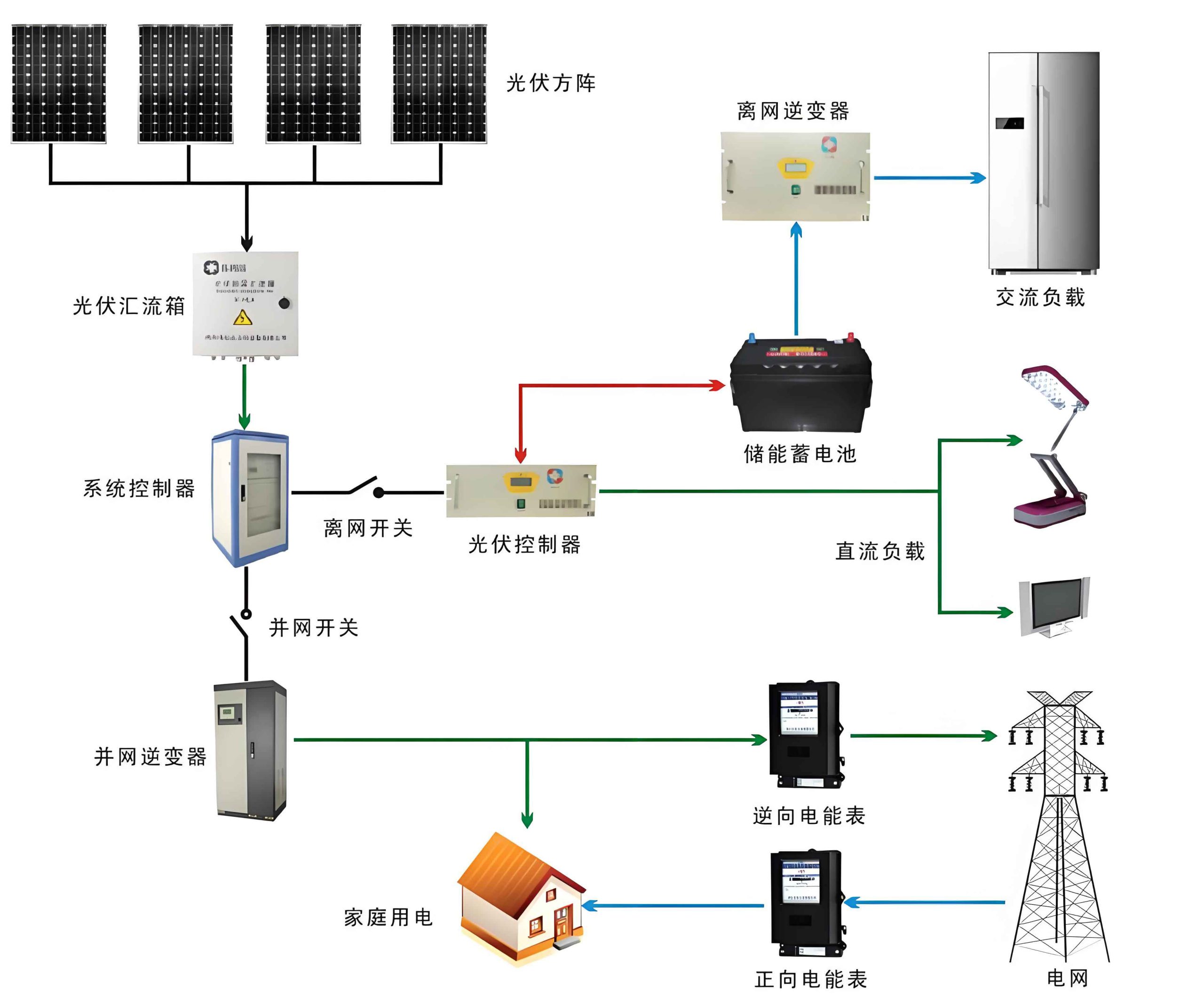
The fundamental design leverages the unique architectural characteristics of flat grain warehouses. These single-story structures typically feature large, unobstructed roof areas ideal for installing extensive photovoltaic panels. Furthermore, the spacious layouts common in grain depot complexes provide ample ground area for the installation of vertical borehole heat exchangers (BHEs) for the ground source heat pump system. This spatial configuration is highly conducive to the integration of both solar and geothermal technologies. The operational strategy is based on a “self-consumption, surplus to grid” model. During the summer cooling season, electricity generated by the rooftop PV array is prioritized to power the ground source heat pump system which provides cooling to the warehouse. Any surplus power, after meeting the cooling load and other depot auxiliary loads, is fed into the public grid. In non-cooling seasons, the PV generation primarily supplies the depot’s office and residential electricity needs, with the remainder also exported, thereby generating revenue and offsetting system costs.
System Design and Modeling Framework
The core of this investigation is a detailed simulation model developed to analyze the dynamic performance of the integrated solar system. The study focuses on a representative flat grain warehouse with dimensions of 24 m width, 78 m length, and a grain stacking height of 6.5 m. The primary cooling load for maintaining a low grain temperature (targeting 15°C in the air space above the grain) was first simulated. Results indicated a peak instantaneous cooling load of approximately 198 kW, corresponding to a specific cooling index of about 106 W/m².
Based on this load profile, the integrated system was sized. The ground source heat pump subsystem consisted of a water-to-water heat pump unit with a rated cooling capacity of 210 kW. The ground heat exchanger field was designed with 55 vertical boreholes, each 100 m deep, arranged with a spacing of 5 m. The photovoltaic subsystem was designed to cover the available roof area, comprising 752 monocrystalline silicon PV panels with a total installed capacity of 413.6 kW, coupled with an appropriate inverter and battery storage system for energy management.
The transient simulation was performed using the TRNSYS software, a validated tool for modeling the dynamic behavior of thermal and electrical energy systems. The model integrated several key components:
- A detailed building model for the grain warehouse, accounting for heat transfer through walls and roof, internal heat generation from the grain mass, and infiltration.
- A ground source heat pump model with performance maps defining its Coefficient of Performance (COP) as a function of source (ground loop) and load (chilled water) temperatures.
- A duct-ground heat exchanger model (Type 557a) to simulate the heat exchange between the circulating fluid and the surrounding soil.
- A photovoltaic array model (Type 94a) to convert solar irradiance into DC power, followed by an inverter/battery model (Type 48b, Type 74e) to manage AC power conversion, self-consumption, and grid interaction.
- Control systems to manage the operation of the heat pump, pumps, and fans based on warehouse temperature setpoints.
Prior to analyzing the integrated system, the building thermal response model was validated by comparing its output against measured temperature data from an actual warehouse using a conventional air-source heat pump system. The simulation showed good agreement, with average relative errors for ambient and indoor air layer temperatures of 3.43% and 4.6%, respectively, confirming the model’s reliability for subsequent analysis.
Technical Performance Analysis of the Integrated Solar System
The simulated performance of the integrated solar photovoltaic and ground source heat pump system over both short-term (annual) and long-term (10-year) horizons provides critical insights into its operational characteristics, sustainability, and potential challenges.
Short-Term (Annual) Operational Characteristics
During the simulated summer cooling season, the system demonstrated efficient operation. The performance of a heat pump is quantified by its Coefficient of Performance (COP), defined as the ratio of useful cooling energy delivered to the electrical energy consumed by the compressor and essential auxiliaries:
$$ COP_{sys} = \frac{Q_{cooling}}{W_{comp} + W_{pumps, \ essential}} $$
For the simulated system, the instantaneous COP varied throughout the season, reaching a maximum value of 4.76 and a minimum of 3.30, with an average significantly higher than conventional air-source cooling systems. This high efficiency is a direct result of the relatively stable and favorable ground temperatures compared to fluctuating high ambient air temperatures in summer.
The heat rejected to the ground by the ground source heat pump system caused a local temperature rise in the borefield. Over the first annual cycle, the average soil temperature around the boreholes increased from an initial 20.5°C to a peak of 21.29°C at the end of the cooling season. During the subsequent non-cooling months, the soil temperature experienced a natural recovery, decreasing to 21.15°C. The net annual temperature rise after one year of operation was approximately 0.65°C. The temperature of the fluid entering and leaving the ground heat exchanger is a key parameter, influencing the heat pump’s efficiency. The simulated outlet temperature ranged from 22.5°C to 30.3°C.
| Parameter | Value (Year 1) |
|---|---|
| Maximum System COP | 4.76 |
| Minimum System COP | 3.30 |
| Peak Ground Heat Rejection | 111.4 kW |
| Net Annual Soil Temp. Rise | ~0.65 °C |
| Max. Ground Loop Outlet Temp. | 30.3 °C |
Long-Term (10-Year) Performance and Thermal Balance
A critical consideration for any ground source heat pump application is its long-term thermal sustainability. If the annual heat rejection to the ground consistently exceeds the natural recovery and any intentional heat extraction, the ground temperature will rise progressively, leading to a decline in system efficiency over time. The 10-year simulation of the solar system confirmed this phenomenon. The average ground temperature exhibited a wave-like but steadily increasing trend.
$$ T_{soil}(t) = T_{initial} + \Delta T_{annual} \cdot t – R_{recovery}(t) $$
Where $T_{soil}(t)$ is the average soil temperature at year $t$, $T_{initial}$ is the initial temperature, $\Delta T_{annual}$ is the net annual temperature increment, and $R_{recovery}(t)$ represents the seasonal recovery effect. After 10 years of operation in cooling-only mode, the average soil temperature was predicted to rise to about 25.9°C, an increase of 5.4°C from the initial state. This temperature rise had a direct impact on system performance, as the elevated ground temperatures reduce the temperature differential against which the heat pump rejects heat, thereby lowering its efficiency. By the 10th year, the maximum simulated COP had decreased to 3.96 and the minimum to 3.07.
This finding underscores a vital design aspect for such a solar system in predominantly cooling-dominated applications like grain storage. To ensure long-term performance, strategies to maintain ground thermal balance must be incorporated. These could include:
- Supplementing the ground loop with a cooling tower (creating a hybrid system) to reject a portion of the heat to the atmosphere during peak cooling.
- Utilizing the ground source heat pump for space heating of adjacent office or residential buildings within the depot during winter, thereby extracting heat from the ground and helping to balance the annual thermal load.
| Performance Metric | Year 1 | Year 10 | Change |
|---|---|---|---|
| Avg. Soil Temperature (°C) | 20.5 -> 21.15 | ~25.9 | +5.4 °C |
| Maximum COP | 4.76 | 3.96 | -16.8% |
| Minimum COP | 3.30 | 3.07 | -7.0% |
Energy Self-Sufficiency and Photovoltaic Integration
A primary advantage of the proposed integrated design is the ability of the rooftop photovoltaic system to directly offset the significant electrical demand of the cooling system. The simulation assessed the self-consumption ratio, often expressed as the Solar Fraction (SF) for the depot’s energy needs, or more specifically here, the ratio of on-site PV generation to total site electricity consumption.
The photovoltaic system’s output power ($P_{pv}$) can be modeled as:
$$ P_{pv} = A_{pv} \cdot G_t \cdot \eta_{pv} \cdot \eta_{inv} \cdot [1 – \beta (T_{cell} – T_{STC})] $$
where $A_{pv}$ is the array area, $G_t$ is the solar irradiance on the tilted surface, $\eta_{pv}$ is the PV module efficiency, $\eta_{inv}$ is the inverter efficiency, $\beta$ is the temperature coefficient, and $T_{cell}$ is the cell temperature.
Results from the annual simulation were compelling. During the five-month cooling season, the monthly electricity generation from the PV system consistently exceeded the total electricity consumption of the warehouse cooling system and assumed depot auxiliary loads. The ratio of actual PV generation to total depot consumption (SF) ranged from 192% to 270% across these months. This indicates that the solar system not only fully covers the combined electrical load during the critical cooling period but also generates a substantial surplus. The total annual surplus electricity available for export to the grid was simulated to be approximately 308,000 kWh. This surplus energy creates a revenue stream that is crucial for the system’s economics. This analysis confirms the technical feasibility of using a building-integrated solar system to achieve net-zero energy operation for seasonal cooling in this context.
Economic and Environmental Impact Assessment
The adoption of any renewable energy technology must be evaluated from an economic perspective. For the integrated solar photovoltaic and ground source heat pump system, the initial capital investment is higher than for a conventional air-source cooling system. The investment primarily covers the ground source heat pump unit, drilling and installation of the borehole heat exchanger field, the photovoltaic panels, inverters, battery storage, and associated balance-of-system components. Based on the modeled system sizing and referenced equipment costs, the estimated initial investment for a single warehouse was calculated.
However, the operational economics are favorable. The annual cost savings and revenues include:
- Avoided Electricity Costs: The self-consumption of PV power for cooling and depot loads eliminates the purchase of equivalent grid electricity.
- Revenue from Surplus PV Generation: Electricity fed into the grid generates income based on local feed-in tariffs or power purchase agreements.
- Governmental Subsidies: Policies often provide generation-based incentives for solar PV systems, improving payback.
Combining these cash inflows, the simple payback period for the initial investment was estimated to be approximately 7.8 years for a single warehouse installation. It is important to note that significant economies of scale would apply if an entire grain depot comprising multiple warehouses were equipped with such a system. A depot-wide implementation could potentially reduce the payback period by an estimated 20% or more, making the project even more attractive.
| Economic Component | Description / Value |
|---|---|
| Key Annual Savings/Revenue | Avoided electricity purchase, Feed-in tariff revenue, PV subsidies. |
| Estimated Simple Payback Period (Single Warehouse) | ~7.8 years |
| Potential Payback with Depot-scale Implementation | ~6.3 years (est.) |
From an environmental and energy conservation standpoint, the benefits are substantial. The efficiency of the ground source heat pump system itself represents a major improvement over conventional air-source technology. To quantify this, the concept of “standard coal consumption per ton of grain cooled” can be used. The simulation results allow for a direct comparison:
$$ \text{Specific Energy Saving} = \frac{E_{ASHP} – E_{GSHP}}{E_{ASHP}} \times 100\% $$
Where $E_{ASHP}$ and $E_{GSHP}$ are the primary energy consumptions (converted to standard coal equivalent) of the air-source and ground-source systems, respectively. The analysis concluded that the ground source heat pump system within the integrated solar framework reduced the specific standard coal consumption for cooling from 2.93 kg/(t·a) to 1.20 kg/(t·a). This translates to a direct energy saving rate of 59%. Furthermore, by displacing grid electricity (often coal-fired in many regions), the system achieves significant annual reductions in greenhouse gas and pollutant emissions, including tens of thousands of kilograms of CO₂, SO₂, NOx, and particulates.
Conclusion and Implications
This comprehensive simulation study demonstrates the significant potential of an integrated solar photovoltaic and ground source heat pump system for providing sustainable, low-temperature cooling for grain storage warehouses. The proposed solar system architecture effectively utilizes the specific spatial attributes of grain depots—large roofs for PV and open land for boreholes—to create a synergistic renewable energy solution.
The technical analysis confirms high operational efficiency in the short term, with system COP values significantly outperforming conventional cooling methods. The integration with photovoltaics enables a high degree of energy self-sufficiency, often exceeding 100% of site needs during the cooling season, thereby moving convincingly towards a “zero-energy” operational goal for the core storage function.
The research also identifies a key long-term consideration: the gradual increase in ground temperature under a cooling-dominated load profile, which leads to a slow degradation of system efficiency over a decade. This finding is not a drawback but a crucial design input, highlighting the necessity of incorporating thermal balance management strategies, such as hybrid cooling tower integration or complementary winter heating loads, in the final system design to ensure decades of reliable, high-performance operation.
Economically, while the initial investment is substantial, the combination of energy cost avoidance, revenue from surplus solar electricity, and available subsidies results in a financially viable payback period. The environmental benefits, quantified as a 59% reduction in effective primary energy use and substantial cuts in emissions, provide strong non-economic justification aligned with global sustainability targets.
In summary, this integrated solar system presents a technically sound, economically feasible, and environmentally superior pathway for modernizing grain storage infrastructure. It offers a replicable model for leveraging renewable solar and geothermal resources to enhance food security while reducing the carbon footprint of the agricultural post-harvest sector. The insights from this simulation provide a robust theoretical foundation and practical design guidelines for engineers and policymakers aiming to implement such advanced, sustainable technologies in real-world grain storage facilities.