
As a researcher in sustainable energy infrastructure, I have focused on addressing the critical contradiction between the surging charging load from electric vehicles and the limited local consumption of renewable energy under the “dual carbon” goals. In this study, I constructed a full-chain system architecture for “photovoltaic-energy storage battery-charging pile” integration, analyzed three feasible construction models, and developed a dynamic economic model that couples Levelized Cost of Energy (LCOE) with Net Present Value (NPV). The model embeds time-of-use electricity pricing, carbon trading, and vehicle-to-grid (V2G) revenue mechanisms within a unified discounting framework. I employed Monte Carlo simulations to conduct uncertainty analysis on electricity prices, carbon prices, battery degradation, and policy regression, using risk-adjusted internal rate of return and risk metrics to evaluate the resilience of each model. Based on the evaluation results, I propose recommendations for the integrated application of photovoltaic power and energy storage battery systems in parking lot construction.
The rapid growth of new energy vehicles—with an average annual increase of 58% in China—has placed immense pressure on urban power grids, particularly during peak evening hours in commercial areas, where charging loads now account for 8% to 12% of regional electricity consumption. Despite the potential of renewable energy, its average share in public charging infrastructure remains around 15%, indicating substantial room for improvement. The Chinese government has included “photovoltaic-storage-charging integration” in the Green Low-Carbon Advanced Technology Demonstration Project Implementation Plan, aiming to build 100 demonstration projects by 2025. International experiences, such as Germany’s tripartite subsidy program and California’s legislative mandates, further highlight the global momentum toward integrated systems.
System Architecture and Technical Principles
The proposed “photovoltaic-energy storage battery” parking lot system is built on a three-tier energy framework: generation, storage, and application. At the generation layer, I utilize high-efficiency PERC bifacial photovoltaic modules with a conversion efficiency of at least 21.5%, capable of achieving a 5% to 15% increase in power generation due to their bifacial nature. These modules incorporate anti-PID and anti-crack technologies for long-term stability. The installation tilt angle is optimized based on local latitude and shading analysis, and intelligent tracking bracket systems maximize solar energy utilization.
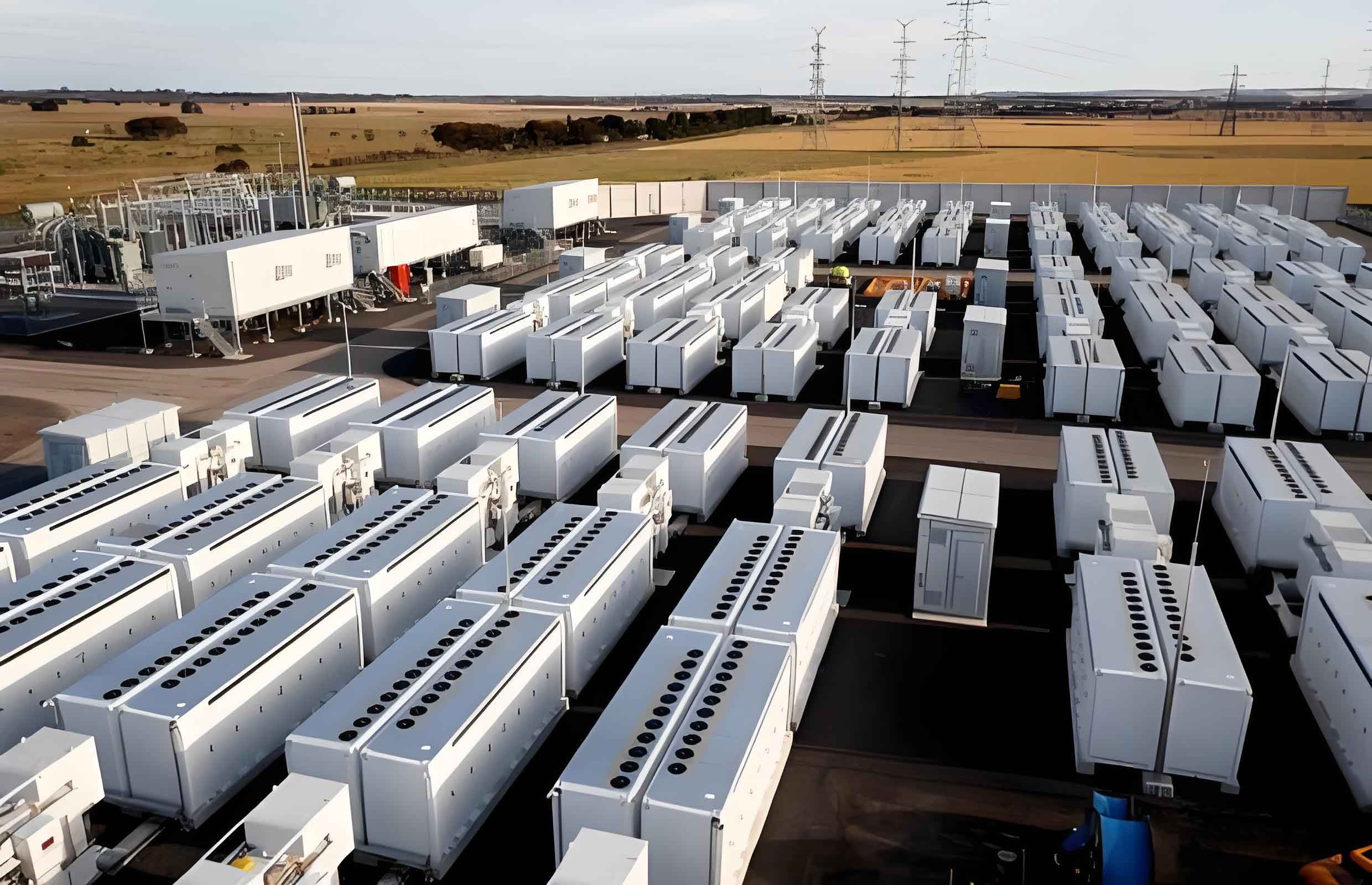
At the storage layer, high-safety lithium iron phosphate battery packs are used, designed in a modular format for easy expansion. These energy storage battery systems have a cycle life exceeding 6,000 cycles at 80% depth of discharge (DOD), supported by advanced liquid cooling temperature control systems to maintain optimal operating temperatures. They support 0.5C fast charging and discharging, integrate multiple safety mechanisms, and achieve SOC estimation accuracy within 3%.
The application layer features 60-150 kW intelligent charging piles with dynamic power allocation technology. These piles support V2G bidirectional charging, are compatible with CCS and CHAdeMO standards, and include smart identification and reservation functions. The system also provides emergency power interfaces for grid failure scenarios. The core control is an Energy Management System (EMS) platform based on distributed edge computing, which includes photovoltaic output prediction based on meteorological data, load demand response integrated with electricity price signals, and battery health assessment using SOH algorithms.
| Component | Technical Parameter | Testing Standard |
|---|---|---|
| Photovoltaic Module | Peak power 550 Wp | IEC 61215 |
| Energy Storage Battery | Energy density 160 Wh/kg (25°C) | GB/T 36276 |
| Charging Pile | Output DC voltage 200-750 VDC adjustable | NB/T 33008 |
| Inverter | Max conversion efficiency ≥98% (rated load) | GB/T 37408 (Level 1) |
The system operates in three typical modes, intelligently switching based on weather, demand, and energy supply. In the photovoltaic direct supply mode, generation from photovoltaic panels during sunny days prioritizes charging demand, with surplus energy stored in the energy storage battery. This mode reduces grid dependence and is ideal for industrial parks and highway service areas. In the storage-charging complementary mode, during peak electricity consumption periods, the system uses coordinated supply from the energy storage battery and photovoltaic generation, leveraging time-of-use pricing to maximize economic benefits. This mode is particularly effective in commercial complexes with significant peak-valley price differences. In the grid supplementary mode, when sustained cloudy weather severely limits photovoltaic output, the system seamlessly switches to grid power to ensure supply continuity, typically accounting for no more than 15% of annual operation time. The system also participates in demand response and other ancillary services.
Construction and Business Models
Based on the system architecture, I identified three typical construction models from the perspective of investment return periods. The full investment model suits investors with ample capital seeking long-term stable returns, with a payback period of approximately 7.2 years. The Energy Management Contract (EMC) model is ideal for energy service companies focusing on short-term benefits, with a payback period of about 5.4 years. The photovoltaic-storage-charging integrated model aligns with the progressive development of the new energy sector, with a payback period of around 6.1 years. The investment payback period (operation period) T is calculated using the formula:
$$T = \frac{\ln\left(1 + \gamma \times \frac{I}{C}\right)}{\ln(1 + \gamma)}$$
In this formula, I represents the initial investment (in 10,000 yuan), C represents the annual net cash flow (in 10,000 yuan), and γ represents the discount rate. Equipment prices are based on market averages from Q4 2023 sources, and annual cash flows are derived from actual generation data of local cases in 2023, combined with local general industrial and commercial electricity prices and an energy storage capacity subsidy of 0.3 yuan/kWh.
| Model | Payback Period | Typical Application | Key Risk | Investor | Revenue Sharing | Technical Barrier |
|---|---|---|---|---|---|---|
| Full Investment | 7.2 years (Long-term) | Urban transport hubs, large public facilities | Policy adjustment, subsidy changes | Investor fully covers | Investor retains all revenue | Low |
| EMC | 5.4 years (Short-term) | Commercial complexes, industrial parks | Customer credit risk, settlement risk | Energy service company | Shared energy-saving revenue | Medium |
| Integrated PV-Storage-Charging | 6.1 years (Medium-term) | New residential areas, charging stations | Equipment maintenance, system safety | Project developer or operator | Comprehensive revenue from energy self-sufficiency | High |
Economic Evaluation Model
To address the structural contradiction between surging charging loads and insufficient local renewable energy consumption, I developed a dynamic economic model that couples LCOE and NPV. This model embeds time-of-use electricity pricing, carbon trading, and V2G revenue mechanisms within a unified discounting framework. The LCOE measures system cost competitiveness, while NPV characterizes investment profitability. Both are linked through discounted cash flow methods to achieve “cost-side” and “revenue-side” alignment on the same timeline.
$$LCOE = \frac{\sum_{t=0}^{T} \frac{C_{inv,t} + C_{om,t} + C_{rep,t}}{(1+\gamma)^t}}{\sum_{t=0}^{T} \frac{E_{pv,t}}{(1+\gamma)^t}}$$
In the above equation, \(C_{inv,t}\), \(C_{om,t}\), and \(C_{rep,t}\) represent the initial investment amortization, operation and maintenance costs, and equipment replacement costs in year t, respectively. \(E_{pv,t}\) is the effective photovoltaic power generation in year t, γ is the discount rate, and T is the operation period.
$$NPV = \sum_{t=0}^{T} \frac{[R_{cha,t}(P_{cha,t}) + R_{v2g,t}(P_{v2g,t}) + R_{co2,t}(P_{co2,t})] – C_{om,t} – C_{deg,t}}{(1+\gamma)^t} – C_{inv,0}$$
In the NPV formula, \(R_{cha,t}(P_{cha,t})\), \(R_{v2g,t}(P_{v2g,t})\), and \(R_{co2,t}(P_{co2,t})\) are price signal functions for charging service fees, V2G discharge revenue, and carbon trading revenue, respectively. \(P_{cha,t}\), \(P_{v2g,t}\), and \(P_{co2,t}\) are the time-of-use electricity price, discharge agreement price, and carbon market average price in year t. \(C_{deg,t}\) represents the capacity value loss due to battery degradation in year t, and \(C_{inv,0}\) is the one-time initial investment.
I built a comparison matrix for the three business models based on this coupled dynamic model. Using average revenue data from major Chinese cities as parameters, I conducted 5,000 Monte Carlo simulations to sample electricity prices, carbon prices, battery degradation, and policy regression. The simulations output the NPV probability distribution and risk-adjusted internal rate of return (RA-IRR) for each model, providing quantitative basis for investment decisions. I also used Value at Risk (VaR) to measure the maximum potential loss in extreme adverse scenarios, defined as the left-tail quantile of the project NPV distribution at a 95% confidence level. A 5% VaR indicates that there is a 5% probability that the project loss will exceed this value; the larger its absolute value, the higher the tail risk.
The simulation results reveal significant differences in risk-adjusted performance across the three models. The RA-IRR values for the EMC, photovoltaic-storage-charging integrated, and full investment models are approximately 12.0%, 7.7%, and 4.1%, respectively. The corresponding 5% VaR values are -95, -142, and -198 (in 10,000 yuan). These results indicate that the EMC model, due to its low initial investment and flexible revenue-sharing mechanism, exhibits the best tail-risk resilience under electricity price and policy volatility. The full investment model, while theoretically offering higher returns, is most sensitive to subsidy regression and electricity price declines. The photovoltaic-storage-charging integrated model has high technical coupling, with operational complexity constituting the main source of uncertainty. This economic evaluation model enables rapid identification of key risk factors for each business model, providing quantitative support for investors to optimize capital structure and formulate hedging strategies.
| Model | RA-IRR | 5% VaR (10,000 yuan) | LCOE Mean (yuan/kWh) |
|---|---|---|---|
| EMC | 12.0% | -95 | 0.42 |
| Integrated PV-Storage-Charging | 7.7% | -142 | 0.51 |
| Full Investment | 4.1% | -198 | 0.58 |
Development Recommendations
Based on current development needs of the new energy industry and the analytical results from the economic model, I propose four targeted recommendations to improve industrial support mechanisms and stimulate market vitality.
First, incorporate photovoltaic carports into green building evaluation standards. I recommend revising the current green building evaluation system to explicitly acknowledge the energy-saving and carbon-reduction contributions of photovoltaic carports, encouraging their application in public buildings, commercial parks, and other scenarios, and granting corresponding scoring weights or policy incentives.
Second, implement a capacity-based electricity price subsidy for the energy storage battery system, with a rate of at least 0.3 yuan/kWh. Given the high operational costs of energy storage systems, I suggest launching special subsidy policies to provide price support based on actual discharge volume for eligible projects, thereby improving investment returns and promoting large-scale energy storage development.
Third, establish technical specifications for DC microgrid interconnection. To promote efficient consumption of new energy, I recommend accelerating the formulation of grid-connection standards for DC microgrids and public grids, specifying voltage levels, safety protection, and dispatch control requirements. This will reduce the technical application barrier and ensure stable system operation.
Fourth, establish a carbon trading mechanism for photovoltaic-storage-charging projects. I suggest incorporating integrated photovoltaic-storage-charging projects into the carbon market trading system, quantifying their green electricity substitution and carbon reduction benefits, and allowing enterprises to obtain additional revenue through carbon quota trading. This will stimulate market investment vitality and accelerate the transition to a low-carbon energy system.
Conclusion
In this study, I proposed a systematic design model for “photovoltaic + parking lot + charging pile” integration and analyzed its construction models, economic benefits, investment risks, and related policy recommendations. The results provide a reference for the flexible application of photovoltaic systems in China. Future research will focus on the pricing model and profit allocation mechanism of “photovoltaic + parking lot + charging pile” systems, as well as developing response strategies for this system under policy and natural climate changes. The integration of photovoltaic and energy storage battery systems in parking lots presents a viable pathway to address urban energy challenges, reduce grid strain, and support the widespread adoption of electric vehicles while leveraging renewable energy sources.