
The rapid global expansion of photovoltaic (PV) power generation has ushered in an era of abundant clean energy. However, this expansion is accompanied by a significant demand for land, as utility-scale solar farms require considerable area for the installation of solar panels. This land-use challenge has spurred innovative approaches to dual-use agrivoltaics, where agricultural production and solar energy generation coexist on the same land parcel. Among the most synergistic pairings is the cultivation of edible mushrooms in the shaded, environmentally moderated spaces beneath solar panel arrays. Mushrooms, being heterotrophic organisms that thrive in low-light, high-humidity conditions, find an ideal microclimate in the under-canopy environment of a PV installation. This article, drawing from practical field experience, explores the technical methodologies, economic potential, and distinct advantages of cultivating edible mushrooms, specifically the oyster mushroom (Pleurotus ostreatus), beneath solar panels in high-latitude regions, presenting a viable model for enhancing land-use efficiency and creating complementary revenue streams.
1. The Agrivoltaic Niche: Characterizing the Solar Panel Microclimate
The space beneath a solar panel array is not merely a shaded area; it is a distinct ecological zone with unique physical parameters. The primary function of the solar panel is to intercept photosynthetically active radiation (PAR) for energy conversion, which simultaneously creates a low-light environment beneath it. This light attenuation is its defining characteristic. The microclimate is further shaped by reduced wind speed, altered precipitation patterns (as panels shed rain), moderated soil temperature fluctuations, and potentially higher ambient humidity due to reduced evapotranspiration compared to fully exposed ground.
In high-latitude regions (typically above 45°N), these effects are pronounced and interact with a cooler baseline climate. The growing season is shorter, and solar incidence angles are lower. Here, the solar panel acts as a passive environmental moderator. During spring and autumn, it can provide slight frost protection and retain ground heat. In summer, it prevents overheating and excessive drying. The key environmental parameters for mushroom cultivation under a fixed-tilt solar panel structure can be summarized as follows:
| Parameter | Under Solar Panel (Typical Range) | Open Field (Typical Range) | Impact on Mushroom Cultivation |
|---|---|---|---|
| Photosynthetic Photon Flux Density (PPFD) | 50 – 400 μmol/m²/s (Diffuse light) | Up to 2000+ μmol/m²/s (Direct + Diffuse) | Ideal for fruiting body initiation; prevents excessive drying and discoloration. |
| Air Temperature (Daily Avg.) | Moderated; 2-5°C cooler than max open field temp | Wider diurnal fluctuation | Extends suitable cultivation period in warm months; stabilizes growth. |
| Soil Surface Temperature | Reduced amplitude; cooler in summer | High amplitude, can be very hot | Prevents substrate overheating, protecting mycelium. |
| Relative Humidity | Consistently 10-25% higher | Lower, highly variable | |
| Wind Speed at Ground Level | Reduced by 50-70% | Full wind exposure | Minimizes physical stress and moisture loss from fruiting bodies. |
| Precipitation Reach | Drip line and edge effects; central area dry | Uniform | Creates a rain-protected zone, enabling fully controlled irrigation. |
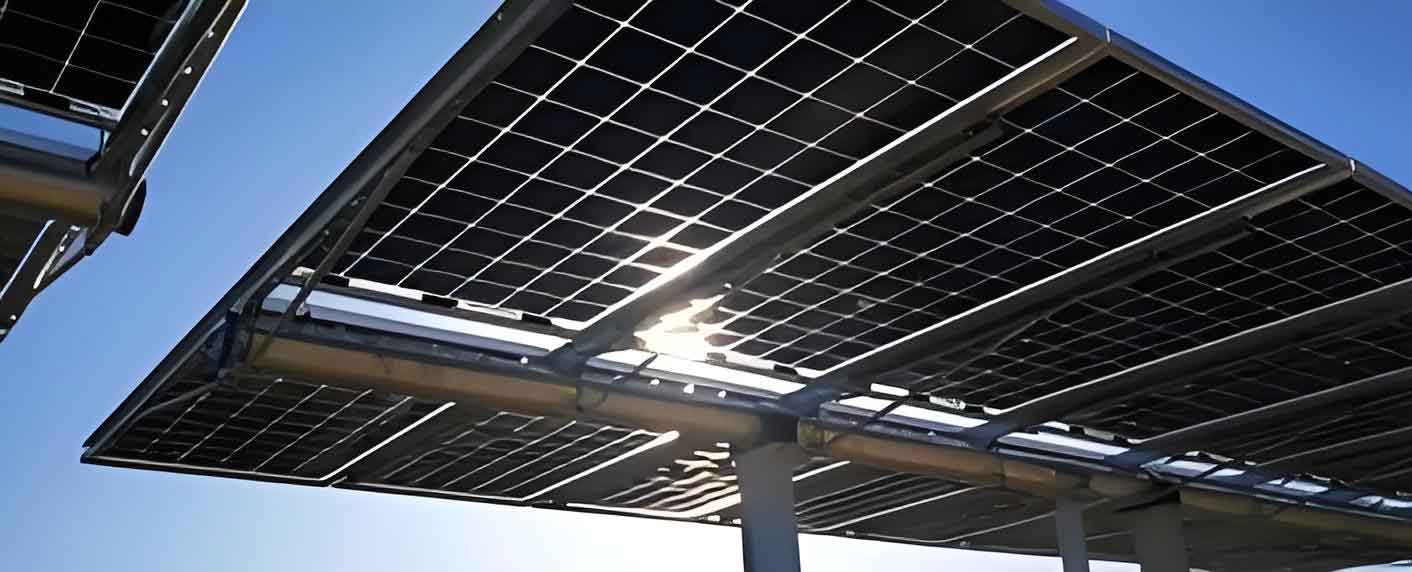
The solar panel infrastructure itself provides critical mounting points for auxiliary systems like shade nets, irrigation lines, and environmental sensors, facilitating a controlled cultivation environment. The physical structure, typically with panels mounted 1-2 meters above ground, creates a readily usable workspace. This synergy transforms what is often considered “wasted” space into a highly productive, protected agricultural niche. The core technology enabling this dual use is the solar panel itself, which must be robust and efficient. Modern installations increasingly use bifacial modules that capture light from both sides, though their racking design still creates the essential shaded zone underneath.
2. Systematic Cultivation Protocol for Oyster Mushrooms Under Solar Panels
Our field trials in a high-latitude continental climate (approx. 46°N) established a standardized protocol for cultivating grey oyster mushroom (Pleurotus ostreatus strain ‘Grey 25’). The process leverages the solar panel array’s geometry and environmental profile.
2.1 Site Preparation and Cultivation Bed Layout
The layout is dictated by the solar panel mounting structure. We utilize the space between two vertical support posts, which is typically a clear, rectangular area. A raised bed is constructed directly on the ground:
1. Demarcate a bed matching the inter-post dimensions (e.g., 7.5m L x 2.5m W).
2. Build a 0.1m high, compacted soil platform to ensure levelness and prevent water pooling.
3. Cover the bed and adjacent walkways with a woven ground cover fabric to suppress weeds, which can harbor pests and diseases, and to keep the cultivation area clean.
This prepared bed sits permanently under the continuous shade of the solar panel, requiring no additional permanent roofing.
2.2 Substrate Formulation and Processing
We utilize locally abundant agricultural lignocellulosic waste. A standard formulation by mass is:
$$ \text{Substrate} = 70\%\, \text{Corn Cob} + 25\%\, \text{Corn Stalk} + 3\%\, \text{Calcium Superphosphate} + 2\%\, \text{Gypsum} $$
The dry components are thoroughly mixed, and water is added to achieve a final moisture content of 62-65%. The moist substrate is packed into polypropylene cultivation bags (typically 20-22 cm diameter x 40-45 cm length) and sealed. Sterilization is critical: bags are treated in a high-pressure steam autoclave at 121°C for 90-120 minutes to eliminate competing microorganisms. After cooling in a clean room, the substrate is inoculated with grain spawn of the target mushroom species under aseptic conditions.
2.3 Spawn Run and Mycelial Colonization
Inoculated bags (spawn bags) are incubated in a dedicated, dark, climate-controlled room at 24-26°C and 70-75% relative humidity for approximately 30-35 days. During this phase, the mushroom mycelium grows through the substrate, consuming and breaking down the complex polymers. Complete, white colonization indicates the spawn bag is ready for fruiting. The controlled environment for this phase is separate from the solar panel field but is a standard component of any mushroom farm operation.
2.4 Strategic Placement and Arrangement of Spawn Bags
This is the most critical step for adapting cultivation to the solar panel environment. Fully colonized spawn bags are transported to the pre-prepared beds under the solar panel. Each bag is opened by cutting or removing a section to create a fruiting window. The bags are not scattered but arranged in a deliberate “enclosed rectangle” or “double-wall” pattern.
- Bags are laid horizontally, stacked 5-7 layers high (forming a wall ~0.5m high).
- An outer wall of bags is created with their fruiting windows facing inwards.
- An inner, parallel wall is built with windows facing outwards.
- This creates a central, sheltered corridor or “fruiting alley” (approx. 0.4m wide) between the two walls.
This configuration, made possible by the consistent space under the solar panel, serves multiple purposes:
- Microclimate Enhancement: The alley acts as a windbreak, further reducing air movement across the delicate pinheads (young mushrooms). It also traps humidity exhaled by the growing mushrooms and from irrigation, creating a stable, humid micro-zone ideal for fruiting body development.
- Yield and Quality: With fruiting windows directed into a confined space, the developing mushroom clusters have limited room to expand. This naturally restricts the size of individual caps, promoting the formation of smaller (50-80 mm diameter), uniform, and dense clusters that often command a premium in the market.
- Operational Efficiency: The alley provides clear, accessible pathways for daily inspection, manual harvesting, and irrigation management, all under the protective cover of the solar panel.
The total number of bags per square meter under the solar panel is a key density metric. Given bag dimensions and the stacking pattern, a density ($\rho_{bag}$) of 16 to 25 bags per square meter of bed area is achievable.
$$ \rho_{bag} = \frac{N_{bags}}{A_{bed}} $$
Where $N_{bags}$ is the total number of bags in the bed and $A_{bed}$ is the ground area covered by the cultivation bed.
2.5 Environmental Management Under the Solar Panel Canopy
While the solar panel provides the primary shade and rain shelter, fine-tuning is necessary to respond to seasonal changes in the high-latitude climate.
Light & Temperature Modulation: Despite the permanent shade from the solar panel, ambient light intensity and temperature fluctuate seasonally. We deploy supplementary shade nets hung from the solar panel racking:
- Late Spring/Early Autumn (Cooler): A single layer of 20-30% shade net helps retain humidity without excessive cooling.
- Mid-Summer (Warmer): A double layer of shade net is used to lower the temperature in the fruiting alley by an additional 2-4°C, preventing heat stress which can abort fruiting body development.
The solar panel structure makes deploying and retracting these nets straightforward.
Precision Irrigation: The area under the central part of a solar panel is largely shielded from rain. This is a significant advantage, as it allows for complete control over water application—a critical factor for mushroom yield and disease prevention. A drip or low-trajectory micro-sprinkler system is installed on the racking. Irrigation schedules are based on temperature and growth stage:
$$ I(t) = I_{base} \times k_T \times k_{stage} $$
Where $I(t)$ is the daily irrigation volume (L/m²), $I_{base}$ is a baseline rate, $k_T$ is a temperature coefficient (>1 in hot, dry periods), and $k_{stage}$ is a coefficient for the fruiting cycle (highest during pinhead formation and fruit expansion). Typically, 1-2 short watering cycles per day are sufficient to maintain substrate moisture and alley humidity above 85%.
2.6 Harvesting and Post-Harvest
Mushrooms are harvested daily at a young, firm stage by twisting them gently from the substrate. The sheltered alley allows for clean and efficient picking regardless of external weather conditions. Harvested mushrooms are immediately placed in ventilated, food-grade containers and moved to a cooling facility to maintain freshness and shelf-life.
3. Quantitative Economic Analysis of Solar Panel Mushroom Cultivation
The economic viability is a cornerstone of this integrated model. The revenue is generated from the mushroom yield on land that is simultaneously producing solar electricity, with minimal overhead for structures.
The yield ($Y$) per unit area under the solar panel can be calculated as:
$$ Y = \rho_{bag} \times W_{bag} \times E $$
Where:
- $\rho_{bag}$ = Bag density (bags/m²), e.g., 20.
- $W_{bag}$ = Average fresh yield per bag (kg/bag), e.g., 0.75 kg.
- $E$ = Biological efficiency factor (accounting for multiple flushes), often 1.0-1.2 for a full cycle.
Thus, $Y = 20 \times 0.75 \times 1.1 = 16.5\,\text{kg/m}^2$ per cultivation cycle.
In high-latitude regions, the moderated environment under the solar panel can allow for 2-3 distinct cultivation cycles from late spring to early autumn. Assuming 2.5 cycles annually and a conservative farm-gate price ($P$) of $12/kg, the annual revenue per square meter ($R_{annual}$) is:
$$ R_{annual} = Y \times C \times P = 16.5 \times 2.5 \times 12 = 495\,\text{\$ per m}^2\text{ of cultivation bed} $$
This is revenue from the agricultural activity alone. The land cost is effectively shared with, or subsidized by, the solar energy operation. Key economic advantages include near-zero cost for the growing “structure” (the solar panel), reduced water consumption due to controlled irrigation and lower evaporation, and lower cooling costs compared to traditional mushroom houses in summer.
| Cost/Revenue Factor | Traditional Cultivation Shed | Cultivation Under Solar Panel |
|---|---|---|
| Initial Infrastructure Cost | High (construction of insulated building, climate control systems) | Very Low (utilizes existing PV racking; cost for beds/irrigation only) |
| Land Cost Attribution | 100% borne by agriculture | Shared with / subsidized by solar energy generation |
| Climate Control Energy Cost | High (year-round heating/cooling, humidification) | Low to Moderate (only seasonal shading and irrigation needed; natural moderation by panel) |
| Water Usage Efficiency | Moderate (potential for evaporation loss) | High (precise irrigation, reduced evaporation under panel) |
| Potential Revenue per m² of Ag. Space | High | Comparably High, with significantly lower overhead |
| System Resilience | Dependent on grid/generator | Can be coupled with on-site solar power for irrigation/sensors |
4. Inherent Advantages and Synergistic Potential
The integration of mushroom cultivation with a solar panel farm creates a system where the whole is greater than the sum of its parts. The advantages are multifaceted:
1. Radical Land-Use Efficiency: This model achieves true vertical integration of food and energy production on a single land footprint. It provides a compelling answer to land-use competition, transforming a solar farm from a single-purpose infrastructure into a multifunctional, productive landscape.
2. Climate Resilience and Predictability: The solar panel provides a stable, buffered environment. It protects crops from extreme weather events—hail, heavy rain, scorching sun—which are increasing in frequency due to climate change. This predictability reduces crop failure risk and allows for precise production scheduling.
3. Foundation for Automation and Standardization: The uniform geometry of the solar panel array is ideal for automation. Robotic harvesters, automated irrigation valves, and networked environmental sensors can be mounted on or integrated with the panel support structures. This enables data-driven, precision agriculture, reducing labor costs and improving consistency. Every cultivation bed under every solar panel is functionally identical, allowing for seamless replication of successful protocols.
4. Enhanced Sustainability Profile: The system closes loops. Agricultural waste (e.g., corn stover) becomes mushroom substrate. Spent mushroom substrate is a valuable soil amendment that can be used for site remediation or sold. The solar panel farm reduces its embodied carbon by generating an additional food product, while the mushroom crop benefits from clean, on-site renewable energy for operations.
5. Conclusion and Future Perspectives
Cultivating edible mushrooms under solar panels, particularly in high-latitude regions, represents a sophisticated and highly efficient form of agrivoltaics. It successfully leverages the otherwise unused three-dimensional space beneath the solar panel, creating an optimized microclimate for a high-value, shade-tolerant crop. The technical protocol—from substrate formulation to the strategic “enclosed rectangle” bag arrangement—is designed to maximize yield and quality within the constraints and opportunities presented by the PV infrastructure. The economic analysis reveals a compelling secondary revenue stream that can improve the financial resilience of solar projects and provide local agricultural employment. As the world seeks sustainable, intensive land-use solutions, the synergy between solar energy and non-photosynthetic food production under the same solar panel array stands out as a model of pragmatic innovation. Future research should focus on optimizing species and strain selection for specific solar panel microclimates, developing integrated energy-water-nutrient management systems, and creating standardized economic models to further accelerate the adoption of this promising practice worldwide.