
As we face growing global energy demands and environmental challenges, the shift toward renewable energy sources has become imperative. Among these, solar energy stands out as a clean, abundant, and sustainable resource. In this context, thin film solar panels have emerged as a promising technology due to their low material usage, cost-effectiveness, and flexibility. In this article, I will explore the research progress in photovoltaic materials for inorganic thin film solar panels, covering unary, binary, and multinary systems. I will summarize key findings using tables and formulas, and highlight future directions for this field. Throughout, the term “thin film solar panels” will be emphasized to underscore their significance in advancing solar energy solutions.
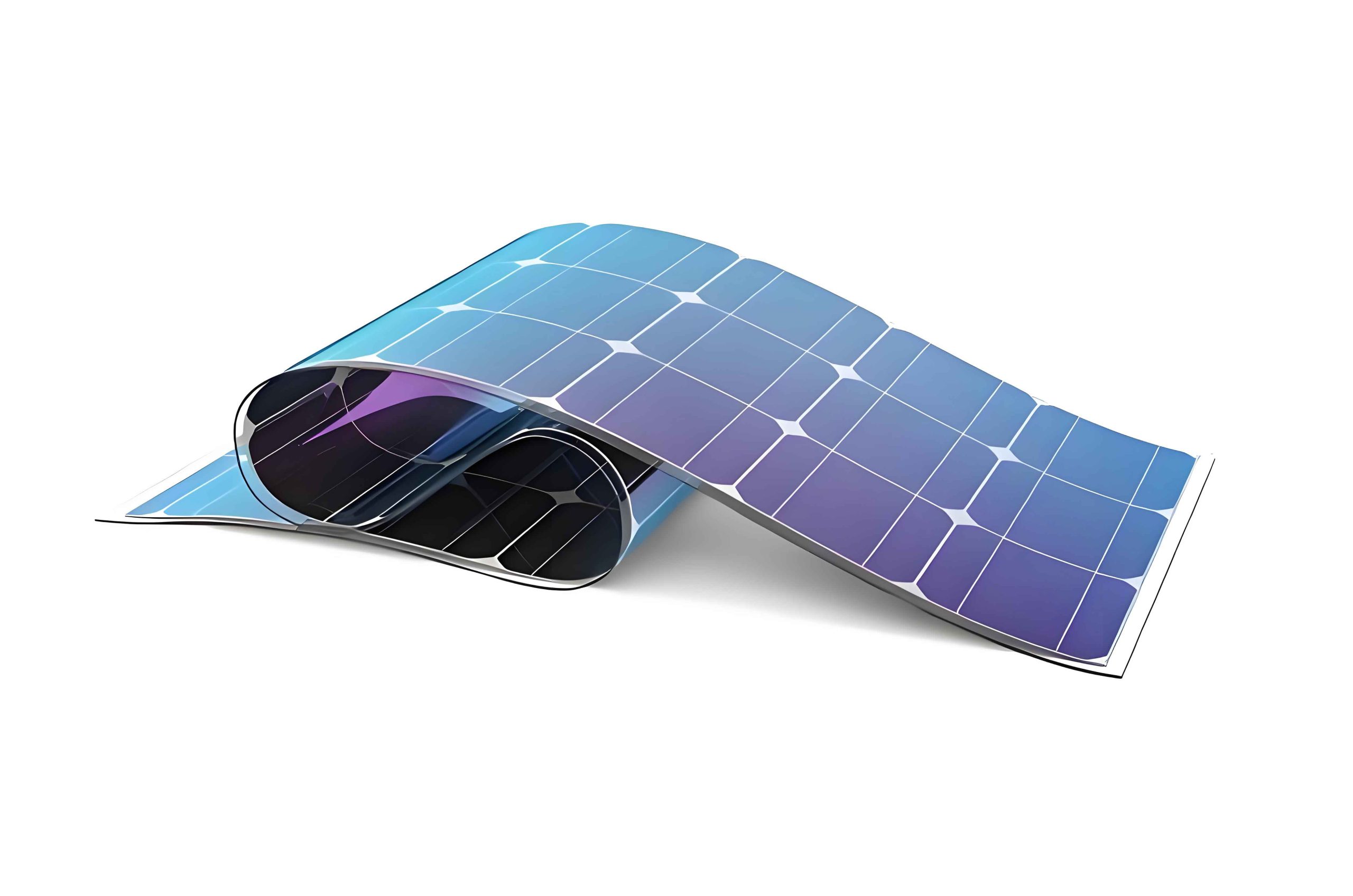
The development of thin film solar panels represents a critical step in making solar energy more accessible and efficient. Unlike traditional crystalline silicon panels, thin film solar panels require only micrometers of material thickness, reducing raw material costs and enabling applications in flexible and building-integrated photovoltaics. The efficiency of a solar panel is often expressed as: $$ \eta = \frac{V_{oc} \times J_{sc} \times FF}{P_{in}} $$ where $\eta$ is the power conversion efficiency, $V_{oc}$ is the open-circuit voltage, $J_{sc}$ is the short-circuit current density, $FF$ is the fill factor, and $P_{in}$ is the incident solar power. For thin film solar panels, optimizing these parameters through material design is essential. I will delve into various inorganic materials used in thin film solar panels, analyzing their structural and optoelectronic properties.
Unary Systems: Amorphous Silicon (a-Si)
Amorphous silicon (a-Si) is one of the earliest materials used in thin film solar panels. Its disordered atomic structure, compared to crystalline silicon, results in a higher absorption coefficient in the visible spectrum, allowing for thinner layers. The bandgap of a-Si is typically around 1.7–1.8 eV, which is wider than that of crystalline silicon, leading to better performance under low-light conditions. However, the lack of long-range order limits carrier mobility, affecting efficiency. Hydrogenation (a-Si:H) is commonly used to passivate dangling bonds, improving electronic properties. The efficiency of a-Si-based thin film solar panels has reached up to 13.6% in laboratory settings. To summarize, a-Si offers advantages such as low-temperature processing and abundance of silicon, but challenges remain in enhancing stability and efficiency. The following table compares key properties of unary thin film solar panels materials:
| Material | Bandgap (eV) | Absorption Coefficient (/cm) | Best Efficiency (%) | Advantages | Challenges |
|---|---|---|---|---|---|
| a-Si | 1.7–1.8 | ~105 | 13.6 | Low cost, flexible | Low carrier mobility, light-induced degradation |
The optoelectronic behavior of a-Si can be described by the Tauc equation for amorphous semiconductors: $$ (\alpha h\nu)^{1/2} = B(h\nu – E_g) $$ where $\alpha$ is the absorption coefficient, $h\nu$ is the photon energy, $B$ is a constant, and $E_g$ is the optical bandgap. This relationship helps in tuning the material for thin film solar panels. Despite limitations, ongoing research focuses on multilayer designs and alloying to improve a-Si performance in thin film solar panels.
Binary Systems: CdTe and Sb2Se3
Binary compounds like cadmium telluride (CdTe) and antimony selenide (Sb2Se3) have gained attention for thin film solar panels due to their direct bandgaps and high absorption coefficients. CdTe has a bandgap of 1.45 eV, close to the ideal value for single-junction solar cells, and its thin film solar panels have achieved efficiencies over 22%. However, concerns about cadmium toxicity and tellurium scarcity drive the search for alternatives. Sb2Se3, with a bandgap of 1.1 eV and a one-dimensional crystal structure, offers anisotropic charge transport and lower environmental impact. Recent advances have pushed Sb2Se3 thin film solar panels to efficiencies near 10%. The performance of binary thin film solar panels materials can be modeled using the diode equation: $$ J = J_0 \left( \exp\left(\frac{qV}{nkT}\right) – 1 \right) – J_{ph} $$ where $J$ is the current density, $J_0$ is the reverse saturation current, $q$ is the electron charge, $V$ is the voltage, $n$ is the ideality factor, $k$ is Boltzmann’s constant, $T$ is the temperature, and $J_{ph}$ is the photocurrent. Optimizing these parameters is crucial for high-efficiency thin film solar panels.
| Material | Crystal Structure | Bandgap (eV) | Absorption Coefficient (/cm) | Best Efficiency (%) | Remarks |
|---|---|---|---|---|---|
| CdTe | Cubic | 1.45 | ~105 | 22.1 | Toxic, scarce elements |
| Sb2Se3 | Orthorhombic | 1.1 | >105 | 9.2 | One-dimensional chains, eco-friendly |
For Sb2Se3, the anisotropic conductivity along the [001] direction can be expressed as: $$ \sigma_{\parallel} = q n \mu_{\parallel} $$ where $\sigma_{\parallel}$ is the conductivity along the chain direction, $n$ is the carrier concentration, and $\mu_{\parallel}$ is the mobility in that direction. This unique property benefits charge collection in thin film solar panels. Overall, binary systems demonstrate the potential of thin film solar panels, but material sustainability and efficiency improvements are key research areas.
Multinary Systems: From Ternary to Perovskites
Multinary compounds expand the material palette for thin film solar panels by enabling bandgap tuning and defect engineering. I will discuss ternary Cu-Sn-S (CTS) and Cu-Sn-Se (CTSe) systems, quaternary Cu(In,Ga)Se2 (CIGSe), penternary Cu2ZnSn(S,Se)4 (CZTSSe), and inorganic perovskites like CsPb(I1-xBrx)3. These materials offer diverse optoelectronic properties for thin film solar panels.
Ternary Systems: CTS and CTSe
Ternary materials like Cu2SnS3 (CTS) and Cu2SnSe3 (CTSe) are composed of earth-abundant elements, making them attractive for low-cost thin film solar panels. Their bandgaps range from 0.8 to 1.7 eV, with high absorption coefficients. However, phase purity and defect control are challenges. The efficiency of CTS-based thin film solar panels has reached 6.7% with germanium doping. The optical bandgap can be approximated using the formula: $$ E_g(x) = E_{g,0} + bx $$ where $E_g(x)$ is the bandgap at composition $x$, $E_{g,0}$ is the base bandgap, and $b$ is the bowing parameter. This allows customization for thin film solar panels.
| Material | Bandgap (eV) | Efficiency (%) | Notable Features |
|---|---|---|---|
| Cu2SnS3 | 1.0–1.5 | 6.7 | Phase complexity, Ge doping |
| Cu2SnSe3 | 0.8–1.2 | 4.29 | High absorption, Se-rich |
Quaternary Systems: CIGSe
CIGSe thin film solar panels have achieved efficiencies over 23%, benefiting from tunable bandgaps (1.0–1.7 eV) and excellent optoelectronic properties. The composition ratio Cu/(In+Ga) is critical for performance. The efficiency can be enhanced by alkali doping, such as sodium or potassium. The bandgap grading in CIGSe thin film solar panels minimizes recombination and is described by: $$ E_g(z) = E_{g,min} + \Delta E_g \left(1 – \frac{z}{d}\right) $$ where $z$ is the depth, $d$ is the film thickness, $E_{g,min}$ is the minimum bandgap, and $\Delta E_g$ is the bandgap difference. This design optimizes photon absorption and carrier collection in thin film solar panels.
| Material | Bandgap Range (eV) | Best Efficiency (%) | Advantages |
|---|---|---|---|
| CIGSe | 1.0–1.7 | 23.2 | High efficiency, flexible substrates |
Penternary Systems: CZTSSe
CZTSSe is a promising candidate for thin film solar panels, as it replaces indium and gallium in CIGSe with abundant zinc and tin. Its bandgap is 1.0–1.5 eV, with absorption coefficients above 104 /cm. However, efficiency is limited by defect complexes and secondary phases. The current record efficiency for CZTSSe thin film solar panels is 12.6%. The defect formation energy can be calculated using: $$ E_f = E_{total} – \sum_i n_i \mu_i $$ where $E_{total}$ is the total energy of the defective system, $n_i$ is the number of atoms of type $i$, and $\mu_i$ is the chemical potential. Understanding this helps in optimizing CZTSSe for thin film solar panels.
Inorganic Perovskites: CsPb(I1-xBrx)3
Inorganic perovskites have revolutionized thin film solar panels with their high efficiency and tunable bandgaps. CsPb(I1-xBrx)3 offers bandgaps from 1.73 to 2.36 eV, with high absorption and long carrier diffusion lengths. The phase stability is a concern, as the non-perovskite δ-phase can form at room temperature. The efficiency of CsPbI3 thin film solar panels has reached 19%. The bandgap tuning with halide composition follows: $$ E_g(x) = (1-x)E_{g,I} + xE_{g,Br} – bx(1-x) $$ where $E_{g,I}$ and $E_{g,Br}$ are the bandgaps of CsPbI3 and CsPbBr3, respectively, and $b$ is the bowing parameter. This flexibility makes perovskites ideal for tandem thin film solar panels.
| Material | Bandgap (eV) | Efficiency (%) | Stability Issues |
|---|---|---|---|
| CsPbI3 | 1.73 | 19.0 | Phase instability |
| CsPbBr3 | 2.36 | 10.5 | Wide bandgap |
| CsPb(I1-xBrx)3 | 1.73–2.36 | 18.4 | Composition-dependent |
For all multinary systems, the Shockley-Queisser limit provides a theoretical maximum efficiency for single-junction thin film solar panels: $$ \eta_{max} = \frac{1}{P_{in}} \int_{E_g}^{\infty} \frac{E}{e} \phi(E) \, dE $$ where $\phi(E)$ is the photon flux density. By engineering materials, we can approach this limit in thin film solar panels.
Conclusions and Outlook
In summary, inorganic thin film solar panels have made significant strides, with materials ranging from unary to multinary systems. Each class offers unique advantages: a-Si for flexibility, CdTe for high efficiency, Sb2Se3 for eco-friendliness, CIGSe for performance, CZTSSe for abundance, and perovskites for tunability. However, challenges such as toxicity, scarcity, phase stability, and defect control persist. Future research should focus on sustainable materials, advanced fabrication techniques, and integration into building-applied thin film solar panels. The efficiency of thin film solar panels can be further improved through tandem structures, where multiple junctions capture different parts of the solar spectrum. The overall efficiency of a tandem thin film solar panel is given by: $$ \eta_{tandem} = 1 – \prod_{i=1}^{n} (1 – \eta_i) $$ where $\eta_i$ is the efficiency of the i-th junction. With continued innovation, thin film solar panels will play a pivotal role in achieving global renewable energy targets. I believe that by addressing material limitations and scaling up production, thin film solar panels can become a mainstream technology, contributing to a sustainable energy future.
Throughout this article, I have emphasized the importance of thin film solar panels in the photovoltaic landscape. From fundamental formulas to practical tables, the progress in inorganic materials is evident. As we move forward, interdisciplinary efforts will be key to unlocking the full potential of thin film solar panels. Let us continue to explore and innovate, making thin film solar panels more efficient, affordable, and environmentally friendly for widespread adoption.