
The global shift towards sustainable energy storage has intensified the search for alternatives to lithium-ion batteries, primarily due to the limited availability and rising cost of lithium resources. In this context, sodium-ion batteries have emerged as a promising candidate, owing to the abundance and low cost of sodium. However, the practical implementation of sodium-ion batteries faces significant challenges, particularly in developing anode materials that can accommodate the larger ionic radius of sodium ions (Na+), which often leads to substantial volume changes during charge-discharge cycles, resulting in structural degradation and capacity fade. To address these issues, research has focused on designing stable materials with robust frameworks that facilitate rapid ion transport and minimize mechanical stress. Among various candidates, polyanionic compounds, such as phosphates and oxyphosphates, have garnered attention due to their inherent structural stability, three-dimensional (3D) ion diffusion pathways, and ability to buffer volume expansion. This article presents a comprehensive study on a novel niobium phosphate oxide, denoted as $$Nb(PO_4)O$$, synthesized via a supramolecular polymer-assisted one-step calcination method. The material exhibits exceptional electrochemical performance as an anode in sodium-ion batteries, characterized by high reversible capacity, excellent rate capability, and long-term cycling stability. Through detailed characterization and kinetic analysis, we elucidate the mechanisms underlying its superior sodium storage behavior, offering insights into the design of next-generation anode materials for sodium-ion battery systems.
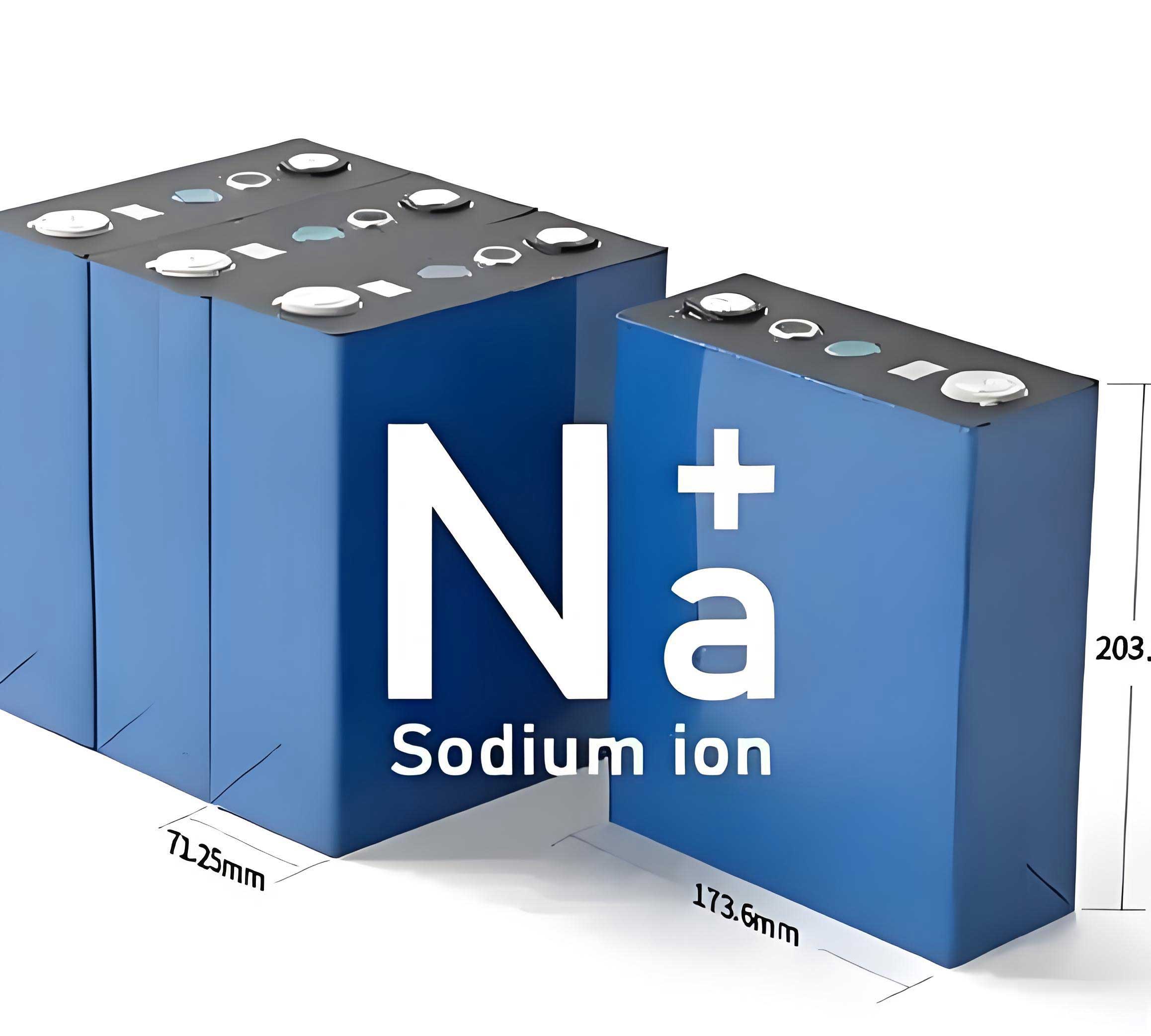
The development of efficient sodium-ion battery technology hinges on the discovery of electrode materials that can withstand the repeated insertion and extraction of sodium ions without compromising structural integrity. Traditional anode materials like graphite, which are effective in lithium-ion batteries, often suffer from poor sodium storage capacity due to the larger size of Na+ ions. Transition metal oxides, while offering higher capacities, typically undergo severe volume changes leading to pulverization and rapid capacity decay. In contrast, polyanionic compounds, with their rigid frameworks composed of MO6 octahedra and PO4 tetrahedra, provide stable host structures for sodium ions. The $$PO_4^{3-}$$ polyanion induces strong covalent bonding, which enhances the overall framework stability and minimizes lattice strain during sodiation/desodiation. Moreover, the 3D interconnected channels in materials like $$Nb(PO_4)O$$ enable facile Na+ diffusion, which is crucial for achieving high rate performance in sodium-ion battery applications. This work explores the synthesis, characterization, and electrochemical evaluation of $$Nb(PO_4)O$$, highlighting its potential as a high-performance anode material for sodium-ion batteries.
The synthesis of $$Nb(PO_4)O$$ was achieved through a straightforward and scalable approach involving the use of a supramolecular polymer derived from phytic acid and melamine. This strategy ensures uniform distribution of precursors and facilitates the formation of a well-defined structure during calcination. Briefly, niobium chloride (NbCl5) was dissolved in deionized water to form a clear solution, followed by the addition of melamine under ultrasonication. Phytic acid was then introduced dropwise, leading to the self-assembly of a supramolecular network via hydrogen bonding and coordination interactions. The resulting precipitate was collected, washed, and freeze-dried before being subjected to high-temperature calcination at 900°C under an argon atmosphere. For comparison, pure $$Nb_2O_5$$ was prepared via a similar calcination route without the polymer precursors. The synthesis process is designed to yield a material with a porous sheet-like morphology, which enhances electrolyte accessibility and shortens ion diffusion paths, thereby optimizing the performance of the sodium-ion battery.
Structural and morphological analyses were conducted using X-ray diffraction (XRD), scanning electron microscopy (SEM), transmission electron microscopy (TEM), and nitrogen adsorption-desorption measurements. The XRD pattern of $$Nb(PO_4)O$$ confirms its orthorhombic crystal structure (space group Pnma), with lattice parameters matching the standard reference (PDF#81-0213). In contrast, $$Nb_2O_5$$ exhibits a monoclinic phase (PDF#37-1468). The absence of impurity peaks indicates high phase purity for both materials. SEM images reveal that $$Nb(PO_4)O$$ possesses a unique architecture composed of loosely stacked nanosheets that aggregate into micron-sized particles. This morphology provides a large specific surface area, which is beneficial for electrolyte infiltration and active site exposure in sodium-ion battery electrodes. TEM further confirms the sheet-like structure and shows that the material is coated with a thin layer of nitrogen-phosphorus co-doped carbon, originating from the decomposition of the supramolecular polymer. This carbon coating enhances electronic conductivity, a critical factor for improving rate capability in sodium-ion battery systems.
Table 1 summarizes the key physical properties of $$Nb(PO_4)O$$ and $$Nb_2O_5$$, as derived from BET surface area analysis and XRD refinements.
| Material | Crystal Structure | Specific Surface Area (m2/g) | Average Pore Size (nm) | Carbon Coating |
|---|---|---|---|---|
| $$Nb(PO_4)O$$ | Orthorhombic | 5.3 | ~15 | N,P-doped carbon |
| $$Nb_2O_5$$ | Monoclinic | 2.1 | ~10 | None |
The porous nature of $$Nb(PO_4)O$$ is further evidenced by its type-IV nitrogen adsorption isotherm, with a hysteresis loop indicating mesoporous characteristics. The pore size distribution, calculated using the Barrett-Joyner-Halenda (BJH) method, shows a broad range centered around 15 nm, which facilitates electrolyte penetration and accommodates volume changes during cycling. Chemical composition and bonding environments were investigated via X-ray photoelectron spectroscopy (XPS). The survey spectrum confirms the presence of Nb, P, O, C, and N elements in $$Nb(PO_4)O$$. High-resolution scans of Nb 3d reveal doublet peaks at 206.79 eV and 209.56 eV, corresponding to Nb5+ in $$Nb(PO_4)O$$. The P 2p spectrum shows peaks attributable to P-O and P-O-Nb bonds, while the O 1s spectrum deconvolutes into contributions from Nb-O, P-O, and C-O species. The N 1s spectrum indicates the incorporation of nitrogen in various forms, such as pyridinic and pyrrolic N, which enhance electronic conductivity. These features collectively contribute to the robust electrochemical performance of $$Nb(PO_4)O$$ as an anode material for sodium-ion batteries.
Electrochemical evaluations were performed by assembling CR2032 coin cells with $$Nb(PO_4)O$$ or $$Nb_2O_5$$ as the working electrode, sodium metal as the counter/reference electrode, and a electrolyte consisting of 1 M NaClO4 in ethylene carbonate/diethyl carbonate (1:1 v/v) with 5 wt% fluoroethylene carbonate additive. Galvanostatic charge-discharge tests were conducted over a voltage range of 0.01–3.0 V vs. Na+/Na. Figure 1a compares the cycling performance of $$Nb(PO_4)O$$ and $$Nb_2O_5$$ at a current density of 100 mA/g. The $$Nb(PO_4)O$$ electrode delivers an initial discharge capacity of 618.1 mAh/g with a Coulombic efficiency of 43.17%, attributed to solid electrolyte interphase (SEI) formation and irreversible side reactions. After 100 cycles, it retains a reversible capacity of 218.6 mAh/g, corresponding to a capacity retention of 81.9% relative to the first charge. In stark contrast, $$Nb_2O_5$$ exhibits a much lower initial capacity (68.5 mAh/g) and rapid decay, retaining only 12.6 mAh/g after 100 cycles. This underscores the superior structural stability of the polyanionic framework in $$Nb(PO_4)O$$ for sodium-ion battery applications.
The rate capabilities of $$Nb(PO_4)O$$ were assessed at varying current densities from 0.1 to 4 A/g. As shown in Figure 1b, the electrode delivers average discharge capacities of 225, 210, 190, 175, 160, 145, and 117.9 mAh/g at 0.1, 0.2, 0.5, 1, 2, 3, and 4 A/g, respectively. When the current density is returned to 0.1 A/g, the capacity recovers to 222 mAh/g, demonstrating excellent reversibility. The voltage profiles at different rates (Figure 1c) show minimal polarization, indicating fast reaction kinetics. In contrast, $$Nb_2O_5$$ shows negligible capacity at high rates due to poor conductivity and sluggish ion diffusion. Long-term cycling stability was tested at a high current density of 1 A/g (Figure 1d). The $$Nb(PO_4)O$$ electrode maintains a reversible capacity of 133.7 mAh/g after 3000 cycles, with a Coulombic efficiency approaching 100%. This outstanding performance highlights the durability of $$Nb(PO_4)O$$ in sodium-ion battery configurations, making it a viable candidate for large-scale energy storage.
To understand the sodium storage mechanisms, cyclic voltammetry (CV) was performed at scan rates from 0.2 to 12 mV/s. The CV curves of $$Nb(PO_4)O$$ (Figure 2a) exhibit a reduction peak near 1.0 V in the first discharge, which disappears in subsequent cycles, consistent with SEI formation. A pair of redox peaks around 2.2 V and 1.8 V correspond to the insertion/extraction of sodium ions, with the reactions likely involving the Nb5+/Nb4+ redox couple. The shape of the CV curves remains stable over cycles, indicating reversible electrochemical processes. The relationship between peak current (i) and scan rate (v) can be described by the power law: $$i = a v^b$$, where b is an exponent that distinguishes between diffusion-controlled (b = 0.5) and capacitive-dominated (b = 1.0) processes. For $$Nb(PO_4)O$$, the b values for the anodic and cathodic peaks are calculated as 0.65 and 0.68, respectively, suggesting a mixed contribution from diffusion and surface-controlled reactions. The capacitive contribution can be quantified by separating the current response at a fixed potential using the equation: $$i(V) = k_1 v + k_2 v^{1/2}$$, where $$k_1 v$$ represents the capacitive component and $$k_2 v^{1/2}$$ corresponds to the diffusion-controlled component. Figure 2b illustrates the capacitive contribution ratio at different scan rates, increasing from 2.3% at 0.2 mV/s to 18.3% at 12 mV/s. This indicates that the sodium storage in $$Nb(PO_4)O$$ is primarily governed by bulk diffusion, with a minor pseudocapacitive effect, which is favorable for high-rate performance in sodium-ion batteries.
Table 2 provides a comparison of electrochemical parameters for $$Nb(PO_4)O$$ and other reported anode materials for sodium-ion batteries, emphasizing its competitive performance.
| Material | Initial Capacity (mAh/g) | Cycle Life (Cycles) | Rate Capability (Capacity at High Current) | Key Features |
|---|---|---|---|---|
| $$Nb(PO_4)O$$ (this work) | 618.1 (discharge) | 3000 at 1 A/g | 117.9 mAh/g at 4 A/g | Polyanionic framework, N,P-doped carbon coating |
| $$Nb_2O_5$$ | 68.5 | 100 at 0.1 A/g | Negligible at 1 A/g | Poor conductivity, volume changes |
| Hard Carbon | ~300 | 500 at 0.1 A/g | ~100 mAh/g at 2 A/g | Low cost, but limited capacity |
| $$NaTi_2(PO_4)_3$$ | ~130 | 1000 at 1 A/g | ~80 mAh/g at 5 A/g | NASICON structure, low voltage |
| $$V_2(PO_4)O$$ | ~400 | 200 at 0.1 A/g | ~150 mAh/g at 2 A/g | High capacity, but synthesis complexity |
Ion transport properties were further investigated using galvanostatic intermittent titration technique (GITT). The sodium ion diffusion coefficient ($$D_{Na^+}$$) can be estimated from the potential relaxation during the titration steps using the following equation derived from Fick’s second law: $$D_{Na^+} = \frac{4}{\pi \tau} \left( \frac{m_B V_M}{M_B S} \right)^2 \left( \frac{\Delta E_s}{\Delta E_\tau} \right)^2$$, where $$\tau$$ is the pulse duration, $$m_B$$ is the active mass, $$V_M$$ is the molar volume, $$M_B$$ is the molar mass, $$S$$ is the electrode-electrolyte contact area, $$\Delta E_s$$ is the steady-state voltage change, and $$\Delta E_\tau$$ is the voltage change during the pulse. For $$Nb(PO_4)O$$, the calculated $$D_{Na^+}$$ values range from $$10^{-10}$$ to $$10^{-12}$$ cm2/s during charge and discharge, which are higher than those for $$Nb_2O_5$$ ($$10^{-13}$$ to $$10^{-15}$$ cm2/s). This enhanced diffusivity is attributed to the open framework of $$Nb(PO_4)O$$, which provides low-energy pathways for sodium ion migration, a critical advantage for sodium-ion battery anodes.
Electrochemical impedance spectroscopy (EIS) measurements were conducted after 30 cycles to analyze the interfacial resistance. The Nyquist plots (Figure 3a) consist of a semicircle in the high-frequency region, representing the charge transfer resistance ($$R_{ct}$$), and a sloping line in the low-frequency region, associated with sodium ion diffusion in the bulk material. The $$R_{ct}$$ value for $$Nb(PO_4)O$$ is significantly lower than that for $$Nb_2O_5$$ (e.g., 50 Ω vs. 200 Ω), indicating faster charge transfer kinetics due to the conductive carbon coating and favorable electrode-electrolyte interface. This correlates with the superior rate performance observed in galvanostatic tests. Post-cycling characterization, including SEM and XPS, confirms the structural integrity of $$Nb(PO_4)O$$ after 200 cycles. The sheet-like morphology remains intact without noticeable cracking or aggregation, and the XPS spectra show consistent chemical states for Nb, P, and O elements. This robustness underscores the effectiveness of the polyanionic design in mitigating degradation mechanisms common in sodium-ion battery electrodes.
The exceptional performance of $$Nb(PO_4)O$$ can be attributed to several synergistic factors: (i) The stable orthorhombic framework with 3D ion channels enables reversible sodium insertion/extraction with minimal lattice strain, as described by the reaction: $$Nb(PO_4)O + x Na^+ + x e^- \leftrightarrow Na_xNb(PO_4)O$$, where x represents the number of sodium ions accommodated. (ii) The porous nanosheet architecture increases the electrode-electrolyte contact area, reducing the effective diffusion length for sodium ions. (iii) The N,P-doped carbon coating improves electronic conductivity and stabilizes the SEI layer. (iv) The mixed diffusion-capacitive storage mechanism allows for high capacity retention at elevated rates. These attributes make $$Nb(PO_4)O$$ a highly competitive anode material for advanced sodium-ion battery systems, potentially enabling applications in grid storage and electric vehicles.
In summary, this work demonstrates a novel polyanionic compound, $$Nb(PO_4)O$$, synthesized via a supramolecular polymer-assisted route, as an efficient anode for sodium-ion batteries. The material exhibits a high reversible capacity of 133.7 mAh/g at 1 A/g after 3000 cycles and excellent rate performance with 117.9 mAh/g at 4 A/g. Structural and electrochemical analyses reveal that its performance stems from a stable framework, enhanced ion diffusion, and conductive carbon modification. The findings provide a blueprint for designing durable polyanionic materials for sodium-ion battery technologies, addressing key challenges in energy density and cycle life. Future work will focus on optimizing the synthesis to scale up production and integrating $$Nb(PO_4)O$$ with high-voltage cathodes to fabricate full sodium-ion battery cells for practical evaluation.
To further illustrate the advantages of polyanionic materials in sodium-ion batteries, we can consider the general thermodynamic stability criterion based on formation energies. For a compound $$A_mB_nO_p$$, the stability against decomposition during sodium insertion can be assessed using the Gibbs free energy change: $$\Delta G = \Delta H – T\Delta S$$, where $$\Delta H$$ is the enthalpy change and $$\Delta S$$ is the entropy change. For $$Nb(PO_4)O$$, the strong P-O and Nb-O bonds result in a highly negative $$\Delta H$$, making it thermodynamically favorable for sodium storage. Additionally, the volume change per sodium ion inserted can be estimated using the formula: $$\frac{\Delta V}{V_0} = \frac{V_{sodiated} – V_{pristine}}{V_{pristine}}$$. For $$Nb(PO_4)O$$, experimental data suggest a volume change of less than 5% during cycling, compared to over 20% for many oxides, explaining its superior cycling stability. These theoretical insights complement the experimental results, reinforcing the potential of $$Nb(PO_4)O$$ in sodium-ion battery applications.
In conclusion, the development of high-performance anode materials is crucial for advancing sodium-ion battery technology. The novel $$Nb(PO_4)O$$ material presented here offers a compelling combination of stability, capacity, and rate capability, paving the way for more efficient and sustainable energy storage solutions. Continued research into polyanionic systems and their integration with complementary components will accelerate the commercialization of sodium-ion batteries, contributing to a diversified portfolio of rechargeable battery technologies for the future.