
As a researcher in the field of energy storage, I have witnessed the rapid evolution of sodium-ion batteries as a promising alternative to lithium-ion systems. The abundance and low cost of sodium resources make sodium-ion batteries particularly attractive for large-scale grid storage and other applications where energy density is not the sole criterion. However, the practical deployment of sodium-ion batteries faces several hurdles, among which the low initial coulombic efficiency (ICE) of anode materials stands out as a critical bottleneck. In this review, I aim to delve into the factors influencing ICE, summarize the latest strategies for improvement, and provide insights into future directions. Throughout this discussion, the term “sodium-ion battery” will be frequently emphasized to underscore its centrality in advancing sustainable energy solutions.
The initial coulombic efficiency is defined as the ratio of the discharge capacity to the charge capacity in the first cycle of a battery. Mathematically, it can be expressed as:
$$ \text{ICE} = \frac{Q_{\text{discharge}}}{Q_{\text{charge}}} \times 100\% $$
where \( Q_{\text{charge}} \) is the charge capacity during sodiation and \( Q_{\text{discharge}} \) is the discharge capacity during desodiation. A low ICE indicates significant irreversible capacity loss, which depletes the limited sodium ions from the cathode in a full cell, thereby reducing the overall energy density. Understanding and mitigating these losses are paramount for the commercialization of sodium-ion batteries. In the following sections, I will analyze the root causes of low ICE and explore various modification strategies, supported by tables and formulas to consolidate key findings.
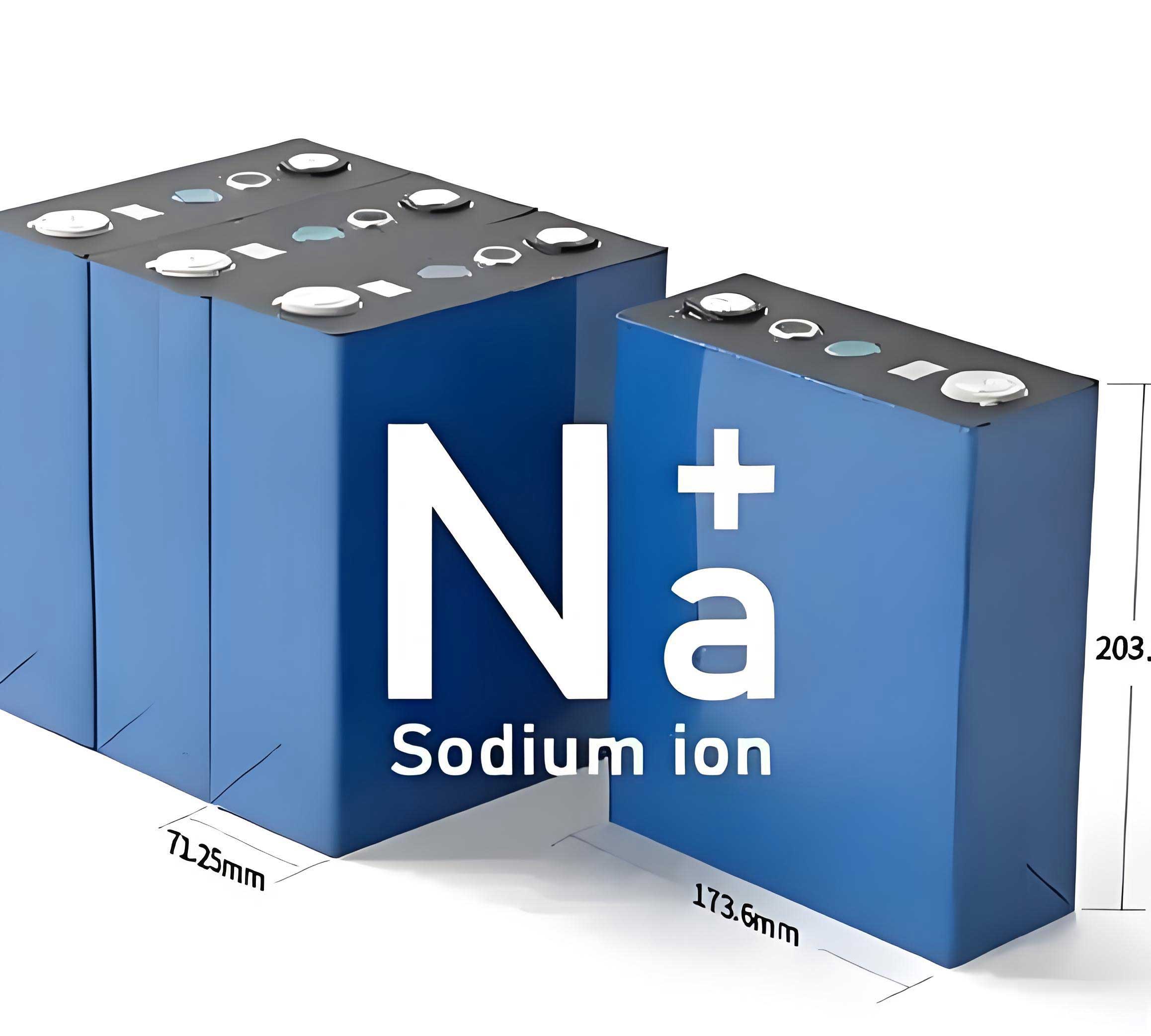
To set the stage, let’s consider the fundamental working mechanism of a sodium-ion battery. Similar to lithium-ion batteries, sodium-ion batteries operate through the reversible insertion and extraction of sodium ions between the cathode and anode. The overall reaction can be generalized as:
$$ \text{Cathode} + \text{Anode} \rightleftharpoons \text{Cathode}’ + \text{Anode}’ $$
where the prime denotes the sodiated or desodiated states. The anode materials in sodium-ion batteries typically store sodium via three primary mechanisms: intercalation/deintercalation, conversion reactions, and alloying/dealloying. Each mechanism has distinct implications for ICE, which I will elaborate on later. The electrolyte, usually composed of sodium salts dissolved in organic solvents, plays a crucial role in forming the solid electrolyte interphase (SEI) on the anode surface. This SEI layer is both a blessing and a curse—it passivates the electrode but also consumes sodium ions irreversibly during its formation.
Factors Affecting Initial Coulombic Efficiency in Sodium-Ion Batteries
In my analysis, I have identified several interconnected factors that contribute to the low ICE observed in many sodium-ion battery anodes. These include irreversible electrolyte decomposition, poor reversibility of sodiation/desodiation processes, the trapping effects of defects and surface functional groups, and other side reactions. Below, I detail each factor with supporting evidence and theoretical frameworks.
Irreversible Electrolyte Decomposition and SEI Formation
The formation of the solid electrolyte interphase is a major source of initial capacity loss in sodium-ion batteries. When the anode potential drops below the reduction potential of the electrolyte components, decomposition occurs, leading to the deposition of a layer on the electrode surface. This SEI layer is intended to be ionically conductive but electronically insulating, preventing further electrolyte reduction. However, its formation consumes sodium ions and electrons irreversibly. The composition and properties of the SEI in sodium-ion batteries differ from those in lithium-ion batteries due to the larger ionic radius of Na⁺ (1.02 Å) compared to Li⁺ (0.76 Å) and the different solvation energies. The general reaction for SEI formation can be represented as:
$$ \text{Electrolyte} + \text{Na}^+ + e^- \rightarrow \text{SEI (insoluble products)} $$
Common decomposition products include Na₂CO₃, NaF, and organic compounds like sodium alkyl carbonates. The thickness and stability of the SEI layer depend on factors such as electrolyte composition, electrode morphology, and operating voltage. For instance, in ester-based electrolytes (e.g., EC/DEC with NaPF₆), the SEI tends to be thicker and less uniform, leading to higher irreversible capacity. In contrast, ether-based electrolytes (e.g., diglyme with NaOTf) often form thinner and more stable SEI layers, improving ICE. To quantify the impact, consider the charge consumed during SEI formation, \( Q_{\text{SEI}} \), which contributes to the irreversible capacity:
$$ Q_{\text{irreversible}} = Q_{\text{SEI}} + Q_{\text{other}} $$
where \( Q_{\text{other}} \) accounts for other losses. Table 1 summarizes typical ICE values and SEI characteristics for different electrolyte systems in sodium-ion batteries.
| Electrolyte System | Salt Concentration | Typical ICE (%) | SEI Thickness (nm) | Key Decomposition Products |
|---|---|---|---|---|
| EC/DEC with NaPF₆ | 1 M | 40-60 | 30-50 | Na₂CO₃, NaF, organic carbonates |
| Diglyme with NaOTf | 1 M | 70-85 | 5-15 | Na₂O, Na₂S, organic ethers |
| PC with NaClO₄ | 0.5 M | 50-65 | 20-40 | NaClO₄ derivatives, polycarbonates |
| Ionic Liquid with NaTFSI | 0.8 M | 65-80 | 10-25 | NaF, Na₂S₂O₄, organic layers |
From this table, it is evident that ether-based electrolytes generally yield higher ICE due to thinner SEI layers. However, the choice of electrolyte must balance ICE with other performance metrics like rate capability and cycling stability.
Poor Reversibility of Sodiation/Desodiation Processes
Another critical factor is the inherent reversibility of the electrochemical reactions at the anode. For intercalation-type materials (e.g., hard carbon), the sodiation process involves Na⁺ insertion into lattice sites, which may be partially irreversible due to structural changes or Na⁺ trapping in deep sites. The reversibility can be described by the coefficient \( \alpha \), defined as:
$$ \alpha = \frac{Q_{\text{desodiation}}}{Q_{\text{sodiation}}} $$
where \( \alpha \) approaches 1 for highly reversible reactions. For conversion-type materials (e.g., metal oxides, sulfides), the reaction mechanism is more complex. Consider a generic conversion reaction:
$$ M_aX_b + c\text{Na}^+ + c e^- \rightleftharpoons aM + b\text{Na}_{c/b}X $$
where M is a transition metal and X is O, S, or P. The forward reaction (sodiation) often proceeds completely, but the reverse reaction (desodiation) may be hindered by kinetic barriers, large volume changes, or the formation of stable intermediates. For example, in Fe₂O₃ anodes, the conversion product Na₂O is highly stable, leading to poor reversibility. The voltage hysteresis between sodiation and desodiation, denoted as \( \Delta V \), also correlates with irreversibility:
$$ \Delta V = V_{\text{charge}} – V_{\text{discharge}} $$
A larger \( \Delta V \) indicates greater polarization and lower reversibility, directly reducing ICE. Alloying-type materials (e.g., Sn, P) face similar issues due to massive volume expansion (>300%) that causes particle pulverization and loss of electrical contact. The irreversible capacity from poor reversibility, \( Q_{\text{rev}} \), can be modeled as:
$$ Q_{\text{rev}} = Q_{\text{sodiation}} \times (1 – \alpha) $$
Table 2 compares the reversibility parameters for different anode classes in sodium-ion batteries.
| Anode Type | Material Example | Reversibility Coefficient (α) | Voltage Hysteresis (ΔV, V) | Typical ICE (%) |
|---|---|---|---|---|
| Intercalation | Hard Carbon | 0.85-0.95 | 0.1-0.3 | 70-85 |
| Conversion | Fe₂O₃ | 0.50-0.70 | 0.5-1.0 | 30-50 |
| Alloying | Sn | 0.60-0.80 | 0.3-0.6 | 40-65 |
| Composite | MoS₂/Graphene | 0.75-0.90 | 0.2-0.4 | 60-80 |
This table highlights that intercalation materials generally exhibit higher reversibility and ICE, while conversion and alloying materials suffer from larger hysteresis and lower α values. Strategies to improve reversibility often focus on nanostructuring and composite design, which I will discuss later.
Defects and Surface Functional Groups
Defects (e.g., vacancies, grain boundaries) and surface functional groups (e.g., -OH, -COOH) on anode materials can act as active sites for sodium storage, enhancing capacity. However, they also contribute to irreversible Na⁺ trapping through strong chemical adsorption or side reactions. For carbon-based anodes, the presence of oxygen-containing groups leads to reactions like:
$$ \text{C-OH} + \text{Na}^+ + e^- \rightarrow \text{C-O}^- \text{Na}^+ + \frac{1}{2}\text{H}_2 $$
This reaction consumes Na⁺ without contributing to reversible capacity. Similarly, defects in crystalline materials create localized states that trap Na⁺ ions, preventing their release during desodiation. The defect density \( \rho_d \) and functional group concentration \( C_{\text{fg}} \) can be correlated with irreversible capacity loss \( Q_{\text{trap}} \):
$$ Q_{\text{trap}} = k_1 \rho_d + k_2 C_{\text{fg}} $$
where \( k_1 \) and \( k_2 \) are proportionality constants. Reducing these features through annealing or surface passivation can significantly improve ICE. For instance, heating hard carbon at high temperatures under inert atmosphere reduces oxygen content and defect density, boosting ICE from ~60% to over 80%.
Other Side Reactions
Additional side reactions, such as gas evolution, corrosion of current collectors, or irreversible phase transformations, also deplete sodium ions. For example, in some sulfide anodes, the formation of polysulfides dissolves into the electrolyte, leading to active material loss. These reactions are often electrolyte-dependent and challenging to quantify. The total irreversible capacity \( Q_{\text{irr,total}} \) in a sodium-ion battery anode can thus be expressed as a sum:
$$ Q_{\text{irr,total}} = Q_{\text{SEI}} + Q_{\text{rev}} + Q_{\text{trap}} + Q_{\text{side}} $$
where \( Q_{\text{side}} \) represents losses from other side reactions. Minimizing each component is key to achieving high ICE.
Strategies to Enhance Initial Coulombic Efficiency in Sodium-Ion Batteries
Having analyzed the factors, I now turn to the strategies that researchers, including myself, have developed to improve ICE in sodium-ion batteries. These approaches can be categorized into electrode structure design, surface modification, electrolyte optimization, and binder engineering. Each strategy aims to address specific irreversible loss mechanisms, and often, a combination is employed for synergistic effects.
Electrode Structure and Morphology Design
Tailoring the microstructure of anode materials is a powerful way to control surface area, porosity, and ion transport paths, thereby influencing SEI formation and reversibility. For instance, reducing the specific surface area (SSA) of carbon anodes minimizes the contact area with electrolyte, limiting SEI formation. The relationship between SSA and ICE can be approximated by:
$$ \text{ICE} \propto \frac{1}{\text{SSA}} $$
for a given electrolyte system. However, too low SSA may sacrifice capacity, so an optimal balance is sought. Nanostructuring, such as creating hollow or porous structures, can accommodate volume changes and improve kinetics, but it must be done cautiously to avoid excessive surface area. Table 3 summarizes how different morphologies impact ICE for selected anode materials in sodium-ion batteries.
| Morphology | Material Example | Specific Surface Area (m²/g) | Porosity (%) | ICE (%) | Reversible Capacity (mAh/g) |
|---|---|---|---|---|---|
| Bulk Particles | Hard Carbon | 5-10 | <5 | 80-85 | 250-300 |
| Nanospheres | Carbon Nanospheres | 50-100 | 10-20 | 60-70 | 300-350 |
| Hollow Structures | TiO₂ Hollow Spheres | 100-200 | 30-50 | 50-60 | 200-250 |
| 3D Networks | Graphene Foams | 500-1000 | 70-90 | 40-50 | 400-500 |
From this table, bulk particles with low SSA and porosity tend to yield higher ICE, albeit with moderate capacity. In contrast, 3D networks offer high capacity but suffer from low ICE due to extensive SEI formation. Therefore, morphology design must be tailored to the specific application requirements of the sodium-ion battery.
Another effective structural approach is the construction of core-shell or heterostructured materials. For example, a carbon-coated Fe₃O₄ core-shell nanoparticle can confine volume expansion and reduce direct electrolyte contact. The core-shell design often follows a model where the shell acts as a barrier for SEI formation. The irreversible capacity loss due to SEI, \( Q_{\text{SEI}} \), can be reduced by a factor \( \beta \) (0 < β < 1) with a protective shell:
$$ Q_{\text{SEI, coated}} = \beta Q_{\text{SEI, uncoated}} $$
where β depends on shell thickness and conductivity. This principle has been applied to various conversion and alloying anodes, boosting ICE by 10-20%.
Surface Modification and Coating
Surface engineering involves applying thin layers of conductive or passive materials onto anode particles to suppress side reactions and stabilize the SEI. Common coatings include carbon, metals, oxides, and polymers. For instance, carbon coating on red phosphorus anodes not only enhances electronic conductivity but also prevents polysulfide dissolution, improving ICE from ~46% to over 75%. The coating process can be described as a conformal deposition, with thickness \( t_c \) optimized to balance protection and ion diffusion. The effective diffusion coefficient of Na⁺ through the coating, \( D_{\text{eff}} \), influences kinetics:
$$ D_{\text{eff}} = \frac{D_0}{1 + \frac{t_c}{l_0}} $$
where \( D_0 \) is the bulk diffusion coefficient and \( l_0 \) is a characteristic length. Too thick a coating may hinder Na⁺ transport, reducing rate capability. Table 4 lists common coating materials and their effects on ICE in sodium-ion batteries.
| Coating Material | Anode Substrate | Coating Thickness (nm) | ICE Improvement (%) | Key Mechanism |
|---|---|---|---|---|
| Amorphous Carbon | SnO₂ | 5-10 | 15-25 | SEI stabilization, volume change buffering |
| Graphene | MoS₂ | 2-5 | 10-20 | Enhanced conductivity, reduced aggregation |
| Al₂O₃ | Hard Carbon | 1-3 | 5-10 | Suppressed electrolyte decomposition |
| Conductive Polymer | Sulfur Composites | 10-20 | 20-30 | Polysulfide confinement, flexible matrix |
These coatings work by creating a more stable electrode-electrolyte interface, which is crucial for high ICE in sodium-ion batteries. Additionally, doping with heteroatoms (e.g., N, S) can modify surface chemistry, promoting favorable SEI composition. For example, N-doped carbon layers facilitate the formation of Na₃N-rich SEI, which is thin and conductive.
Electrolyte Optimization
As highlighted earlier, electrolyte composition profoundly affects SEI formation and reversibility. Optimization involves selecting salts, solvents, and additives that promote a stable, thin SEI. Ether-based solvents (e.g., diglyme, DME) are particularly promising for sodium-ion batteries due to their low viscosity and ability to form organic-rich SEI layers. The reduction potential of solvents can be adjusted using additives like fluoroethylene carbonate (FEC) or vinylene carbonate (VC), which polymerize to form robust SEI. The effect of an additive can be modeled by its reduction current density \( i_{\text{red}} \):
$$ i_{\text{red}} = nF k C_{\text{add}} \exp\left(-\frac{\Delta G^*}{RT}\right) $$
where \( n \) is electron transfer number, \( F \) is Faraday’s constant, \( k \) is rate constant, \( C_{\text{add}} \) is additive concentration, \( \Delta G^* \) is activation energy, \( R \) is gas constant, and \( T \) is temperature. Higher \( i_{\text{red}} \) leads to faster SEI formation, potentially reducing irreversible loss. Sodium salts also matter; for instance, NaPF₆ tends to form NaF-rich SEI, which is stable but thick, while NaOTf promotes thinner layers. Table 5 compares electrolyte formulations and their ICE outcomes for hard carbon anodes in sodium-ion batteries.
| Electrolyte Formula | Salt Concentration (M) | Additive | ICE (%) | SEI Character |
|---|---|---|---|---|
| 1 M NaPF₆ in EC/DEC | 1.0 | None | 55 | Thick, inorganic-rich |
| 1 M NaOTf in Diglyme | 1.0 | None | 78 | Thin, organic-rich |
| 0.8 M NaTFSI in PC | 0.8 | 5% FEC | 72 | Flexible, polymer-rich |
| 1.5 M NaClO₄ in EMC | 1.5 | 2% VC | 65 | Dense, hybrid |
This table underscores that ether-based electrolytes with NaOTf often yield the highest ICE, but additives can further enhance performance. It’s important to note that electrolyte optimization must be compatible with both anode and cathode materials in a full sodium-ion battery cell.
Binder and Electrode Engineering
Beyond active materials, binders and electrode architecture play subtle but significant roles in ICE. Traditional binders like PVDF may react with sodium ions, contributing to irreversible capacity. Alternatively, binders such as sodium alginate or CMC can form stable interfaces and accommodate volume changes. The binder’s functionality can be quantified by its adhesion strength \( \sigma_a \) and ionic conductivity \( \kappa \). A better binder reduces particle isolation and maintains electrical contact during cycling, indirectly improving reversibility. Electrode parameters like mass loading, porosity, and conductive additive content also affect ICE. Higher mass loading may increase irreversible losses due to longer ion diffusion paths, as described by:
$$ Q_{\text{irr}} \propto \sqrt{L} $$
where \( L \) is electrode thickness. Therefore, optimizing electrode fabrication is crucial for practical sodium-ion batteries.
Future Perspectives and Concluding Remarks
In summary, the initial coulombic efficiency is a multifaceted issue in sodium-ion batteries, stemming from electrolyte decomposition, reaction irreversibility, defect trapping, and side reactions. Through structural design, surface modification, electrolyte tuning, and binder selection, significant improvements have been achieved. However, challenges remain in balancing ICE with other metrics like capacity, rate performance, and cycle life. Future research should focus on in-situ characterization techniques to better understand SEI dynamics, machine learning for material discovery, and holistic cell design. The development of low-cost, high-ICE anodes will accelerate the commercialization of sodium-ion batteries for grid storage and beyond.
As I reflect on the progress, it is clear that interdisciplinary efforts are essential. Chemists, materials scientists, and engineers must collaborate to tailor solutions for specific sodium-ion battery configurations. Moreover, sustainability considerations should guide the choice of materials and processes. With continued innovation, I am optimistic that sodium-ion batteries will overcome the ICE hurdle and realize their potential as a viable energy storage technology.
To encapsulate key strategies, Table 6 provides a holistic comparison of approaches to enhance ICE in sodium-ion batteries.
| Strategy | Typical ICE Gain (%) | Key Mechanism | Trade-offs | Suitability for Anode Types |
|---|---|---|---|---|
| Morphology Control (Low SSA) | 10-20 | Reduced SEI formation | Lower capacity | Intercalation, Carbon |
| Core-Shell Design | 15-25 | Confinement, stable interface | Synthesis complexity | Conversion, Alloying |
| Carbon Coating | 10-30 | Enhanced conductivity, SEI modulation | Possible diffusion limitation | All types |
| Ether-Based Electrolytes | 20-35 | Thin, stable SEI | Voltage window limits | Wide range |
| Additive Engineering | 5-15 | Targeted SEI formation | Cost, compatibility | Depends on system |
| Defect Reduction | 5-10 | Minimized Na⁺ trapping | Reduced active sites | Carbon, Oxides |
This comprehensive review underscores the importance of initial coulombic efficiency in sodium-ion batteries and outlines pathways for advancement. As research continues, I anticipate that integrated approaches will yield anodes with ICE exceeding 90%, paving the way for high-energy-density sodium-ion battery systems that are both economical and reliable.