
The manufacturing process of lithium-ion batteries involves a series of critical steps, among which formation stands out as one of the most consequential. The formation process, essentially the initial activation charge, is responsible for the genesis of the solid electrolyte interphase (SEI) on the anode surface. The quality, morphology, and stability of this SEI layer fundamentally dictate a battery’s ultimate performance metrics, including capacity, efficiency, rate capability, cycle life, and thermal behavior. Despite its paramount importance, there is no universally established consensus within the industry regarding the optimal state of charge (SOC) to which a LiFePO4 battery should be charged during this formative stage. Practices vary, often based on empirical experience rather than systematic study. This investigation delves into the specific effects of varying the formation charging SOC on the comprehensive electrochemical performance of commercial-grade pouch-type lithium iron phosphate (LiFePO4) batteries, aiming to provide data-driven insights for process optimization.
The SEI is an electronically insulating yet ionically conductive layer that forms through the reductive decomposition of electrolyte components on the anode surface at potentials below approximately 0.8 V vs. Li/Li⁺. Its formation can be conceptually described by a simplified reaction:
$$\text{Electrolyte (solvents, salts)} + e^- + \text{Li}^+ \rightarrow \text{SEI (Li}_2\text{CO}_3, \text{ROCO}_2\text{Li}, \text{etc.)} + \text{gases}$$
This irreversible reaction consumes active lithium ions from the cathode, directly impacting the first-cycle Coulombic efficiency and the achievable capacity. The properties of the SEI are not static; they are highly dependent on the electrochemical conditions during its formation, including voltage profile, current density, temperature, and crucially, the upper cutoff potential or SOC.
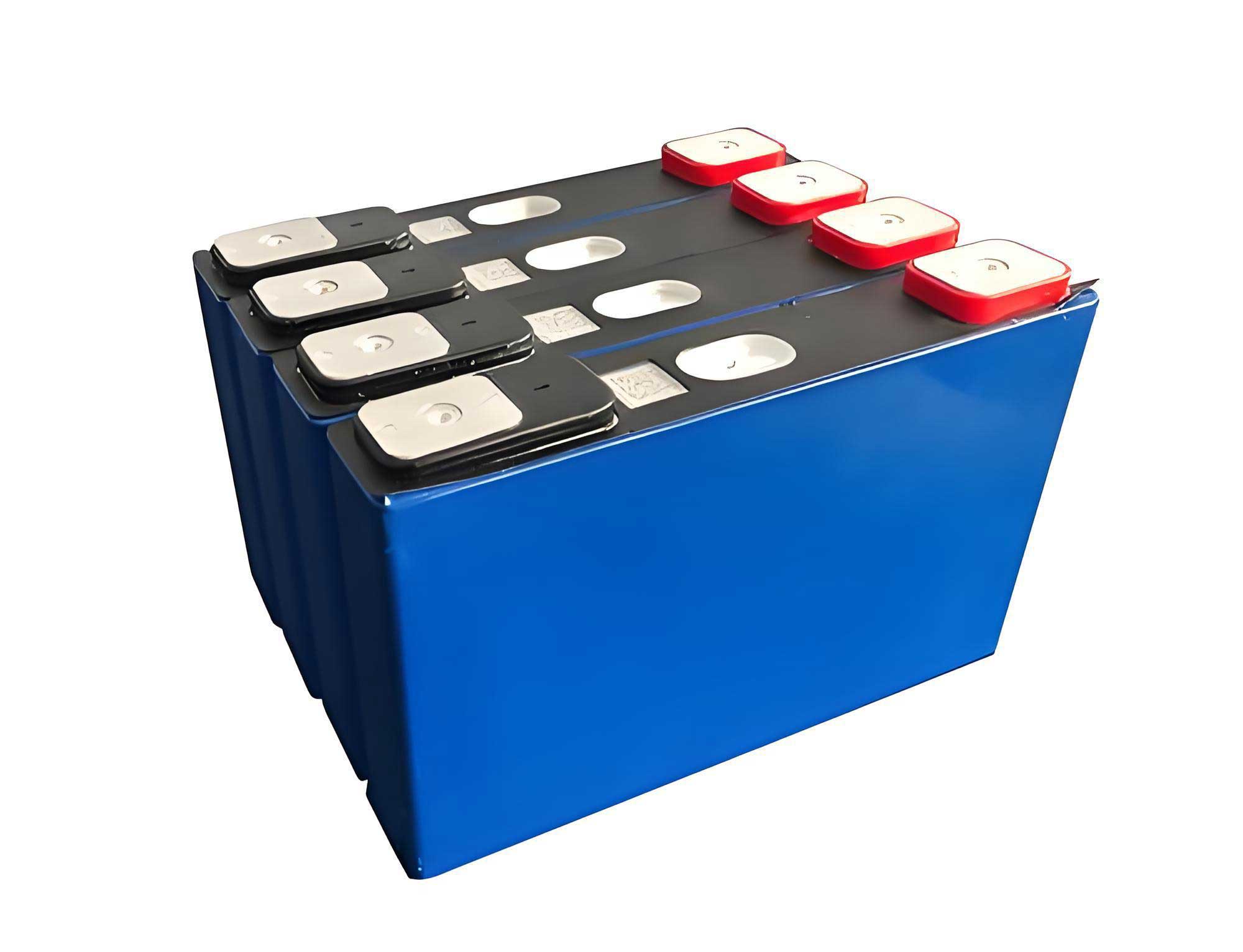
In this study, identical pouch-type LiFePO4/graphite cells were manufactured and then subjected to formation processes differing only in the target SOC: 10%, 40%, 70%, and 100%. Post-formation, all cells underwent standardized aging, grading, and a rigorous testing protocol to evaluate key performance indicators. The central hypothesis is that the formation SOC modulates the completeness, thickness, and ionic conductivity of the SEI, thereby creating distinct performance trade-offs.
Experimental Methodology: Cell Fabrication and Testing Protocols
The electrodes were fabricated using standard industrial procedures. The cathode slurry consisted of LiFePO4 active material, conductive carbon black, carbon nanotubes (CNTs), and polyvinylidene fluoride (PVDF) binder dispersed in N-methyl-2-pyrrolidone (NMP). This was coated onto carbon-coated aluminum foil with a target areal loading of approximately 190 g/m² per side and calendared to a density of 2.35 g/cm³. The anode slurry comprised graphite, conductive carbon, carboxymethyl cellulose sodium (CMC), and styrene-butadiene rubber (SBR) binder in deionized water, coated onto copper foil (~90 g/m² per side) and calendared to 1.5 g/cm³. The electrodes were cut, stacked with separators, welded with tabs, and sealed in aluminum laminate pouches. After thorough drying, a standard LiPF₆-based electrolyte was injected.
The cells were divided into four experimental groups (A, B, C, D), each containing 10 cells for statistical significance. All groups underwent the same initial formation step: a constant current (CC) charge at 0.05C for 1.5 hours. This was immediately followed by a second CC charge at 0.2C, but with different cutoff conditions to achieve the target formation SOC:
- Group A: Charge to 10% SOC.
- Group B: Charge to 40% SOC.
- Group C: Charge to 70% SOC.
- Group D: Charge to 100% SOC (full charge within the normal voltage window).
After formation, all cells underwent degassing, standing, and finally grading (capacity measurement via 1C/1C charge/discharge cycles). Subsequent performance tests were conducted under identical environmental and procedural conditions.
Results and Discussion: A Performance Landscape Shaped by Formation SOC
1. First-Cycle Efficiency and Reversible Capacity
The initial irreversible capacity loss is directly tied to SEI formation. As the formation SOC increases, a greater quantity of charge is passed through the cell at the controlled, low current density of the formation process. This provides more extensive opportunity and driving force for electrolyte reduction, leading to a more substantial SEI layer. Consequently, a larger fraction of cyclable lithium from the LiFePO4 cathode is permanently consumed.
The data presents a clear linear correlation. The first-cycle Coulombic efficiency (FCE) and the specific capacity delivered by the cathode active material (mass-based capacity utilization) decrease monotonically with increasing formation SOC. This relationship can be summarized by the following linear approximations derived from the experimental data:
$$ \text{FCE}(\%) \approx 86.8 – 0.029 \times \text{SOC}_{\text{form}} $$
$$ \text{Cathode Utilization (mAh/g)} \approx 141.3 – 0.045 \times \text{SOC}_{\text{form}} $$
Where $\text{SOC}_{\text{form}}$ is the formation state of charge in percent.
This irreversible consumption represents a fundamental cost-performance trade-off. A higher formation SOC, while potentially beneficial for other properties, inherently reduces the available capacity of the final LiFePO4 battery product. To meet a specific capacity specification, manufacturers must use more cathode material, increasing unit cost.
| Formation Group | Formation SOC (%) | First Coulombic Efficiency (%) | Cathode Active Material Utilization (mAh/g) |
|---|---|---|---|
| A | 10 | 86.6 | 141.0 |
| B | 40 | 85.8 | 140.6 |
| C | 70 | 85.3 | 138.7 |
| D | 100 | 83.8 | 136.8 |
2. High and Low Temperature Discharge Performance
The kinetics of lithium-ion intercalation/de-intercalation and the ohmic resistance of the cell are strongly temperature-dependent. The SEI layer is a major contributor to the total interfacial resistance. Its composition and thickness, influenced by formation SOC, thus critically affect performance at temperature extremes.
High Temperature (55°C) Discharge: At elevated temperatures, ionic conductivity increases, but side reactions and SEI instability can also accelerate. Group D (100% SOC formation) exhibited the highest average discharge voltage (3.31 V) and robust capacity retention (~105.2%). This suggests that the SEI formed under a full-charge condition is not only sufficiently conductive but also remarkably stable at 55°C, minimizing polarization. The LiFePO4 battery from Group C showed slightly lower capacity retention, while Groups A and B had lower average voltages, indicating higher polarization.
Low Temperature (-20°C) Discharge: At sub-zero temperatures, ionic transport becomes the primary limiting factor. A thick or highly resistive SEI can severely hinder discharge. Group D again demonstrated the best overall performance, with the highest capacity retention (82.3%) and average voltage (2.74 V). Group C performed similarly in capacity. Notably, Group B (40% SOC) suffered a dramatic performance collapse, with capacity retention plummeting to 69.2%. This indicates that the intermediate-formation SOC created an SEI structure that is particularly detrimental to low-temperature kinetics, possibly being neither thin enough for easy ion transfer nor robust enough to remain stable during the initial charge, leading to additional impedance upon cooling.
The performance can be quantified by capacity retention ratio ($\eta_T$) and polarization voltage drop ($\Delta V_{\text{pol}}$):
$$ \eta_T = \frac{Q_{\text{disch, T}}}{Q_{\text{disch, RT}}}} \times 100\% $$
$$ \Delta V_{\text{pol}} = V_{\text{avg, RT}} – V_{\text{avg, T}} $$
Where $Q$ is discharge capacity and $V_{\text{avg}}$ is the average discharge voltage at room temperature (RT) or test temperature (T).
| Formation Group | 55°C Performance | -20°C Performance | ||
|---|---|---|---|---|
| Capacity Retention (%) | Avg. Voltage (V) | Capacity Retention (%) | Avg. Voltage (V) | |
| A (10% SOC) | 106.6 | 3.21 | 78.5 | 2.66 |
| B (40% SOC) | 107.2 | 3.26 | 69.2 | 2.69 |
| C (70% SOC) | 101.3 | 3.21 | 82.8 | 2.71 |
| D (100% SOC) | 105.2 | 3.31 | 82.3 | 2.74 |
3. Rate Charge and Discharge Capability
High-power applications demand LiFePO4 batteries capable of sustaining high currents with minimal voltage sag and temperature rise. Rate performance is governed by the combined ohmic, charge-transfer, and diffusion polarizations. The SEI contributes significantly to the charge-transfer resistance at the anode.
Cells were subjected to 5C constant current charge and discharge. Group C (70% SOC formation) consistently delivered the best rate performance. It achieved the highest capacity retention during both 5C charge (~100.5%) and 5C discharge (~97.9%). Remarkably, it also exhibited the lowest temperature rise during 5C discharge (17.47°C), indicating efficient kinetics and low overall impedance. The SEI formed at 70% SOC appears to offer an optimal balance: it is sufficiently dense to be stable under high current, yet not so thick or resistive as to severely impede rapid lithium-ion transport.
In contrast, Group D (100% SOC) showed comparable capacity retention but the highest temperature rise during both charge and discharge (15.26°C and 25.26°C, respectively). This suggests that the very dense SEI from full formation increases the overall cell resistance, leading to greater Joule heating ($P_{\text{heat}} = I^2R$) at high rates. Group A (10% SOC) showed the worst capacity retention, likely due to an incomplete SEI that continues to decompose and reform during aggressive cycling, consuming additional capacity.
The heat generation during high-rate operation can be approximated, with the SEI resistance ($R_{\text{SEI}}$) being a key component:
$$ P_{\text{heat}} = I^2 (R_{\Omega} + R_{\text{ct}} + R_{\text{SEI}} + …) $$
$$ \Delta T \propto \frac{P_{\text{heat}} \cdot t}{m \cdot C_p} $$
Where $I$ is current, $R$ are various resistances, $\Delta T$ is temperature rise, $t$ is time, $m$ is mass, and $C_p$ is heat capacity.
| Formation Group | 5C Rate Charging | 5C Rate Discharging | ||
|---|---|---|---|---|
| Capacity Retention (%) | Max. Temp. Rise (°C) | Capacity Retention (%) | Max. Temp. Rise (°C) | |
| A (10% SOC) | 98.2 | 8.47 | 96.4 | 19.64 |
| B (40% SOC) | 100.2 | 11.77 | 97.3 | 19.12 |
| C (70% SOC) | 100.5 | 14.02 | 97.9 | 17.47 |
| D (100% SOC) | 99.9 | 15.26 | 97.7 | 25.26 |
4. Cycle Life Performance
Long-term cycle life is the ultimate test of SEI stability. A robust SEI should prevent continuous electrolyte decomposition and protect the graphite anode from exfoliation.
Under mild 1C/1C cycling, all groups showed nearly identical capacity fade over 2000 cycles, with capacity retention clustered around 88-89%. This indicates that for standard operating conditions, the formation SOC has a minimal impact on the long-term degradation mechanisms, likely because the stresses are within the design limits of all SEI variants.
The critical difference emerged under an accelerated aging test using a 1C charge but a high 5C discharge. This test applies significant kinetic stress on the SEI during the high-rate lithiation of the anode. The results were striking:
- Groups C & D (70% & 100% SOC): Exhibited the longest cycle life (~961 and ~977 cycles to failure, respectively). Their dense, well-formed SEI layers effectively withstood the high-rate discharge stress.
- Group A (10% SOC): Showed reduced cycle life (~887 cycles), as its initially incomplete SEI likely underwent continuous repair throughout life, consuming electrolyte and active lithium.
- Group B (40% SOC): Suffered a catastrophic reduction in cycle life, lasting only ~524 cycles. This reinforces the observation from low-temperature tests: the SEI formed at this intermediate SOC is seemingly the least robust. It may have a heterogeneous or mechanically weak structure that readily fractures under high-rate lithiation, leading to fresh graphite surface exposure, rapid electrolyte consumption, and catastrophic failure.
The capacity fade during cycling is often modeled using a square root of time (or cycle number) law, related to SEI growth:
$$ Q_{\text{loss}} = k \cdot \sqrt{t} $$
Where $Q_{\text{loss}}$ is the lost capacity and $k$ is a degradation rate constant highly dependent on SEI stability. A fragile SEI leads to a larger effective $k$.
| Formation Group | 1C/1C Cycle Life (Cycles to 80% Cap. Ret.) | 1C/5C Accelerated Cycle Life (Cycles to 80% Cap. Ret.) |
|---|---|---|
| A (10% SOC) | >2000 (est. ~88%) | 887 |
| B (40% SOC) | >2000 (est. ~89%) | 524 |
| C (70% SOC) | >2000 (est. ~88%) | 961 |
| C (100% SOC) | >2000 (est. ~89%) | 977 |
Conclusions and Recommendations for LiFePO4 Battery Manufacturing
This systematic study elucidates the profound and nuanced impact of the formation charging SOC on the performance profile of pouch-type LiFePO4 batteries. The formation SOC acts as a key process variable that engineers the SEI, creating distinct performance trade-offs:
- Capacity & First-Cycle Efficiency: Inversely proportional to formation SOC. Higher SOC reduces available capacity and increases cost.
- High/Low-Temperature Performance: Optimized at 100% formation SOC. The SEI formed under full-charge conditions provides the lowest polarization and best kinetics across extreme temperatures.
- Rate Performance: Optimized at 70% formation SOC. This condition yields the best balance of high-current capacity retention and minimal temperature rise.
- Cycle Life (under high-rate stress): Optimized at 70% or 100% SOC. The SEI formed at these levels is stable. The 40% SOC condition is particularly detrimental to cycle life under dynamic loads.
Therefore, the choice of optimal formation SOC is application-dependent:
- For a Balanced, Cost-Effective High-Power LiFePO4 Battery: A formation SOC of 70% is recommended. It delivers excellent rate capability, good cycle life, and better capacity utilization (lower cost) compared to the 100% SOC protocol.
- For a LiFePO4 Battery Prioritizing Performance in Extreme Environments: A formation SOC of 100% is recommended. It ensures superior discharge capability at both high and low temperatures, albeit with a penalty in initial capacity and a slightly higher temperature rise during very high-rate operation.
The formation process for LiFePO4 batteries is not merely an activation step but a critical materials engineering event. Tailoring the formation SOC allows manufacturers to fine-tune the SEI and, consequently, the performance signature of the final LiFePO4 battery product to meet specific market needs, whether for electric vehicles requiring fast charging, grid storage demanding long life, or devices operating in broad temperature ranges.