
In modern power systems, the integration of distributed generation sources has become increasingly prevalent due to their environmental benefits and ability to enhance system flexibility and economic operation. However, the dispersed nature of these sources often leads to a non-ideal grid environment characterized by increased grid impedance and background harmonics, commonly referred to as a weak grid. Under such conditions, utility interactive inverters, which are essential for connecting renewable energy sources to the grid, face significant stability challenges. The wide variation in grid impedance can reduce system robustness, while grid background harmonics distort the output current, compromising power quality. In this paper, I address these issues by proposing an enhanced current control strategy for single-phase LCL-type utility interactive inverters. The approach combines voltage feed-forward with self-tuning filtering and parallel adaptive virtual impedance to improve phase margin, suppress resonance peaks, and enhance adaptability to weak grids. Through detailed analysis, simulation, and experimental validation, I demonstrate the effectiveness of this strategy in ensuring stable and high-performance operation of utility interactive inverters under diverse grid conditions.
The core of this work revolves around the utility interactive inverter, a key component in grid-tied systems. Traditionally, LCL filters are used in utility interactive inverters to attenuate switching harmonics, but they introduce resonance frequencies that can interact with grid impedance, leading to instability. In weak grids, where the grid impedance is primarily inductive and varies widely, the interaction between the inverter output impedance and grid impedance becomes critical. The phase margin at their intersection frequency determines system stability. A phase margin below 30° may result in poor dynamic performance or even instability. Therefore, improving the phase margin across a wide frequency range is essential for reliable operation of utility interactive inverters. This paper explores methods to achieve this, focusing on a modified current control scheme that leverages advanced filtering and impedance shaping techniques.
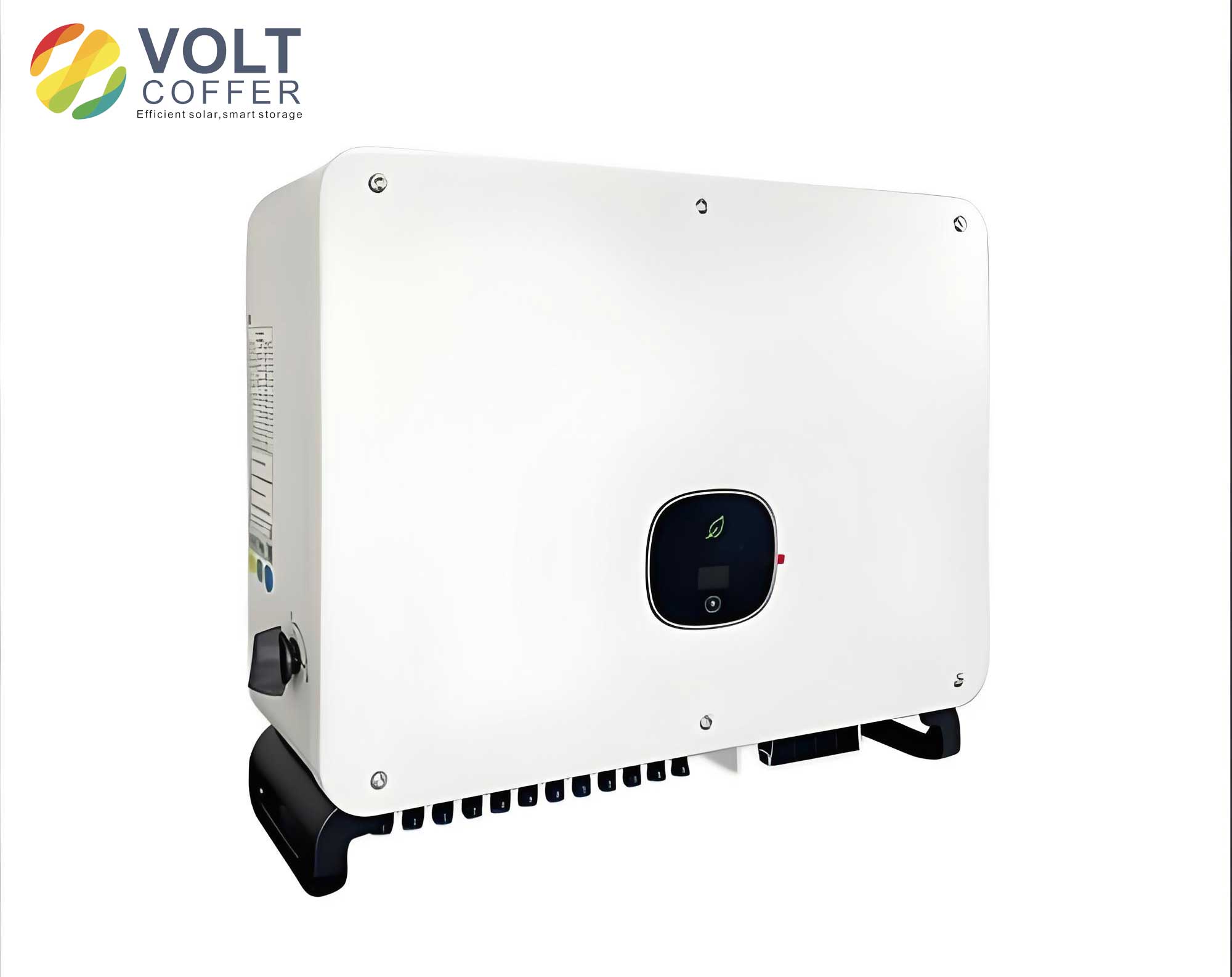
To lay the groundwork, I first establish the mathematical model of a single-phase LCL-type utility interactive inverter. The topology typically includes a DC input voltage, an inverter bridge, an LCL filter composed of inverter-side inductance, filter capacitance with series resistance, and grid-side inductance, and the grid with impedance. The control system often employs a current controller, such as a PI regulator, to regulate the grid current. The transfer function of the grid current can be derived as:
$$I_g(s) = \frac{I_{\text{ref}}(s) \cdot (sCR + G) – U_g(s) \cdot (s^2 CL_1 + sCG)}{s^3 CL_1 L_2 + s^2 C(L_1 Z_g + L_2 G + R L_1 + R L_2) + s(C G Z_g + C R G + L_1 + L_2) + G}$$
where \(I_g\) is the grid current, \(I_{\text{ref}}\) is the reference current, \(U_g\) is the grid voltage, \(G = K_p + K_i/s\) is the PI controller, \(C\) is the filter capacitance, \(R\) is the damping resistance, \(L_1\) and \(L_2\) are the inverter-side and grid-side inductances, respectively, and \(Z_g\) is the grid impedance. For weak grids, \(Z_g\) is predominantly inductive, so \(Z_g(s) = sL_g\), where \(L_g\) is the grid inductance. The stability of the utility interactive inverter system can be analyzed using the Norton equivalent circuit, where the inverter is represented by a current source \(I_s\) in parallel with an output impedance \(Z_{\text{out}}\). The grid current is then:
$$I_g(s) = \frac{I_s(s) – U_g(s)/Z_{\text{out}}(s)}{1 + Z_g(s)/Z_{\text{out}}(s)}$$
The term \(1/[1 + Z_g(s)/Z_{\text{out}}(s)]\) determines system stability. If both the inverter and grid are independently stable, the system stability depends on the impedance ratio \(Z_g(s)/Z_{\text{out}}(s)\). The phase margin (PM) at the crossover frequency \(\omega_c\), where \(|Z_g(j\omega_c)| = |Z_{\text{out}}(j\omega_c)|\), is given by:
$$\text{PM} = 180^\circ – \left[\arg(Z_g(j\omega_c)) – \arg(Z_{\text{out}}(j\omega_c))\right]$$
For robust performance, PM should exceed 30°. The output impedance \(Z_{\text{out}}\) of the utility interactive inverter under traditional current control can be derived as:
$$Z_{\text{out}}(s) = \frac{s^3 C L_1 L_2 + s^2 C (L_2 G + R L_1 + R L_2) + s (C R G + L_1 + L_2) + G}{s^2 C L_1 + s C G}$$
To illustrate the impact of grid impedance, I plot the Bode diagrams of \(Z_{\text{out}}\) and \(Z_g\) for different \(L_g\) values. As \(L_g\) increases from 0.5 mH to 3 mH, the crossover frequency shifts to lower frequencies, and the phase margin decreases from 15° to 5°, indicating reduced stability. This underscores the need for control strategies that enhance the phase margin in utility interactive inverters operating in weak grids.
To address this, I propose an improved current control strategy that integrates voltage feed-forward with self-tuning filtering (STF) and parallel adaptive virtual impedance. The first step involves incorporating an STF in the voltage feed-forward path. The STF is designed to pass the fundamental frequency component without attenuation or phase shift while attenuating harmonics. Its transfer function is:
$$G_{\text{STF}}(s) = \frac{K(s + j\omega_0)}{s^2 + K s + \omega_0^2}$$
where \(\omega_0\) is the fundamental angular frequency, and \(K > 0\) is a tuning parameter. This filter helps mitigate grid background harmonics and improves the phase margin by reshaping the output impedance. With STF, the output impedance of the utility interactive inverter becomes:
$$Z_{\text{out1}}(s) = \frac{s^3 C L_1 L_2 + s^2 C (L_2 G + R L_1 + R L_2) + s (C R G + L_1 + L_2) + G}{s^2 C L_1 + s C (G + R – H) + (1 – H)}$$
where \(H\) is related to the STF design. The Bode plot shows that \(Z_{\text{out1}}\) achieves a higher phase margin (e.g., 38° to 42° for \(L_g\) from 0.5 mH to 3 mH) compared to traditional control. However, this approach introduces a positive resonance peak in the frequency response, which can still compromise stability. Therefore, I further enhance the strategy by adding a parallel adaptive virtual impedance to the utility interactive inverter control loop.
The parallel virtual impedance, denoted as \(Z_v\), is connected in a feedback path from the point of common coupling (PCC) voltage to the current reference. This effectively modifies the output impedance to suppress the resonance peak and boost the phase margin. The adjusted output impedance is:
$$Z_{\text{out2}}(s) = \frac{s^3 C L_1 L_2 + s^2 C A_3 + s B_3 + G}{s^2 C L_1 + s C (H – T_G) + (1 + T_G)}$$
where \(A_3\), \(B_3\), and \(T_G\) are parameters derived from the virtual impedance integration. The virtual impedance is designed to be adaptive, adjusting based on the harmonic content of the PCC voltage to optimize performance. The adaptive mechanism uses a notch filter to extract harmonic components, a low-pass filter, and a regulator to dynamically adjust \(1/Z_v\). This ensures that the utility interactive inverter maintains stability under varying grid conditions without excessive power loss.
The effectiveness of this improved control strategy for utility interactive inverters is validated through simulations and experiments. The system parameters are summarized in the following table:
| Parameter | Value |
|---|---|
| DC bus voltage | 200 V |
| Grid voltage (RMS) | 110 V |
| Grid current | 10 A |
| Switching frequency | 10 kHz |
| Sampling frequency | 20 kHz |
| PI controller: \(K_p\) | 0.6 |
| PI controller: \(K_i\) | 80 |
| Inverter-side inductance \(L_1\) | 4 mH |
| Filter capacitance \(C\) | 30 μF |
| Grid-side inductance \(L_2\) | 1.61 mH |
| Damping resistance \(R\) | 2 Ω |
| STF parameter \(K\) | 80 |
| Adaptive regulator: \(K_{PR}\) | 0.5 |
| Adaptive regulator: \(K_{iR}\) | 60 |
In simulation, I compare three control strategies for the utility interactive inverter: traditional current control, voltage feed-forward with STF, and the improved strategy with STF and adaptive virtual impedance. Under strong grid conditions (\(L_g = 0.1\) mH), all strategies yield stable grid currents with low total harmonic distortion (THD). However, the improved strategy shows the lowest THD, highlighting its superiority even in ideal grids. Under weak grid conditions (\(L_g = 3\) mH), the traditional control leads to severe current distortion with high THD, while the STF method reduces THD but still exceeds 5%. The improved strategy maintains a sinusoidal current with THD below 1.27%, demonstrating robust stability. Furthermore, with grid background harmonics injected (e.g., 3% of fundamental at odd harmonics up to 35th), the improved strategy effectively attenuates harmonics, keeping THD under 5%, whereas the other strategies fail to meet this standard.
Experimental validation on a DSP-based power conversion platform confirms these findings. The utility interactive inverter prototype is tested under similar conditions. In strong grids, all controls perform adequately, but the improved strategy yields the cleanest current waveform. In weak grids, traditional control causes instability, STF control improves but still has elevated THD, and the improved strategy ensures stable operation with minimal distortion. With background harmonics, only the improved strategy maintains compliance with grid codes, proving its practical efficacy for utility interactive inverters in real-world weak grid environments.
The proposed strategy enhances the utility interactive inverter performance through several mechanisms. The voltage feed-forward with STF rejects grid voltage disturbances and improves phase margin by reshaping the output impedance in the mid-frequency range. The parallel adaptive virtual impedance then suppresses the positive resonance peak introduced by STF and further increases phase margin across a wider frequency band. This dual approach ensures that the utility interactive inverter maintains a phase margin above 48° even with grid impedance up to 3 mH, well beyond the 30° requirement. Additionally, the adaptive nature of the virtual impedance optimizes damping without fixed parameters, allowing the utility interactive inverter to adapt to varying grid conditions dynamically.
In conclusion, I have presented a comprehensive improved current control strategy for single-phase LCL-type utility interactive inverters operating in weak grids. The integration of voltage feed-forward self-tuning filtering and parallel adaptive virtual impedance effectively addresses key challenges such as reduced phase margin due to grid impedance variations, resonance peaks, and grid background harmonics. The strategy significantly boosts the phase margin, suppresses current distortion, and enhances overall system stability. Simulation and experimental results validate that this approach outperforms traditional methods, ensuring reliable and high-quality power injection from utility interactive inverters into weak grids. Future work could extend this strategy to three-phase systems or explore integration with other grid-support functions in utility interactive inverters for smarter grid integration.
The utility interactive inverter is a critical link between distributed energy resources and the grid, and its performance under non-ideal conditions is paramount. By advancing control techniques as discussed here, we can foster greater penetration of renewables while maintaining grid stability and power quality. This research contributes to the ongoing efforts to develop resilient power electronic interfaces for modern energy systems.