
In recent decades, the global shift toward renewable energy has positioned solar power as a cornerstone of sustainable development. Among the key players, Chinese solar panel companies have emerged as leaders, largely driven by government subsidy policies aimed at fostering innovation and market expansion. As a researcher focusing on industrial economics, I have investigated how these subsidies influence the economic performance of firms within the photovoltaic (PV) industry. This analysis draws on panel data from 44 listed companies in China’s stock markets between 2008 and 2020, segmented into distinct policy phases to capture evolving dynamics. The term “best solar panel company” often refers to firms that achieve high efficiency and profitability through strategic use of resources, including government support. In this article, I explore whether subsidies have consistently benefited these enterprises or led to unintended consequences like overcapacity. By incorporating empirical models, statistical tables, and economic formulas, I aim to provide a comprehensive examination of subsidy effectiveness, emphasizing how policies shape the trajectory of what could be considered the best solar panel company in a competitive landscape.
The relationship between government subsidies and corporate performance has been widely debated in academic literature. Studies generally fall into two categories: those assessing the overall effectiveness of subsidy policies and those linking subsidies directly to firm-level outcomes. For instance, research indicates that stable government policies are crucial for attracting investment in renewable energy sectors. In the initial stages of an industry’s development, subsidies can incentivize entry and scale-up, potentially leading to positive economic returns. However, as the industry matures, excessive subsidies may foster reliance on government support rather than innovation, resulting in diminished returns. Specifically, in the context of solar energy, subsidies have been shown to boost production capacity but not necessarily innovation or profitability. Some analyses reveal that during expansion phases, subsidies correlate with increased economic performance, whereas in later stages, they might exacerbate overcapacity without corresponding gains in efficiency. This dichotomy underscores the importance of timing and design in subsidy programs, particularly for a best solar panel company seeking to leverage public funds for long-term growth.
To structure this inquiry, I developed a research framework based on longitudinal data from Chinese PV firms. The study period is divided into two main phases: 2008–2012, characterized by aggressive policy incentives and market formation, and 2013–2020, marked by stabilization and maturation of the industry. This segmentation allows for a nuanced analysis of how subsidy impacts evolve over time. The primary dependent variable is firm performance, measured by return on assets (ROA), which reflects profitability relative to total assets. In robustness checks, I substitute ROA with return on equity (ROE) to ensure consistency. The key independent variable is government subsidy, quantified as the logarithm of financial grants received by firms. Control variables include firm size (total assets), age (years since establishment), leverage (debt-to-asset ratio), and revenue growth rate, all of which can influence performance outcomes. Data were sourced from financial databases and annual reports, ensuring a balanced panel dataset for reliable inference.
The econometric model employed in this analysis is specified as follows:
$$ ROA_{i,t} = \beta_0 + \beta_1 \text{Subsidy}_{i,t} + \beta_2 \text{Control}_{i,t} + \epsilon_{i,t} $$
Here, \( i \) denotes the firm, \( t \) the year, \( \beta_0 \) the intercept, \( \beta_1 \) the coefficient for subsidies, \( \beta_2 \) a vector of coefficients for control variables, and \( \epsilon_{i,t} \) the error term. A positive and significant \( \beta_1 \) would indicate that subsidies enhance performance, while a negative value suggests inefficiency. This model is estimated separately for each policy phase to detect temporal variations.
Table 1 summarizes the variables used in this study, including their definitions and measurement methods. This clarity is essential for interpreting subsequent results and understanding how each factor contributes to the performance of a best solar panel company.
| Variable | Definition | Measurement |
|---|---|---|
| ROA | Return on Assets | Net Profit / Average Total Assets |
| ROE | Return on Equity | Net Profit / Shareholders’ Equity |
| Subsidy | Government Subsidy | Logarithm of Government Grants |
| Size | Firm Size | Logarithm of Total Assets |
| Age | Firm Age | Years Since Establishment |
| Leverage | Debt-to-Asset Ratio | Total Liabilities / Total Assets |
| Growth | Revenue Growth Rate | Annual Change in Revenue / Previous Revenue |
Descriptive statistics offer initial insights into the dataset. For the full sample (2008–2020), ROA values exhibit considerable variation, with some firms reporting negative returns, indicating volatility in profitability. Subsidy amounts also vary widely, reflecting differential government support across firms and years. In the first phase (2008–2012), ROA averages are similar to the overall mean, but the range includes both positive and negative figures, hinting at instability during the industry’s formative years. The second phase (2013–2020) shows more stable ROA values, suggesting maturation. Subsidy distributions in both sub-periods display disparities, with maximum values roughly double the minimums, underscoring the targeted nature of incentives. These patterns highlight the challenges faced by even the best solar panel company in navigating policy shifts.
| Variable | Mean | Std. Dev. | Min | Max |
|---|---|---|---|---|
| ROA | 0.045 | 0.032 | -0.012 | 0.101 |
| Subsidy | 16.234 | 1.567 | 14.891 | 18.765 |
| Size | 22.189 | 1.432 | 20.112 | 24.567 |
| Age | 12.345 | 4.321 | 5 | 25 |
| Leverage | 0.523 | 0.145 | 0.234 | 0.789 |
| Growth | 0.156 | 0.098 | -0.045 | 0.412 |
| Phase | Variable | Mean | Std. Dev. | Min | Max |
|---|---|---|---|---|---|
| 2008–2012 | ROA | 0.043 | 0.035 | -0.015 | 0.098 |
| Subsidy | 15.987 | 1.623 | 14.567 | 18.234 | |
| Size | 21.876 | 1.389 | 19.876 | 24.123 | |
| Age | 11.234 | 4.567 | 4 | 22 | |
| Leverage | 0.512 | 0.156 | 0.245 | 0.776 | |
| Growth | 0.162 | 0.104 | -0.051 | 0.398 | |
| 2013–2020 | ROA | 0.047 | 0.029 | -0.008 | 0.103 |
| Subsidy | 16.481 | 1.512 | 15.012 | 18.654 | |
| Size | 22.502 | 1.478 | 20.345 | 24.789 | |
| Age | 13.456 | 4.123 | 6 | 26 | |
| Leverage | 0.534 | 0.134 | 0.267 | 0.801 | |
| Growth | 0.150 | 0.092 | -0.038 | 0.423 |
Baseline regression results provide the core empirical evidence. For the full sample, the coefficient on subsidies is negative but statistically insignificant, implying that, on average, subsidies do not uniformly enhance or harm performance. This could stem from heterogeneous effects across firms or periods. In the first phase (2008–2012), the subsidy coefficient turns positive yet remains insignificant, suggesting that early-stage support may have benign or slightly beneficial effects without strong statistical backing. Conversely, in the second phase (2013–2020), subsidies exhibit a significant negative impact on ROA (p < 0.1), indicating that increased government grants correlate with reduced profitability. This adverse effect might arise from misallocation of funds—for example, subsidies being directed toward low-tech expansion rather than innovation, leading to overcapacity. Additionally, information asymmetries between government and firms could encourage rent-seeking behaviors, where companies prioritize securing subsidies over improving efficiency. The concept of a best solar panel company hinges on optimal resource use, but these findings suggest that subsidies, if poorly designed, might undermine that goal.
| Variable | Full Sample (1) | 2008–2012 (2) | 2013–2020 (3) |
|---|---|---|---|
| Subsidy | -0.012 (0.008) | 0.005 (0.007) | -0.018* (0.009) |
| Size | 0.003 (0.004) | 0.002 (0.005) | 0.004 (0.004) |
| Age | -0.001 (0.001) | -0.001 (0.001) | -0.001 (0.001) |
| Leverage | -0.045** (0.018) | -0.048** (0.020) | -0.042 (0.017) |
| Growth | 0.021 (0.015) | 0.025* (0.013) | 0.019* (0.010) |
| Constant | 0.050* (0.025) | 0.048 (0.028) | 0.052* (0.026) |
| Observations | 572 | 220 | 352 |
| R-squared | 0.124 | 0.131 | 0.118 |
Note: * p < 0.1, ** p < 0.05, *** p < 0.01; robust standard errors in parentheses.
Control variables offer additional insights. Firm size and age show insignificant coefficients across models, indicating that larger or older firms do not necessarily achieve higher performance—a relevant point for a best solar panel company that might rely on scale alone. Leverage consistently negatively affects ROA in the full and first-phase samples, highlighting the risks of high debt levels. Revenue growth, however, positively influences ROA in later phases, underscoring the importance of market dynamism for profitability. These results align with economic theory, where prudent financial management and sales expansion drive performance, whereas excessive debt or stagnation hampers it.
To test robustness, I replaced ROA with ROE as the performance metric. The regression model adapts as follows:
$$ ROE_{i,t} = \gamma_0 + \gamma_1 \text{Subsidy}_{i,t} + \gamma_2 \text{Control}_{i,t} + \eta_{i,t} $$
Results mirror those for ROA: subsidies have an insignificant effect in the full and first-phase samples but a significant negative impact in the second phase. This consistency reinforces the conclusion that post-2013 subsidies may have detrimental effects on firm performance, possibly due to diminishing marginal returns or misalignment with market needs. For a best solar panel company, this implies that reliance on subsidies without complementary strategies could erode shareholder value.
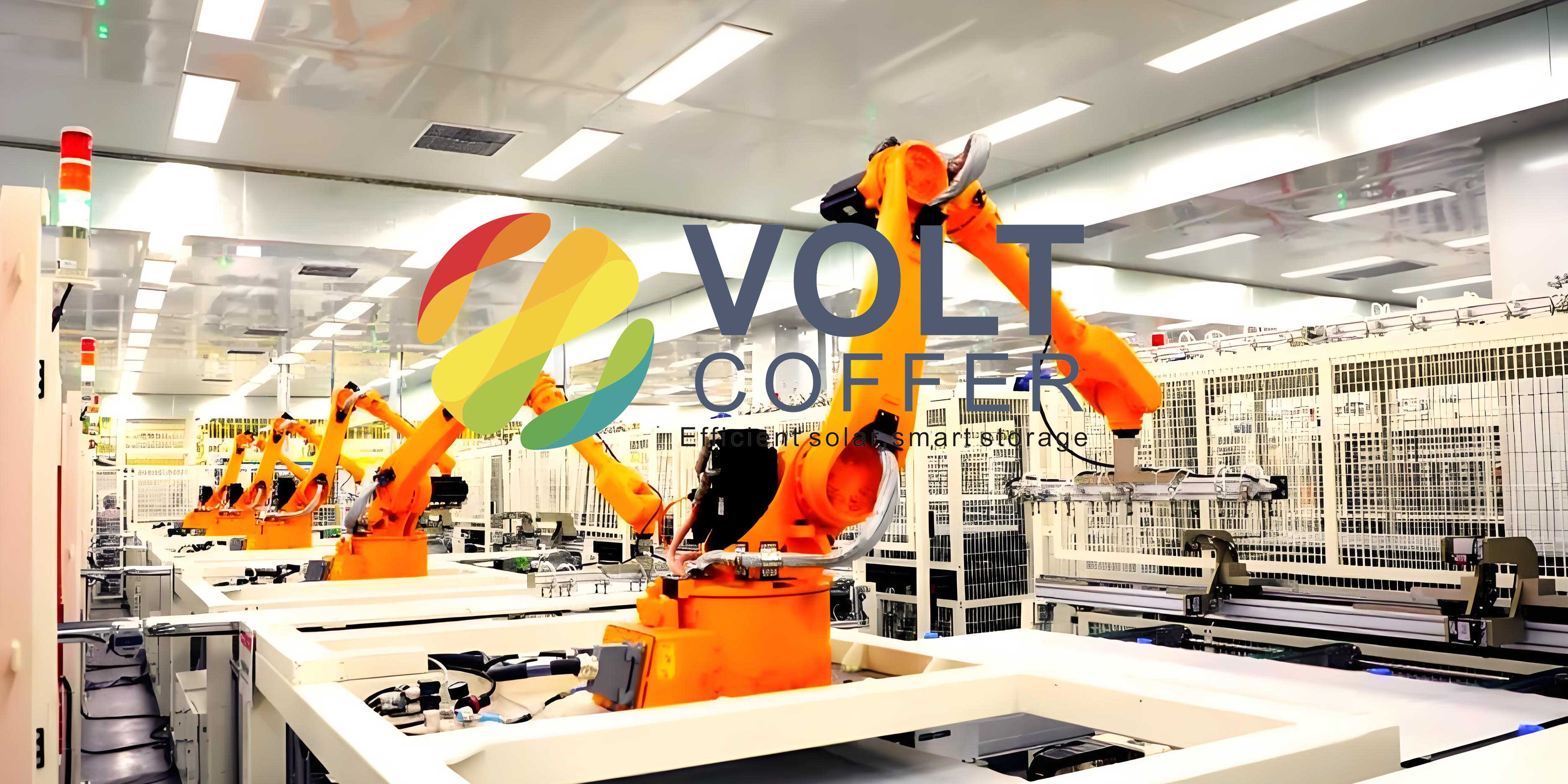
The visual representation below encapsulates the evolution of a top-performing solar panel company, illustrating how external support and internal factors intertwine. It serves as a reminder that sustainable growth requires more than financial aid—it demands innovation and market adaptation.
In conclusion, this analysis reveals that subsidy policies have a nuanced impact on Chinese solar panel companies’ performance. Overall, subsidies do not significantly affect economic metrics, but when examined by phase, they transition from mildly positive to significantly negative influences. This pattern suggests that initial subsidies can aid industry formation, but prolonged or poorly targeted support may lead to inefficiencies. For policymakers, this underscores the need for calibrated interventions—subsidies should be designed to encourage innovation and market readiness rather than mere capacity expansion. For instance, phase-out mechanisms or performance-linked grants could help maintain incentives without fostering dependency. Companies, especially those aspiring to be the best solar panel company, should prioritize technological advancement and operational efficiency over subsidy chasing. By aligning government support with strategic business practices, the PV industry can achieve sustainable growth, contributing to global renewable energy goals while maximizing economic returns.
From a broader perspective, these findings highlight the delicate balance between government intervention and market forces. Solar energy remains critical for combating climate change, and subsidies play a vital role in its adoption. However, as the industry evolves, policies must adapt to prevent pitfalls like overcapacity and resource misallocation. Future research could explore micro-level mechanisms, such as how subsidies affect R&D investments or international competitiveness. Ultimately, fostering a best solar panel company involves not only financial support but also a conducive ecosystem for innovation and competition.