
In recent years, the rapid expansion of photovoltaic energy systems has drawn significant attention to their environmental impacts, particularly in arid and semi-arid regions prone to desertification. As a researcher focused on sustainable land management, I have been investigating how the installation height of solar panels influences soil physicochemical properties in rocky desertification areas during dry periods. The interplay between photovoltaic infrastructure and soil health is complex, involving changes in microclimate, water retention, and nutrient cycling. In this study, I aim to explore the effects of varying solar panel heights on soil moisture and nutrient dynamics across different slopes, using a combination of field sampling and statistical analyses. The findings could inform better design practices for photovoltaic installations to support ecological restoration and green energy development.
Rocky desertification regions are characterized by fragile ecosystems with limited water resources and poor soil fertility. The introduction of photovoltaic systems can alter local environmental conditions, such as temperature and humidity, which in turn affect soil properties. Previous studies have highlighted the shading effects of solar panels on reducing evaporation and moderating soil temperature, but the role of panel height remains underexplored. Specifically, how the height of photovoltaic arrays interacts with topographic slopes to influence soil water holding capacity and nutrient availability during drought conditions is not well understood. This research addresses that gap by examining soil samples from areas under high and low solar panels, as well as non-shaded control sites, on both gentle and steep slopes.
The study was conducted in a photovoltaic demonstration base that has been operational for eight years. This area experiences a distinct dry season with minimal rainfall, making it ideal for assessing drought impacts. I collected soil samples from beneath solar panels of different heights: high panels with a front eave height of 2.4 m and rear eave height of 3.1 m, and low panels with a front eave height of 0.5 m and rear eave height of 1.2 m, both set at a 24° tilt angle. Sampling was performed at the beginning and end of the dry season to capture temporal variations. For each panel height and slope combination, I analyzed soil volumetric water content, saturated water holding capacity, capillary water holding capacity, field capacity, organic carbon, total nitrogen, total phosphorus, pH, bulk density, porosity, and enzyme activities like urease and phosphatase. Statistical methods, including ANOVA and redundancy analysis (RDA), were used to identify key factors driving changes in soil properties.
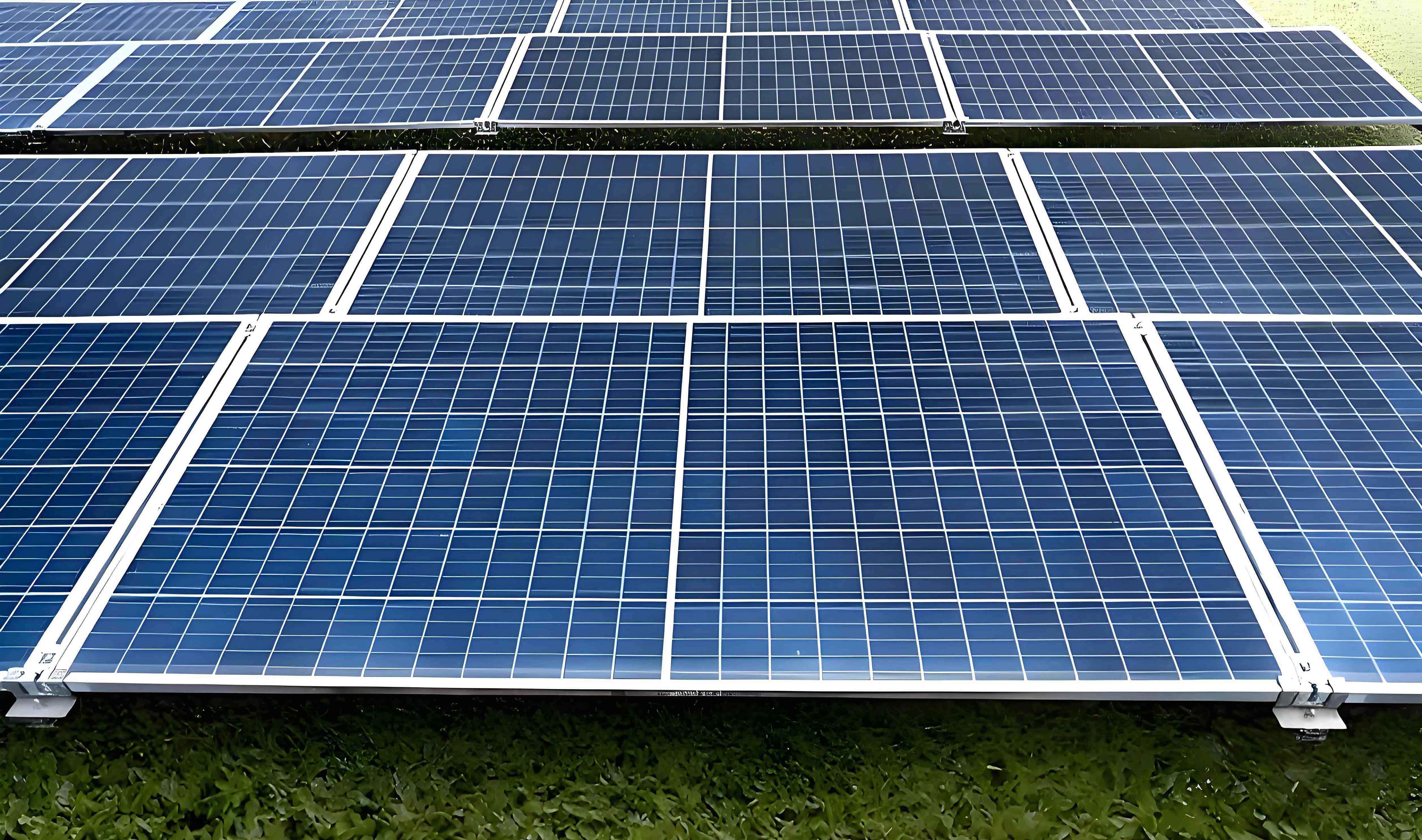
The results revealed significant variations in soil moisture and nutrient levels due to photovoltaic panel height and slope. During the early dry season, soil volumetric water content ranged from 20.56% to 35.23%, with the highest values observed under low panels on gentle slopes. Similarly, saturated water holding capacity varied between 383.07 and 559.50 g/kg, showing a clear advantage in shaded areas, particularly under low photovoltaic panels. These patterns persisted into the late dry season, though absolute values decreased due to prolonged drought. The enhanced water retention under lower panels can be attributed to reduced solar radiation and wind exposure, which minimize evaporation. This relationship can be expressed using a simplified water balance equation: $$ \frac{dW}{dt} = I – E – L $$ where \( W \) is soil water content, \( I \) is infiltration, \( E \) is evaporation, and \( L \) represents losses from runoff or drainage. In this case, the shading from photovoltaic panels reduces \( E \), leading to higher \( W \).
Nutrient analysis showed that soil organic carbon, total nitrogen, and total phosphorus were significantly influenced by photovoltaic panel height. In the early dry season, organic carbon content was highest under low panels on gentle slopes, averaging 15.48 g/kg, while it decreased to 8.8 g/kg under high panels on steep slopes. Total nitrogen followed a similar trend, with values up to 3.17 g/kg in favorable conditions. However, by the late dry season, organic carbon content in shaded areas was 35% lower than in non-shaded controls, possibly due to reduced plant litter input and microbial activity. The dynamics of nitrogen and phosphorus can be modeled using mineralization equations: $$ N_{\text{min}} = k_N \cdot SOC \cdot f(T, W) $$ and $$ P_{\text{avail}} = k_P \cdot TP \cdot g(pH, E) $$ where \( k_N \) and \( k_P \) are rate constants, \( SOC \) is soil organic carbon, \( TP \) is total phosphorus, and \( f \) and \( g \) are functions of temperature (\( T \)), water content (\( W \)), pH, and enzyme activity (\( E \)). These equations highlight how photovoltaic-induced changes in microclimate indirectly affect nutrient availability.
| Sample Site | Volumetric Water Content (%) | Saturated Water Holding Capacity (g/kg) | Capillary Water Holding Capacity (g/kg) | Field Capacity (g/kg) |
|---|---|---|---|---|
| Low Panel, Gentle Slope | 35.23 ± 0.55 | 559.50 ± 51.34 | 416.89 ± 11.29 | 325.08 ± 12.16 |
| Low Panel, Steep Slope | 31.96 ± 0.96 | 464.11 ± 21.88 | 409.02 ± 22.95 | 345.10 ± 17.46 |
| High Panel, Gentle Slope | 25.21 ± 0.94 | 424.42 ± 23.04 | 376.80 ± 15.55 | 311.30 ± 26.97 |
| High Panel, Steep Slope | 24.21 ± 0.80 | 419.52 ± 32.92 | 356.49 ± 20.95 | 283.23 ± 14.46 |
| Control, Gentle Slope | 23.13 ± 1.28 | 415.90 ± 70.78 | 380.22 ± 16.07 | 301.52 ± 3.10 |
| Control, Steep Slope | 20.56 ± 0.89 | 383.07 ± 11.36 | 345.15 ± 18.45 | 261.93 ± 6.45 |
Statistical analyses, including ANOVA, confirmed that photovoltaic panel height had a significant effect (p < 0.05) on all measured soil parameters. For instance, soil bulk density and porosity were strongly correlated with water holding capacities. In the early dry season, bulk density ranged from 1.2 to 1.5 g/cm³, with lower values under low panels, indicating better soil structure. Porosity, which influences water infiltration and retention, was higher in shaded areas, particularly under low photovoltaic panels on gentle slopes. The RDA results further illustrated that enzyme activities, such as urease and phosphatase, were key drivers of nutrient variations. In the early dry season, these enzymes showed positive correlations with organic carbon and total nitrogen, whereas by the late dry season, their influence diminished due to moisture stress.
To quantify the relationships, I developed a multiple regression model for soil water content: $$ W = \beta_0 + \beta_1 H + \beta_2 S + \beta_3 BD + \beta_4 P + \epsilon $$ where \( H \) is photovoltaic panel height, \( S \) is slope, \( BD \) is bulk density, \( P \) is porosity, and \( \epsilon \) is the error term. The coefficients indicated that lower panel heights and gentler slopes positively affected water content, with bulk density and porosity playing moderating roles. Similarly, for nutrient dynamics, a principal component analysis (PCA) was performed, revealing that the first two components explained over 80% of the variance, with photovoltaic panel height and slope as dominant factors.
| Sample Site | Organic Carbon (g/kg) | Total Nitrogen (g/kg) | Total Phosphorus (g/kg) | pH |
|---|---|---|---|---|
| Low Panel, Gentle Slope | 14.87 ± 2.1 | 2.20 ± 0.3 | 0.53 ± 0.05 | 6.5 ± 0.2 |
| Low Panel, Steep Slope | 16.45 ± 1.8 | 1.98 ± 0.2 | 0.48 ± 0.04 | 6.7 ± 0.3 |
| High Panel, Gentle Slope | 12.33 ± 1.5 | 1.75 ± 0.2 | 0.42 ± 0.03 | 7.0 ± 0.2 |
| High Panel, Steep Slope | 11.20 ± 1.2 | 1.50 ± 0.1 | 0.38 ± 0.02 | 7.2 ± 0.3 |
| Control, Gentle Slope | 30.49 ± 3.5 | 1.65 ± 0.2 | 0.40 ± 0.03 | 6.8 ± 0.2 |
| Control, Steep Slope | 28.75 ± 3.0 | 0.98 ± 0.1 | 0.27 ± 0.02 | 7.1 ± 0.3 |
Discussion of these findings centers on the mechanisms by which photovoltaic panels alter soil environments. The shading effect of solar panels reduces direct solar radiation, lowering soil temperature and evaporation rates. This is particularly beneficial in dry seasons, as it helps conserve moisture. Lower photovoltaic panels, being closer to the ground, provide more extensive shading and wind protection, leading to higher soil water retention. Additionally, the change in microclimate can influence microbial activity and enzyme production, which are crucial for nutrient cycling. For example, urease activity, which catalyzes urea hydrolysis, was higher under low panels, facilitating nitrogen mineralization. The decrease in organic carbon under photovoltaic panels by the late dry season might be due to reduced plant growth and litter decomposition in shaded areas, though this requires further investigation.
Slope also played a critical role; gentle slopes retained more water and nutrients due to reduced runoff and better water infiltration. On steep slopes, even with photovoltaic shading, soil erosion and rapid water loss diminished the benefits. This interaction can be modeled using a slope-adjusted water retention equation: $$ W_s = W_0 \cdot e^{-k \cdot \tan(\theta)} $$ where \( W_s \) is soil water content on a slope, \( W_0 \) is the baseline water content on flat terrain, \( k \) is a constant, and \( \theta \) is the slope angle. This shows that steeper slopes lead to exponentially lower water retention, emphasizing the importance of terrain in photovoltaic system planning.
In terms of practical implications, these results suggest that installing lower photovoltaic panels in rocky desertification areas, especially on gentle slopes, can enhance soil water conservation and nutrient retention during dry periods. This approach aligns with sustainable land use practices, promoting both energy production and ecological health. However, long-term studies are needed to assess cumulative effects, such as changes in soil organic matter and biodiversity. Future research could also explore the integration of photovoltaic systems with agroforestry or other restoration techniques to maximize benefits.
In conclusion, this study demonstrates that photovoltaic panel height significantly influences soil physicochemical properties in rocky desertification regions during dry seasons. Lower panels consistently improved soil moisture and nutrient levels, with gentle slopes amplifying these effects. The use of statistical models and equations helped elucidate the underlying relationships, highlighting the roles of bulk density, porosity, pH, and enzyme activities. As the world increasingly adopts renewable energy, understanding these environmental interactions is essential for designing photovoltaic installations that support rather than hinder ecosystem recovery. I recommend considering panel height and topography in the planning phases to optimize soil health and contribute to combating desertification.
Further analysis using advanced statistical tools, such as structural equation modeling, could uncover indirect pathways through which photovoltaic factors affect soil properties. For instance, the mediation effect of microbial communities on nutrient cycles could be quantified. Additionally, climate change scenarios could be incorporated to predict how these relationships might evolve under increasing drought frequency. Overall, the integration of photovoltaic energy with land management strategies holds promise for sustainable development in vulnerable ecosystems, and I hope this research inspires more interdisciplinary efforts in this field.