
As the global energy landscape shifts toward cleaner and low-carbon solutions, the demand for high-safety, long-life energy storage lithium batteries has become increasingly critical in applications such as grid-scale energy storage systems and electric vehicles. However, incidents involving thermal runaway, fires, and explosions in lithium-ion batteries have raised significant safety concerns. The separator, serving as the sole physical barrier between the cathode and anode in an energy storage lithium battery, plays a pivotal role in determining the safety boundaries due to its thermal stability, mechanical strength, and interfacial properties. Over the years, separator coating technologies have evolved: early designs lacked any coating, followed by the introduction of inorganic layers like alumina or boehmite to enhance thermal stability and electrolyte wettability. Recently, the industry has shifted toward combining inorganic coatings with polymer adhesive layers to further improve safety and electrochemical performance. Among the common polymer materials used for these adhesive layers are polyvinylidene fluoride (PVDF) and polymethyl methacrylate (PMMA), which are known to enhance adhesion between the separator and electrodes, reduce internal resistance, and mitigate risks like gas formation during cycling or internal short circuits under abuse conditions. Despite their widespread use, a detailed comparative analysis of how PVDF and PMMA adhesive layers influence the safety of energy storage lithium batteries under extreme scenarios remains limited. This study aims to address this gap by systematically evaluating the effects of PVDF and PMMA-based adhesive layers on the safety performance of 280 A·h lithium iron phosphate batteries, which are commonly employed in energy storage applications, under overcharge, external heating, and nail penetration abuse tests. The findings provide essential insights for optimizing separator materials in energy storage lithium batteries, thereby enhancing their reliability and safety.
In this investigation, we focused on two types of separator samples obtained from the same manufacturer, designated as Type 1 (with a PVDF adhesive layer) and Type 2 (with a PMMA adhesive layer). Both separators featured a 9+2+1 structure, where the “2” represents an alumina coating and the “1” denotes the adhesive layer. To characterize the fundamental properties of these separators, we conducted a series of tests, including puncture strength, tensile strength, air permeability, thermal conductivity, and thermal stability. The puncture strength was measured using a puncture strength tester (model BE-BL-10N), tensile strength with a universal testing machine (model BE-BL-2KN), air permeability with a Gurley tester (model Gurley 4110N), thermal conductivity with a thermal constants analyzer (model TPS2500S), and thermal shrinkage after exposure to 130°C for 1 hour using a temperature-controlled chamber (model GRS-ZK50L). These tests are crucial for understanding how the material properties influence the behavior of energy storage lithium batteries under abuse conditions.
The results of the separator property tests are summarized in Table 1. As shown, Type 1 separator (PVDF-based) exhibited superior puncture strength (4.86 N) compared to Type 2 (4.61 N), indicating better resistance to mechanical penetration. Similarly, the transverse tensile strength was higher for Type 1 (0.2448 N/mm²) than for Type 2 (0.2390 N/mm²), suggesting enhanced mechanical integrity. In terms of thermal stability, Type 1 demonstrated lower thermal shrinkage in both longitudinal (0.75%) and transverse (0.59%) directions after heating, compared to Type 2 (1% and 0.84%, respectively). This reduced shrinkage is vital for maintaining separator integrity at elevated temperatures, thereby delaying internal short circuits in energy storage lithium batteries. The air permeability values were comparable (192 s/100 mL for Type 1 and 194 s/100 mL for Type 2), indicating similar electrolyte infiltration characteristics. Thermal conductivity measurements showed minimal differences (0.126 W/(m·K) for Type 1 and 0.128 W/(m·K) for Type 2), implying that heat dissipation properties are not significantly affected by the adhesive layer material. Overall, these properties highlight that Type 1 separator, with its PVDF adhesive layer, offers better mechanical and thermal performance, which could contribute to improved safety in energy storage lithium batteries.
| Category | Air Permeability [s·(100 mL)⁻¹] | Tensile Strength [N/mm²] (Longitudinal) | Tensile Strength [N/mm²] (Transverse) | Thermal Conductivity [W/(m·K)] | Puncture Strength [N] | Thermal Shrinkage [%] (130°C, 1 h, Longitudinal) | Thermal Shrinkage [%] (130°C, 1 h, Transverse) |
|---|---|---|---|---|---|---|---|
| Type 1 | 192 | 0.2513 | 0.2448 | 0.126 | 4.86 | 0.75 | 0.59 |
| Type 2 | 194 | 0.2512 | 0.2390 | 0.128 | 4.61 | 1.00 | 0.84 |
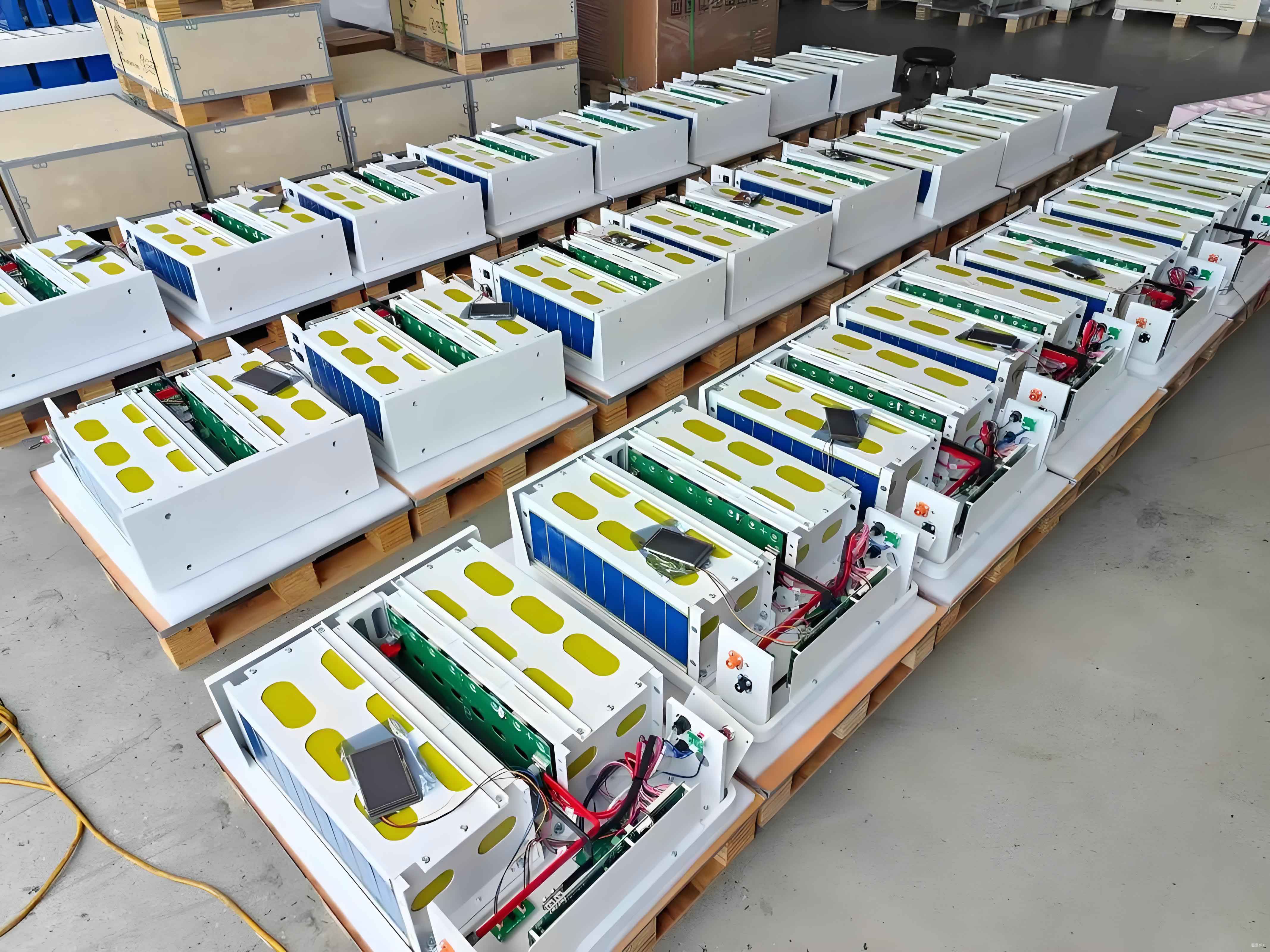
For the battery safety tests, we fabricated 280 A·h prismatic aluminum-shell lithium iron phosphate batteries using standard production processes, with the only variable being the separator type. The electrodes, electrolyte, and other components were from identical batches to ensure consistency. Prior to testing, all batteries were charged to 100% state of charge (SOC). Three abuse tests were conducted: overcharge, external heating, and nail penetration. In the overcharge test, batteries were charged at a constant current of 0.5 C (140 A) until thermal runaway occurred, using a battery charge-discharge tester (model BTS-100V100A4CH). For external heating, a heating plate (900 W, model HU591) was used to gradually increase the battery temperature until thermal runaway, with temperatures monitored using a multi-channel data logger (model TP700-16/K). The nail penetration test involved piercing the battery with a high-temperature resistant steel needle (6 mm diameter, 45° tip angle) at a speed of 25 mm/s perpendicular to the large face, using a nail penetration tester (model BE-9002-2T). In all tests, we recorded key parameters such as voltage, surface temperature, and time to events like safety valve activation and voltage drop, to assess the safety performance of energy storage lithium batteries.
The overcharge test simulates scenarios where the battery management system fails, leading to continuous charging beyond design limits. Under these conditions, both Type 1 and Type 2 batteries exhibited safety valve activation, electrolyte ejection, and smoke release, but no fire or explosion occurred. However, the timing and severity of these events differed significantly. For Type 2 batteries (PMMA-based), the safety valve opened at 12.6 minutes, followed by a voltage drop at 24.4 minutes (120% SOC), and thermal runaway onset at 27.4 minutes, with a maximum surface temperature (TTRmax) of 290.2°C and a maximum temperature rise rate (dT/dtmax) of 5.28°C/s. In contrast, Type 1 batteries (PVDF-based) showed delayed responses: safety valve opening at 14.1 minutes, voltage drop at 25.9 minutes (121% SOC), and thermal runaway at 28.0 minutes, with a lower TTRmax of 279.2°C and dT/dtmax of 5.17°C/s. This delay of 1.5 minutes in valve opening and 1.5 minutes in voltage drop, along with an 11°C reduction in peak temperature, underscores the enhanced safety of PVDF-based separators in energy storage lithium batteries during overcharge abuse. The underlying mechanism can be partly explained by the higher thermal stability and mechanical strength of PVDF, which resists internal short circuits longer. The heat generation during overcharge can be modeled using the equation: $$Q_{gen} = I^2 R_{internal} + I \left( \frac{\partial E}{\partial T} \right) \Delta T$$ where \(Q_{gen}\) is the heat generation rate, \(I\) is the current, \(R_{internal}\) is the internal resistance, \(E\) is the open-circuit voltage, and \(\Delta T\) is the temperature change. The slower response in Type 1 batteries suggests a higher resistance to thermal runaway initiation, aligning with the material properties.
| Category | Valve Opening Time (min) | Voltage Drop Time (min) | Thermal Runaway Onset Time (min) | Maximum Temperature TTRmax (°C) | Maximum Temperature Rise Rate dT/dtmax (°C/s) |
|---|---|---|---|---|---|
| Type 1 | 14.1 | 25.9 | 28.0 | 279.2 | 5.17 |
| Type 2 | 12.6 | 24.4 | 27.4 | 290.2 | 5.28 |
In the external heating test, which replicates thermal abuse conditions such as exposure to high ambient temperatures or thermal propagation in energy storage systems, we observed distinct behaviors between the two separator types. Type 2 batteries experienced safety valve opening at 28.4 minutes, voltage drop at 38.5 minutes, and thermal runaway at 40.7 minutes, with TTRmax reaching 295.2°C and dT/dtmax of 8.82°C/s. Notably, flames emerged from the safety valve during smoke release for Type 2, indicating more severe reactions. Conversely, Type 1 batteries demonstrated improved resilience: safety valve opening occurred later at 35.9 minutes, voltage drop at 49.0 minutes, and thermal runaway at 52.6 minutes, with lower TTRmax of 293.7°C and dT/dtmax of 5.64°C/s. The delays of 7.5 minutes in valve opening, 10.5 minutes in voltage drop, and 11.9 minutes in thermal runaway onset, combined with a 1.5°C lower peak temperature and a 3.18°C/s reduction in temperature rise rate, highlight the superior thermal stability of PVDF-based separators in energy storage lithium batteries. This performance can be attributed to the higher thermal shrinkage resistance of PVDF, as shown in Table 1, which prevents premature separator collapse and delays internal short circuits. The heat transfer during external heating can be described by the Fourier heat equation: $$\frac{\partial T}{\partial t} = \alpha \nabla^2 T + \frac{q_{gen}}{\rho C_p}$$ where \(\alpha\) is the thermal diffusivity, \(q_{gen}\) is the heat generation per volume, \(\rho\) is density, and \(C_p\) is specific heat capacity. The slower temperature rise in Type 1 batteries suggests better heat distribution and reduced localized hot spots, critical for safety in energy storage lithium batteries.
| Category | Valve Opening Time (min) | Voltage Drop Time (min) | Thermal Runaway Onset Time (min) | Maximum Temperature TTRmax (°C) | Maximum Temperature Rise Rate dT/dtmax (°C/s) |
|---|---|---|---|---|---|
| Type 1 | 35.9 | 49.0 | 52.6 | 293.7 | 5.64 |
| Type 2 | 28.4 | 38.5 | 40.7 | 295.2 | 8.82 |
The nail penetration test, which mimics mechanical abuse like collisions or crushing that cause internal short circuits, further validated the safety advantages of PVDF-based separators in energy storage lithium batteries. Both battery types did not ignite or explode but released smoke and electrolyte after safety valve activation. For Type 2 batteries, the valve opened at 10.9 seconds post-penetration, voltage dropped to near zero at 0.76 minutes, and thermal runaway occurred at 4.2 minutes, with TTRmax of 192.4°C and dT/dtmax of 3.12°C/s. In comparison, Type 1 batteries showed slower degradation: valve opening at 15.1 seconds, voltage drop at 1.11 minutes, and thermal runaway at 4.2 minutes, but with a significantly lower TTRmax of 175.7°C and dT/dtmax of 2.27°C/s. The 4.2-second delay in valve opening and 0.35-minute delay in voltage drop, along with a 16.7°C reduction in peak temperature and 0.85°C/s lower temperature rise rate, demonstrate the enhanced mechanical robustness of PVDF adhesive layers. This is consistent with the higher puncture and tensile strengths of Type 1 separators, which reduce the extent of internal short circuits and subsequent heat generation. The short-circuit current during nail penetration can be estimated using Ohm’s law: $$I_{short} = \frac{V}{R_{short}}$$ where \(V\) is the battery voltage and \(R_{short}\) is the resistance of the short path. The lower severity in Type 1 batteries indicates a higher \(R_{short}\) due to better separator integrity, thereby mitigating thermal effects in energy storage lithium batteries.
| Category | Valve Opening Time (s) | Voltage Near Zero Time (min) | Thermal Runaway Onset Time (min) | Maximum Temperature TTRmax (°C) | Maximum Temperature Rise Rate dT/dtmax (°C/s) |
|---|---|---|---|---|---|
| Type 1 | 15.1 | 1.11 | 4.2 | 175.7 | 2.27 |
| Type 2 | 10.9 | 0.76 | 4.2 | 192.4 | 3.12 |
To further analyze the thermal behavior, we can model the temperature dynamics during abuse tests using a simplified energy balance equation: $$\frac{dT}{dt} = \frac{Q_{gen} – Q_{loss}}{C_p m}$$ where \(Q_{gen}\) is the total heat generation, \(Q_{loss}\) is the heat loss to surroundings, \(C_p\) is the specific heat capacity, and \(m\) is the mass of the energy storage lithium battery. In our experiments, \(Q_{gen}\) includes contributions from joule heating, side reactions, and internal short circuits, while \(Q_{loss}\) depends on factors like convection and radiation. For Type 1 batteries, the lower dT/dtmax values across all tests suggest a more gradual heat generation profile, likely due to the PVDF adhesive layer’s ability to maintain separator integrity and delay reaction kinetics. Additionally, the thermal stability of PVDF, with its higher melting point compared to PMMA, contributes to this effect. The Arrhenius equation can be applied to describe the temperature-dependent reaction rates: $$k = A e^{-E_a / RT}$$ where \(k\) is the rate constant, \(A\) is the pre-exponential factor, \(E_a\) is the activation energy, \(R\) is the gas constant, and \(T\) is temperature. The delayed thermal runaway in Type 1 batteries implies a higher effective \(E_a\) for degradation reactions, aligned with the material properties of PVDF.
In summary, our comprehensive evaluation demonstrates that PVDF-based adhesive layers significantly enhance the safety of energy storage lithium batteries under various abuse conditions. The superior mechanical strength, thermal stability, and shrinkage resistance of PVDF contribute to delayed safety valve activation, voltage drop, and thermal runaway onset, as well as reduced peak temperatures and temperature rise rates. These findings emphasize the importance of material selection in separator design for energy storage lithium batteries, where safety is paramount. Future work could explore hybrid adhesive systems or nanostructured modifications to further optimize performance. Ultimately, this study provides critical data for advancing the development of safer energy storage lithium batteries, supporting the global transition to sustainable energy solutions.