
In recent years, the global emphasis on energy crises and environmental issues has intensified, with many nations actively supporting new energy industries. Lithium-ion batteries, as advanced energy storage devices, are widely used in electric tools, electric vehicles, and digital consumer products due to their high energy density, long service life, and lack of memory effect. Among these, the LiFePO4 battery, with its excellent safety and stability, has become a key focus in power battery development. However, the cycle performance of LiFePO4 batteries is influenced by various factors, including internal aspects like materials, structure, moisture, and manufacturing processes, as well as external factors such as temperature, cycling protocols, and pressure. In particular, the test fixture used during battery evaluation can significantly affect cycle life, yet this aspect is often overlooked in research. This study aims to analyze the effect of test fixtures on the cycle performance of LiFePO4 batteries, providing insights for improving testing reliability and module design.
We conducted experiments using 3.65 Ah LiFePO4/graphite pouch cells to compare two types of test fixtures: an unlimited fixture (wooden clamps and binder clips) and a limited fixture (aluminum plates with bolts, pre-tightened to 0.2 MPa). The cells were cycled at 45°C with a charge-discharge current of 1 C (where 1 C = 3650 mA) within a voltage range of 2.50–3.65 V and 100% depth of discharge (DOD). Cycling was performed up to 1800 cycles, with direct current internal resistance (DCIR) measured every 100 cycles. After cycling, we performed non-invasive analyses including DCIR, electrochemical impedance spectroscopy (EIS), and differential capacity (dQ/dV) on the failed cells. Additionally, the cells were disassembled at 100% state of charge (SoC) to examine the cathode, anode, and separator using scanning electron microscopy-energy dispersive spectrometer (SEM-EDS), X-ray diffraction (XRD), differential scanning calorimetry (DSC), inductively coupled plasma optical emission spectrometry (ICP), and permeability tests. All analyses aimed to understand the underlying mechanisms affecting cycle performance due to fixture design.
The cycling results showed that the LiFePO4 battery tested with the limited fixture exhibited superior performance. After 1800 cycles, the capacity retention was 86.6% with a swelling rate of 1.5%, compared to 83.7% capacity retention and 7.0% swelling rate for the unlimited fixture. This indicates that the limited fixture improves cycle life by 2.9% and reduces swelling by 5.5%. To quantify the internal resistance changes, we measured DCIR during cycling and EIS at 25°C for 0%, 50%, and 100% SoC after cycling. The EIS data were fitted using an equivalent circuit model, where the impedance \(Z\) is represented as:
$$Z = R_s + \frac{R_{ct}}{1 + j\omega R_{ct}C} + W_s$$
Here, \(R_s\) is the ohmic resistance, \(R_{ct}\) is the charge transfer resistance, \(C\) is the capacitance, \(\omega\) is the angular frequency, and \(W_s\) is the Warburg diffusion impedance. The fitted parameters are summarized in Table 1.
| SoC | Fixture Type | \(R_s\) (Ω) | \(R_{ct}\) (Ω) | \(W_s\) (Ω) |
|---|---|---|---|---|
| 0% | Unlimited | 0.0074 | 0.0318 | 25.6400 |
| Limited | 0.0057 | 0.0294 | 25.1000 | |
| 50% | Unlimited | 0.0088 | 0.0239 | 30.6000 |
| Limited | 0.0062 | 0.0228 | 29.3500 | |
| 100% | Unlimited | 0.0087 | 0.0232 | 24.8200 |
| Limited | 0.0066 | 0.0230 | 25.9400 |
The data reveal that the limited fixture reduces \(R_s\) by over 20% across all SoC levels, indicating improved interfacial contact and reduced ohmic losses. In contrast, \(R_{ct}\) and \(W_s\) show minimal differences, suggesting that the fixture primarily affects the physical interface rather than electrochemical kinetics. The DCIR measurements during cycling at 45°C showed no significant variation, highlighting that temperature masks fixture effects on internal resistance. This underscores the importance of room-temperature EIS for detecting subtle changes.
Further analysis via differential capacity (dQ/dV) provided insights into phase transitions in the graphite anode. The dQ/dV curve is derived from the voltage-capacity data, expressed as:
$$\frac{dQ}{dV} = \frac{\Delta Q}{\Delta V}$$
where \(Q\) is capacity and \(V\) is voltage. For LiFePO4 batteries, the dQ/dV peaks correspond to graphite staging phases: Peak 1 (around 3.4 V) represents LiC6 formation, Peak 2 (around 3.3 V) indicates LiC12 transition, and Peak 3 (around 3.2 V) relates to earlier lithiation stages. We observed that the unlimited fixture led to a reduction in Peak 1 area, signifying greater active lithium loss due to side reactions. The limited fixture preserved Peak 1 area, implying fewer side reactions and better lithium utilization. This aligns with the EIS findings, as reduced side reactions minimize SEI layer growth and interfacial degradation.
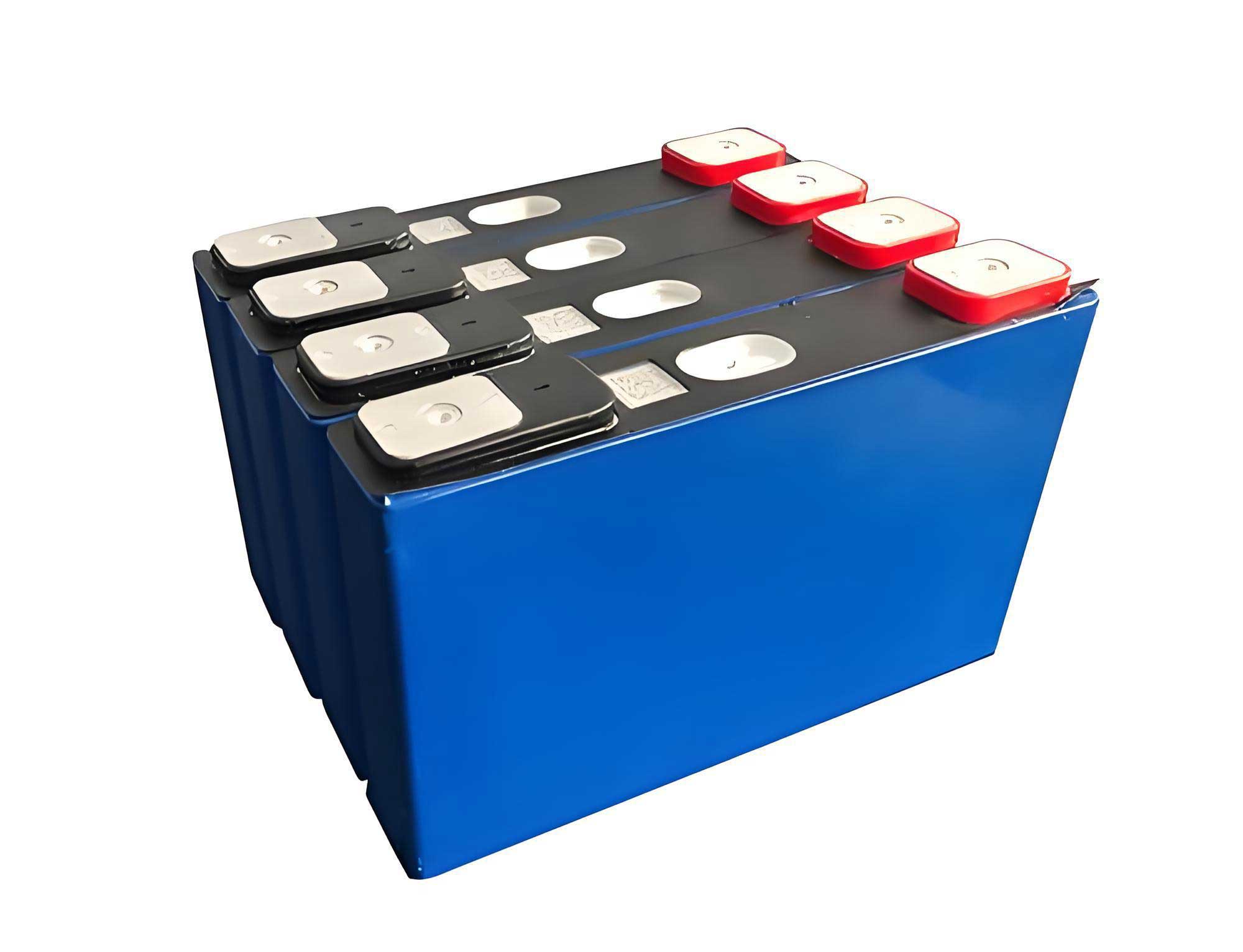
To investigate the morphological and compositional changes, we disassembled the cycled LiFePO4 batteries and examined the electrodes and separator. The anode surface from the unlimited fixture showed distinct “dead zones” with excessive side product deposition, whereas the limited fixture anode appeared more uniform with less coverage. SEM-EDS analysis quantified the surface element composition, as shown in Table 2.
| Electrode | Fixture Type | C | O | F | P | Fe |
|---|---|---|---|---|---|---|
| Anode | Unlimited | 36.83 | 52.06 | 5.48 | 5.64 | — |
| Limited | 44.09 | 51.05 | 1.44 | 3.43 | — | |
| Cathode | Unlimited | 1.55 | 13.37 | 1.74 | 32.73 | 51.10 |
| Limited | 1.55 | 13.05 | 1.61 | 31.86 | 51.93 |
The unlimited fixture anode had higher oxygen (O), fluorine (F), and phosphorus (P) content—by 1.0%, 4.0%, and 2.2% respectively—indicating more electrolyte decomposition and side reactions. In contrast, the limited fixture reduced these elements, promoting a cleaner interface. The cathode showed negligible differences, confirming that the fixture effect is anode-dominant. This is critical for LiFePO4 battery longevity, as anode degradation often limits cycle life.
XRD analysis of the fully charged anode (100% SoC) focused on the (002) peak of graphite lithiation phases. The diffraction pattern can be modeled using Bragg’s law:
$$n\lambda = 2d\sin\theta$$
where \(n\) is the order, \(\lambda\) is the wavelength, \(d\) is the interplanar spacing, and \(\theta\) is the diffraction angle. The (002) peak splits into two components: LiC6 (lower angle) and LiC12 (higher angle). We calculated the peak intensity ratio \(I_{\text{LiC6}} / I_{\text{LiC12}}\) to assess lithium intercalation. The limited fixture yielded a higher ratio, implying more complete lithiation and less active lithium loss. This supports the dQ/dV results, as the unlimited fixture’s lower ratio correlates with reduced LiC6 formation due to side reactions.
DSC measurements on the anode powder evaluated SEI layer stability. The heat flow \(\Delta H\) during SEI decomposition (80–150°C) follows the relation:
$$\Delta H = \int_{T_1}^{T_2} C_p \, dT$$
where \(C_p\) is heat capacity and \(T\) is temperature. The unlimited fixture anode exhibited a decomposition heat of 84.8 J/g, while the limited fixture anode showed 54.8 J/g—a 35% reduction. This indicates that the limited fixture minimizes SEI layer thickening and repair cycles, thereby conserving active lithium and reducing exothermic risks. For LiFePO4 batteries, which are prized for safety, lower SEI decomposition heat enhances thermal stability.
ICP analysis quantified iron (Fe) and lithium (Li) in the anode. The unlimited fixture anode contained 20.7 ppm Fe and 37,335.5 ppm Li, whereas the limited fixture anode had 21.0 ppm Fe and 40,840.8 ppm Li. The similar Fe levels suggest negligible cathode iron dissolution, but the higher Li content in the limited fixture anode (by about 9.4%) confirms better lithium retention. This directly links to the improved capacity retention observed in cycling.
The separator analysis revealed critical insights. The unlimited fixture caused severe pore clogging on the separator base membrane (facing the anode), as seen in SEM images. Permeability tests measured air penetration time: 7.1 s for the unlimited fixture separator versus 6.8 s for the limited fixture separator—a 4.2% improvement. This can be expressed in terms of Gurley number \(G\):
$$G = \frac{t}{A}$$
where \(t\) is time and \(A\) is area, though here we report time directly. Reduced clogging facilitates lithium-ion transport, lowering polarization and prolonging cycle life. The unlimited fixture’s non-uniform pressure distribution accelerates local side reactions, increasing temperature and promoting deposition that blocks pores. This exacerbates impedance rise and capacity fade in LiFePO4 batteries.
Mechanistically, the limited fixture’s rigid structure ensures uniform pressure distribution across the LiFePO4 battery cell. During cycling, the electrode stack undergoes “breathing” expansion and contraction. The unlimited fixture deforms synchronously, creating pressure gradients that lead to uneven interfacial contact and localized stress. This triggers more side reactions, such as electrolyte reduction and SEI growth, consuming active lithium and increasing resistance. The limited fixture maintains constant pressure, improving contact uniformity and minimizing side reactions. This is particularly vital for LiFePO4 batteries in module applications, where cell-to-cell force variations can shorten module life.
To generalize these findings, we can model the effect of fixture pressure \(P\) on cycle life \(L\). Empirically, cycle life correlates with ohmic resistance growth rate \(\alpha\), which depends on pressure uniformity. Assuming a linear model:
$$L = L_0 – k \cdot \alpha$$
where \(L_0\) is baseline life and \(k\) is a constant. The resistance growth rate \(\alpha\) is lower for limited fixtures due to reduced \(R_s\), as shown in Table 1. For LiFePO4 batteries, optimizing fixture design can thus extend life by mitigating interfacial degradation.
In practical terms, this study highlights the need for standardized testing protocols for LiFePO4 batteries. During R&D, pouch cells often use non-limited fixtures for convenience, but this can misrepresent performance when scaling to prismatic or cylindrical cells with constrained designs. By adopting limited fixtures in early testing, researchers can better predict real-world behavior. Additionally, module designers should prioritize force uniformity to enhance longevity. For example, using rigid enclosures with even clamping pressure can replicate the benefits observed here.
Further research could explore fixture effects under varied temperatures, cycling rates, and battery chemistries. However, for LiFePO4 batteries, the principles remain: mechanical stability aids electrochemical stability. Advanced modeling using finite element analysis (FEA) could simulate pressure distributions and predict failure zones, guiding fixture optimization. Formulas like stress-strain relationships \(\sigma = E \epsilon\) (where \(\sigma\) is stress, \(E\) is Young’s modulus, and \(\epsilon\) is strain) may help quantify deformation effects.
In conclusion, the test fixture significantly impacts the cycle performance of LiFePO4 batteries. The limited fixture reduces ohmic resistance by over 20%, decreases SEI decomposition heat by 35%, improves separator permeability by 4.2%, and enhances capacity retention by 2.9%. These benefits stem from improved pressure uniformity, which minimizes side reactions and preserves active lithium. For LiFePO4 battery development, using limited fixtures during testing ensures reliability and informs module design for longer service life. As the demand for durable energy storage grows, such insights are crucial for advancing LiFePO4 battery technology and supporting sustainable energy solutions.